




Before 2021, the small island of Ma Wan, nestled between Lantau Island and Tsing Yi, was famous for its “Ghost Town”. Once an abandoned settlement that had fallen into decay, and where time seemed to stand still, it became something of a haunted attraction.
But then, the government took on a project to “to preserve and rejuvenate the historical buildings and architectural heritage in the Ma Wan Old Village”. Today, this effort has resulted in Ma Wan 1868.
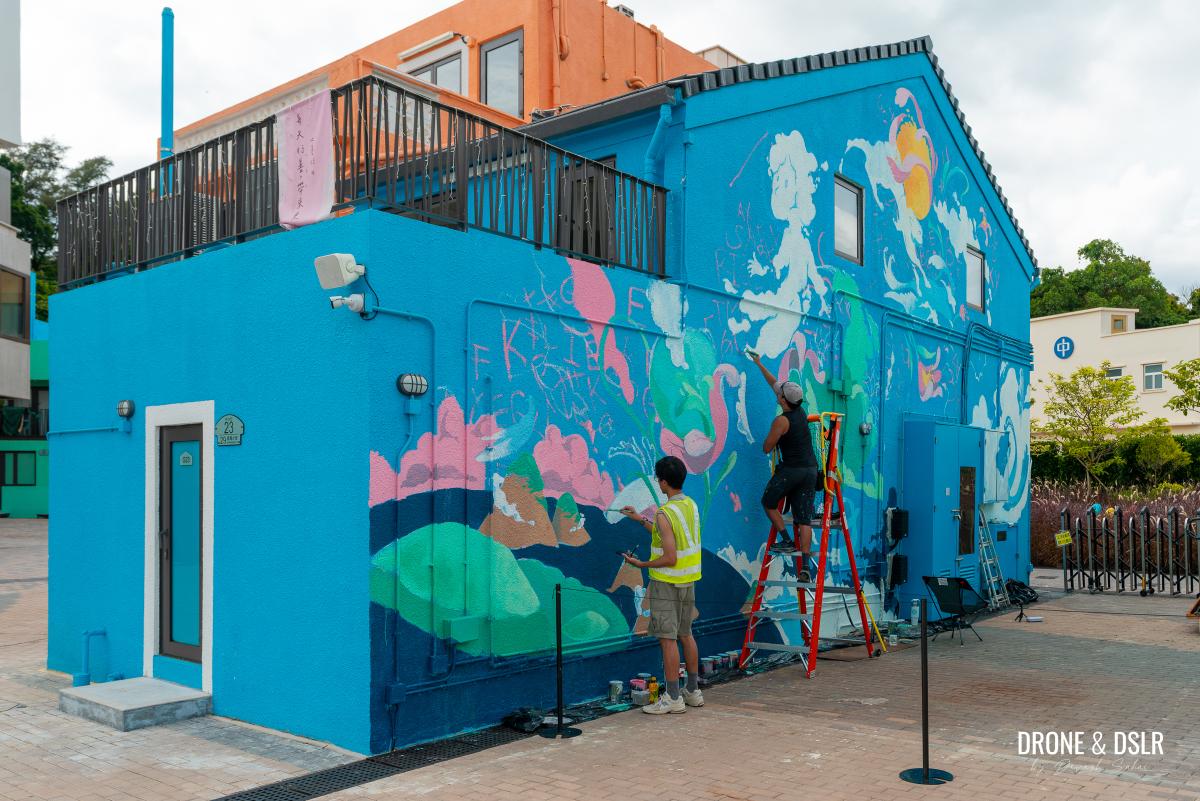
The ghost town at Ma Wan has taken a new shape
The remnants of the ghost town have virtually disappeared and will soon vanish entirely. But what exactly was the story behind the Ma Wan “Ghost Town”?
About Ma Wan’s Abandoned Ghost Town
The eviction story of Ma Wan’s town is relatively recent. This 250-year-old fishing village was once thriving with several thousand living here till the 1980s. It was home to one of Lantau’s stilt house (pang uk) communities, like the one in Tai O. And just like Tai O, Ma Wan was also known for its seafood restaurants, and farms of dried seafood and shrimp paste.
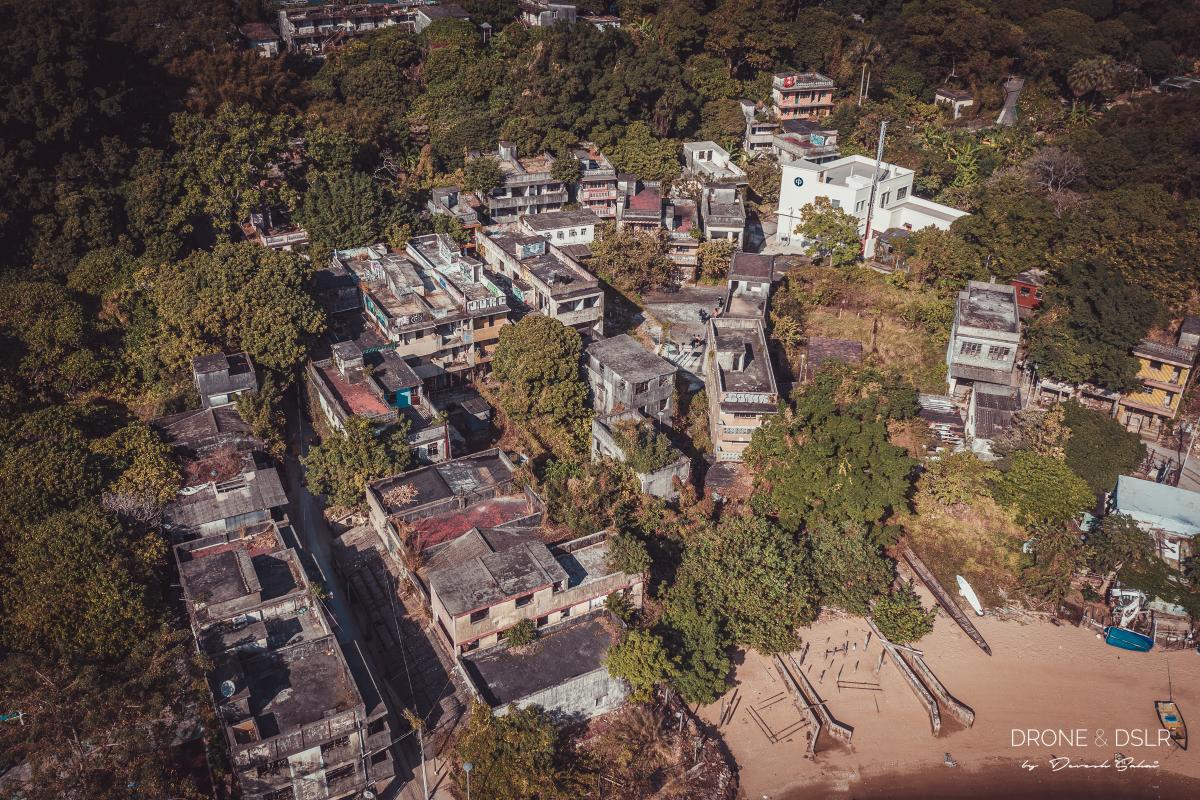
Bird’s eye view of Ma Wan’s abandoned village
But by 2011, the majority of the residents had been evicted after the developer of Park Island bought most of the land on Ma Wan.
The developer offered villagers a three-storey house or three units in the new Park Island complex, which was completed in 2006. While most accepted the deal, others held out in protest.

The ghost town of Ma Wan
Eventually, the entire village was cleared to make way for the Ma Wan 1868 Project.
What is Ma Wan 1868?
Ma Wan 1868 is a new development that has transformed the abandoned village into a vibrant hub for art, shopping, dining, and recreation. One of the project’s main goals is to celebrate Ma Wan’s history.
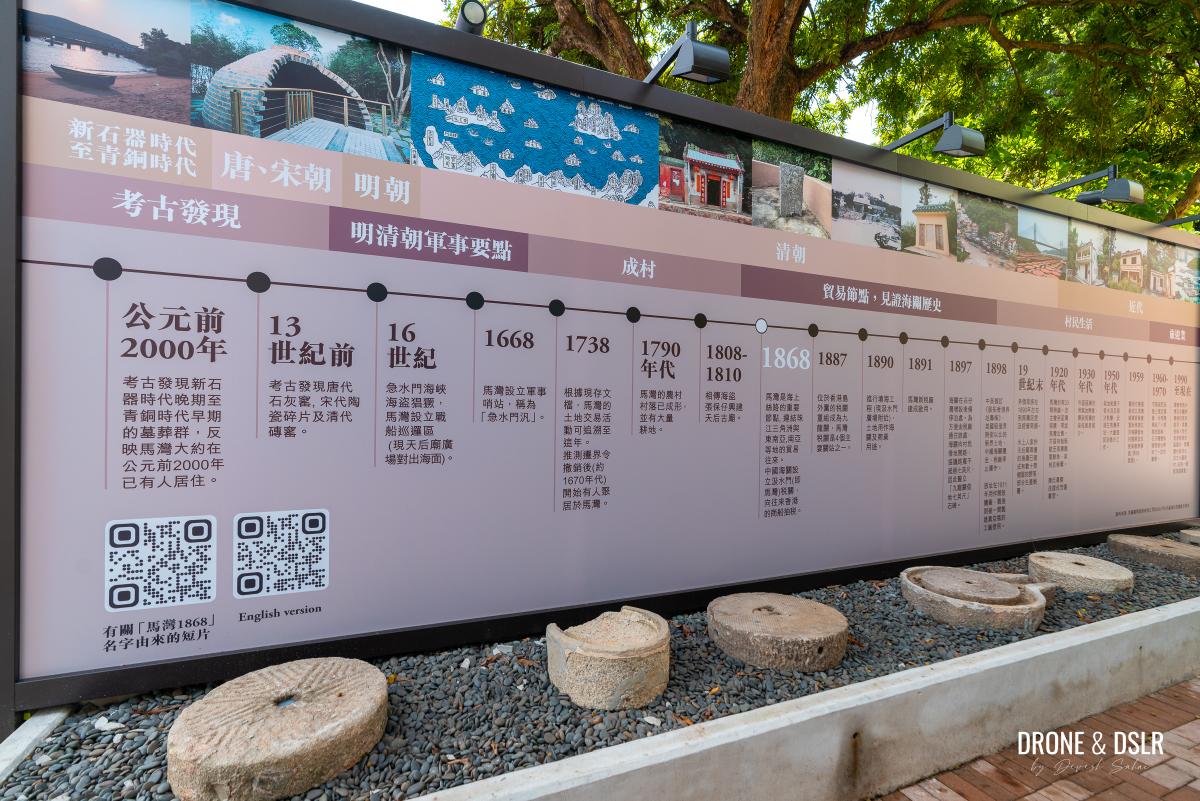
A timeline of Ma Wan’s history
The name “Ma Wan 1868” honors the year 1868, when Ma Wan played a significant role in maritime trade, connecting the Pearl River Estuary to other parts of Asia. It was also the year the Ma Wan Customs Office was established to levy taxes on ships moving in and out of Hong Kong.
The project has finally come to life in 2025.
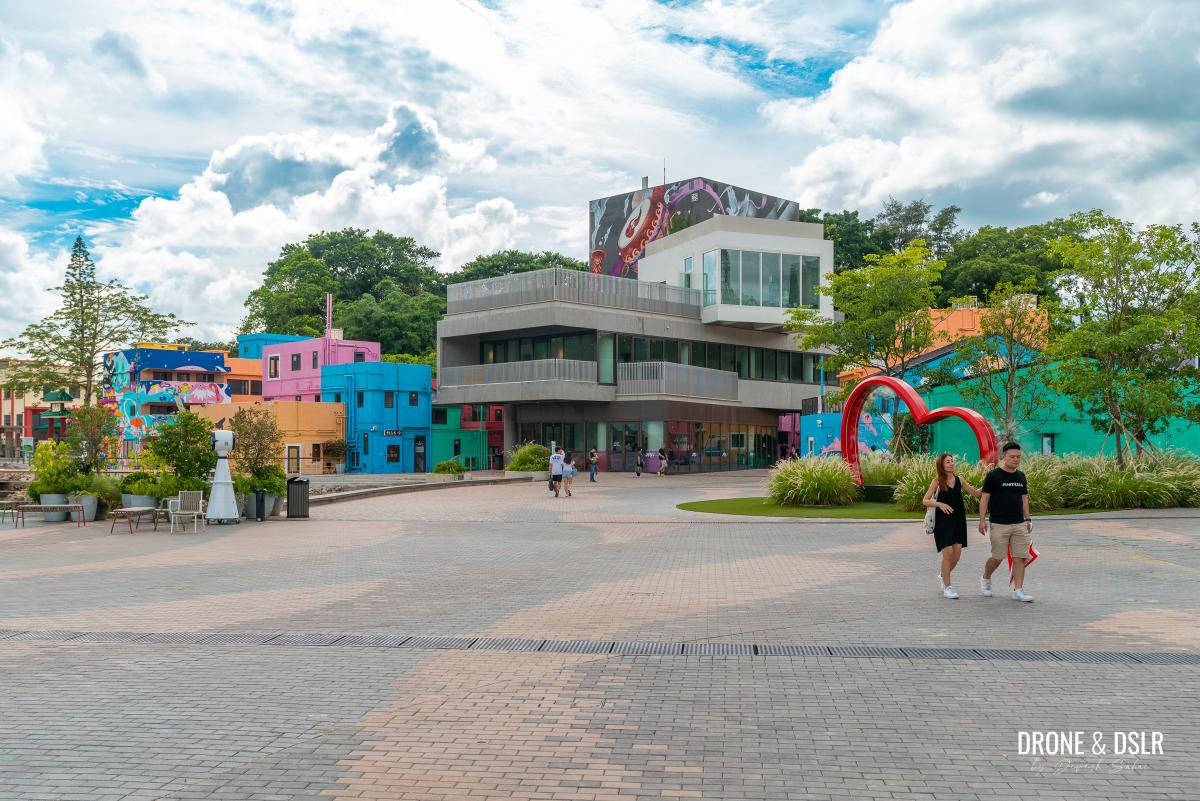
Goodbye ghost town, hello colourful town!
Today, visitors to Ma Wan 1868 can enjoy a variety of restaurants, cafés, and food vendors.
-

- Murals, cafés, bridges
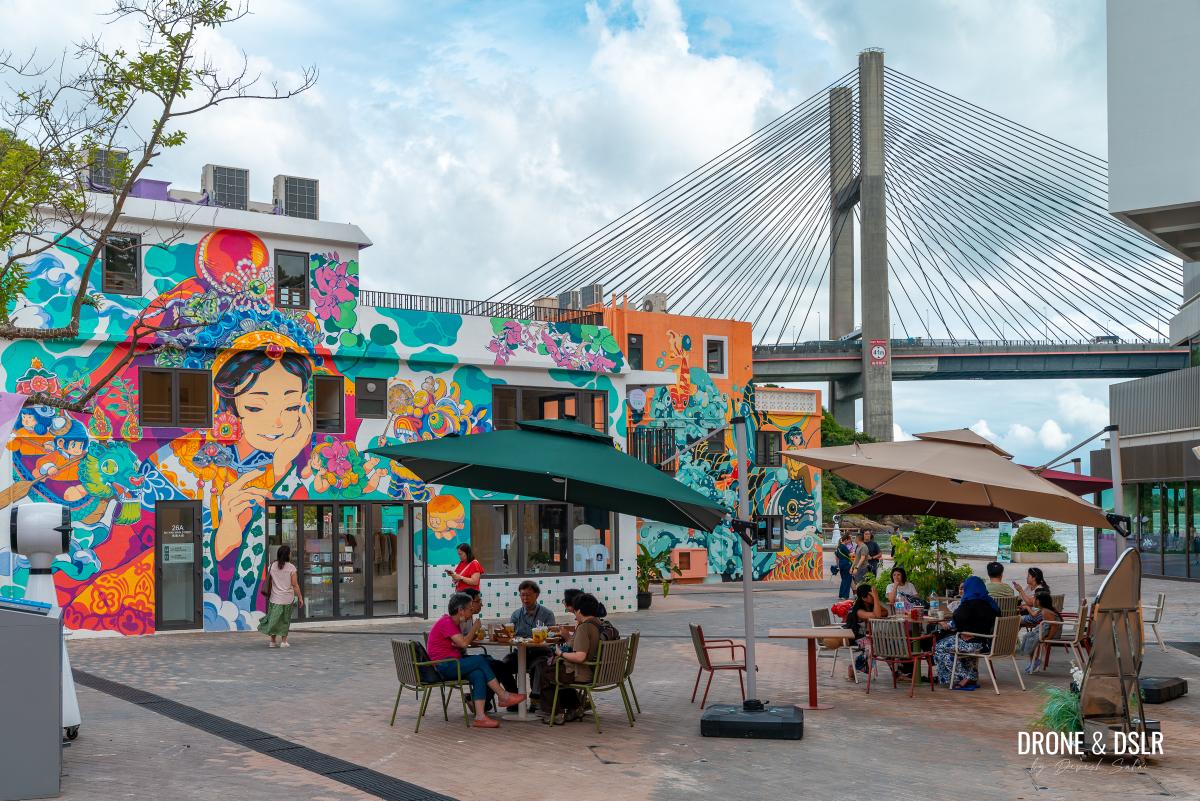
-
- The place is sprawling with many cafés
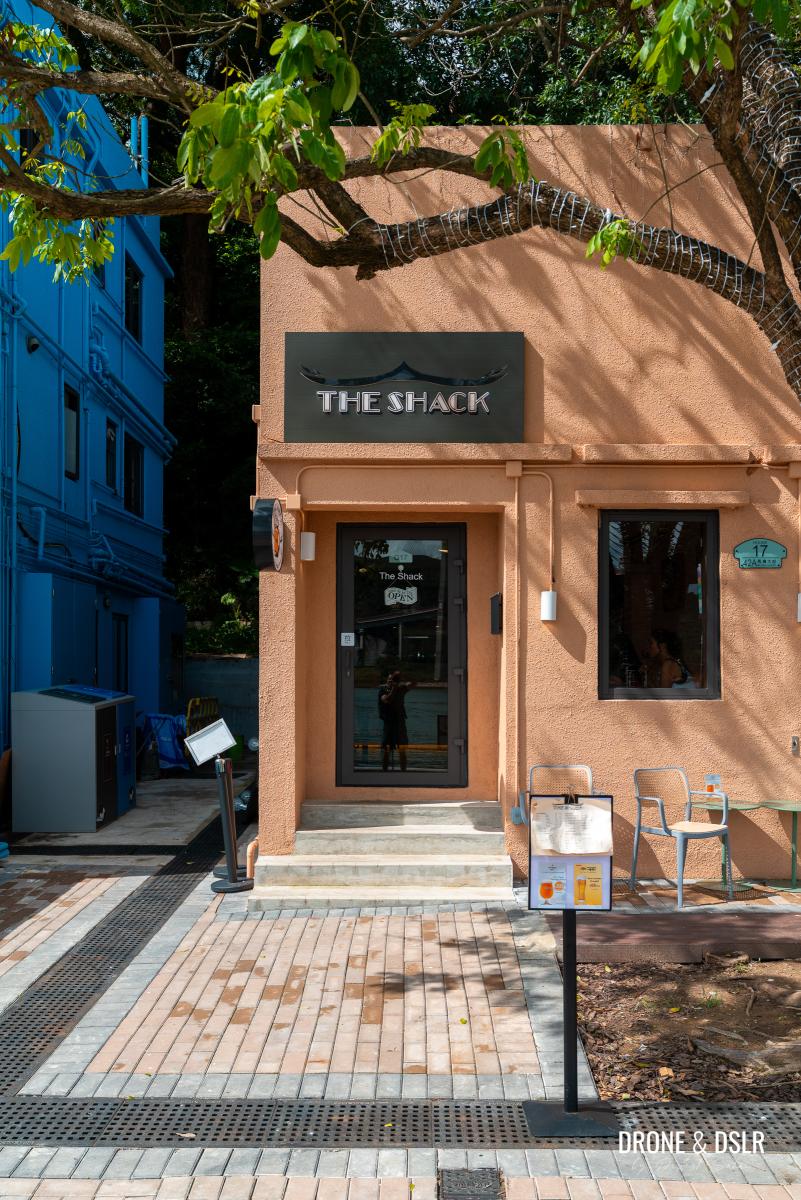
-
- Mini food trucks at Ma Wan 1868

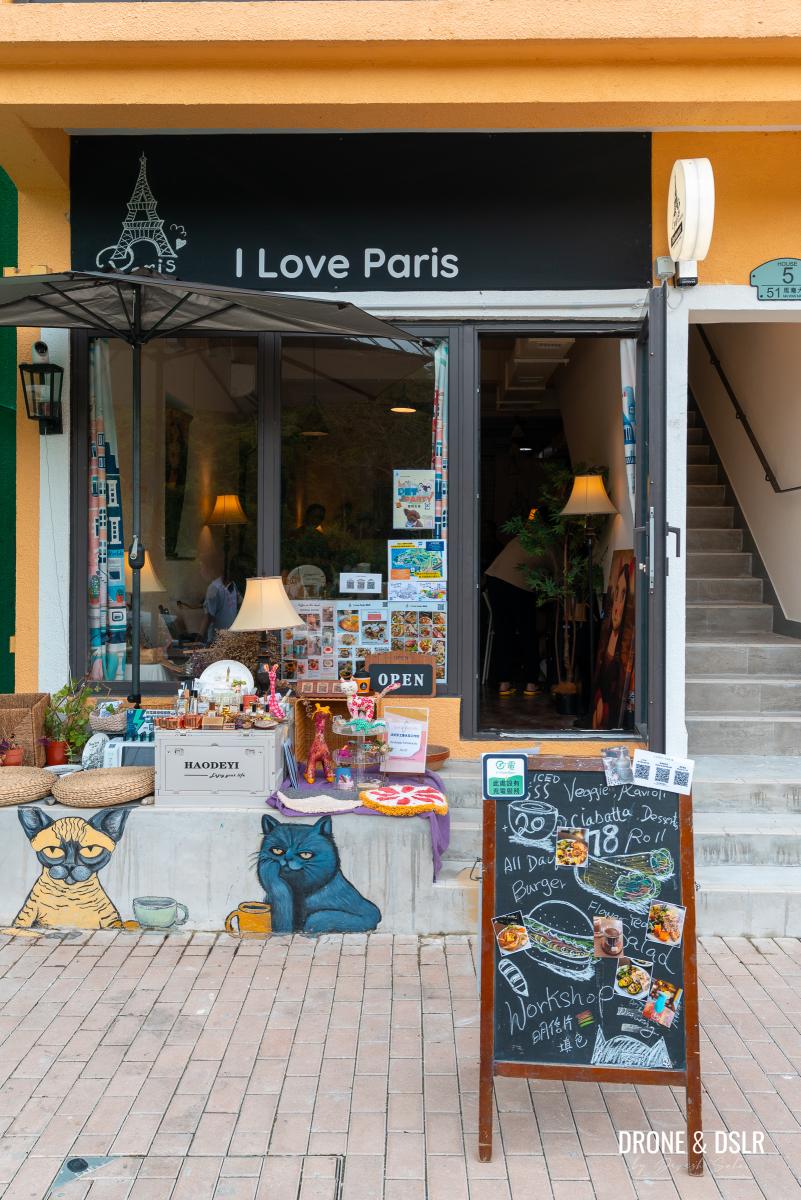
Beyond dining, I also noticed numerous workshops dedicated to arts and crafts, as well as boutique shops selling clothes, toys, and household decorations.
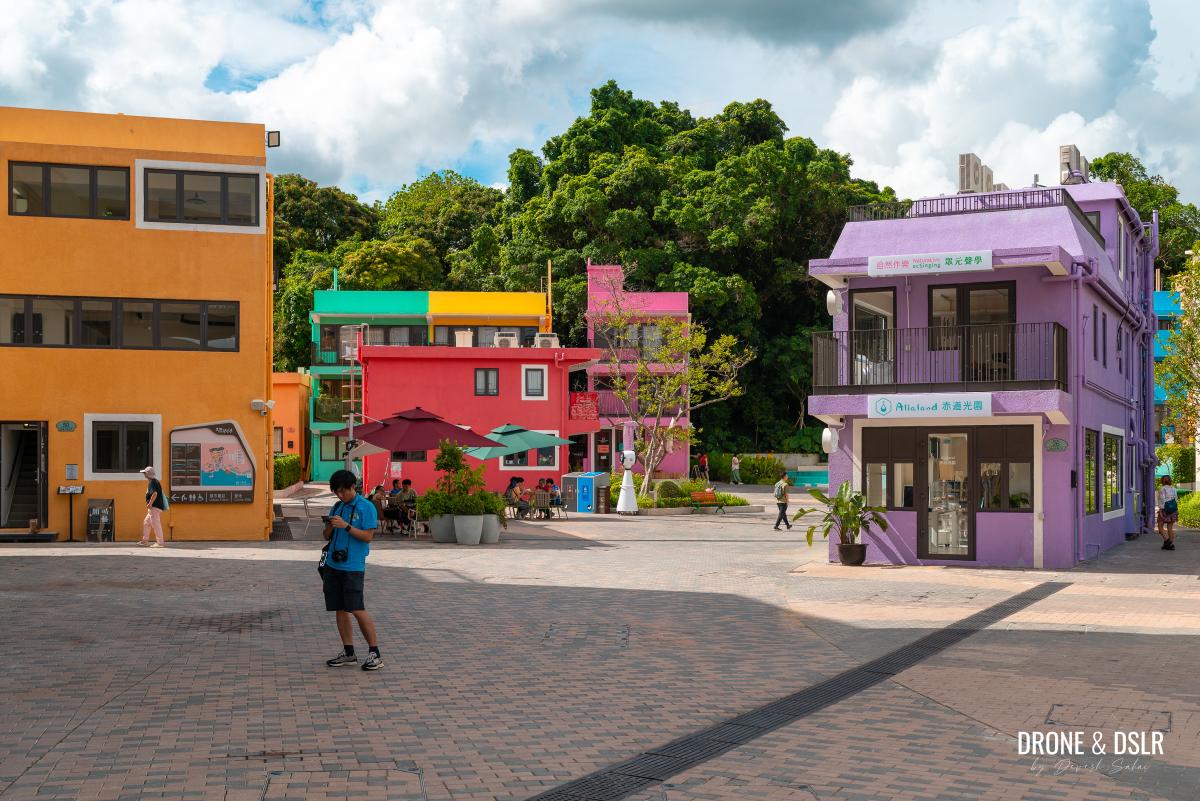
Boutique shops, cafés, workshops all form part of the new Ma Wan 1868
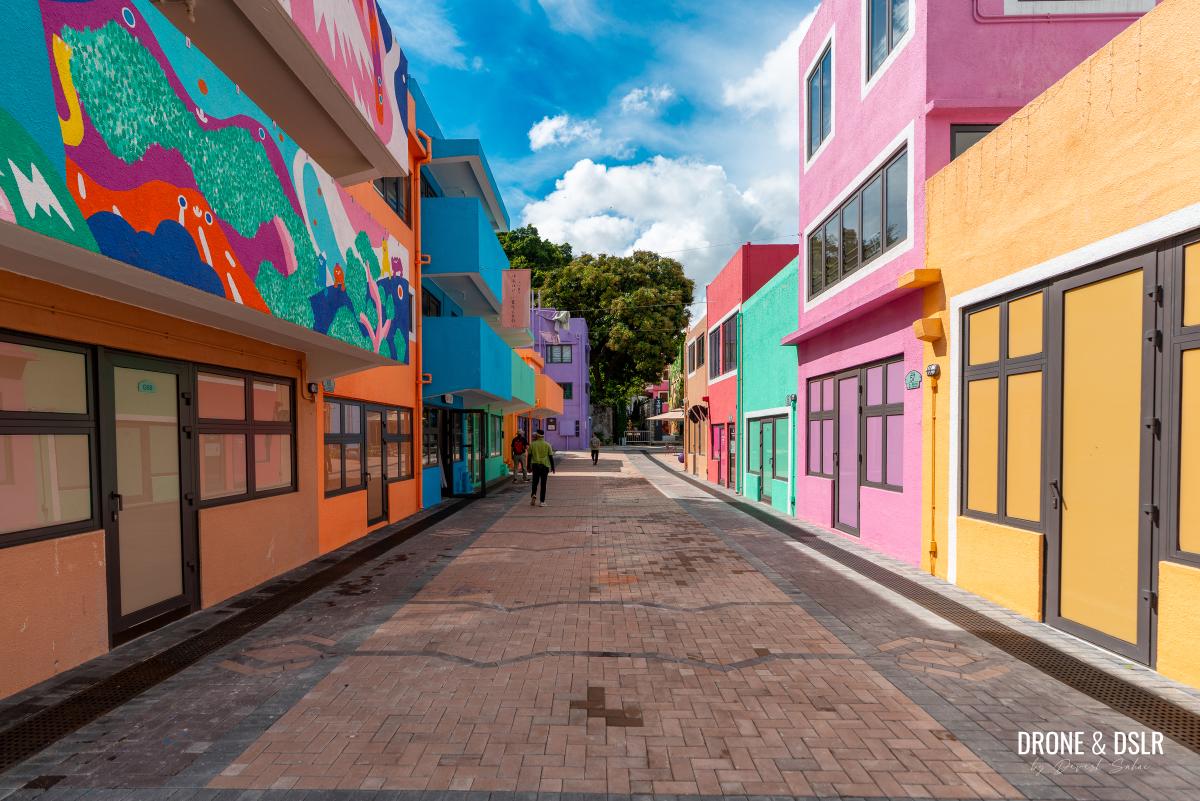
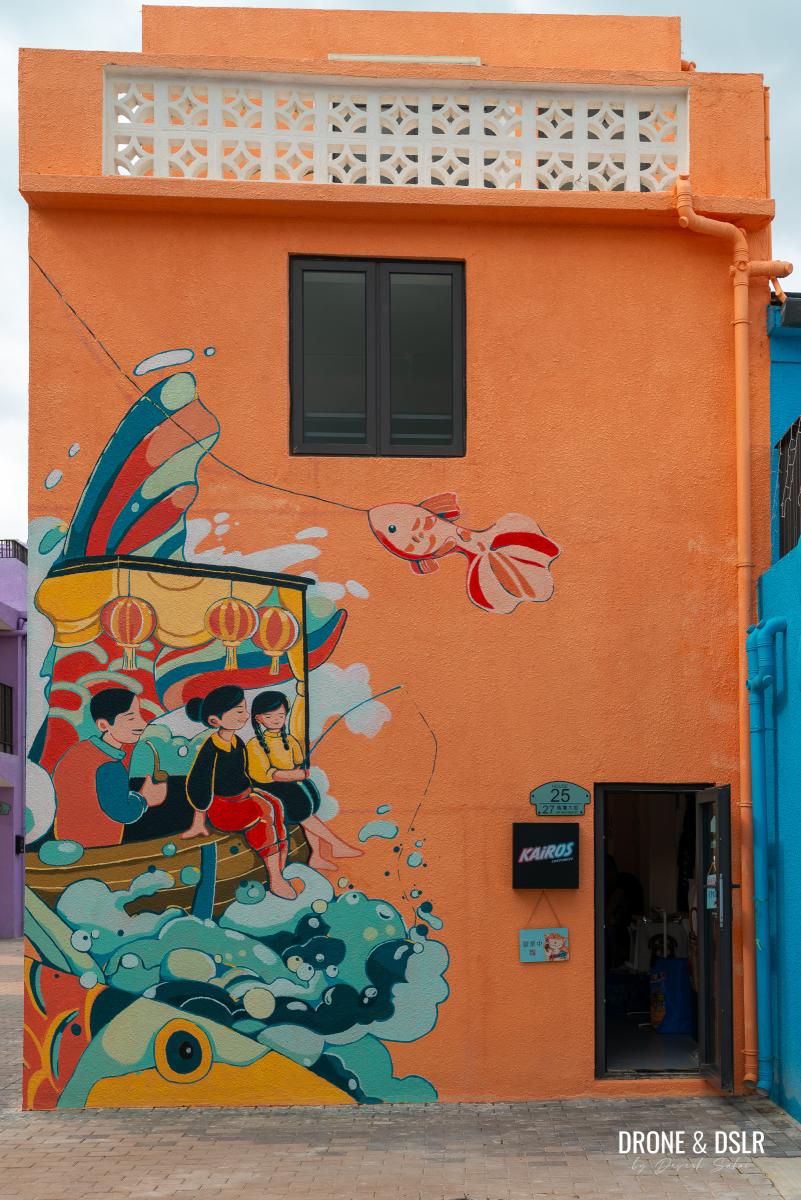
A standout feature of Ma Wan 1868 is the use of vivid colours, and mural artwork throughout the development. This striking palette creates a strong contrast with the abandoned town that once stood here.
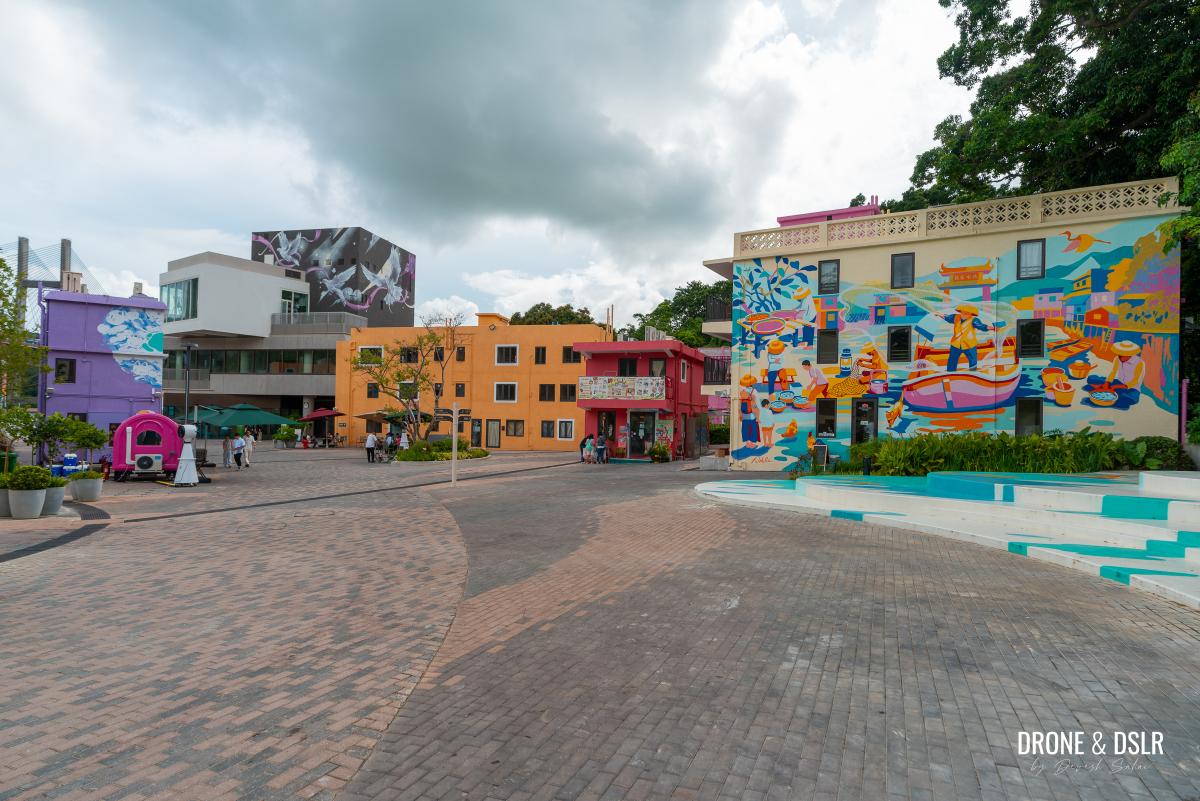
The murals are the centrepiece of Ma Wan 1868
How to get to Ma Wan 1868
There are plenty of options to get to Ma Wan. There are buses that ply between Park Island and Kowloon MTR, Tsing Yi MTR, and Tsuen Wan MTR stations. It’s best to check the fastest route based on your current location on Google Maps.
And there’s also a ferry between Central and Park Island Pier that departs from Central Ferry Pier No. 2.
-
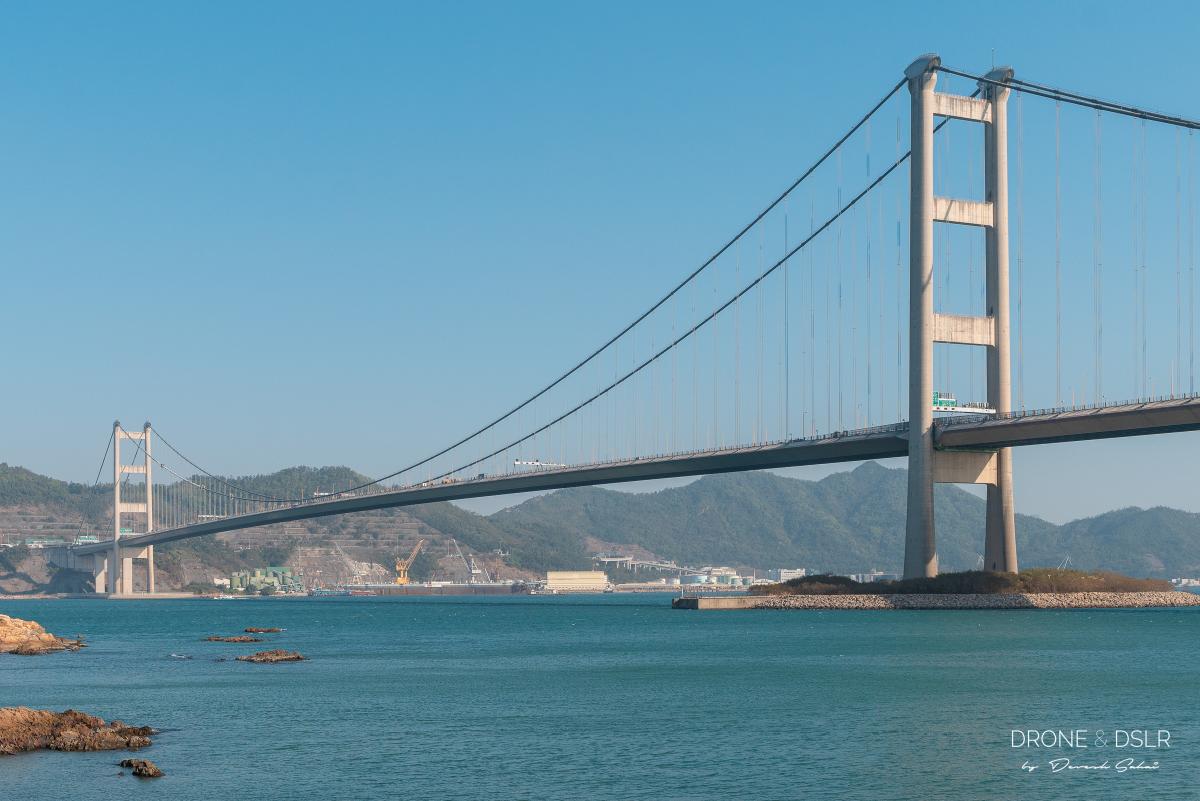
- Tsing Ma Bridge, named after the two islands that it connects – Tsing Yi and Ma Wan
-
- Welcome to Park Island!

-
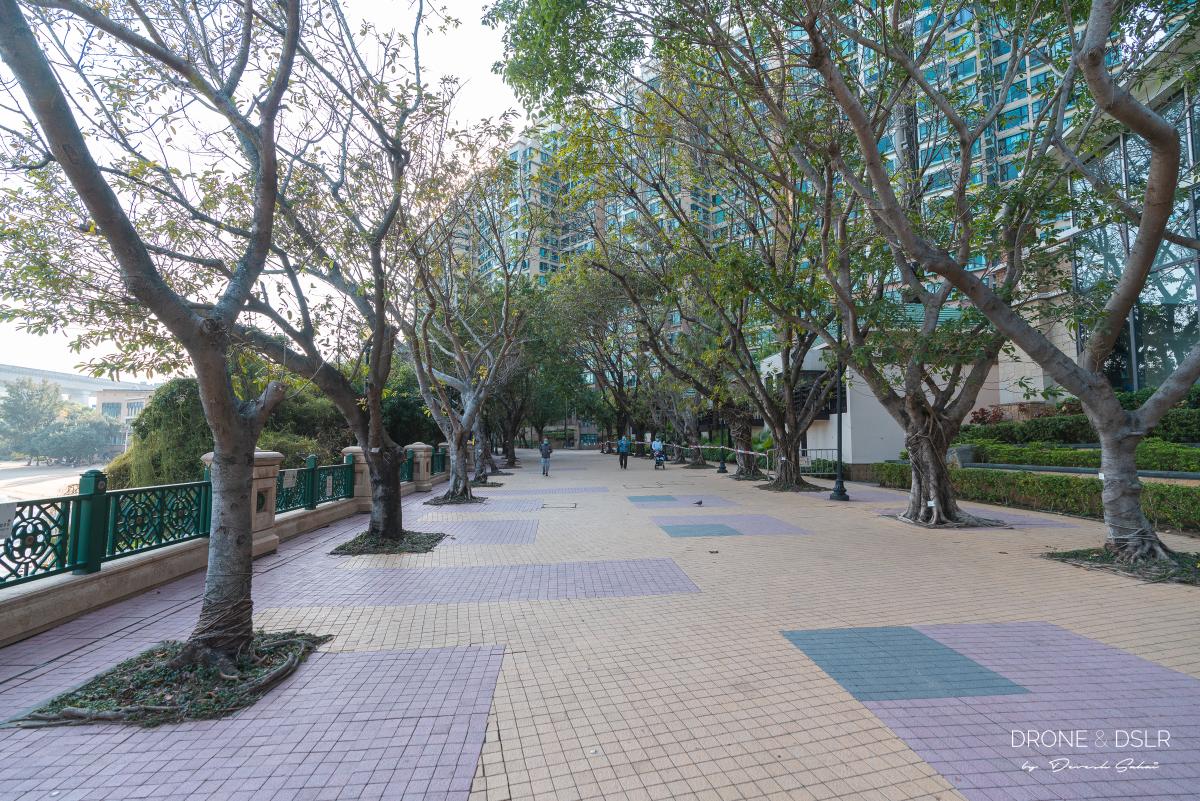
- Walk down this path in front of the towers
-
- Walk along Pak Lao Road
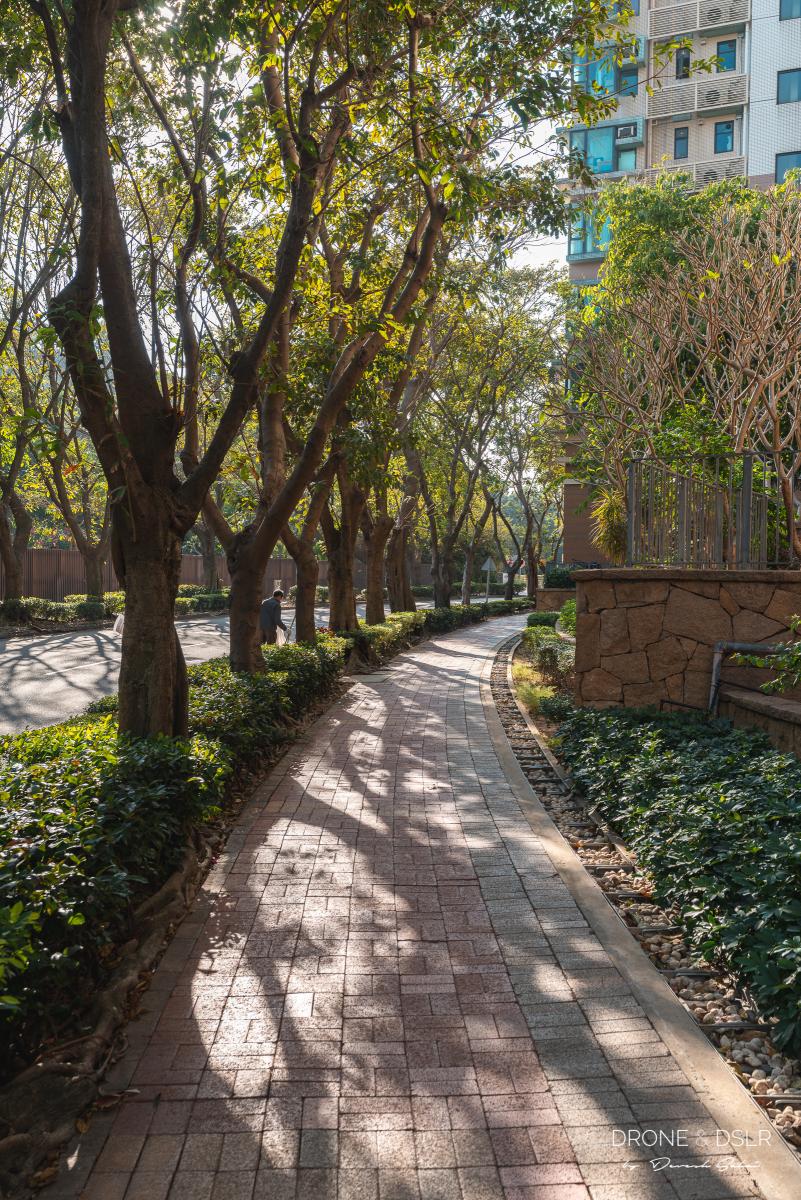
Whether you choose the ferry or the bus, once you arrive at Park Island, follow the signs to Ma Wan 1868. The shortest route is via the road that runs past Noah’s Ark and the Solar Tower, underneath the Tsing Ma Bridge.
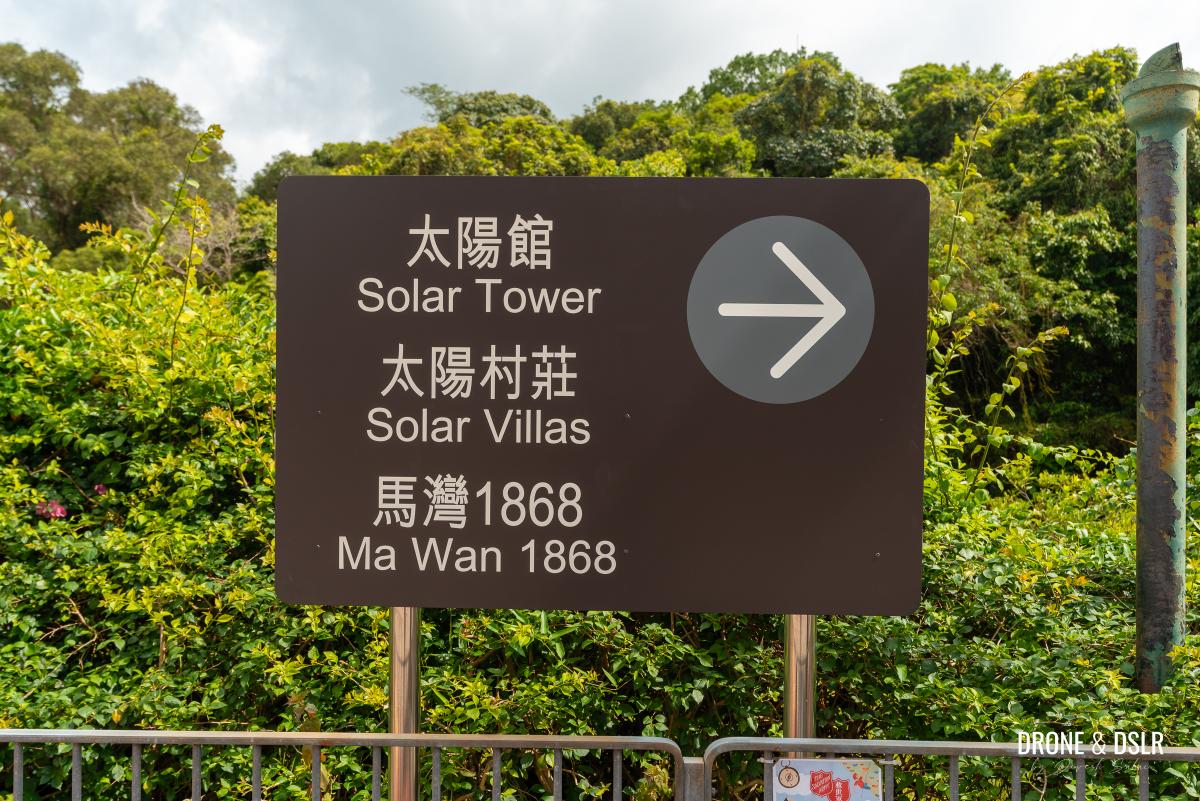
Follow the signs for Ma Wan 1868
Alternatively, you can take the old village path for a more authentic experience of the abandoned village. To do this, follow Pak Lai Road (located in front of the Park Island Towers) onto Fong Yuen Road.
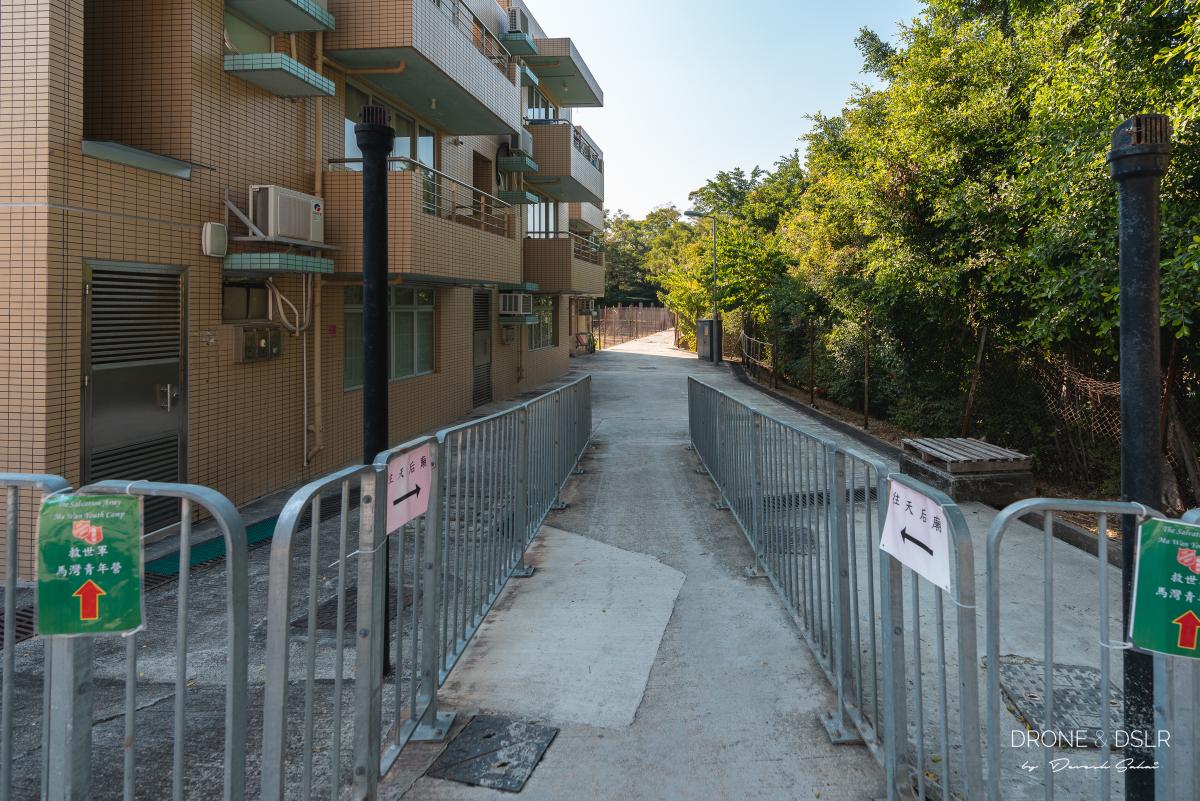
When you reach Ma Wan Rural Committee Road, turn right. Almost immediately, you’ll see a lane on the left with signs for the Salvation Army Camp or Tin Hau Temple—take this lane. I’ve marked the path up till this point on Google Maps.
-
- Walk down this ramp
-
- Turn left at the end of this path
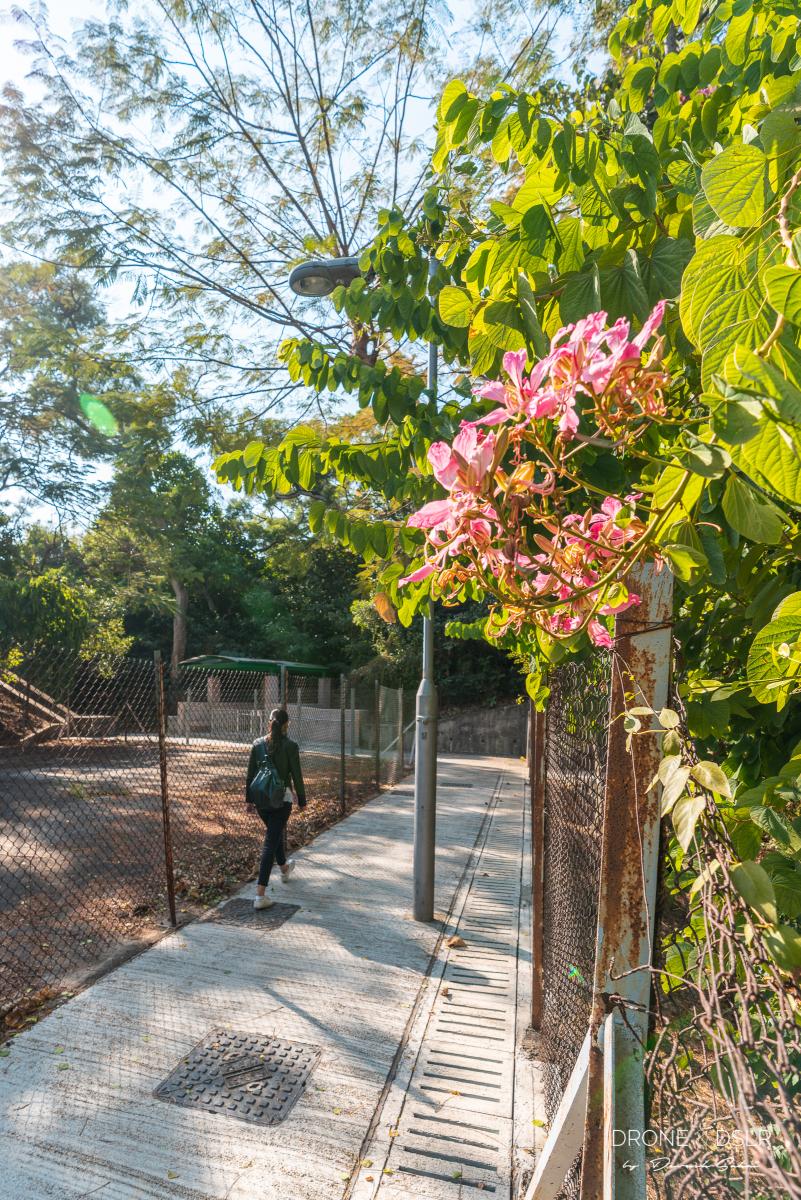
Walk to the end of the path, then turn left and continue along it until you arrive at Ma Wan 1868.
-
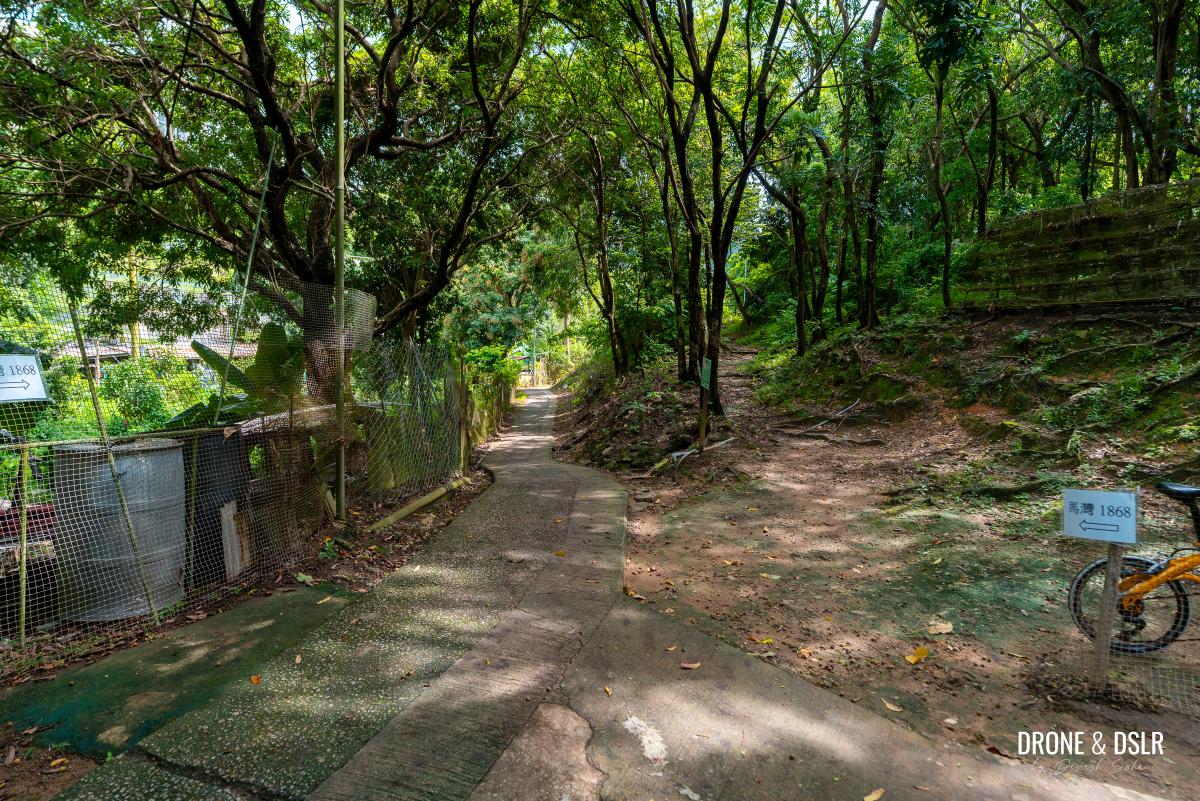
- The old village path, now not in use as much, but the signs for 1868 are there
-
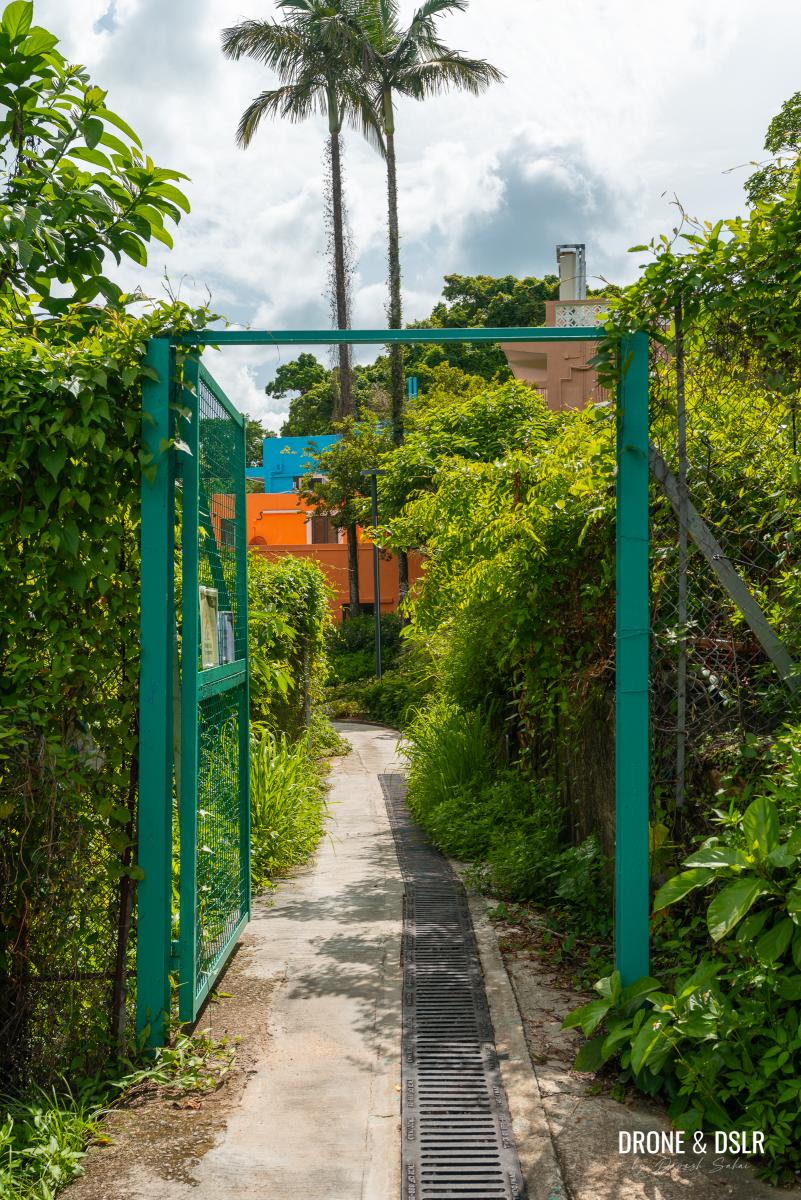
- The back entrance to Ma Wan 1868
Things to do at Ma Wan 1868
Once you’re in Ma Wan 1868, take your time to explore the establishments. You might be surprised by what you find. But if you’re looking for some suggestions, here are a few.
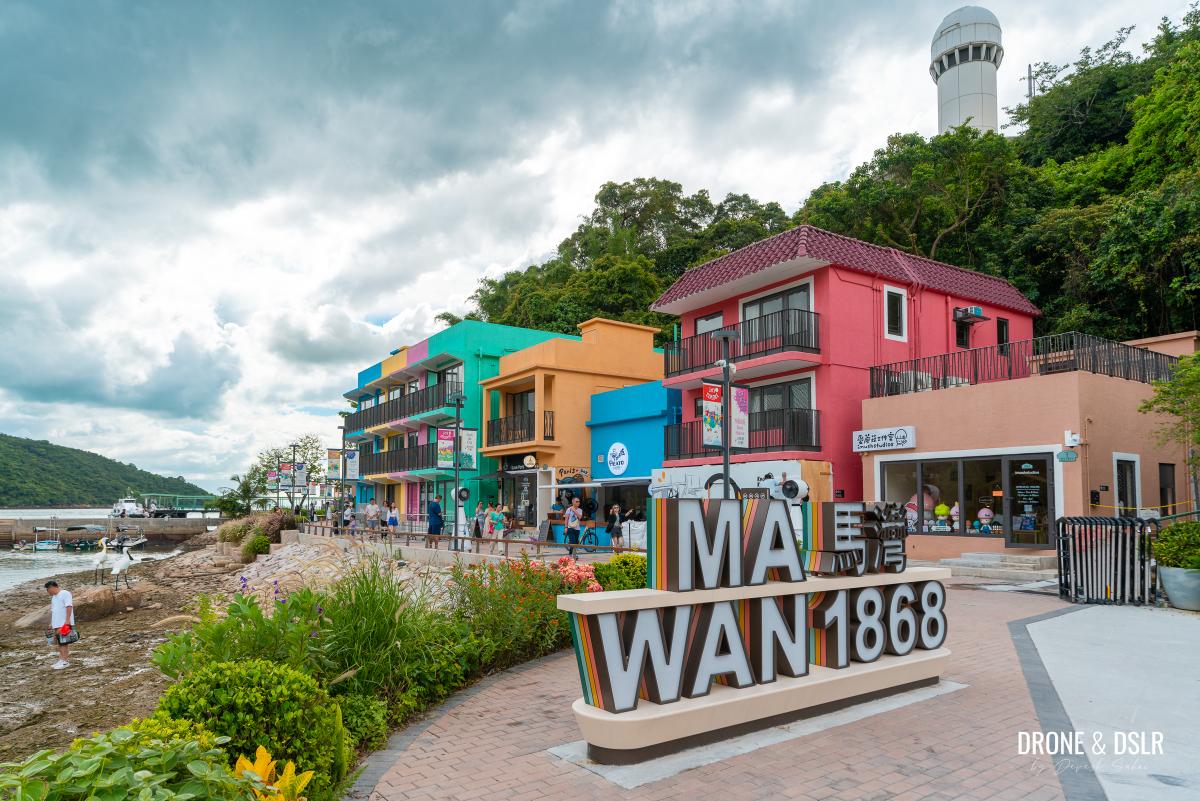
Welcome to Ma Wan 1868
Capture Stunning Photos at Every Corner
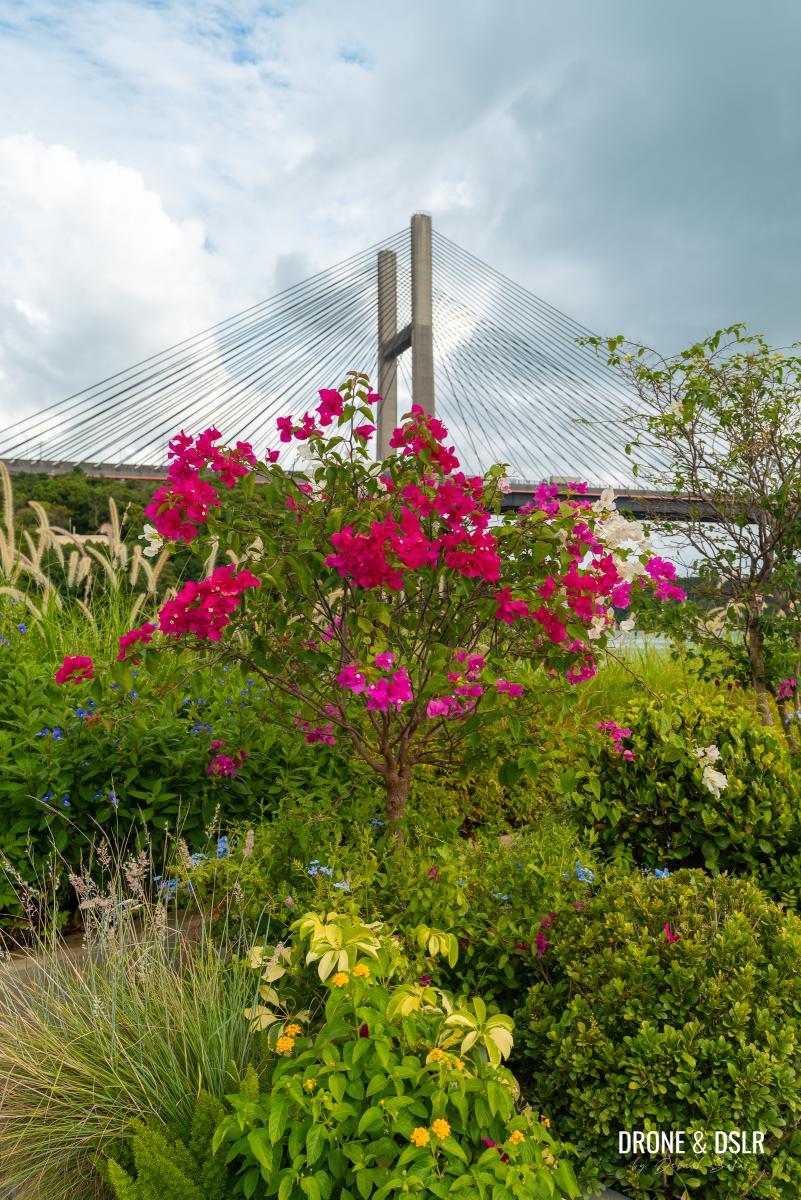
There are countless photo opportunities around every corner, especially with the stunning view of the Tsing Ma Bridge.
-
- One of the more beautiful murals at Ma Wan 1868
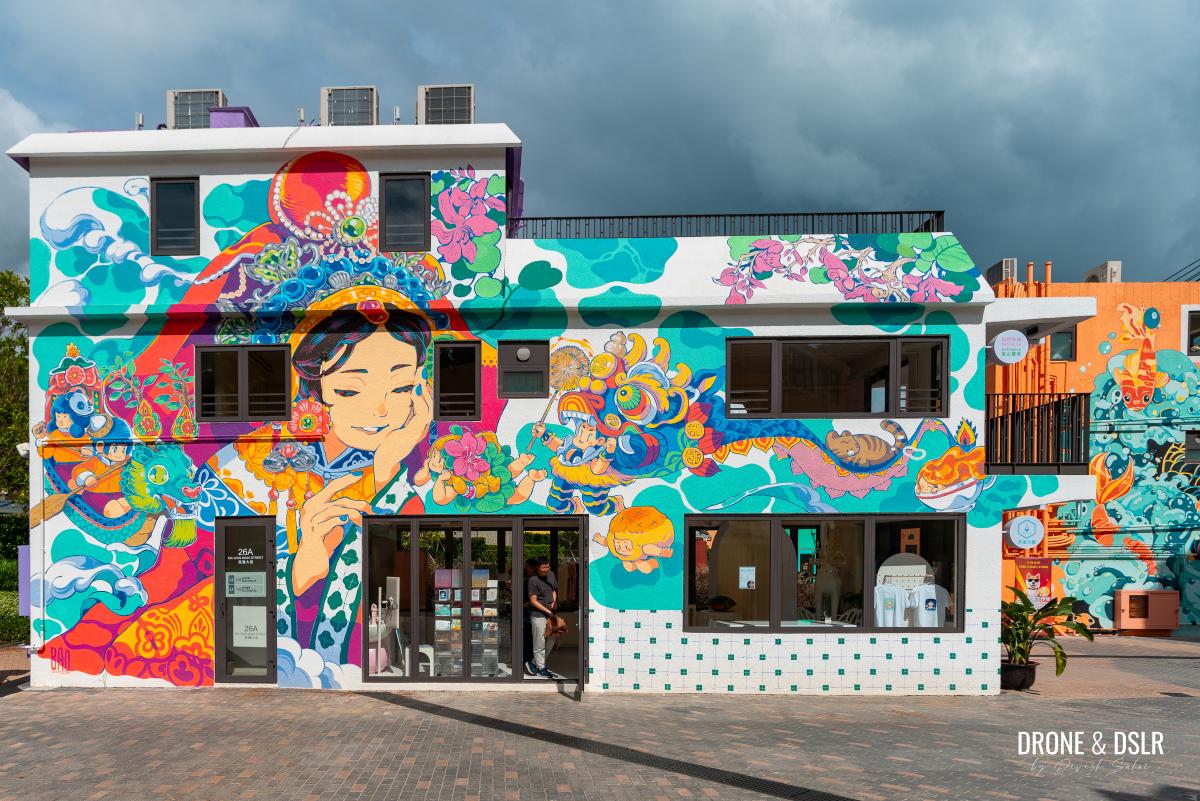
-
- Ma Wan 1868’s colours most certainly add a spark
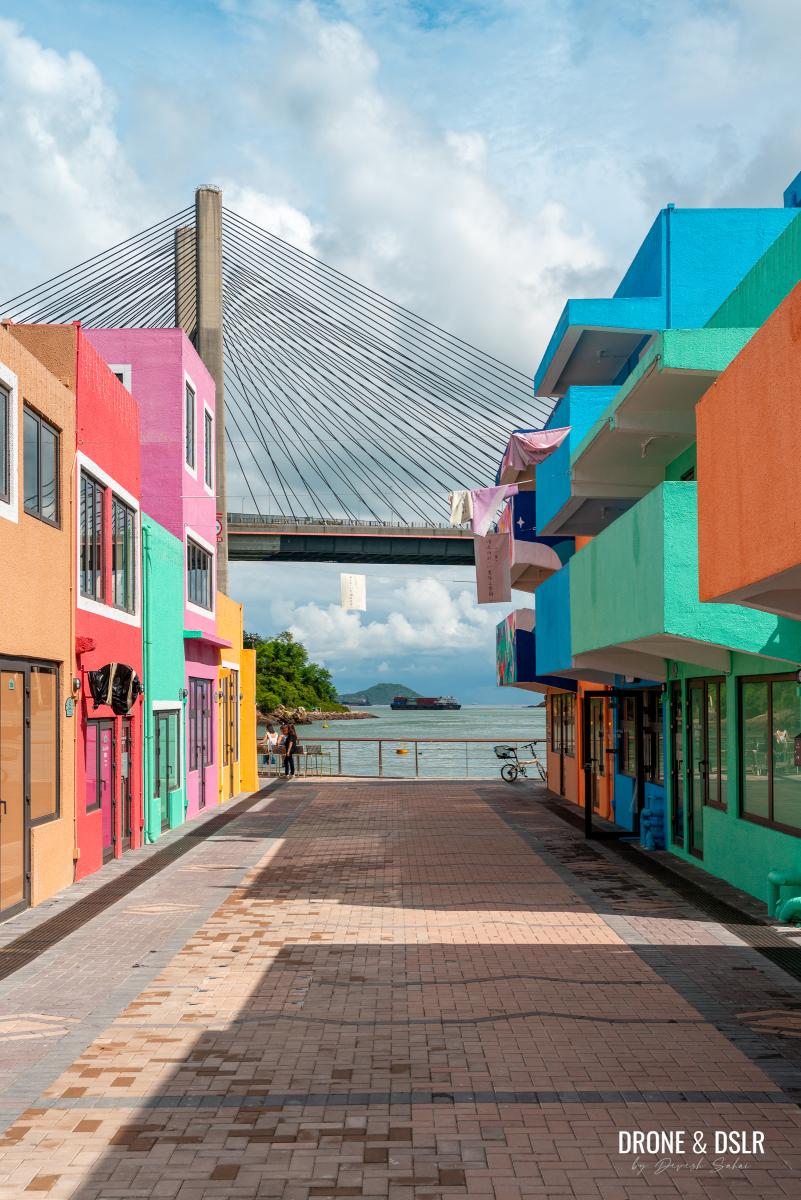
-
- The colours at Ma Wan 1868 really pop
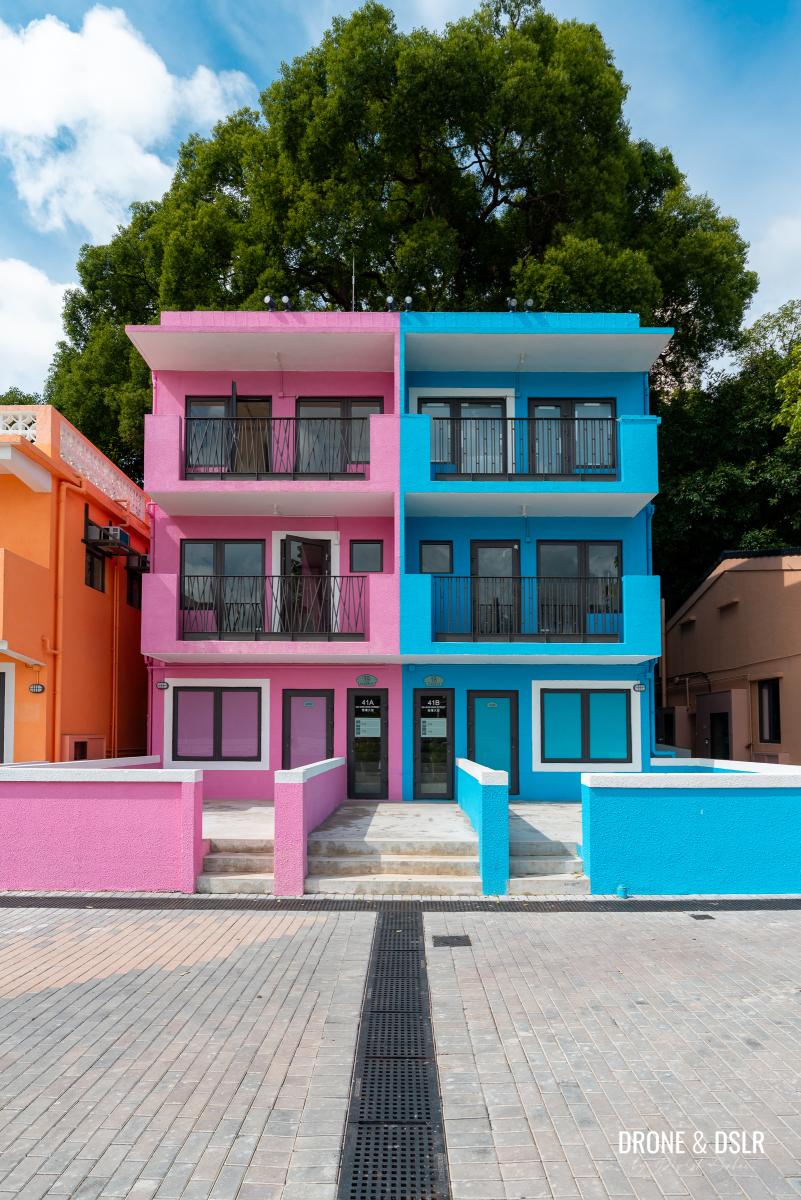
The vibrant shops, restaurants, and beautiful murals and artworks truly enhance the area’s charm, making it feel lively and vibrant.
-
- The colours of Ma Wan 1868
-
- Mural artwork at Ma Wan 1868
-
- One of the many shops at Ma Wan 1868
Add in the scenic views of the sea and green landscapes, and you’ll find yourself stopping to snap a photo every few minutes during your stroll.
-
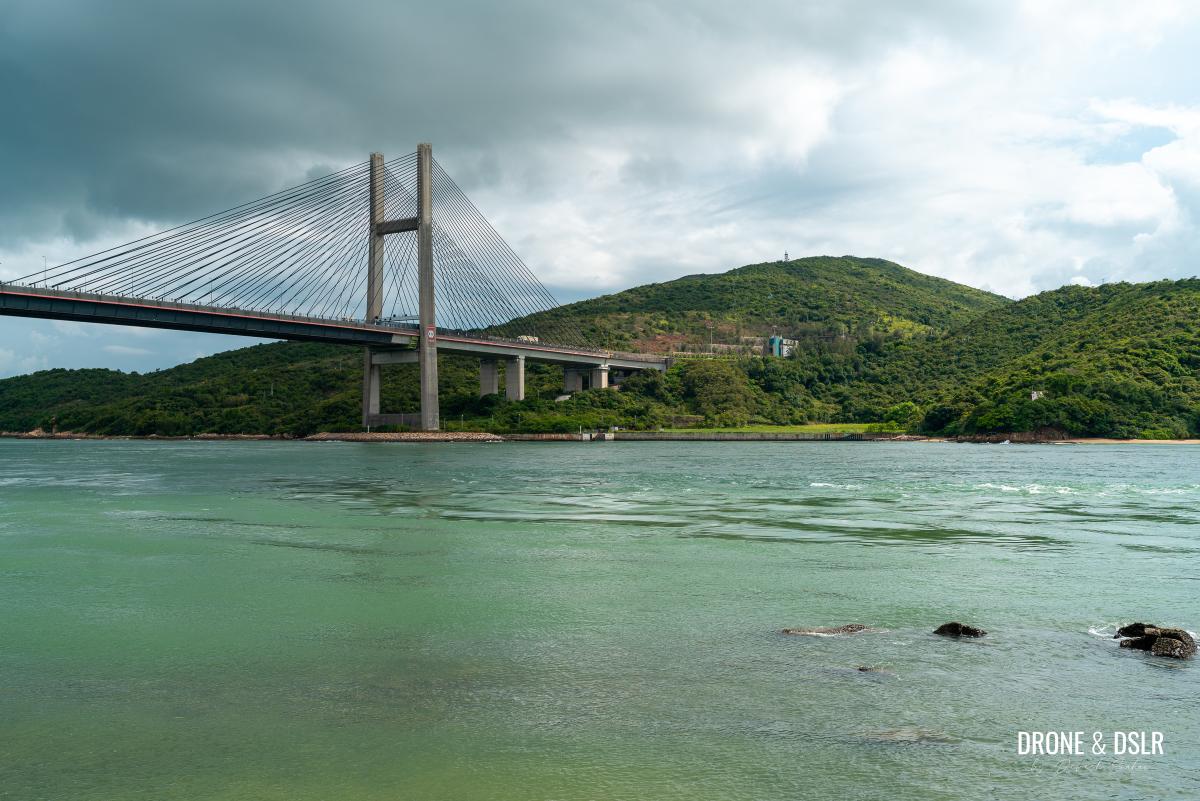
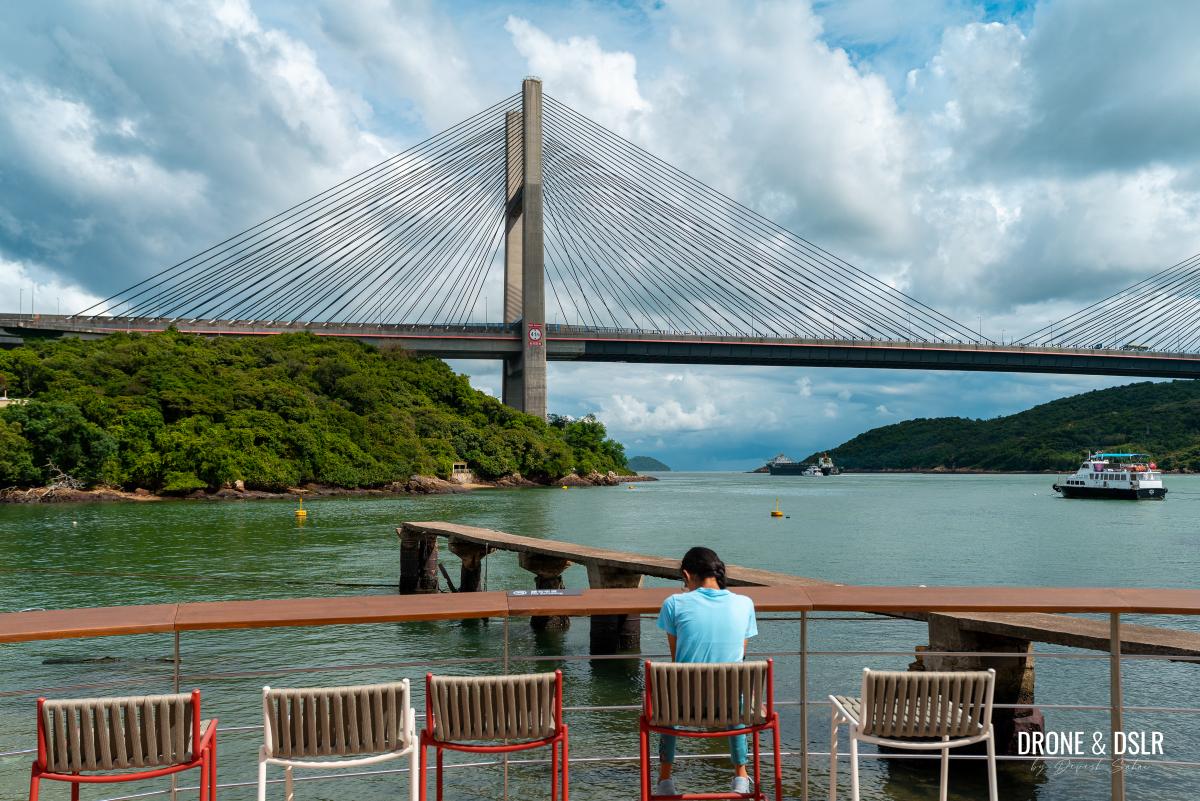
- Beautiful views of the Tsing-Ma Bridge from Ma Wan 1868
-
- Views from the Kap Shui Mun Bridge viewpoint
-
- There are plenty of spots from where you can enjoy the views
Explore the Historic Tin Hau Temple
Amidst all the colour and modernization, sits Ma Wan’s Tin Hau Temple.
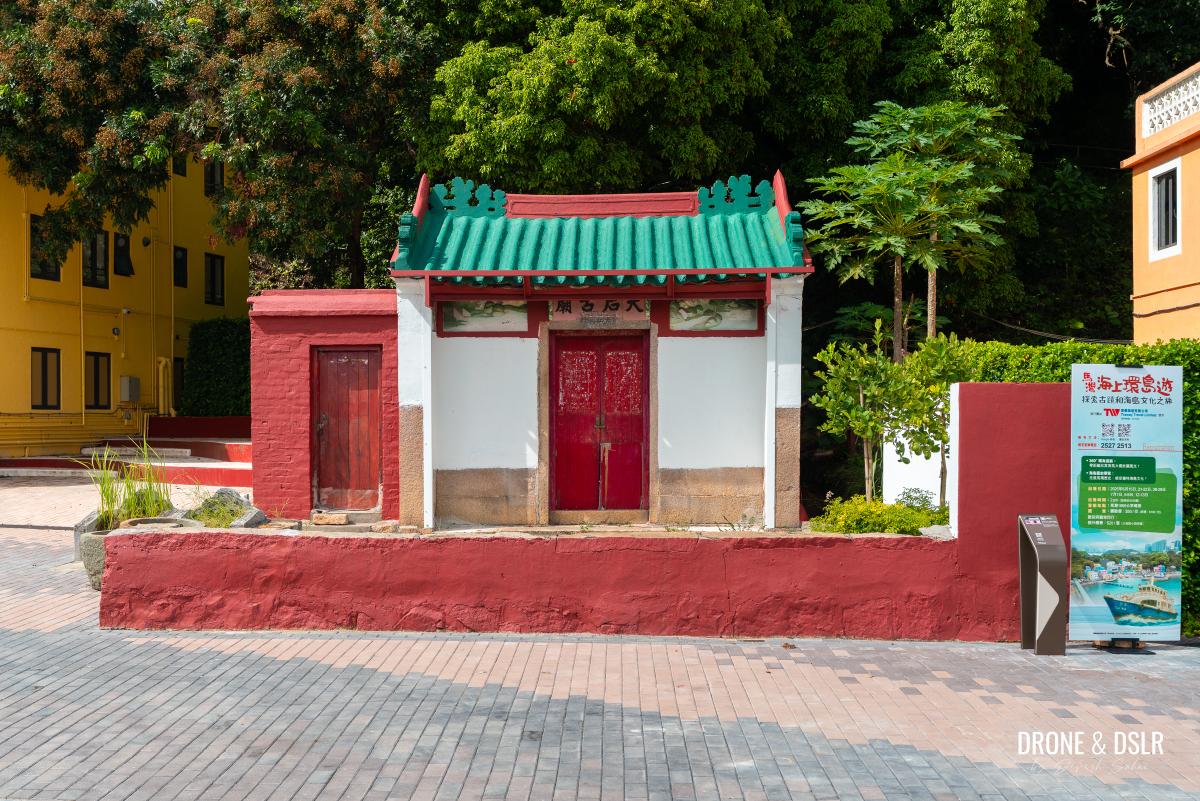
The Tin Hau Temple in Ma Wan
The Ma Wan Tin Hau Temple, built in 1857 by Tanka fishermen, honours the goddess Tin Hau and is the oldest temple on the island. Though legends link it to pirate Cheung Po Tsai (whose cave can be found on Cheung Chau Island), no evidence supports this.
Renovated multiple times, it was designated a Grade III historic building in 2010. The temple features a two-hall layout with green glazed tiles and intricate roof decorations. Inside, the statues of Tin Hau and her guardians stand alongside traditional plaques.
Historically, it served as a tax station against opium smuggling, housing relics like 19th-century incense burners and plaques.
Marvel at the “Phinnie, The Magic Dolphin” Sculpture
Just a short distance from Main Street, there’s a dolphin sculpture facing west, towards the Pearl River Estuary.
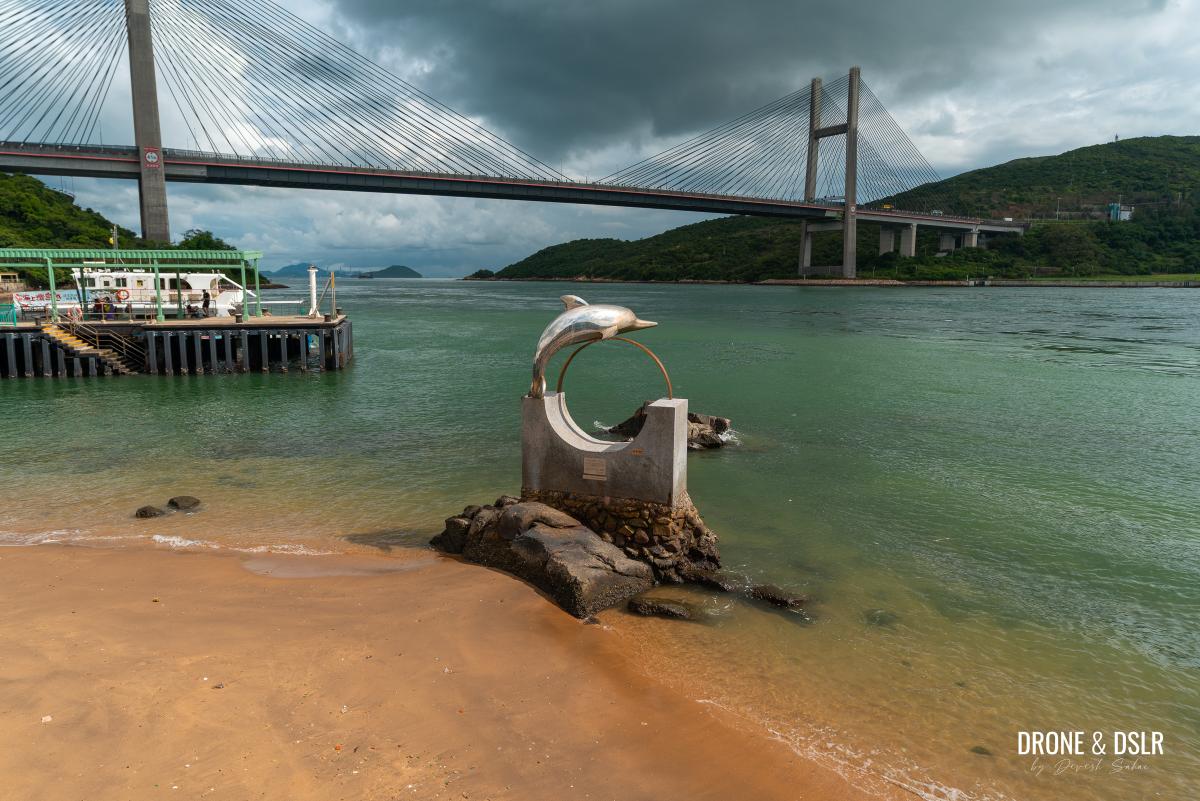
“Phinnie, The Magic Dolphin” Sculpture at Ma Wan
The “Phinnie, The Magic Dolphin” sculpture symbolizes a legendary friendship between a dolphin and a fisherman from northern China, who was guided to Ma Wan by the dolphin to demonstrate fishing and boat-making techniques to the island’s residents.

“Phinnie, The Magic Dolphin”
However, if you want to see the real Chinese White Dolphins in their natural habitat in Hong Kong, read all about it in this post.
Discover the Stone Tablets of Old Kowloon Customs and the “Mui Wai” Rock Inscription
Ma Wan’s history is marked by the “Stone Tablets of the Old Kowloon Customs,” relics from the Qing Dynasty’s 19th-century customs operations.
After treaties expanded trade, Britain established Kowloon Customs (1887) to oversee taxation and border patrols, with revenues sent to Liangguang’s governor. The Kap Shui Mun Customs House (1897) sparked local disputes, resolved by a land-use agreement memorialized in stone.
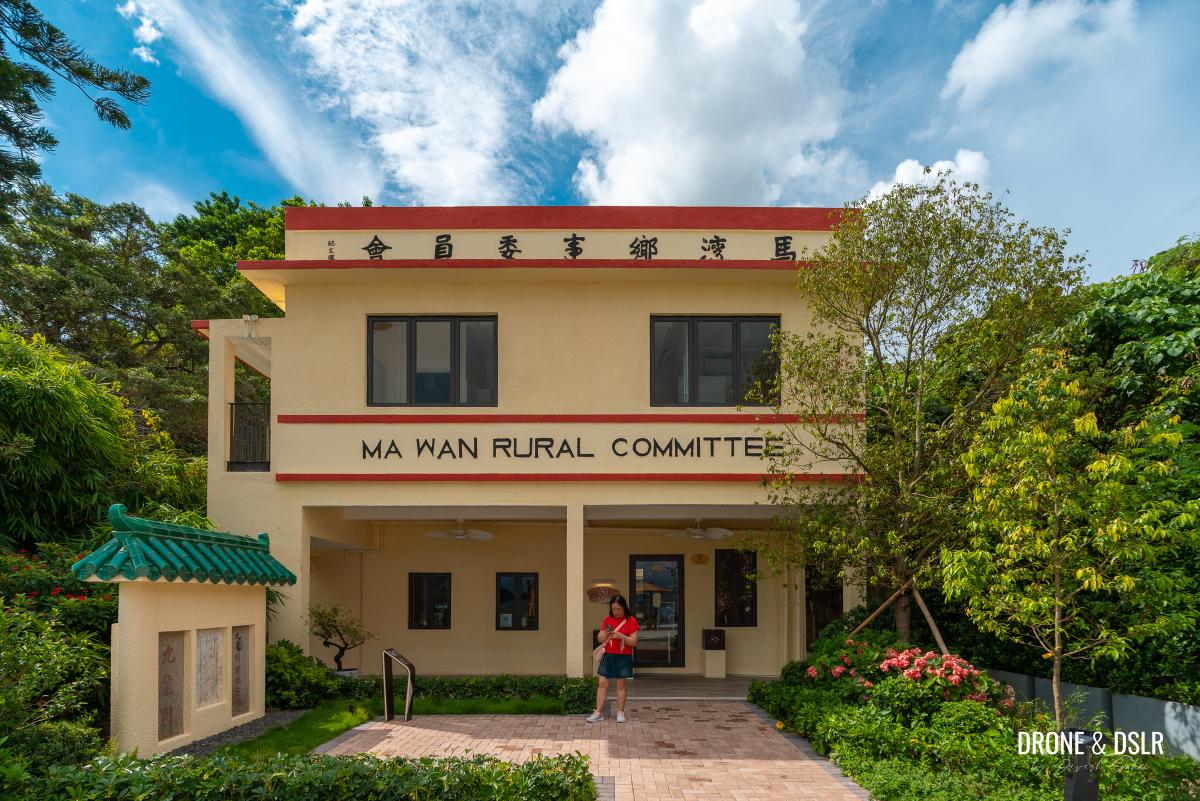
The renovated Ma Wan Rural Committee building
The two surviving inscriptions, one marking the customs’ founding (1897) and another noting a seven-foot land concession, reflect British influence and Qing sovereignty’s decline. Designated Grade III historic buildings (2010), these stones preserve Ma Wan’s role in trade, governance, and community compromise.
Next to the Old Kowloon Customs boundary stone lies the enigmatic “Mui Wai” inscription, whose date remains uncertain but is believed to be from the early 20th century.
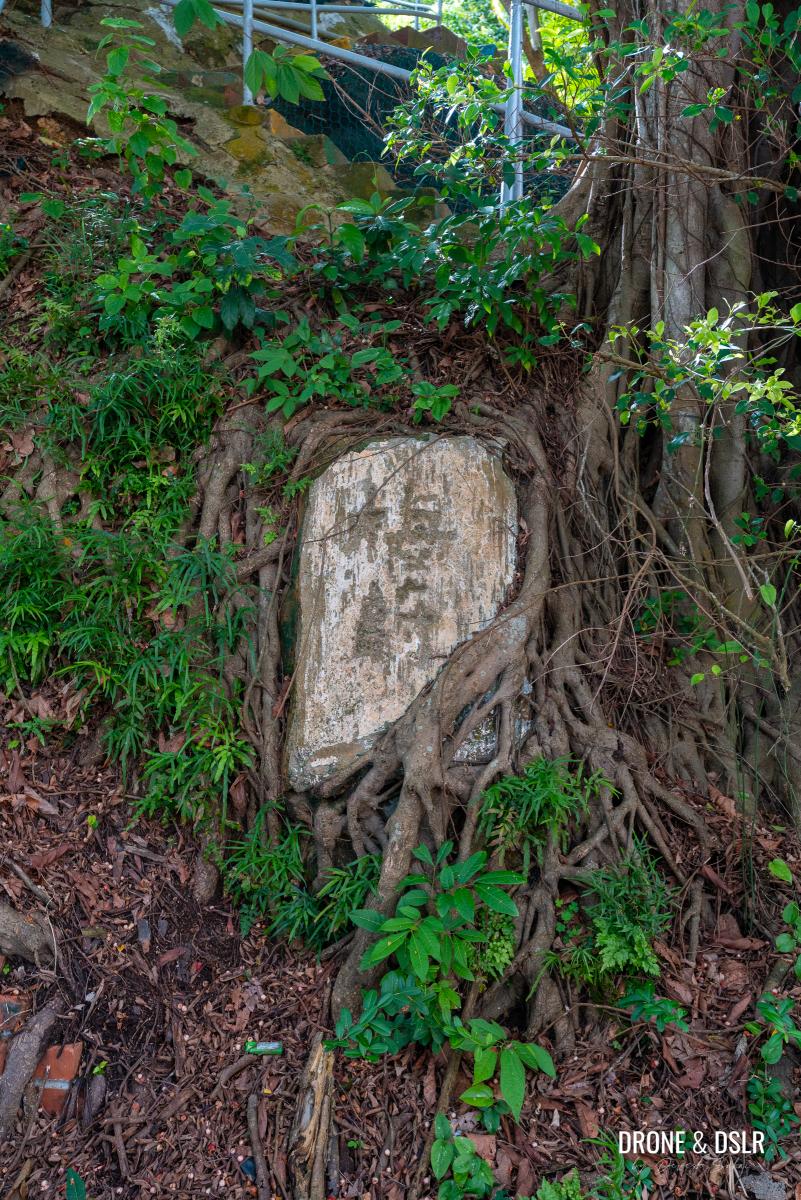
The “Mui Wai” Rock Inscription
Scholars suggest that “Mui Wai” refers to today’s Mui Wo on Lantau Island. Historically, it may mark the site of an imperial palace where Emperor Zhao Bing once stayed during his escape. This connection ties into the story of the Southern Song Dynasty’s fleeing emperor and the legendary Sung Wong Toi.
In December 2007, the Antiquities and Monuments Office officially recognized the “Mui Wai” inscription as a site of archaeological significance in Hong Kong.
Observe Fiddler Crabs and Birds in the Mangrove Swamps
You might be wondering why I’m recommending a visit to Ma Wan’s mangrove swamp. But if you’ve never seen Hong Kong’s fiddler crabs, you’re in for a delightful surprise!
-
- The mangrove and typhoon shelter at Ma Wan

-
- The mangrove at Ma Wan
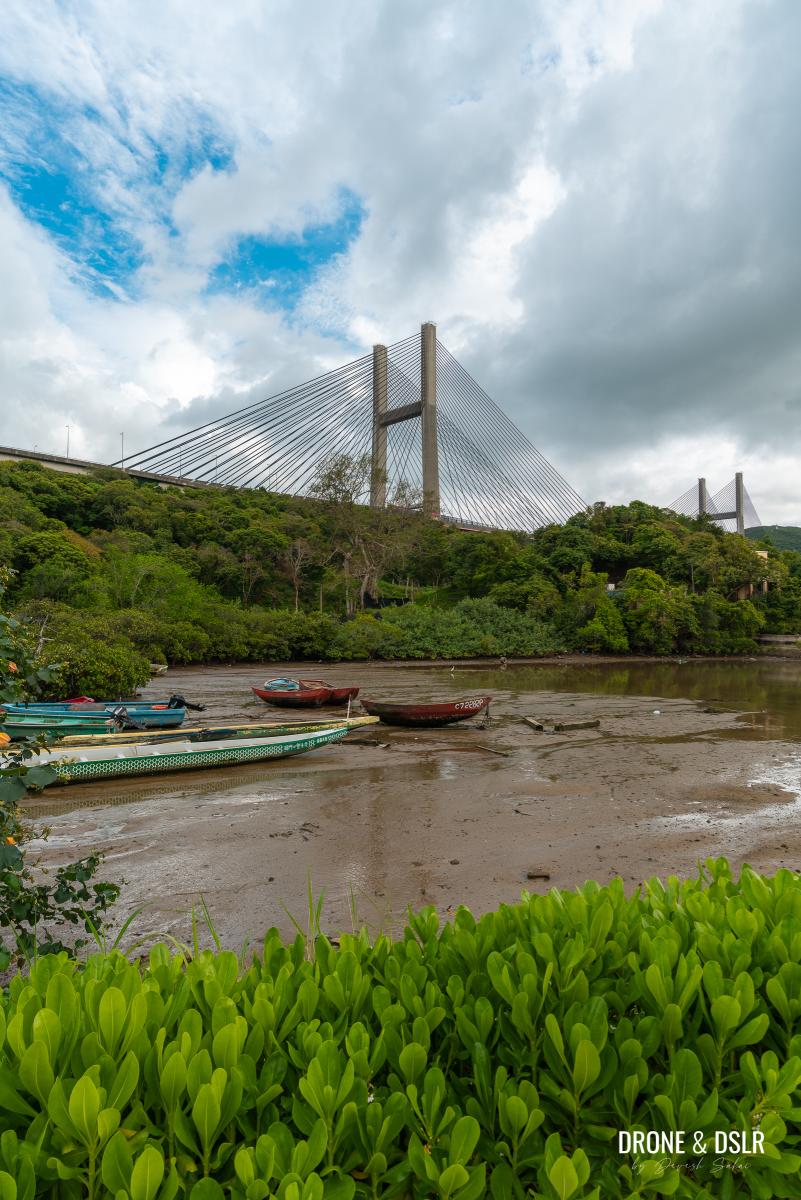
I first encountered these colourful, lopsided creatures years ago at Nam Sang Wai, and they fascinated me.
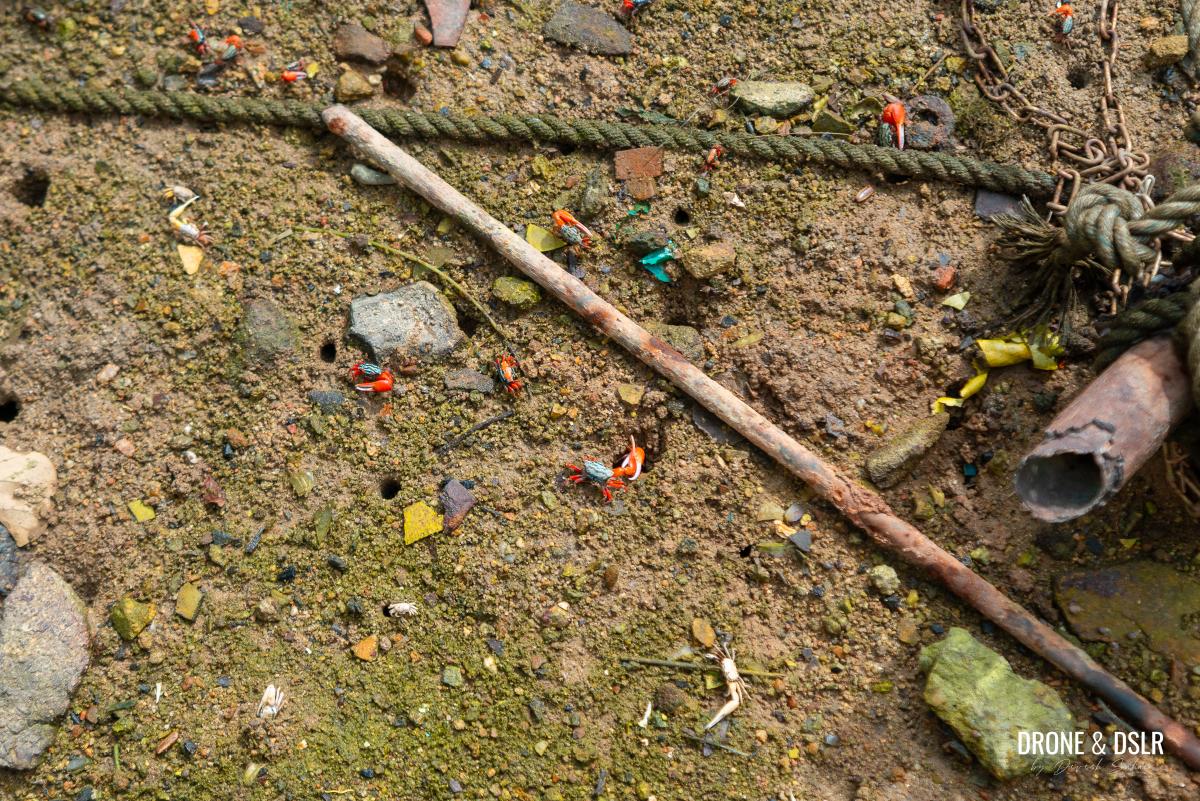
Look at these amazing fiddler crabs!
Have a careful look at the marshy area from above, and you’ll likely spot dozens of fiddler crabs scurrying about.
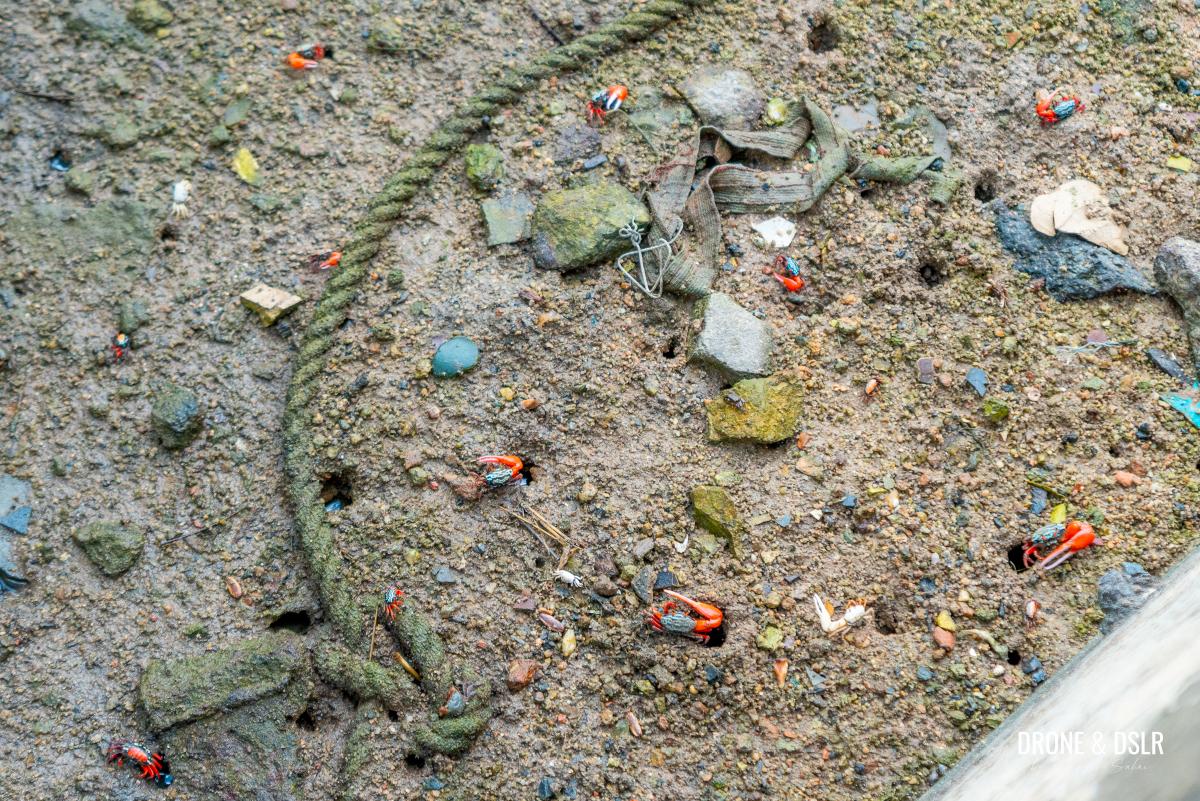
Fiddler crabs at the mangrove in Ma Wan
Experience Camping Adventures in Ma Wan
Perched atop Ma Wan 1868, Camp Site at Island Hideout offers visitors a chance to camp out on Ma Wan.
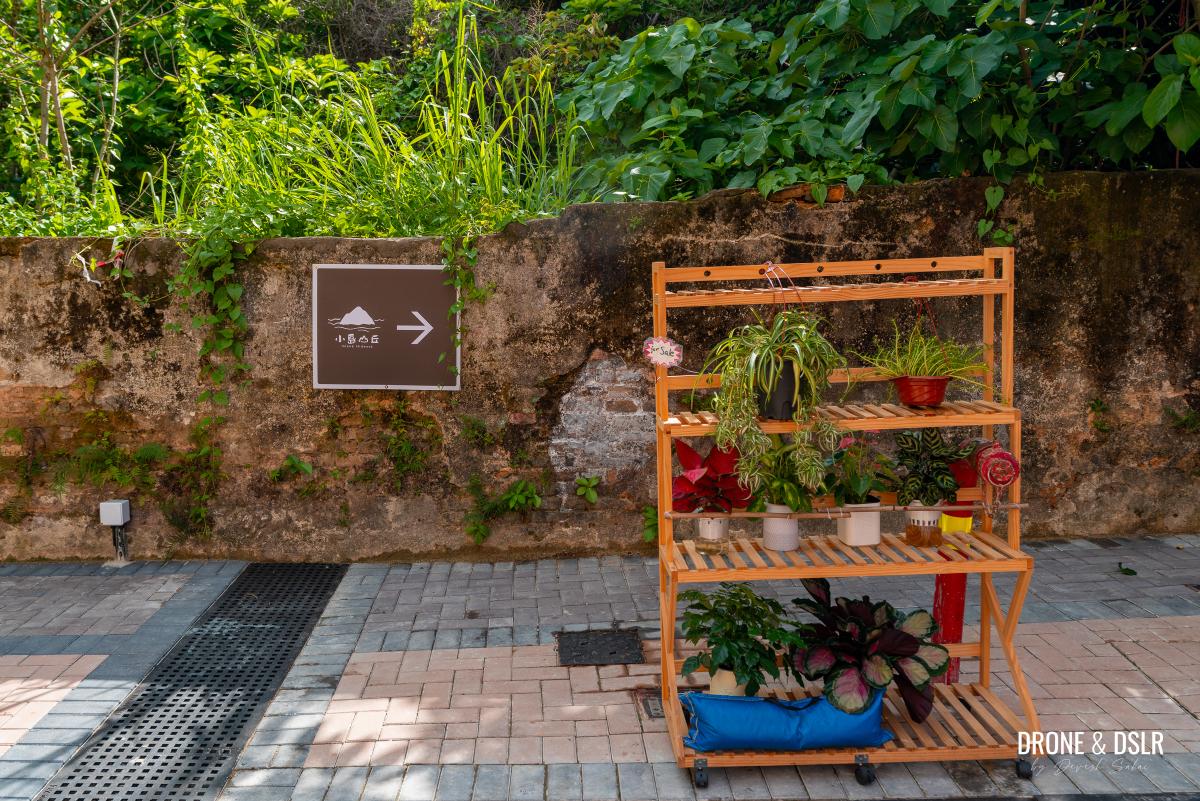
Follow the signs for Island Hideout’s campsite on Ma Wan
The site features fully equipped tents, from where campers can enjoy views of fishing rafts along Ma Wan’s coast and take in the historic charm of the former fishing village.
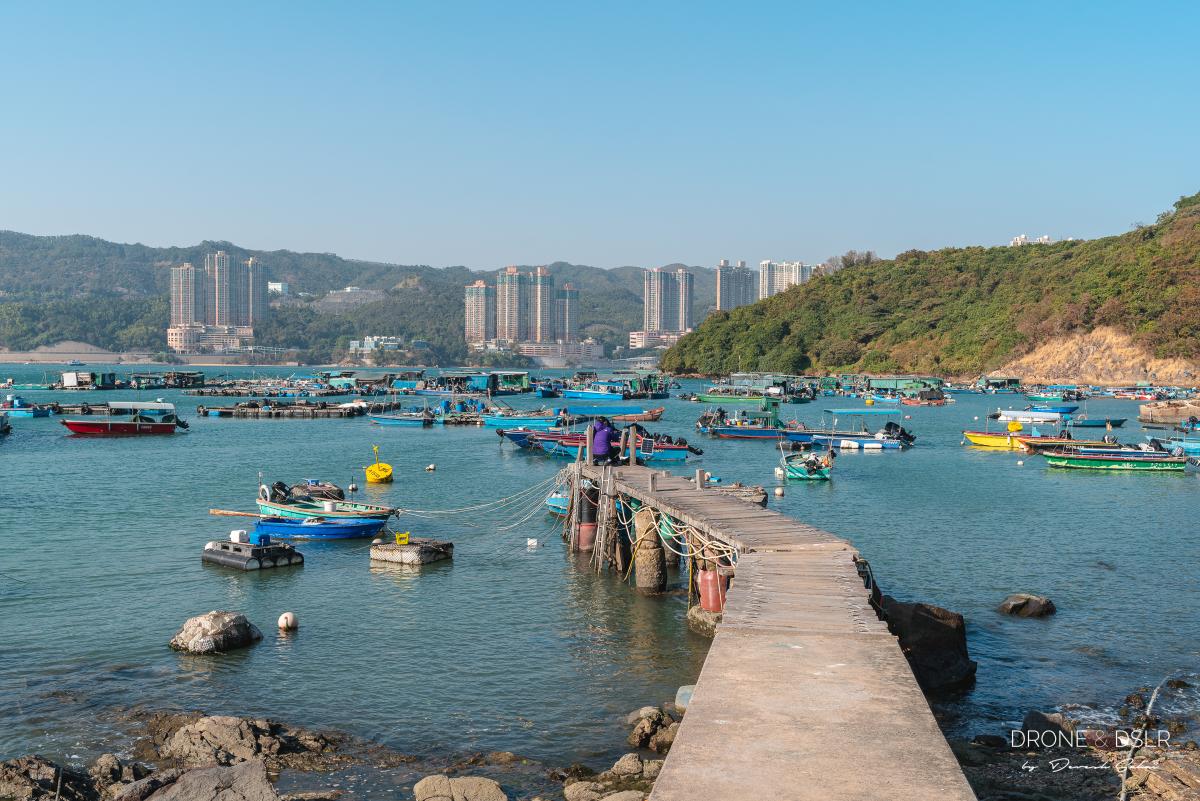
The floating fishing village on one side of Ma Wan
Stop by the Solar Tower (outside Ma Wan 1868)
Located close to Nature Garden, the Solar Tower is dedicated to solar observation. Its highlight is a 350 mm diameter vacuum solar telescope, the largest professional solar telescope in Southeast Asia that is accessible to the public.
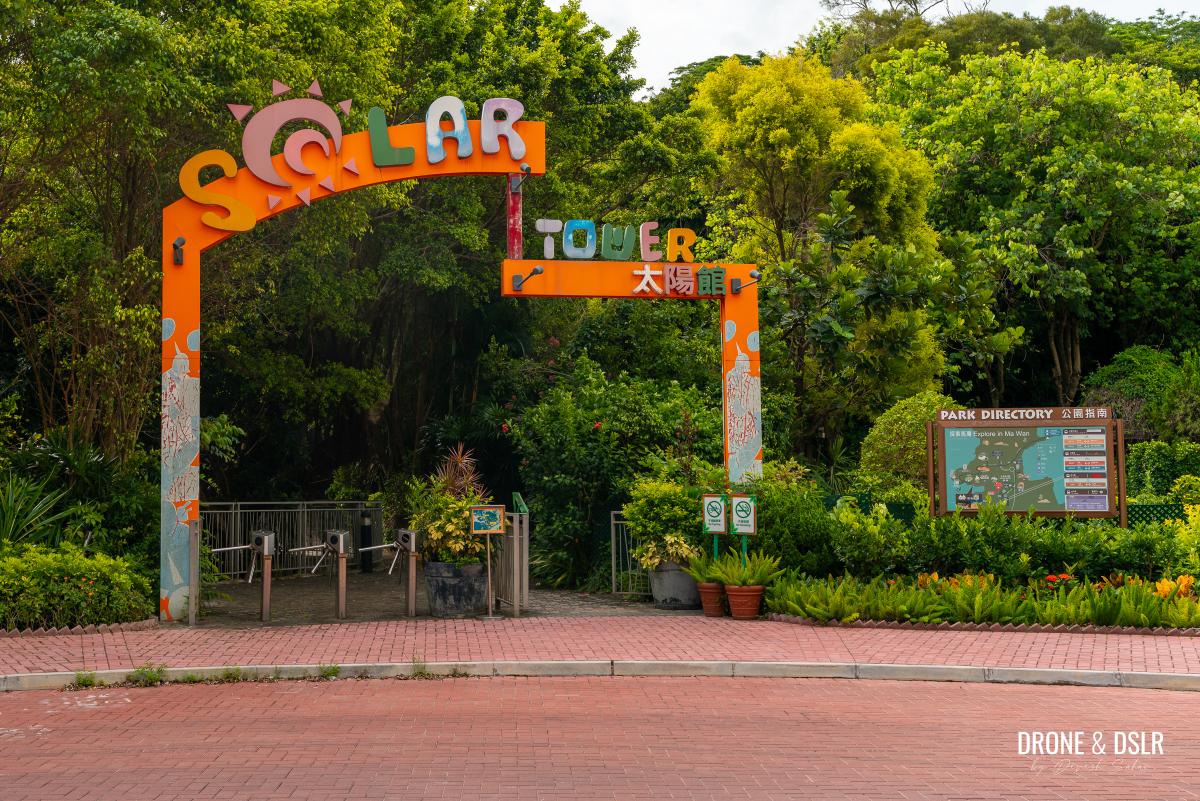
The entrance to the Solar Tower
Using telescope projections, visitors can observe the Sun’s surface activity in real time. The tower also hosts various solar and astronomical exhibits, providing an opportunity to learn about the solar system, and spread awareness.
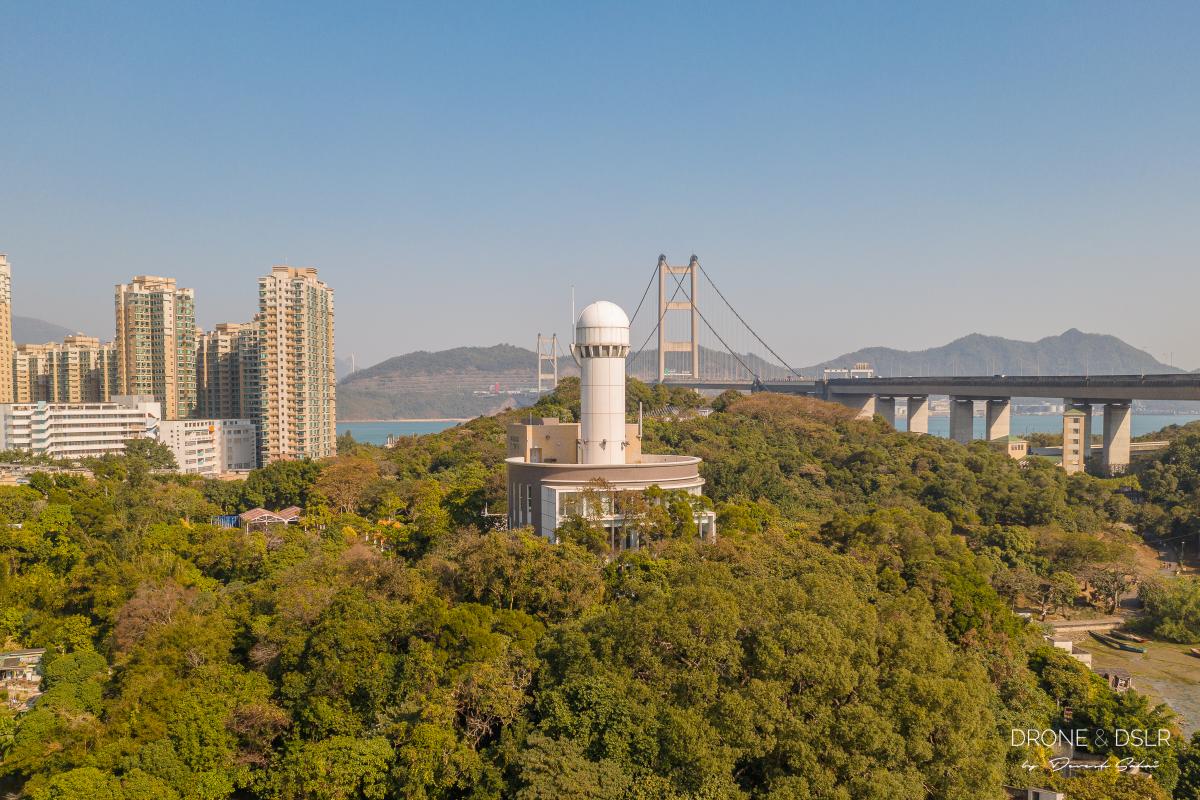
The Solar Tower, Ma Wan
There is also a pretty nice staycation spot nearby called “Solar Villas”. I’m not entirely sure if it’s connected with the Solar Tower, but it’s a worthy staycation option in Hong Kong.
Visit the Noah’s Ark Theme Park (outside Ma Wan 1868)
Noah’s Ark is one of the most prominent tourist attraction’s attractions on Ma Wan.
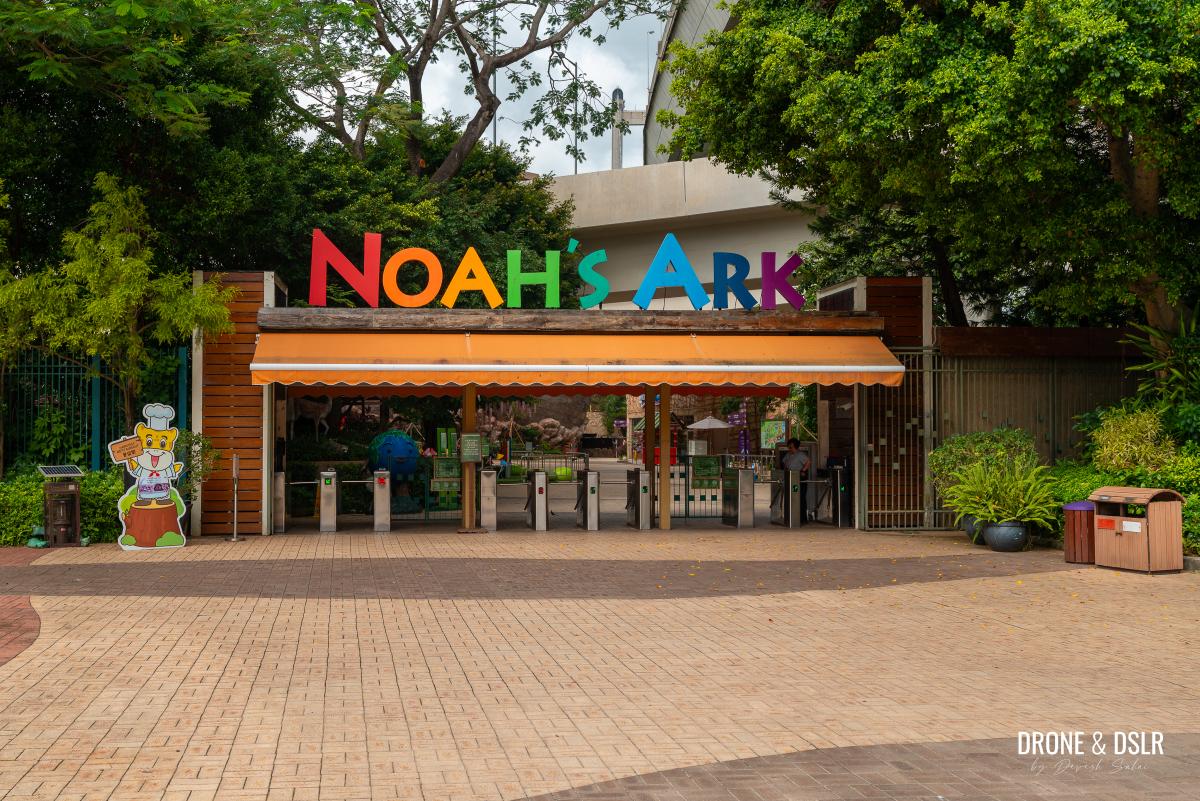
Entrance to Noah’s Ark
And it’s been around longer than Ma Wan 1868.
It is an evangelical Christian theme park, with a full-sized replica of the legendary ship. The theme park features live animals, a 180 degree cinema, gardens, and hands on educational and entertaining activities.
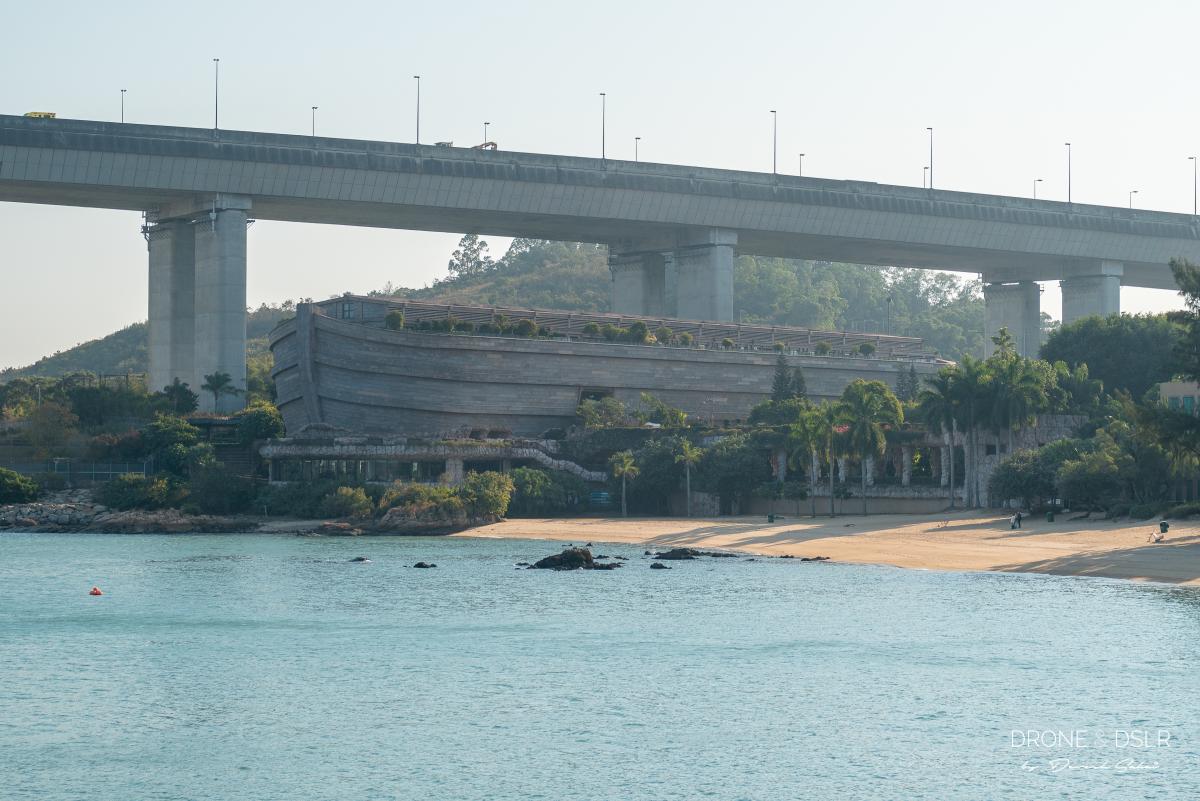
Noah’s Ark on Park Island
There’s also a hotel on the premises (another staycation option).
For more up-to-date information, and a full list of things to see or do, visit the official Ma Wan 1868 website.
Photos of the Former Ma Wan Ghost Town
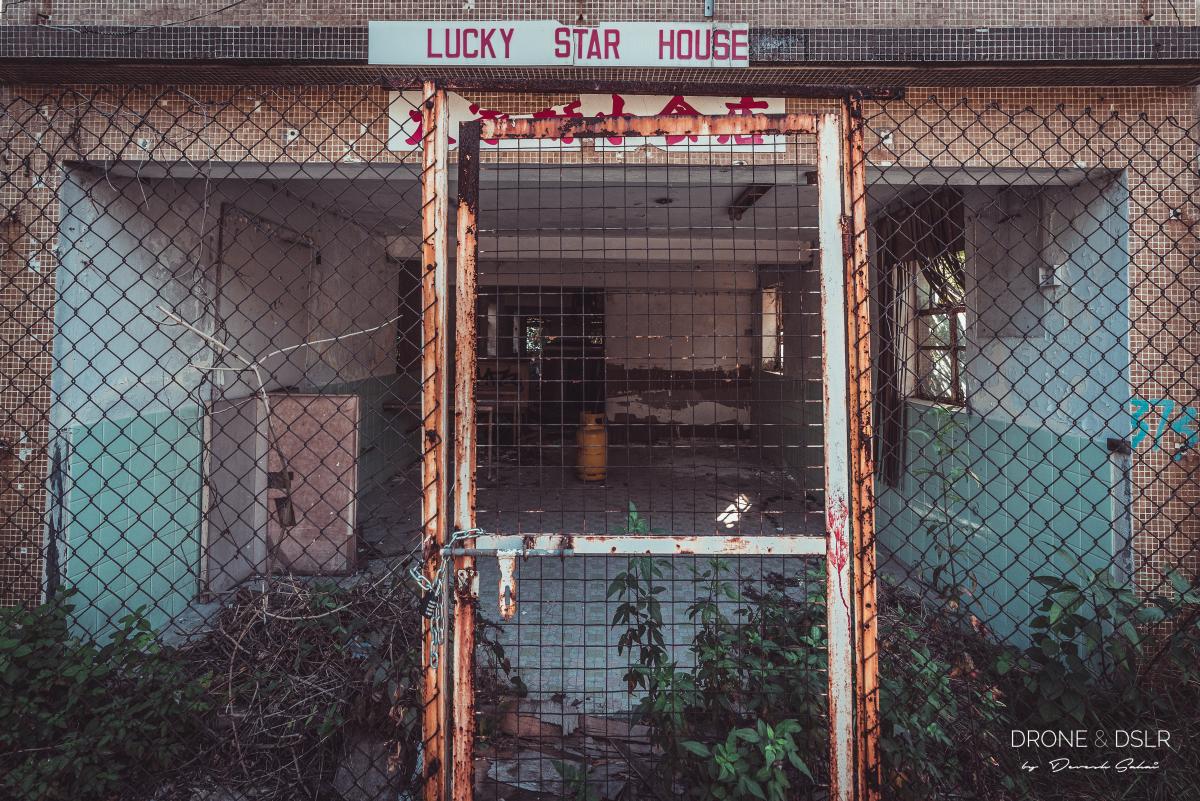
For those who never got to visit Ma Wan’s abandoned village, I’ve saved these photos to give you a glimpse of its eerie charm. Here are some of my favourite shots from the ghost town.
-
- Wonder what Lucky Star House was in its prime
-
- Ma Wan’s abandoned homes

-
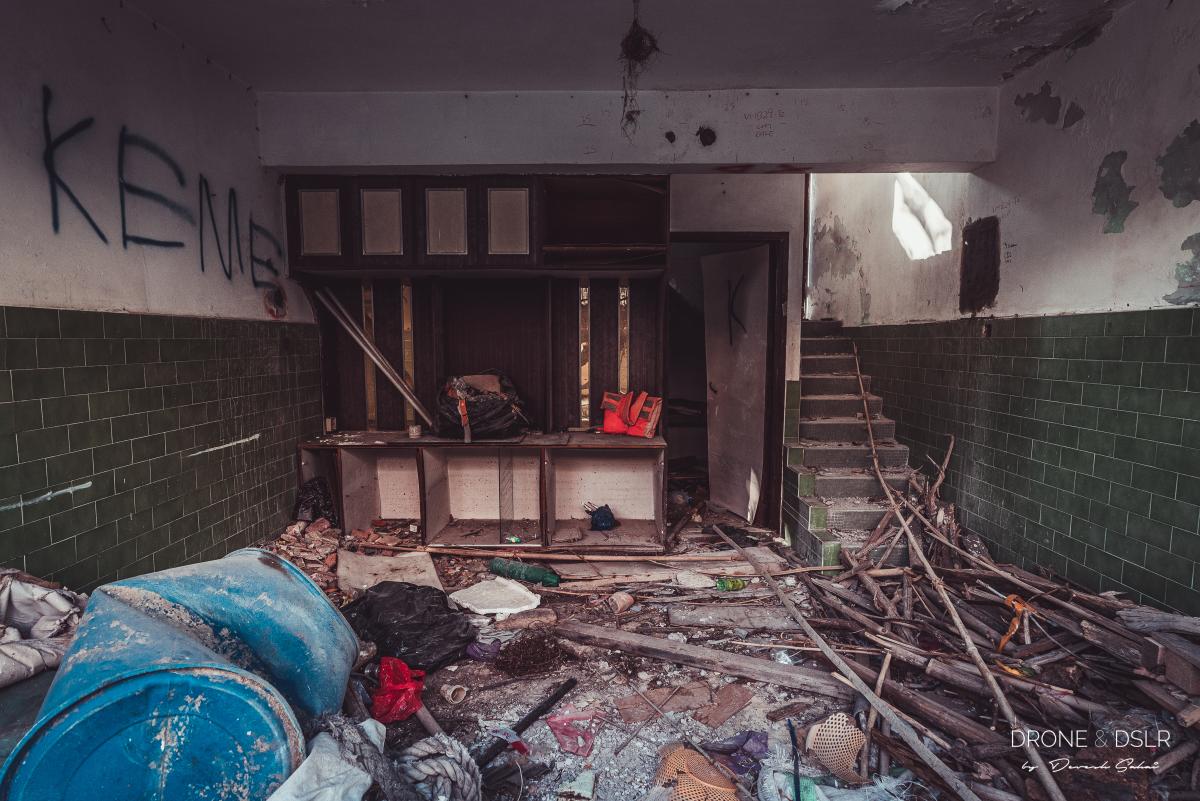
- Some houses can be accessed
-
- Most houses are now covered in graffiti

-
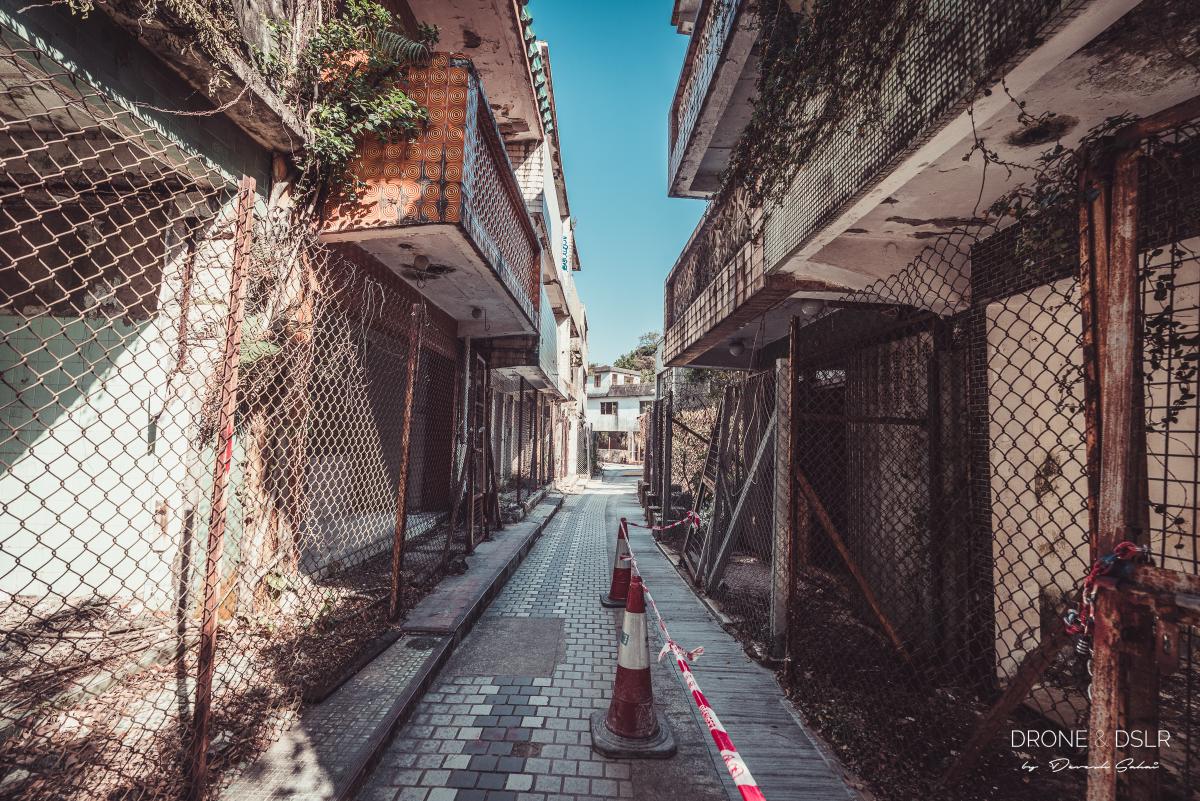
- The empty streets of the Ma Wan village
-
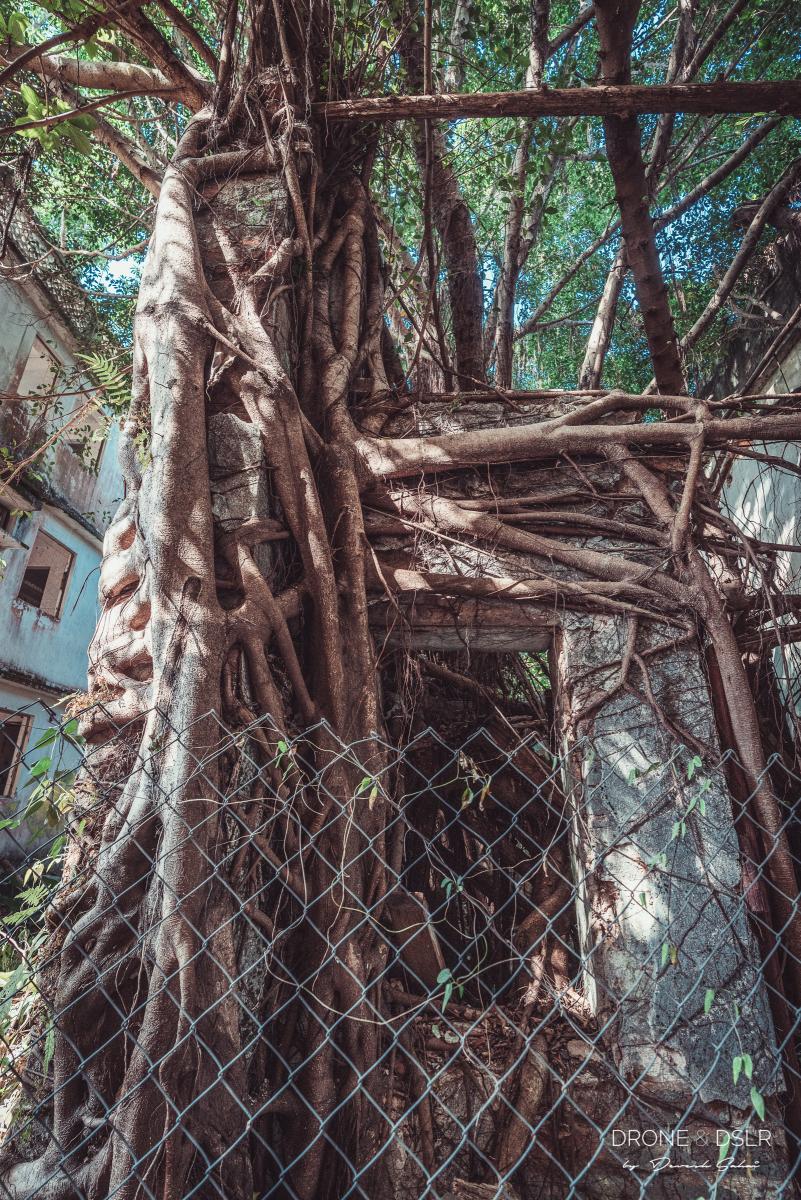
- Nature has taken over some of these houses

-
- The house is held together by this tree
-
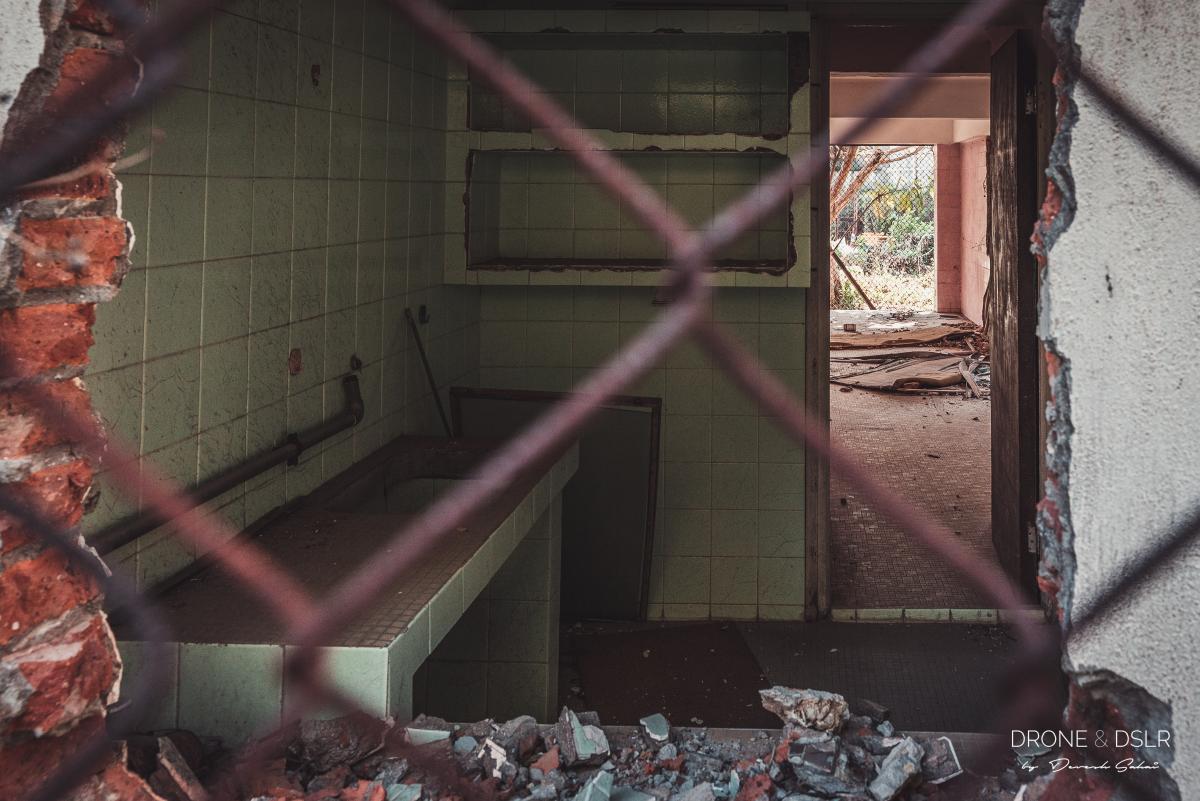
- Slowly crumbling away
-
- Abandoned playground

-
- A fishing village overrun by nature

-
- Eerie vibes

-
- Nature lives here now
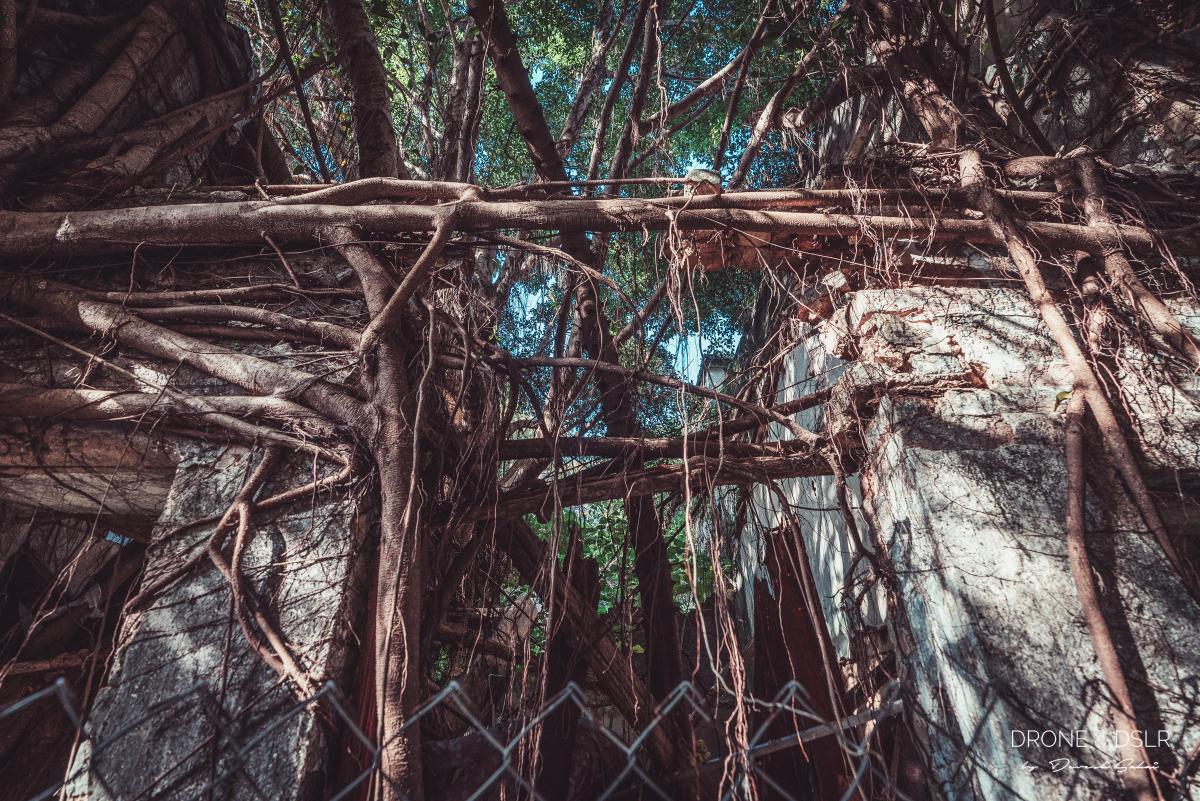
-
- Such a lovely home, abandoned in Ma Wan

-
- Desolate homes in Ma Wan

And here’s a quick video of what the ghost town looked like.
Subscribe to my YouTube channelAnd finally, if you’re looking for such abandoned ghost town vibes, I recommend visiting Yim Tin Tsai in Sai Kung.
The Ever Changing Face of Ma Wan
The tiny island of Ma Wan is a representation of how quickly things change in Hong Kong.

From here you can see the abandoned village in the foreground, and the new construction in the background
As I walked past rows of vibrant new houses, my eye caught a lone abandoned home nestled beside the mangroves – the last remnant of the old village. It stood as a silent witness to a fading era, one that might soon disappear completely.
-
- The last of the ghost town in Ma Wan
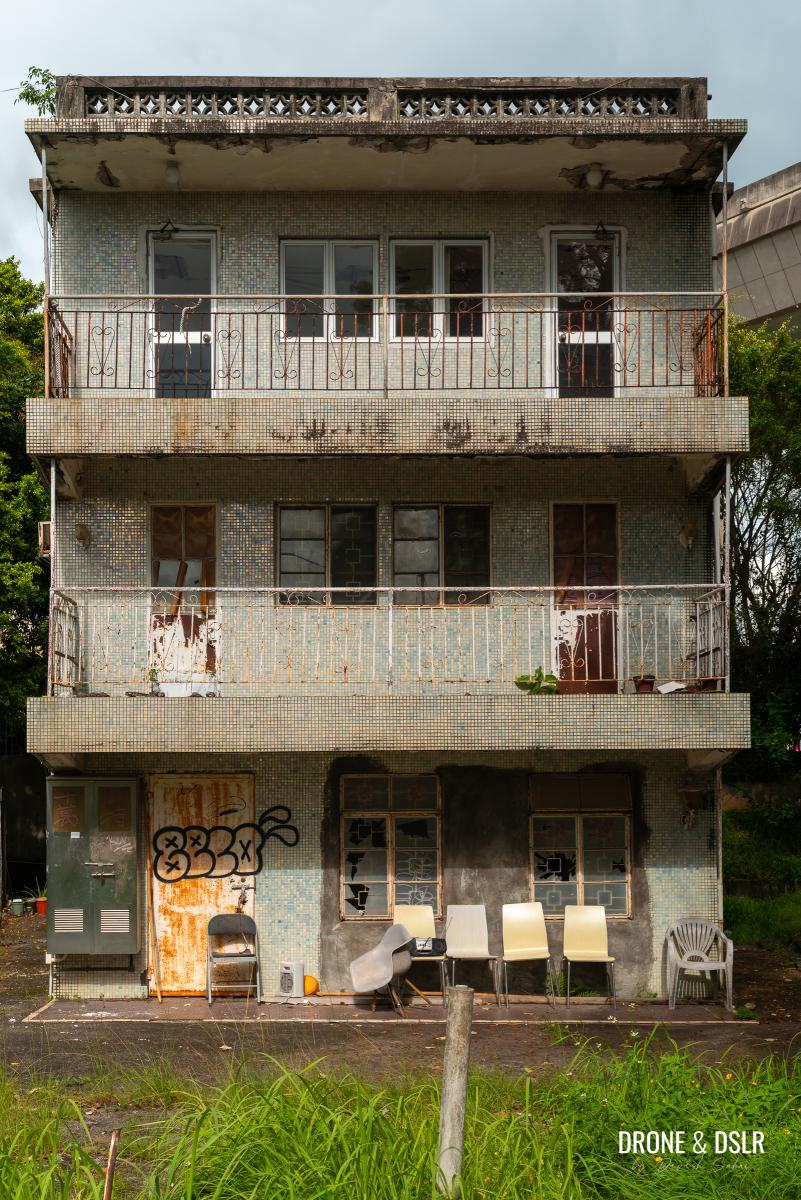
-
- I just had to take this picture of the last house, which looks like something taken out of a time capsule
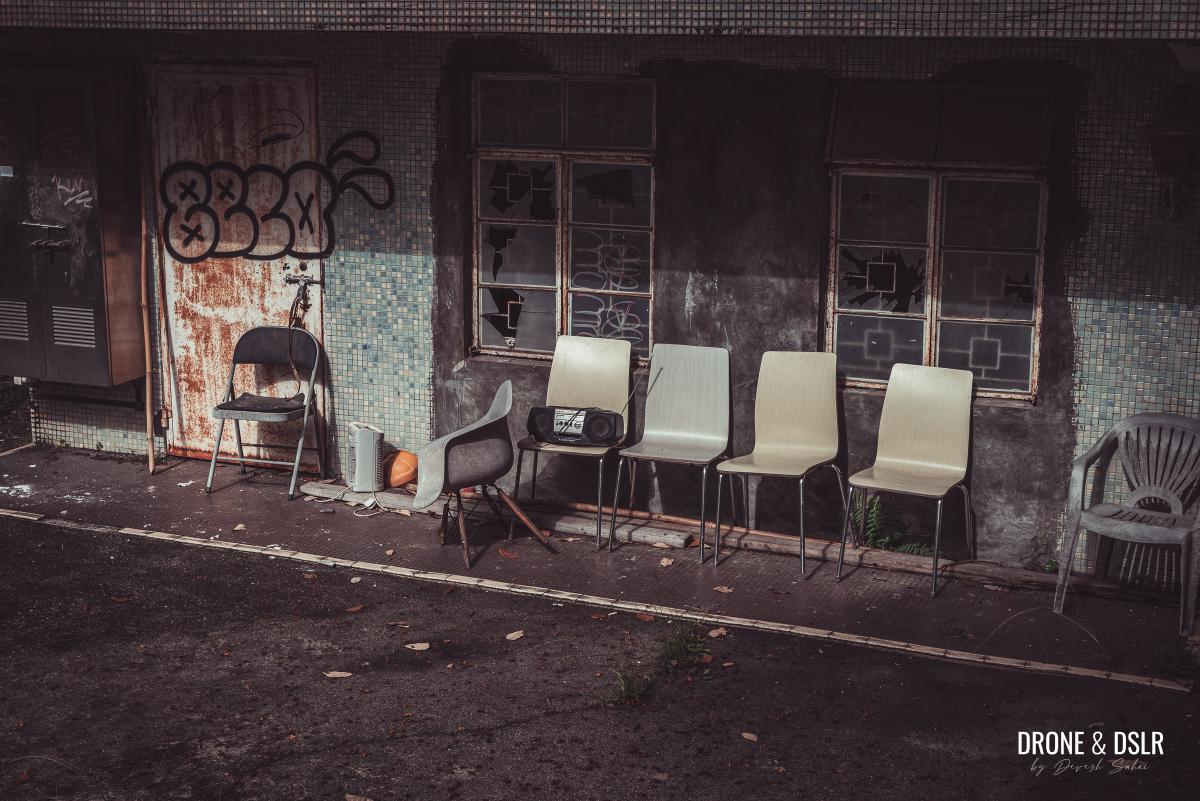
I paused to take these photos, uncertain whether the structure would still be here during my next visit, which, would likely be for hiking the Tai Leng Tau Trail. The contrast between Ma Wan’s past and present couldn’t have been more striking.
You might also like



3 Comments
I can confirm just how restricted access to the village is now (26 Dec 2021).
There are high and solidly-built construction site gates at all inbound paths and roads to the village, and high fences have been built to obscure close views of the works. Even the old Ma Wan public pier appears to have been closed off.
Regardless, I very much appreciate your description of this trail along with the others you’ve done in HK. Inspiring!
Thank you for the kind words and the update on Ma Wan, Richard! We appreciate it.
I lived on Ma Wan from July 1976 until May of 1977. My parents operated a camp above the village that had an English immersion program…