




The Eight Immortals Hike in Hong Kong’s Pat Sin Leng Country Park is legendary, not only for its physical challenge and scenery, but also for its association to Chinese mythology.
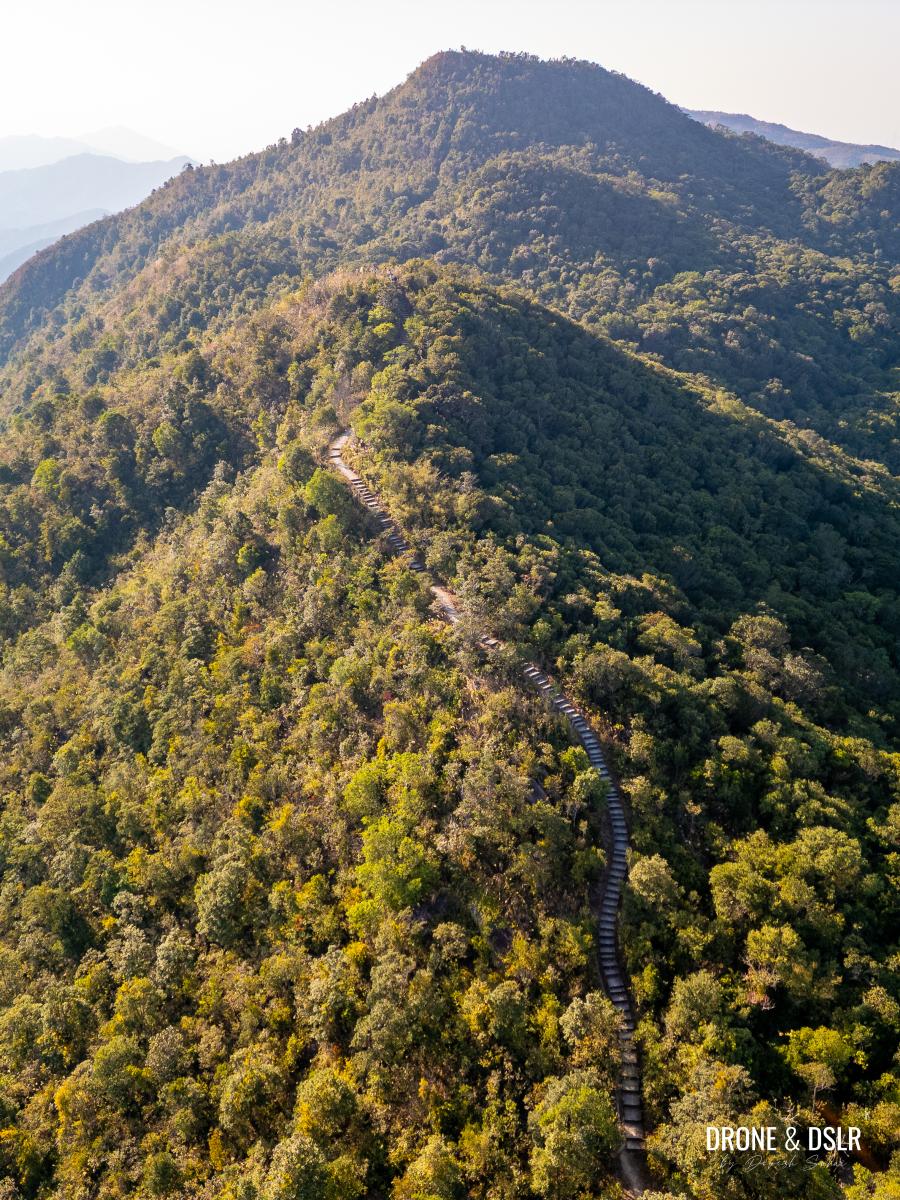
An aerial views of the Eight Immortals Hike
Popularly known as Pat Sin Leng, which translates to “Ridge of the Eight Immortals”, each of the eight peaks along the range is named after a specific deity. While scaling eight peaks in quick succession is no small feat, the rewards are well worth the effort.
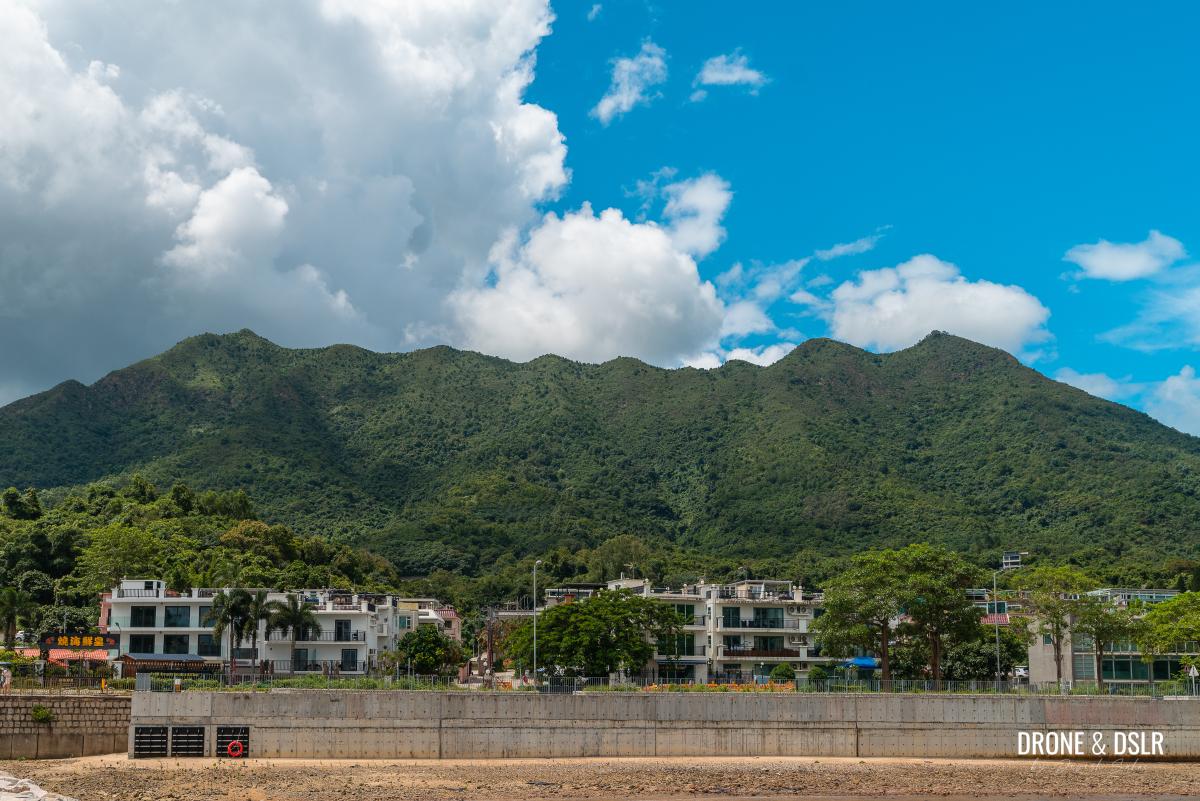
The 8 Immortals towering over Tai Mei Tuk
Located on Section 9 of the Wilson Trail between Tai Mei Tuk and Bride’s Pool, the ridge offers breathtaking panoramas of Tolo Harbour and Plover Cove Reservoir to one side, and the country park leading toward Shenzhen on the other.
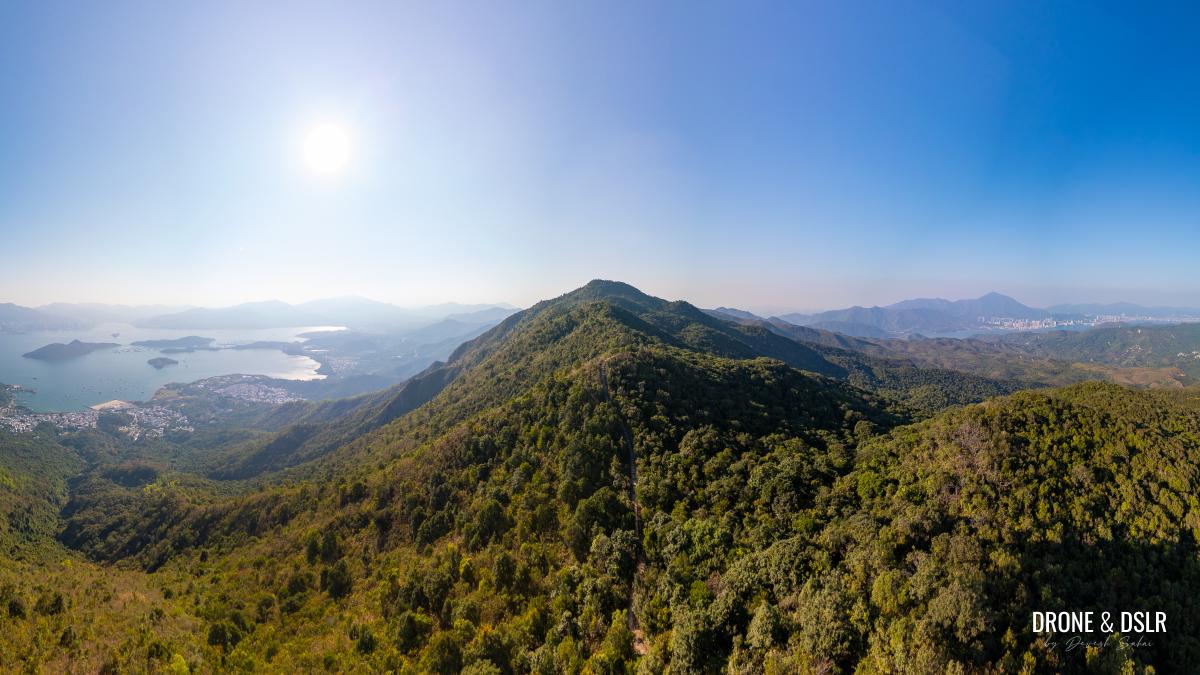
Pat Sin Leng, Pat Sin Leng Country Park, Hong Kong
If you’re ready to conquer this legendary range, this guide has everything you need to know.
About The Eight Immortals Hike (Pat Sin Leng)
There are several ways to approach the Eight Immortals (or 8 Immortals). While many hikers tackle the range as part of the full Pat Sin Leng Trail (from Hok Tau Reservoir to Tai Mei Tuk), the most straightforward option is to start and end in Tai Mei Tuk. This is because Wilson Trail Section 9 offers very few exit points; while exiting via unmarked trails is possible, it can be quite difficult.
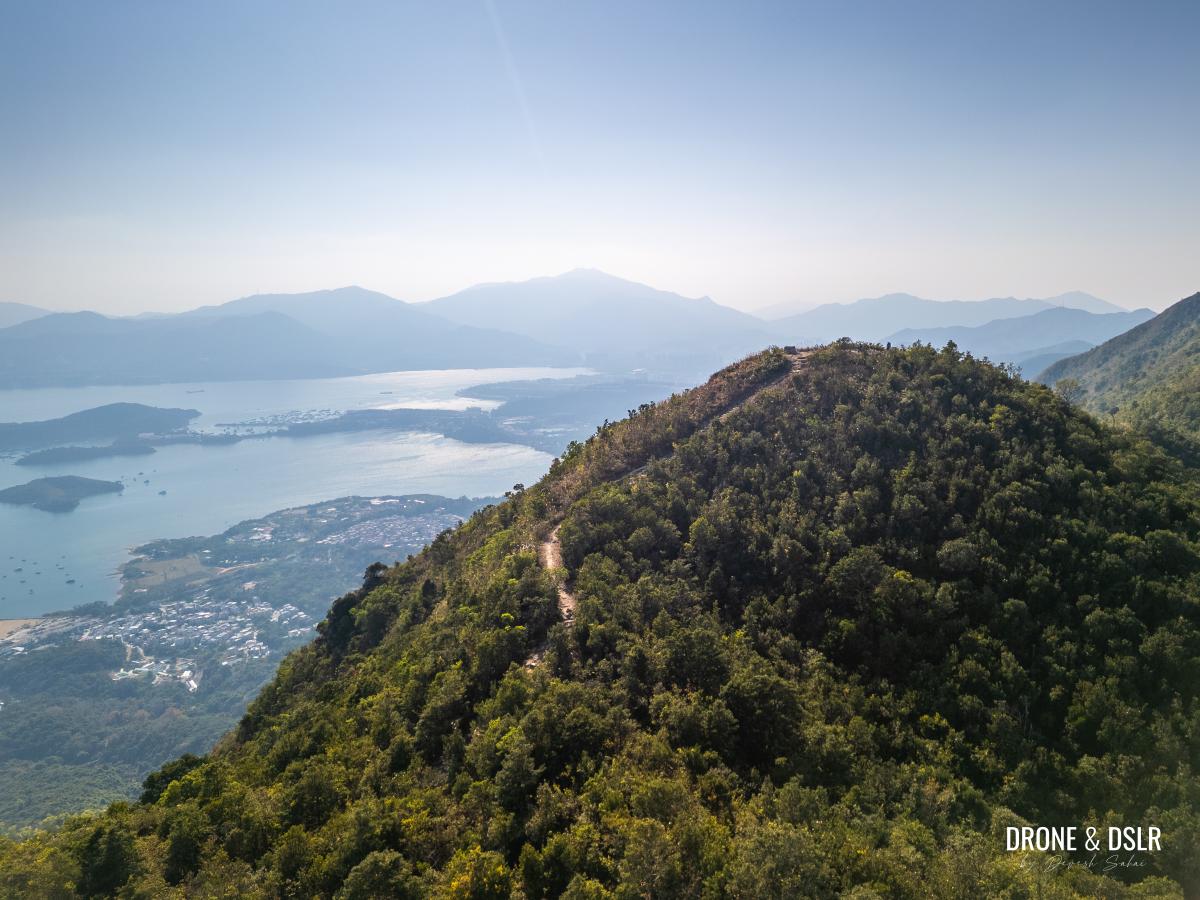
A different view of Sheung Tsz Fung
To stay safe, your two best options are:
- Point-to-Point: Hok Tau Reservoir to Tai Mei Tuk (11.8 km).
- Out-and-Back: Starting and ending in Tai Mei Tuk (~7.5 km, if you follow the route in this guide).
The latter offers more flexibility with your time, though it does require crossing the peaks twice (effectively making it the “16 Immortals” hike!).
This guide will focus on the second option, following the Pat Sin Leng Nature Trail to Wilson Trail Section 10, then Section 9, and finally returning.
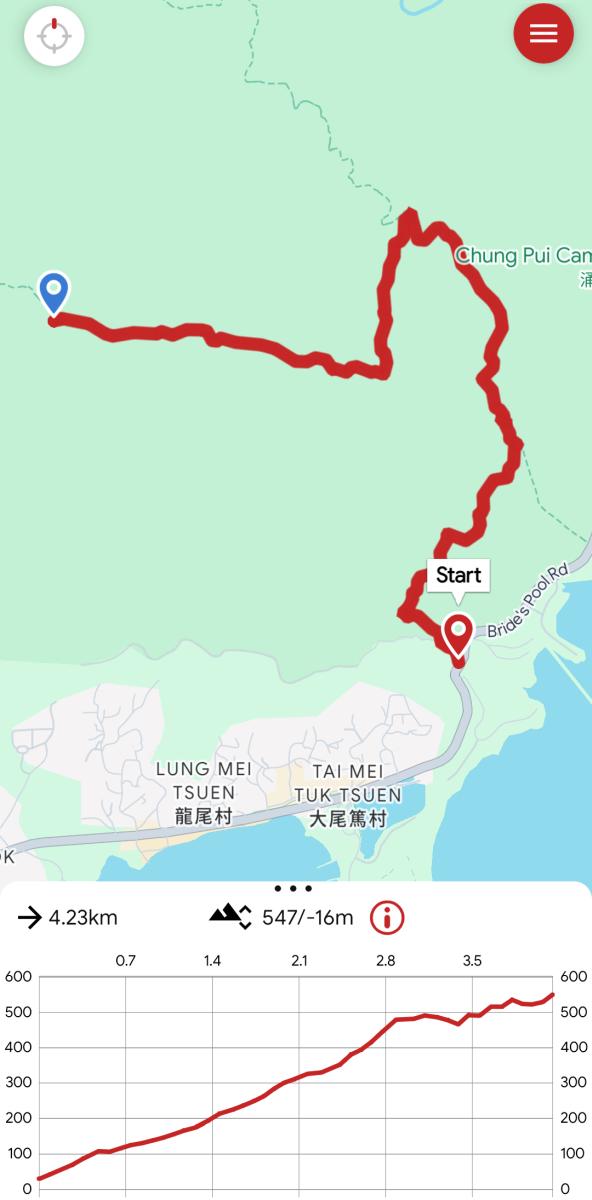
The Eight Immortals Hike (Pat Sin Leng) Trail Map AFCD Plover Cove Country Park Tai Mei Tuk Management Centre to Shun Yeung Fung
But remember, whichever route you take, you will be scaling at least eight peaks.
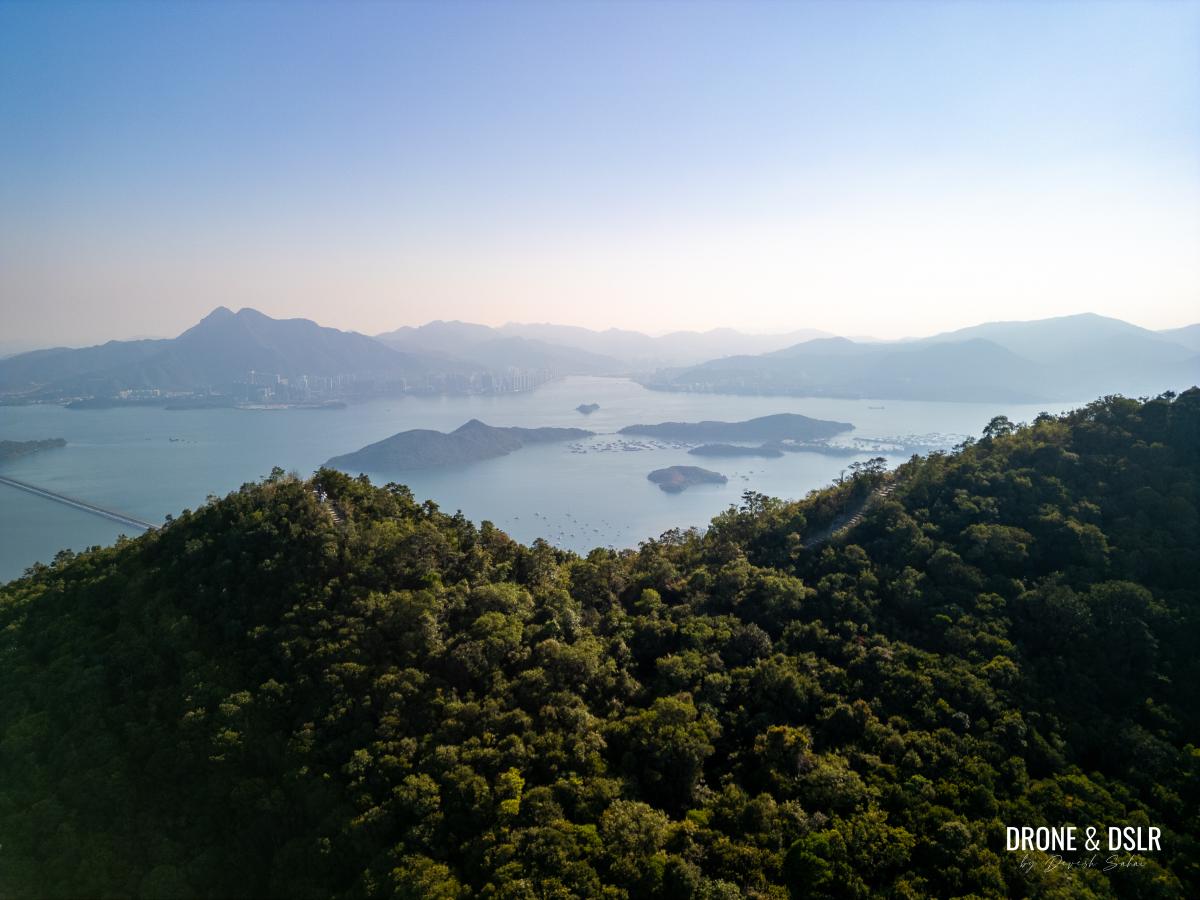
There’s a gap between each Immortal, making it feel like multiple mini-hikes
About The Eight Immortals in Chinese Mythology
According to Chinese mythology, the Eight Immortals, also known as the Ba Xian (八仙), are a group of mythical heroes from ancient times who fight for righteousness and destroy evil. These characters are a blend of historical, legendary, and religious figures, each with their own unique background.
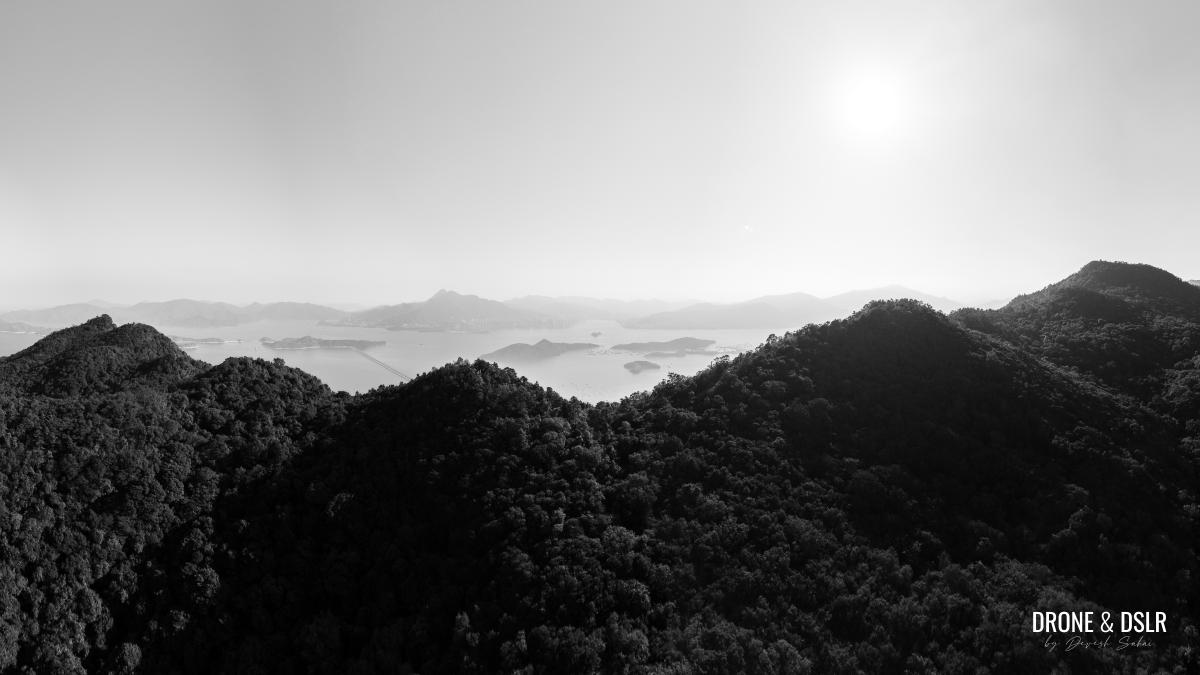
All the Eight Immortals (Pat Sin Leng)
They are thought to have been born during the Tang or Song dynasties and are highly regarded by Taoists, and are a common part of secular Chinese culture.
They are:
- He Xiangu (何仙姑) — The name He Xiangu translates as “the Female Celestial Being”, and is the only woman among the Immortals. She is frequently pictured with a lotus flower, which is supposed to promote both mental and physical health.
- Cao Guojiu (曹國舅) — The name of this immortal translates directly as “Imperial Brother-in-law Cao” and is considered the brother of a 10th-century Song Empress, the uncle of the Song Dynasty’s Emperor, and the son of a military leader.
- Li Tieguai (李鐵拐) — The name Li Tieguai translates as “Iron-Crutch Li”, is rather ill-tempered but is also a benevolent patron to the sick and needy. He is usually depicted carrying a gourd slung over his shoulder, from which he dispenses medicine to heal the sick.
- Lan Caihe (藍采和) — Originally pictured as female, later becoming ambiguous, and is considered the patron of florists and gardeners. He/she often carries a bamboo flower basket and/or a pair of bamboo clappers. He/she is a decided eccentric, serving to symbolize a carefree life devoid of the concerns and responsibilities of ordinary life.
- Lü Dongbin (呂洞賓) — He is a scholar and poet considered to be the leader of the Eight Immortals. He is perhaps the best known of all the Immortals. He is an actual historical figure, a scholar, and poet living during the Tang Dynasty. Lu Dongbin’s symbol is a magic sword that dispels evil spirits and provides him with invisibility. He is regarded as a patron deity for highly literate people; some also see him as a champion of the medical profession.
- Han Xiangzi (韓湘子) — Known as a flute artist, he is usually thought to be an historical person living during the Tang Dynasty and related to a Confucian scholar.
- Zhang Guolao (張果老) — He is a fangshi symbol of longevity and is one of the Immortals known with fair certainty to be an actual historical figure. Zhang Guo Lao lived from approximately the middle of the 7th century into the 8th century, practicing as a Taoist hermit in the mountains of east-central China.
- Zhongli Quan (鍾離權) — He is associated with death and the power to create silver and gold, often depicted holding a fan. Likely a purely mythological figure, Zhongli Quan is usually shown with his chest and stomach exposed, holding a fan with which he can resurrect the dead and transform stones into precious metals. A pleasant character, he is typically shown drinking wine.
Starting Point
There are two ways to access the Pat Sin Leng Nature Trail from Tai Mei Tuk.
- The first is near the Plover Cove Country Park Management Centre on Ting Kok Road (the Ting Kok Road entrance).
- The second is near the Shuen Wan Country Park bus stop on Bride’s Pool Road (the Bride’s Pool Road entrance).
If you are arriving by bus, only the Bride’s Pool Road entrance is directly served by GMB 20R and KMB 275R (the latter runs only on Sundays and public holidays). Starting here saves about 500 metres of hiking, but be prepared, the trail begins with a punishing, steep uphill climb!
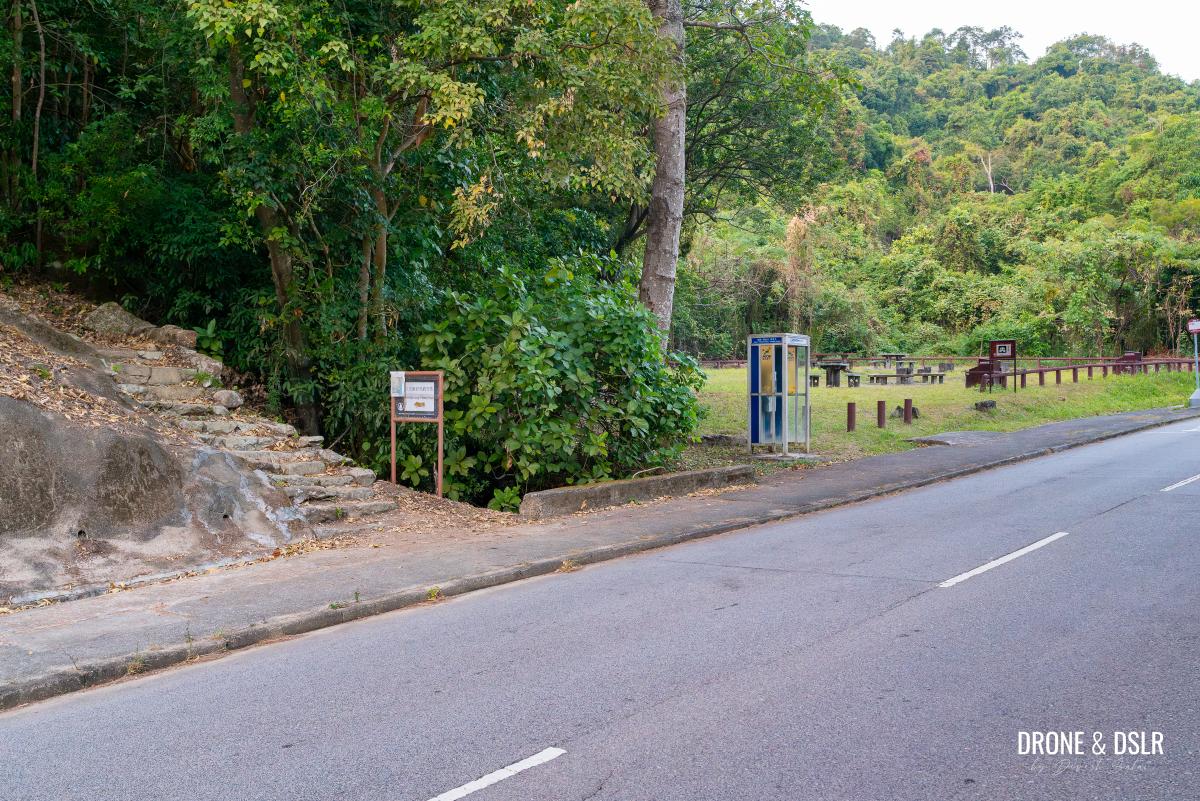
The Bride’s Pool Road Entrance (follow the signs and steps) next to the barbecue site
Alternatively, you can use the Ting Kok Road entrance. While there are no bus stops directly in front of it, it is a manageable 700-metre walk on an incline from the Tai Mei Tuk bus terminus.
We chose the Ting Kok Road entrance after enjoying a leisurely lunch in Tai Mei Tuk.
Walk To The Pat Sin Leng Nature Trail Entrance
Once you arrive at Tai Mei Tuk, head onto Ting Kok Road and walk away from the village toward Bride’s Pool Road.
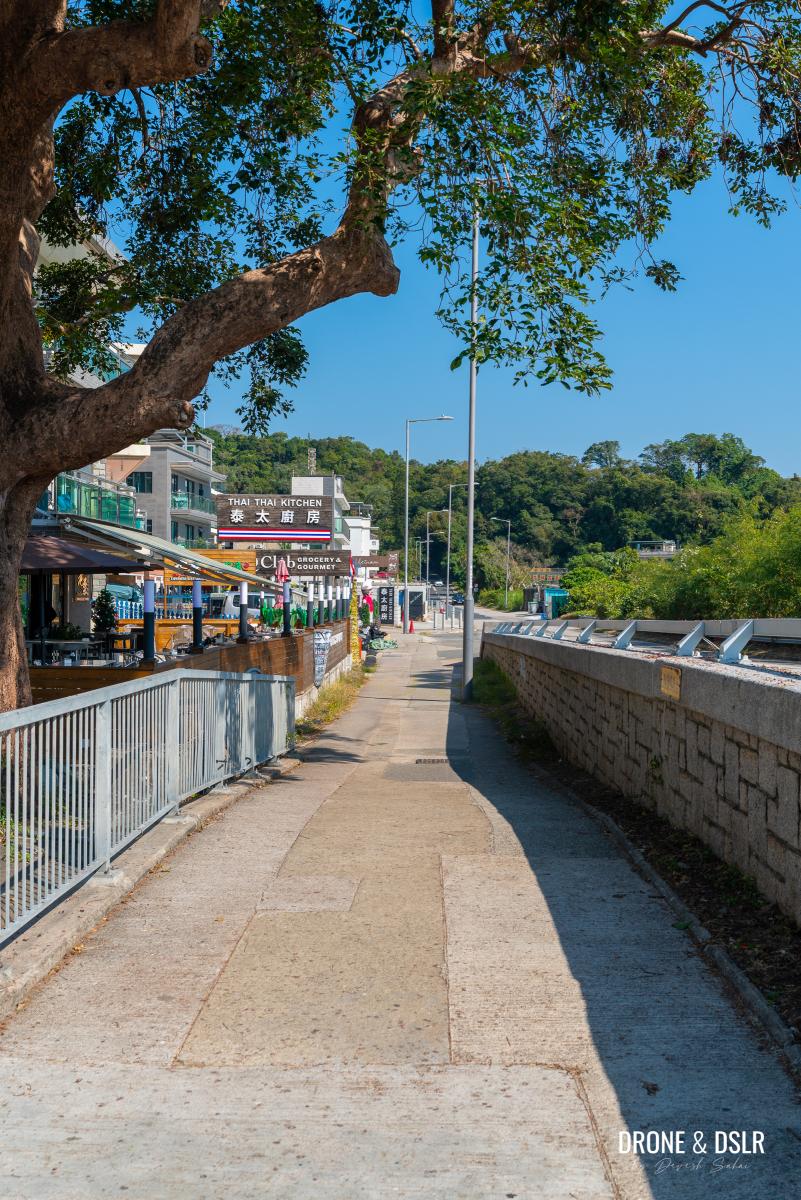
Starting our Eight Immortals Hike from Ting Kok Road in Tai Mei Tuk
The road remains flat next to the village, as it passes the numerous restaurants, cafés, and bakeries. But once you clear the last few houses, the road begins a gentle uphill incline. Please stay to the side of the road and watch for traffic, as this area is accident-prone and popular with cars, buses, and cyclists.
-

- Keep walking on Ting Kok Road
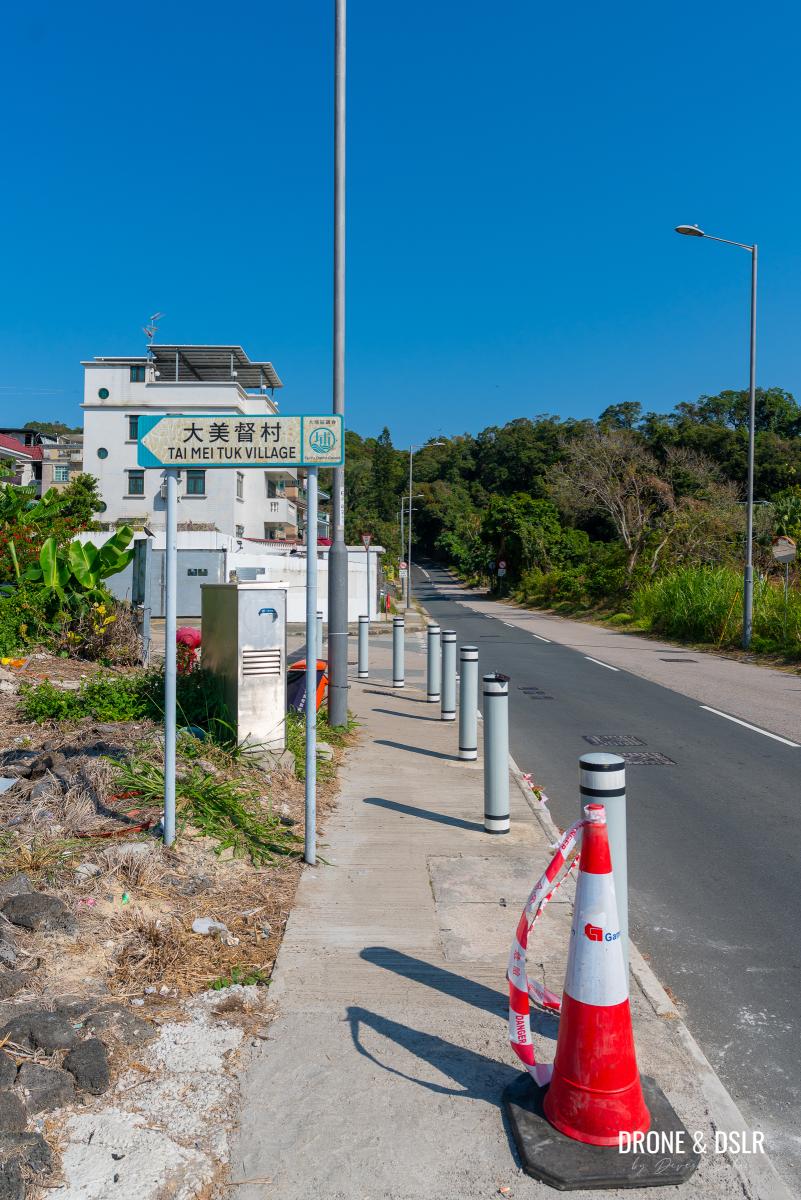
-
- The last houses in Tai Mei Tuk Village, under the shadow of Hsien Ku Fung
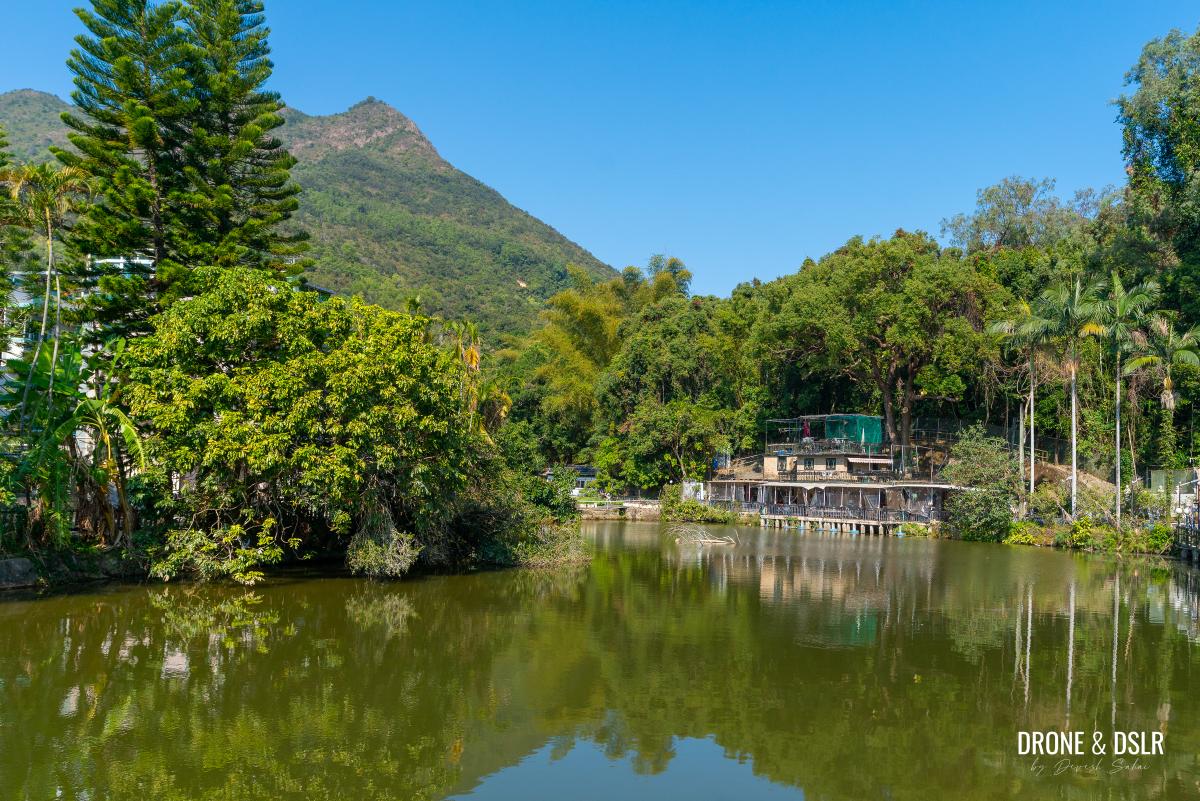
-
- Walk up the incline on Ting Kok Road
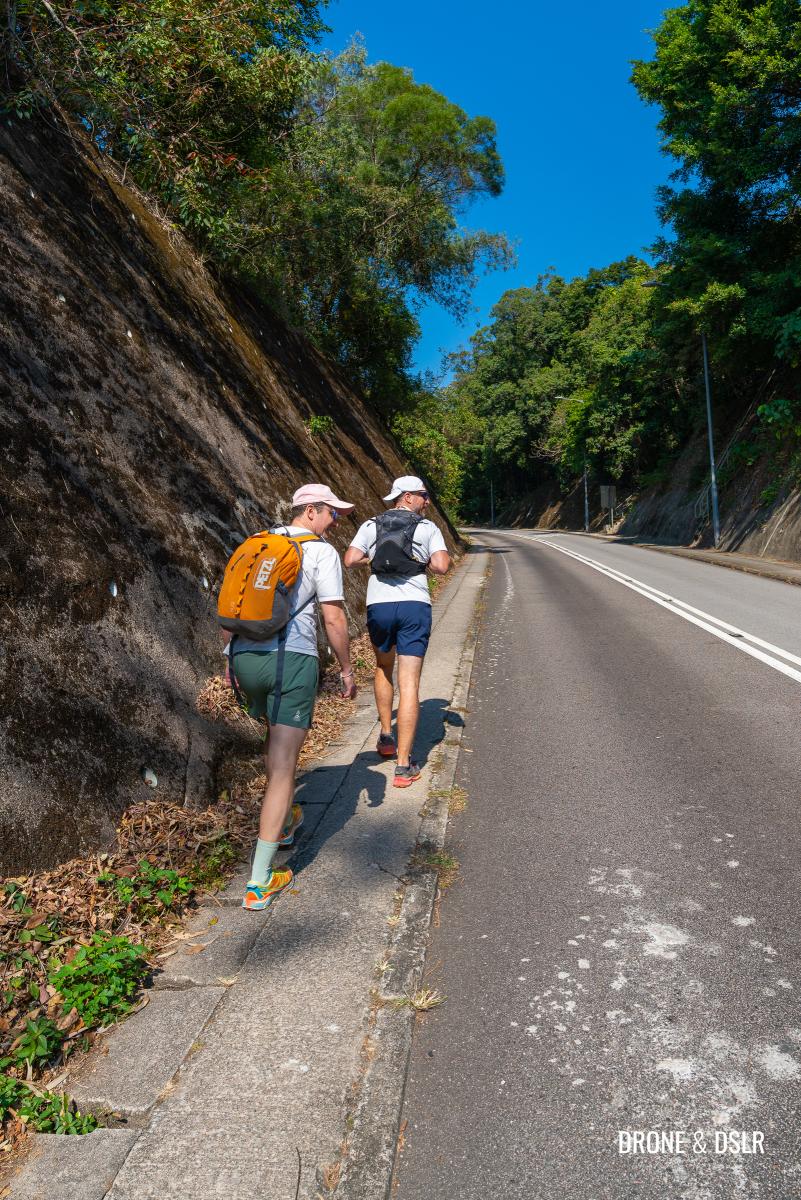
Continue until you reach the AFCD Plover Cove Country Park Tai Mei Tuk Management Centre (quite a mouthful), located where Ting Kok Road transitions into Bride’s Pool Road.
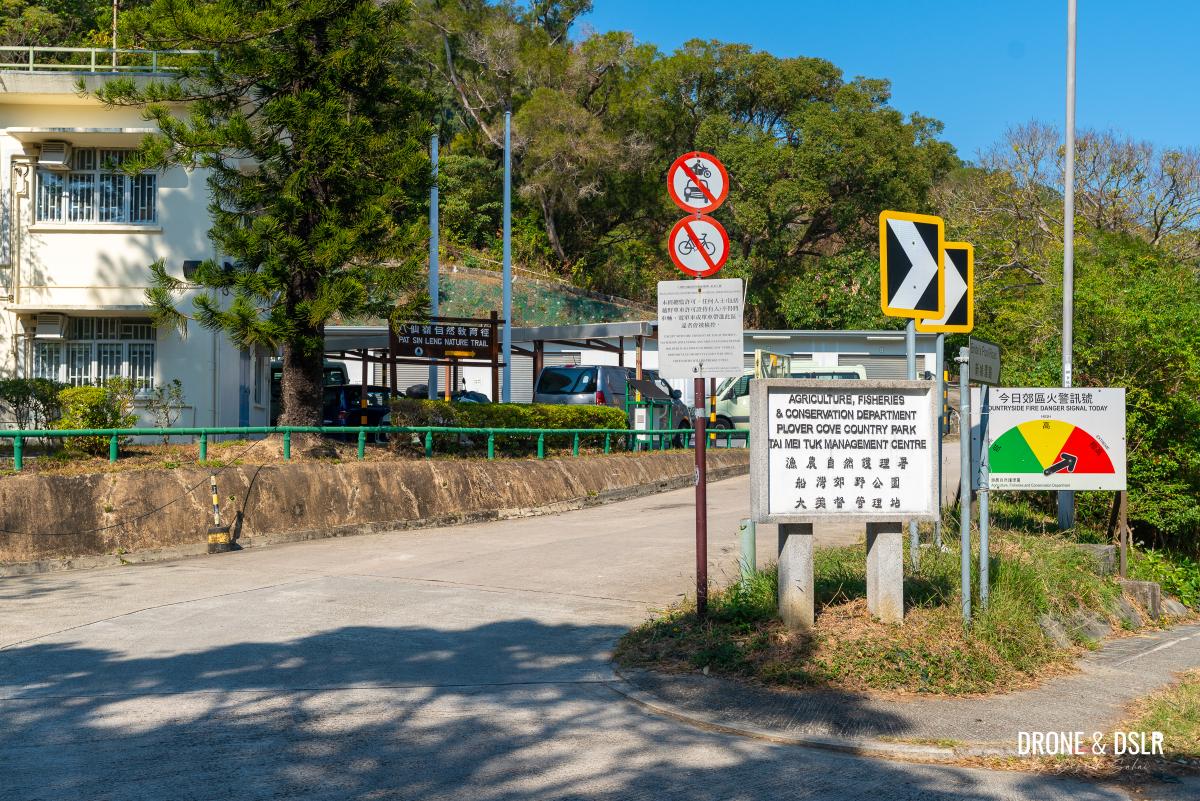
When you arrive at the AFCD Plover Cove Country Park Tai Mei Tuk Management Centre building, get onto the slip road
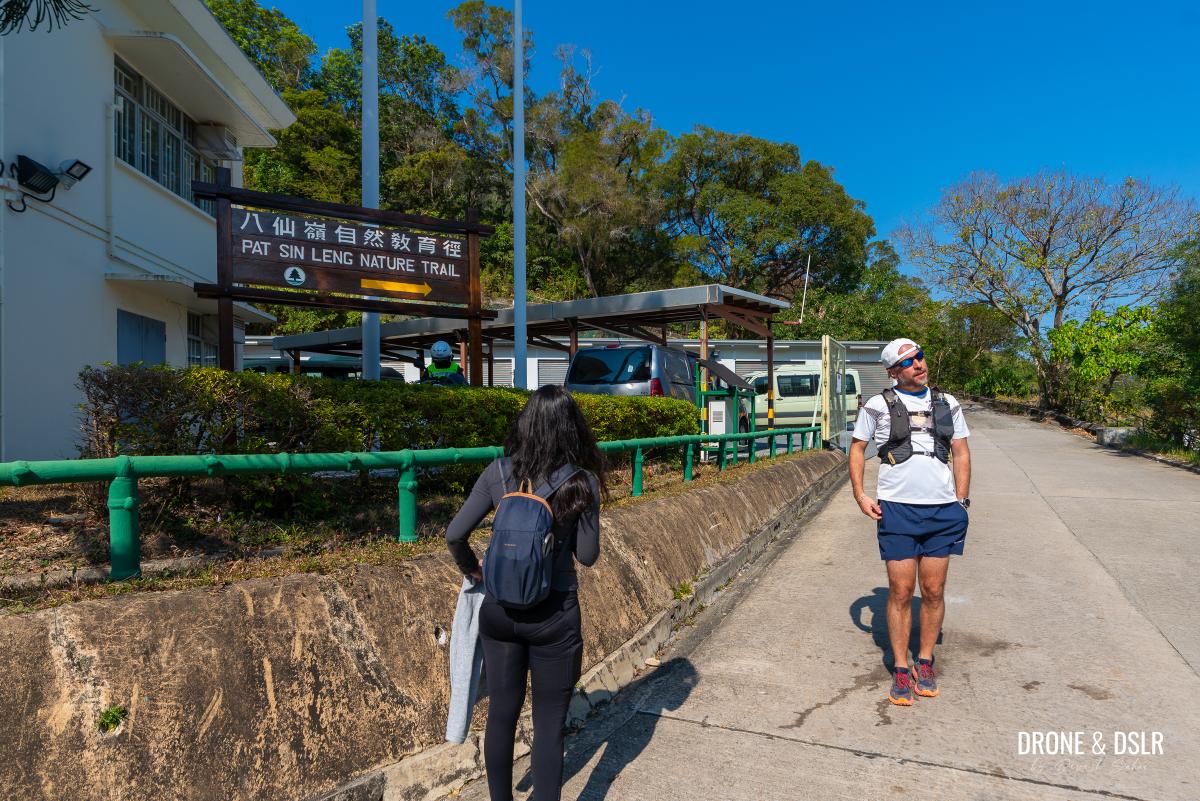
From here, veer off the main road onto the slip road next to the building, where you will see the sign for the “Pat Sin Leng Nature Trail”. Follow this slip road as it climbs toward the trail entrance.
-
- Follow the sign to Pat Sin Leng Nature Trail on the slip road
-
- The entrance to the Pat Sing Leng Nature Trail (it’s been soft-cordoned for a few years now because of a landslide)
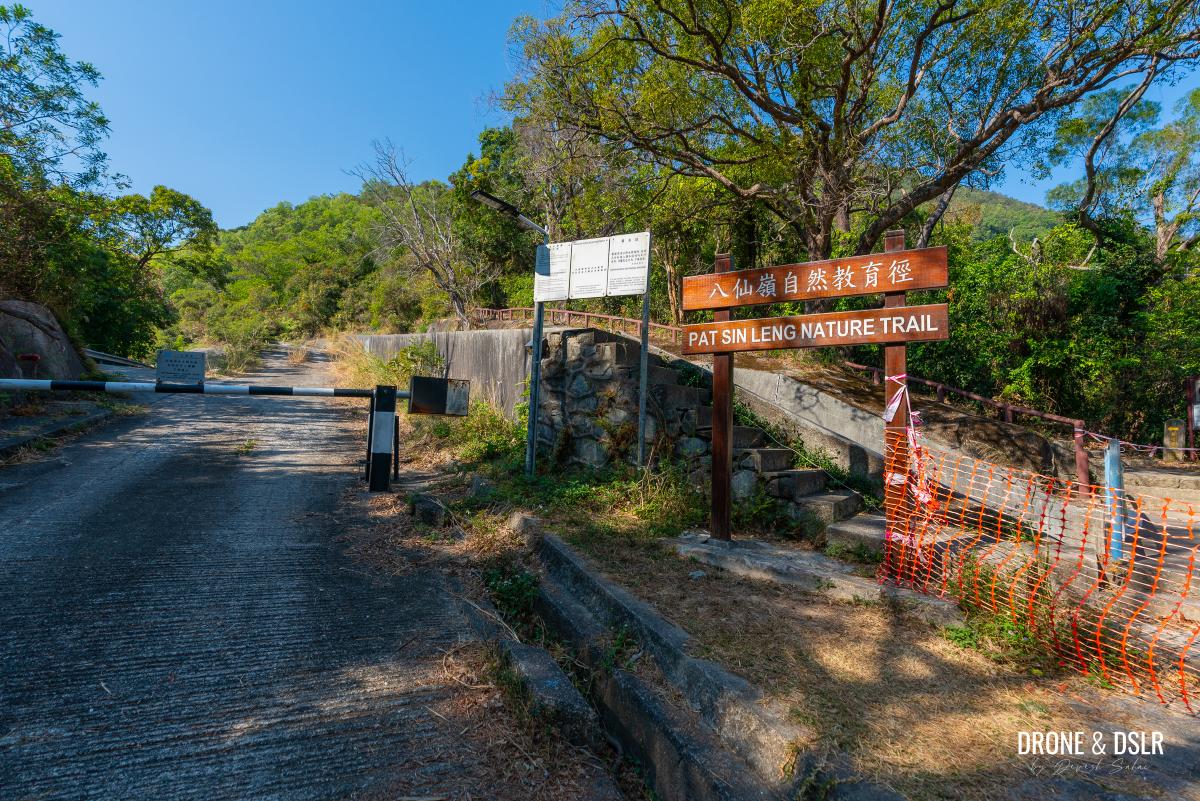
IMPORTANT NOTE: As of writing, this specific entrance has been officially closed for several years due to a landslide. While we chose to proceed and navigate the landslide area, we recommend that hikers who prefer a safer, sanctioned route use the Bride’s Pool Road entrance instead.
A Gentle Start Till It Meets The Other Entrance
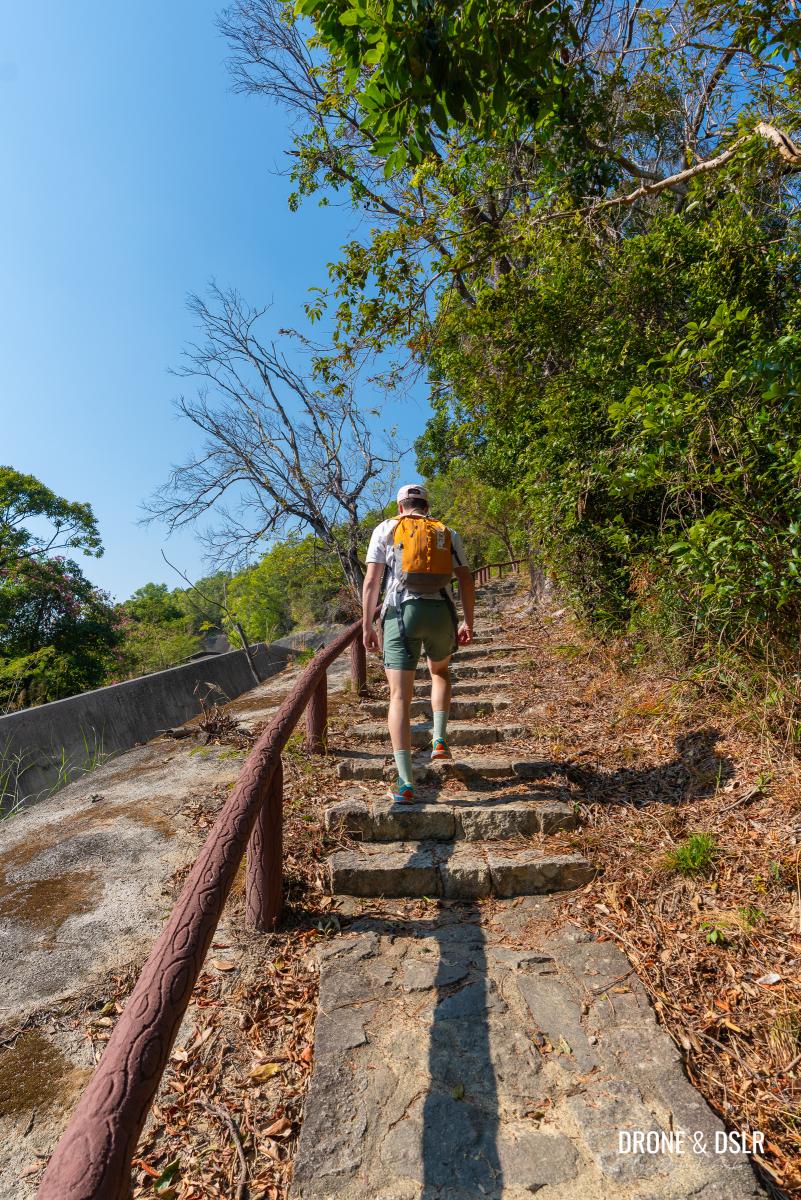
The Eight Immortals Hike begins on a gentle slope along the Pat Sin Leng Nature Trail, leading you toward the Spring Breeze Pavilion.
-
- The Eight Immortals Hike begins on the Pat Sing Leng Nature Trail
-
- You’ll soon arrive at the Spring Breeze Pavilion
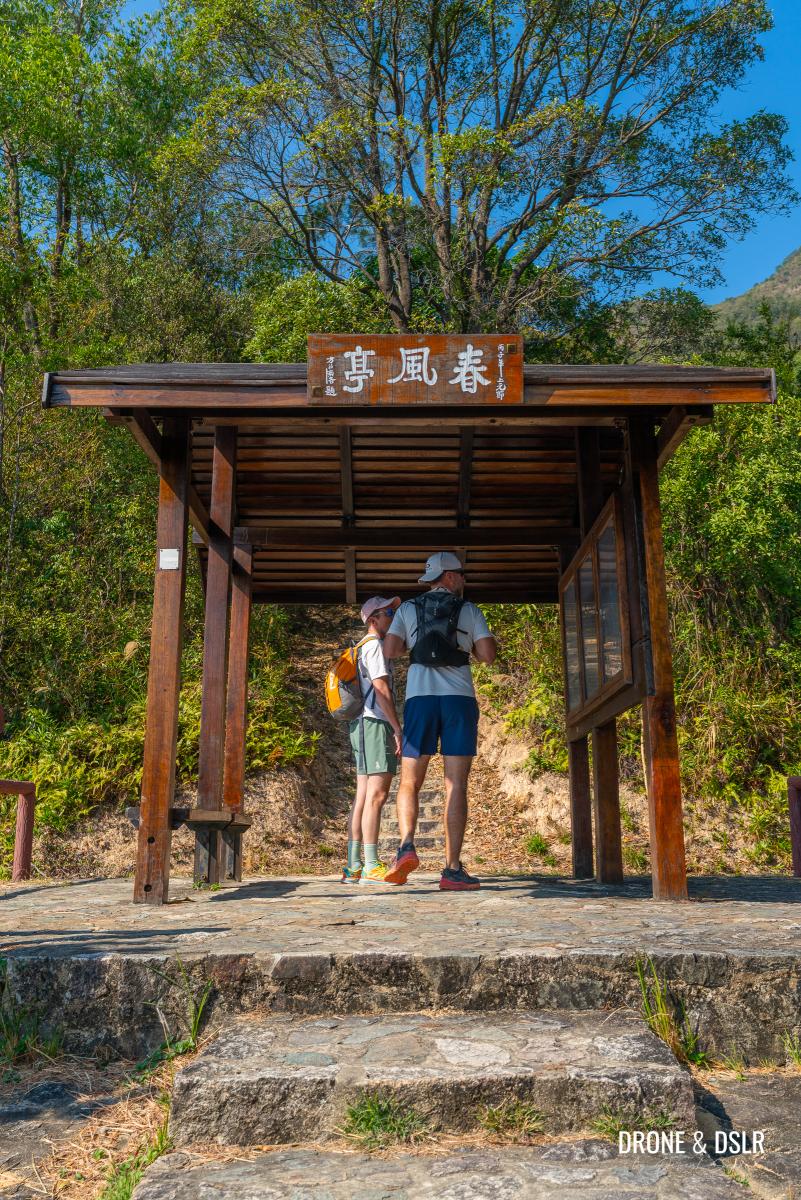
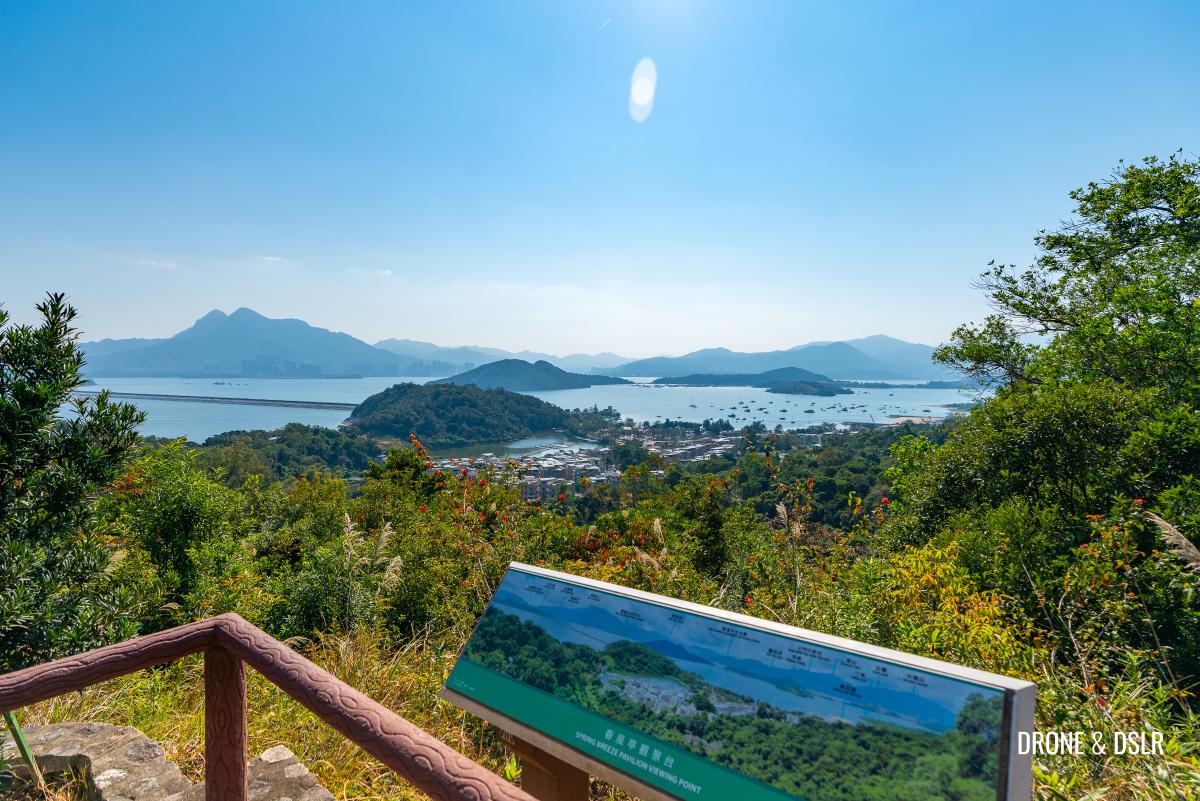
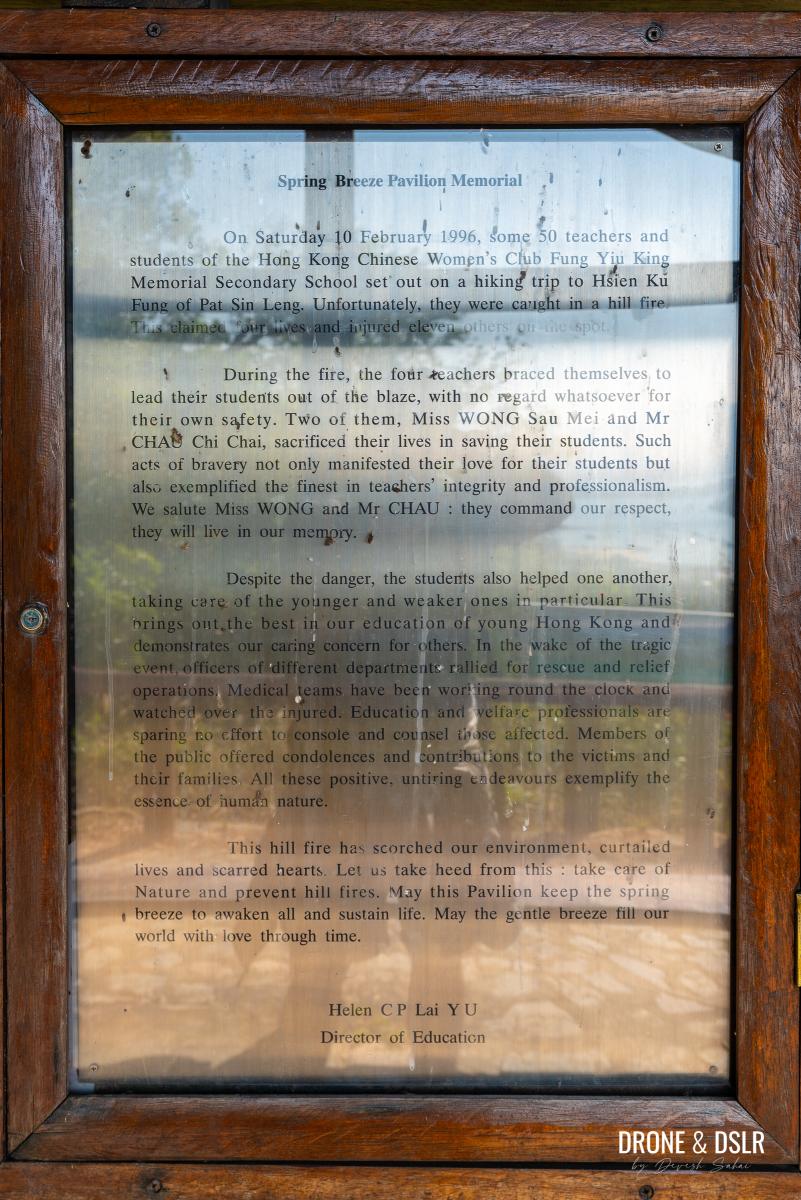
Beyond the views of Tai Mei Tuk, the pavilion also serves as a memorial for a sad but brave story that took place on this hike in 1996.
-
- Good views from the Spring Breeze Pavilion
-
- The Spring Breeze Pavilion also serves as a memorial
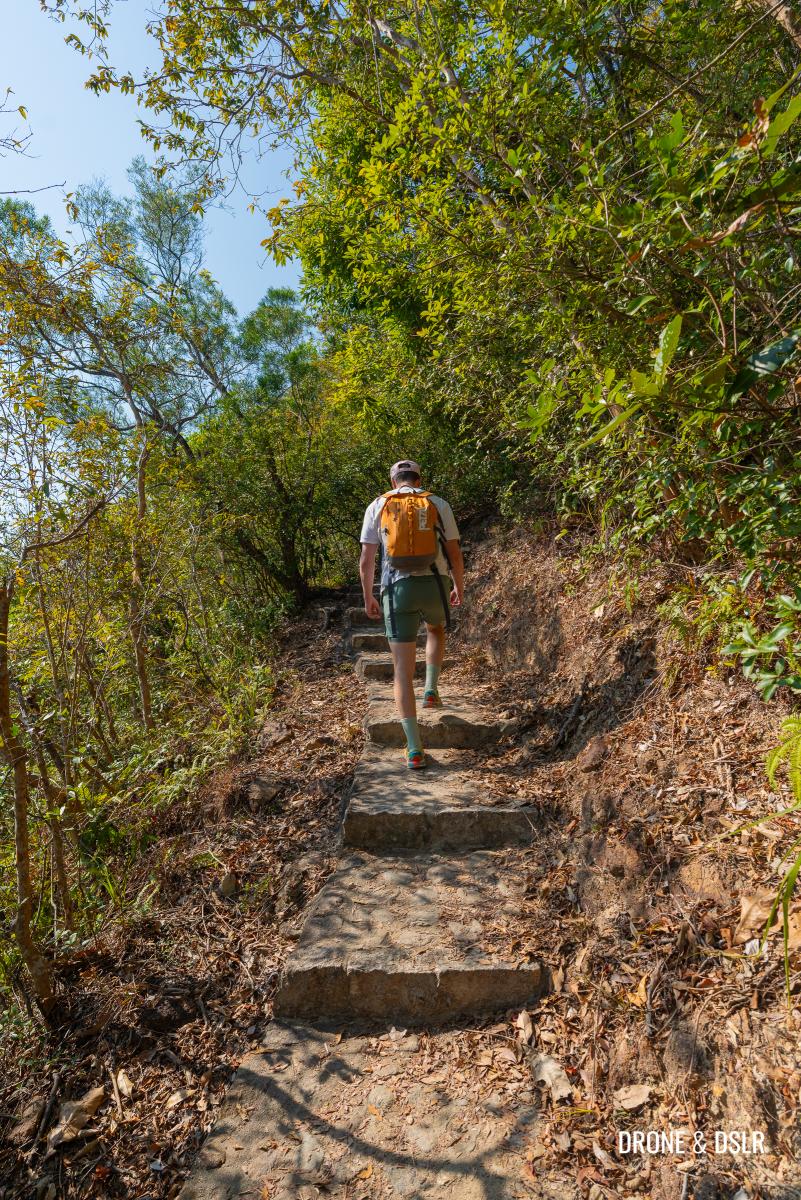
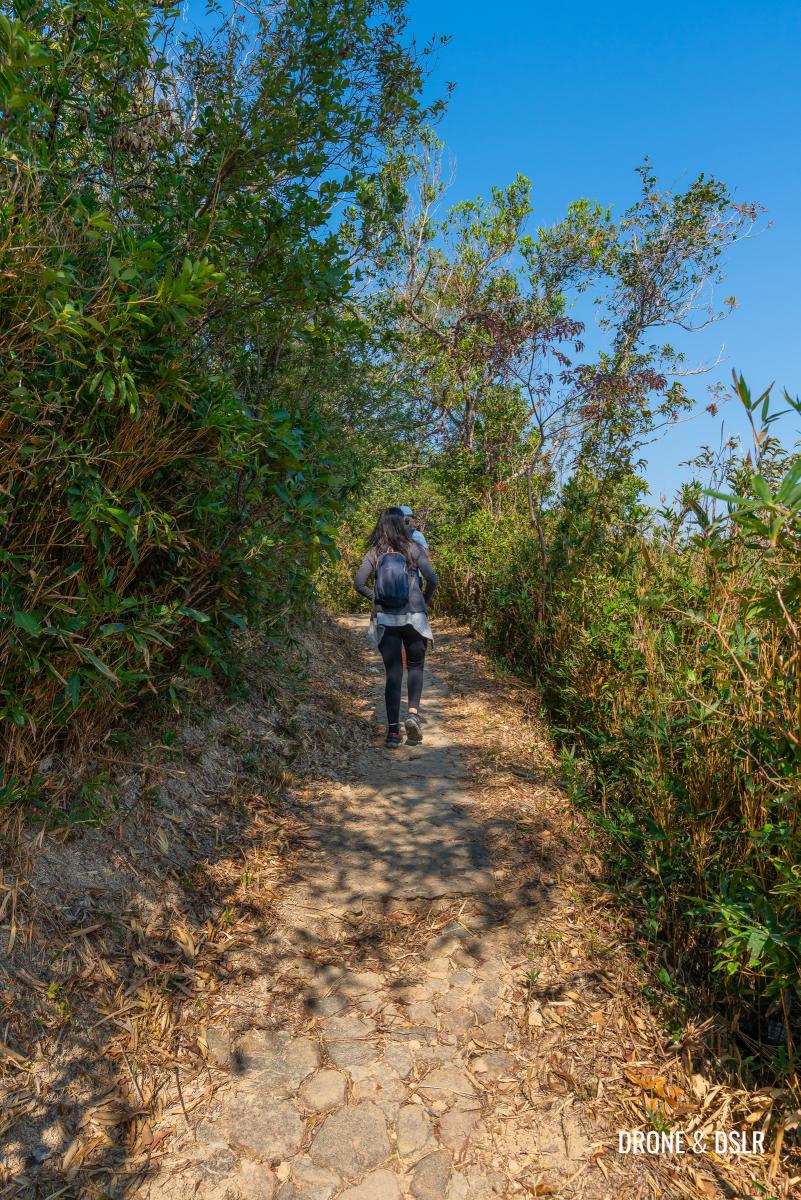
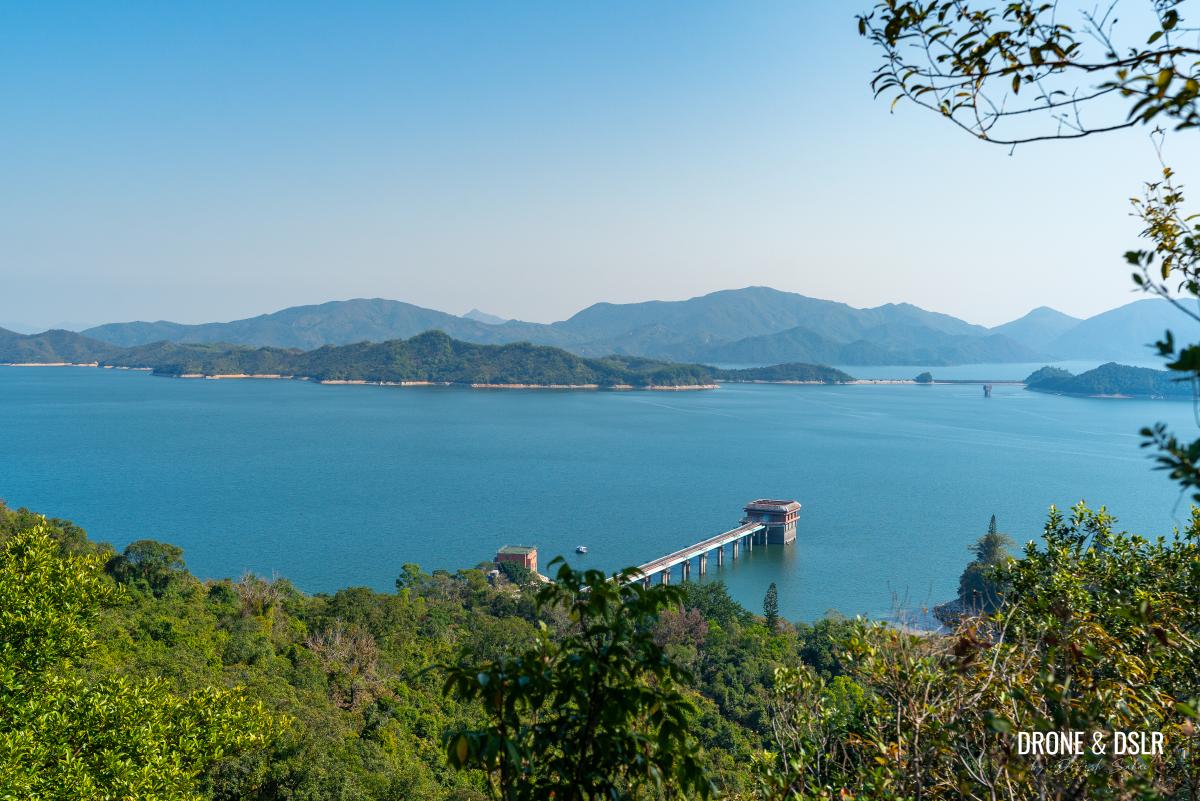
As you enter the country park, the trail remains relatively easy, consisting of flat stretches and mild inclines. The tree canopy provides plenty of shade, a welcome relief on sunny days, though the trees occasionally clear to reveal stunning views of the Plover Cove Reservoir. These views only improve as you climb higher.
-
- Continue hiking from the Spring Breeze Pavilion
-
- The Pat Sin Leng Nature Trail is gentle at this stage
-
- When the trees clear, the views of Plover Cove Reservoir are gorgeous
-
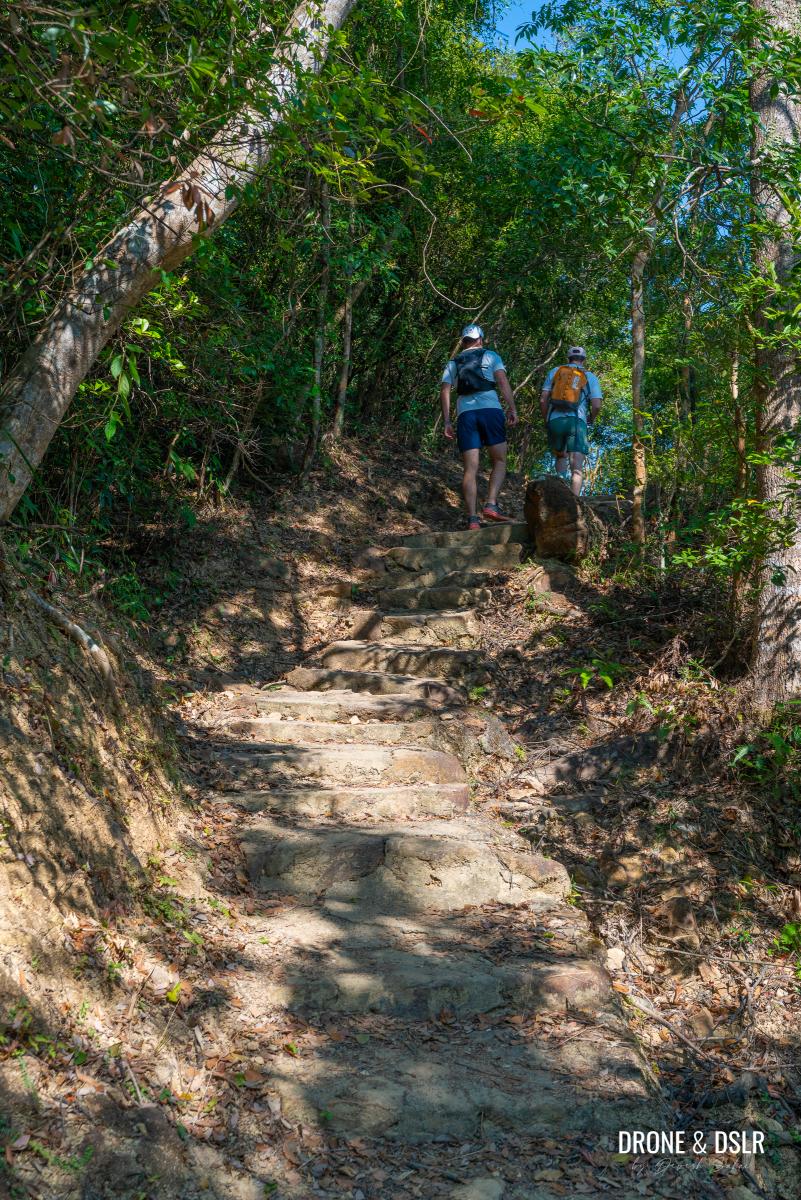
- A bit of climbing
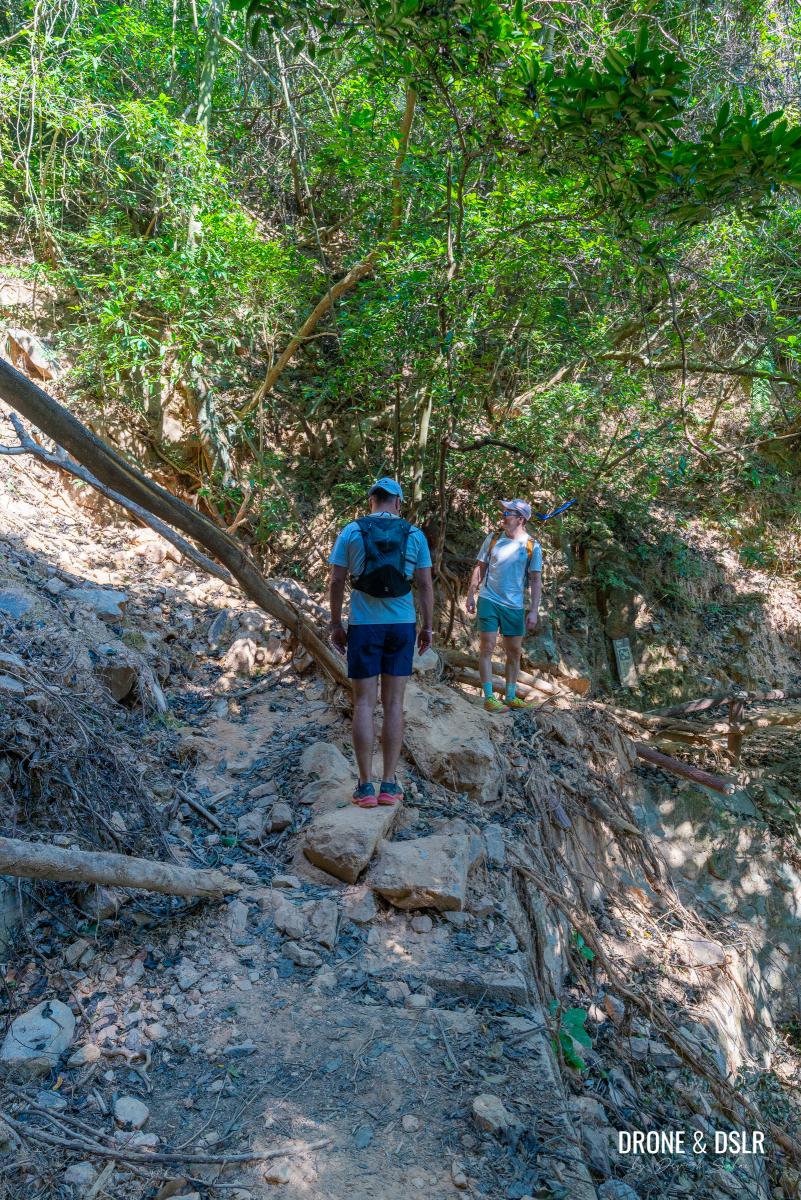
When we reached the landslide area, we were relieved to find it was no longer a major obstacle. We crossed it without much trouble, thankfully.
-
- Luckily, the landslide on Pat Sin Leng Nature Trail is easy to cross
-
- Continue to hike after the landslide
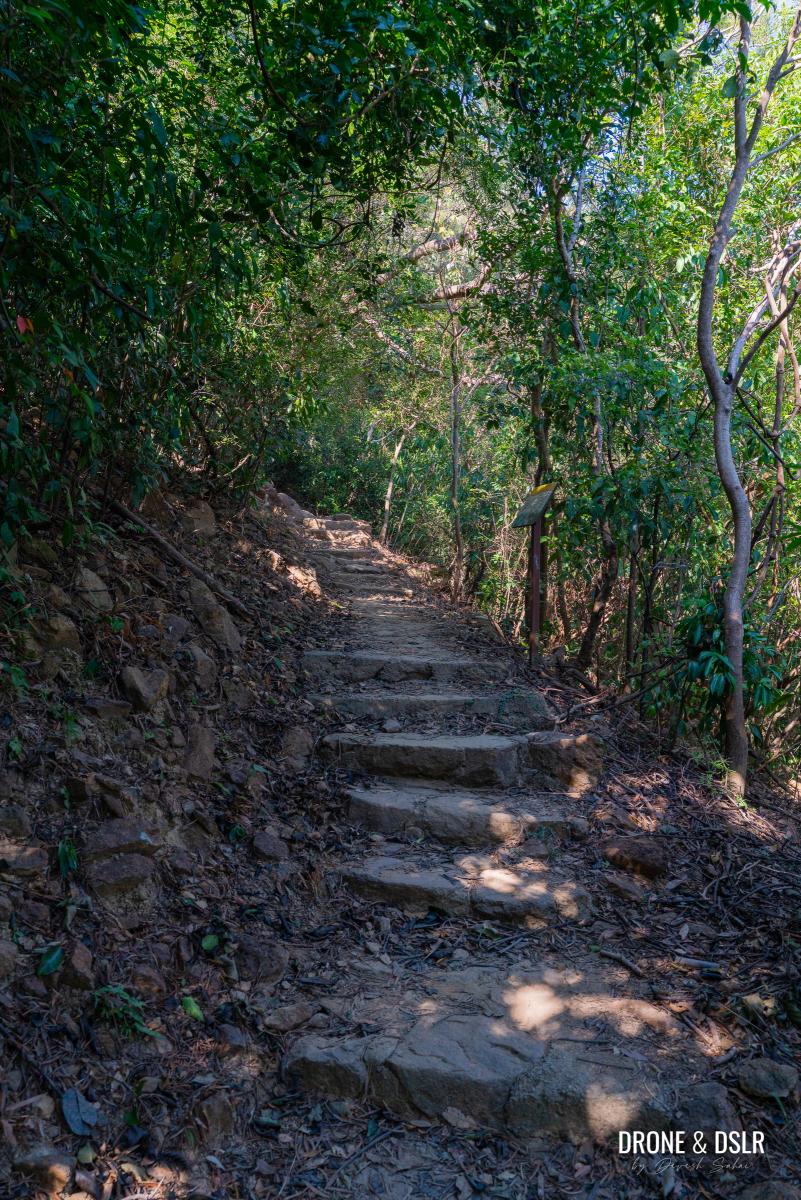
Past this point, the trail continues under a pleasant canopy with occasional views until it merges with the path coming from the Bride’s Pool Road entrance. From this junction onward, the route is the same regardless of which entrance you choose.
-
- The Pat Sin Leng Nature Trail stays quite easy in this section
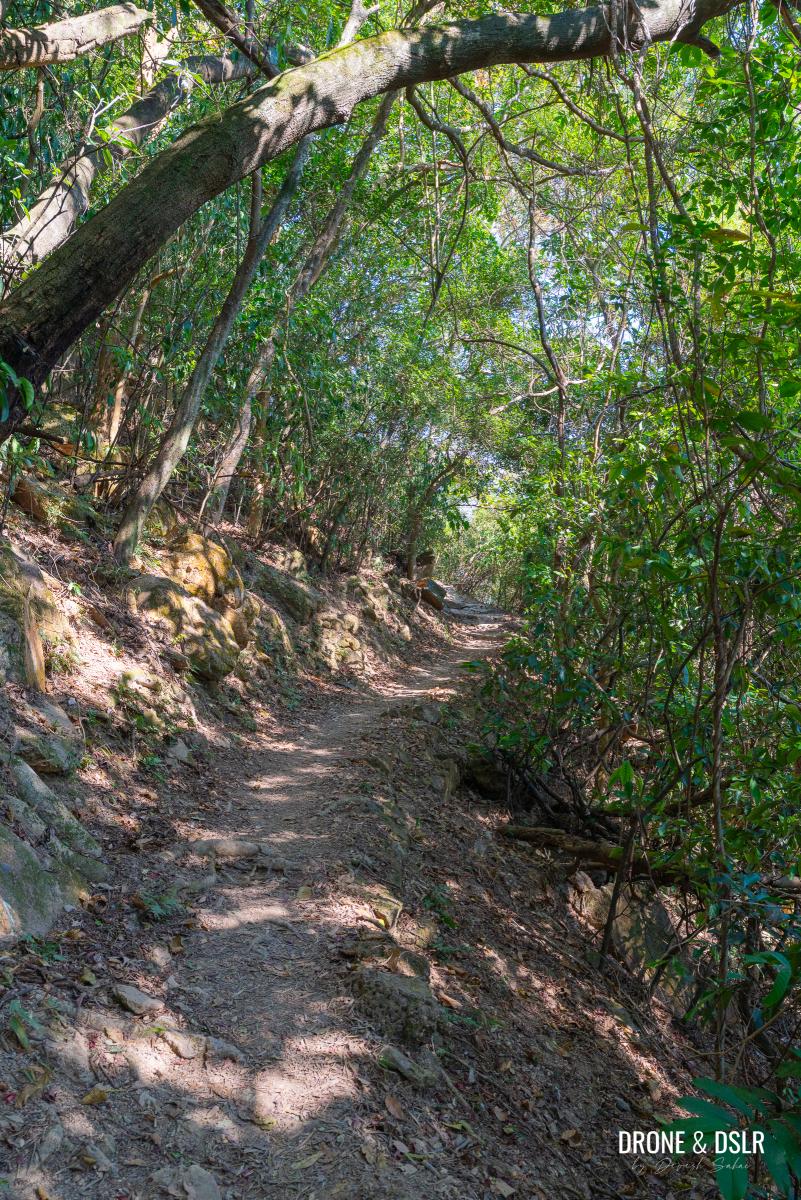
-
- A gentle incline, the Eight Immortals Hike isn’t difficult at this stage
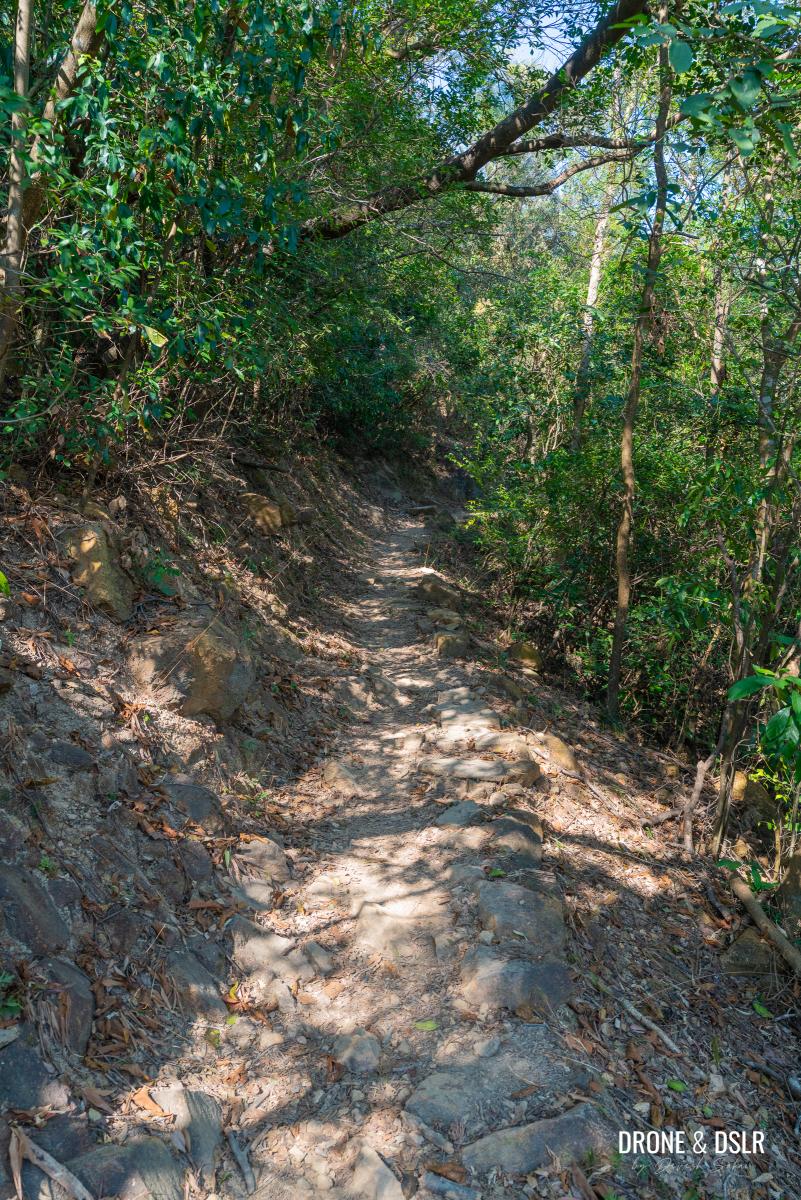
-
- The juncture at which the two entrances meet
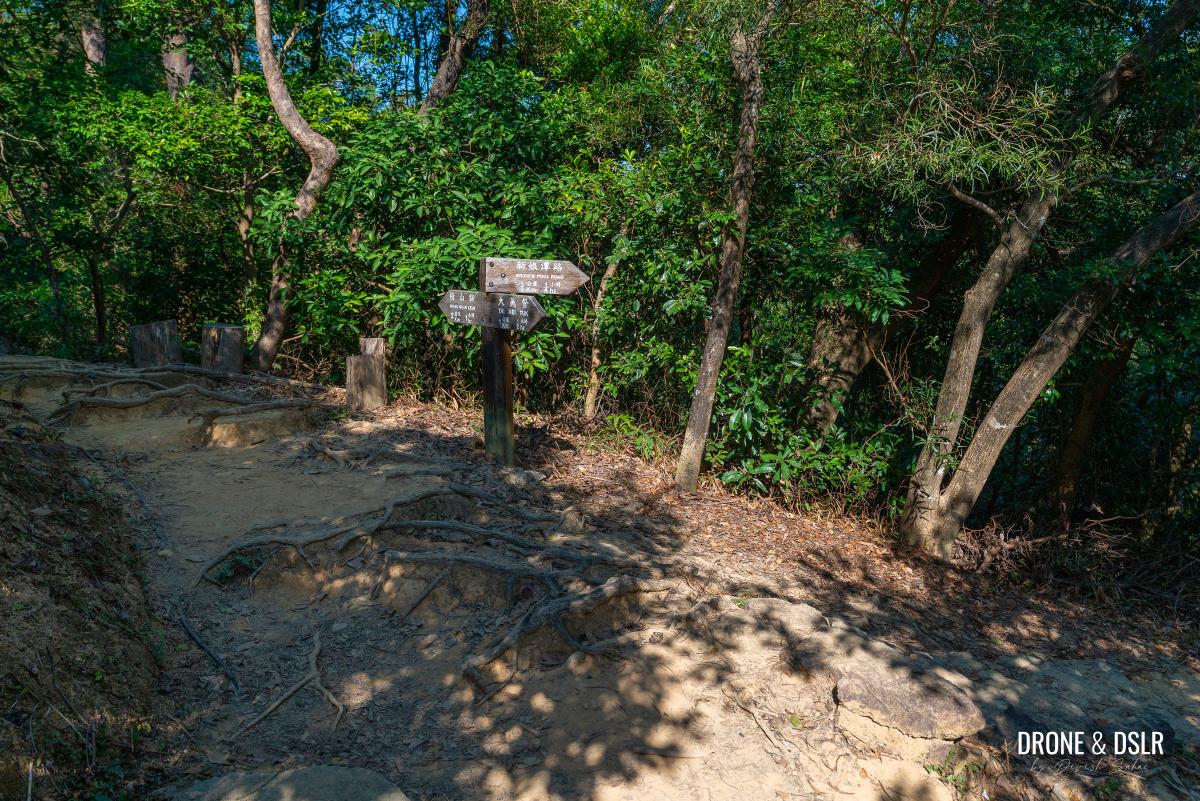
Here Comes The Challenging Part
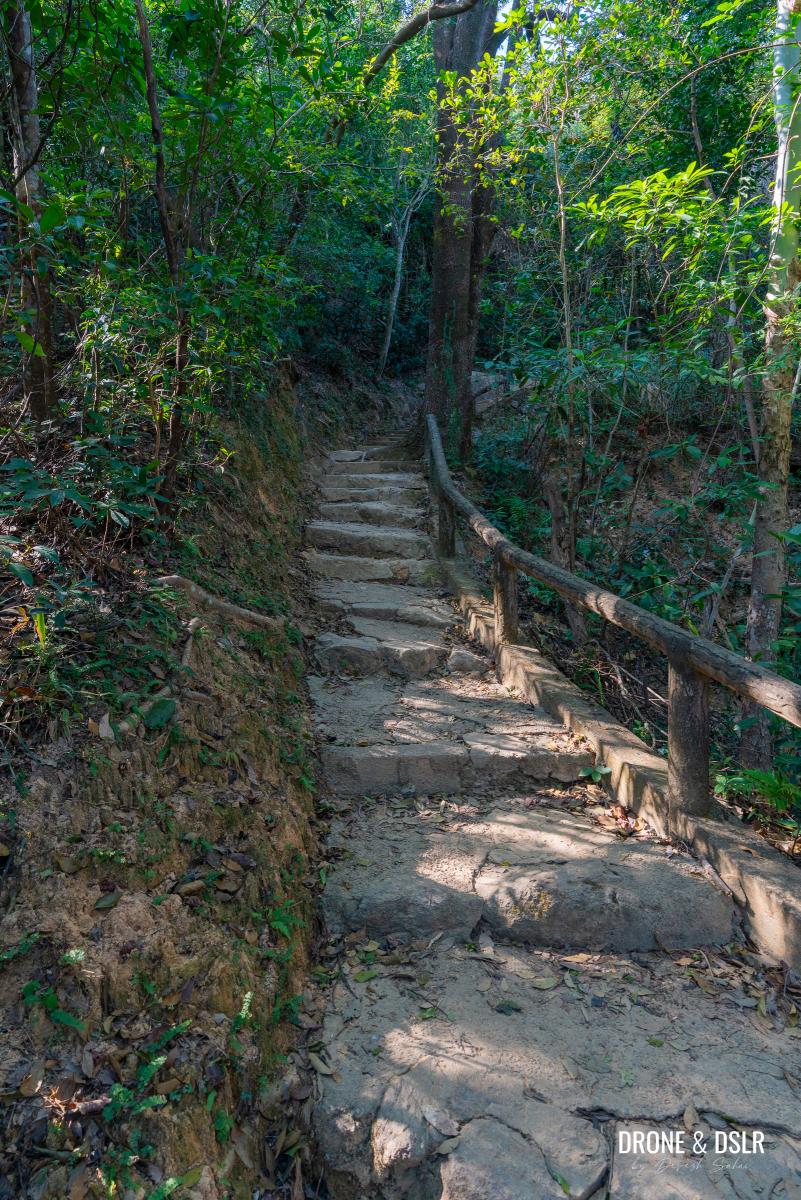
Up to this point, particularly if you avoided the Bride’s Pool Road entrance, the hike has been relatively easy. That is about to change. The junction where the two paths meet marks the beginning of the first real challenge on the Eight Immortals Hike.
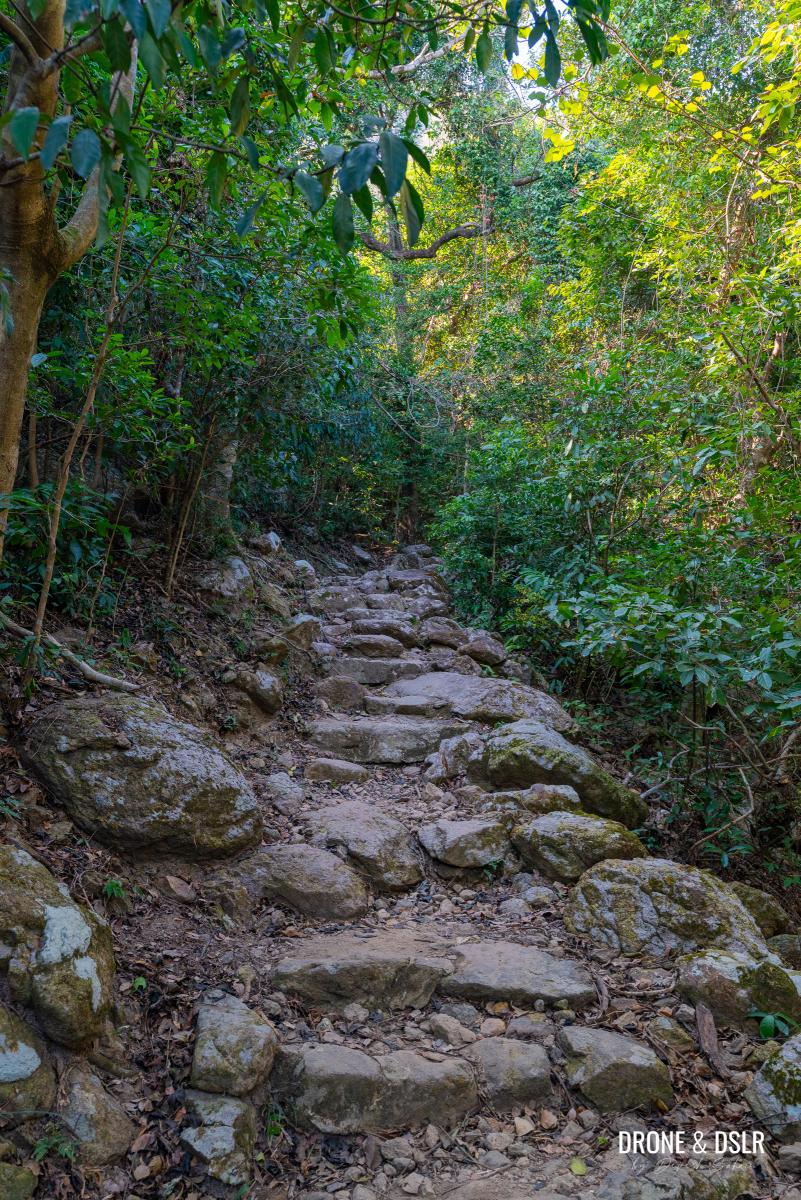
The ascent starts with a standard flight of steps before the path gives way to uneven boulders. While these rocky segments can be tedious, they are a something we’ve come to expect of Hong Kong trails.
-
- After the meeting of the two entrances, the real challenge begins
-
- Some uneven boulders to tackle
-
- Followed by even boulder-steps
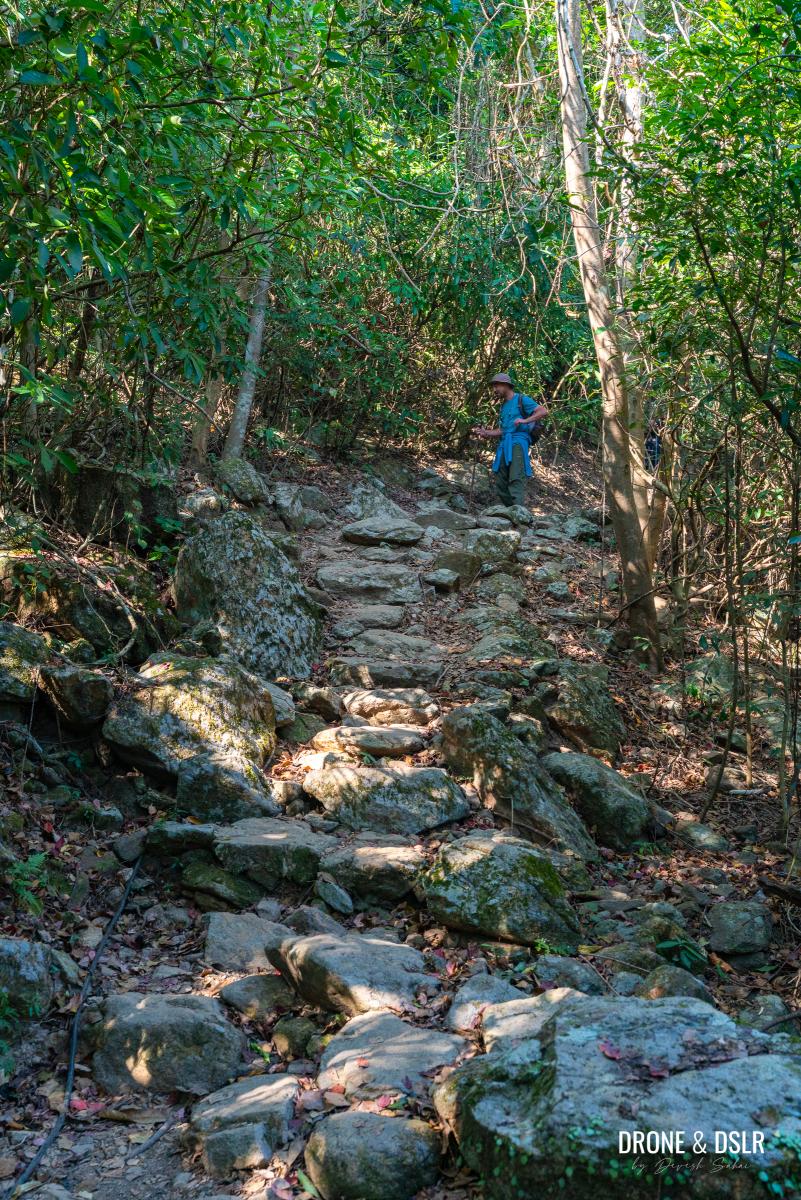
Continue climbing until the trail levels out at a stunning, tree-free vantage point. This is arguably where you will find the best views of Plover Cove Reservoir.
-
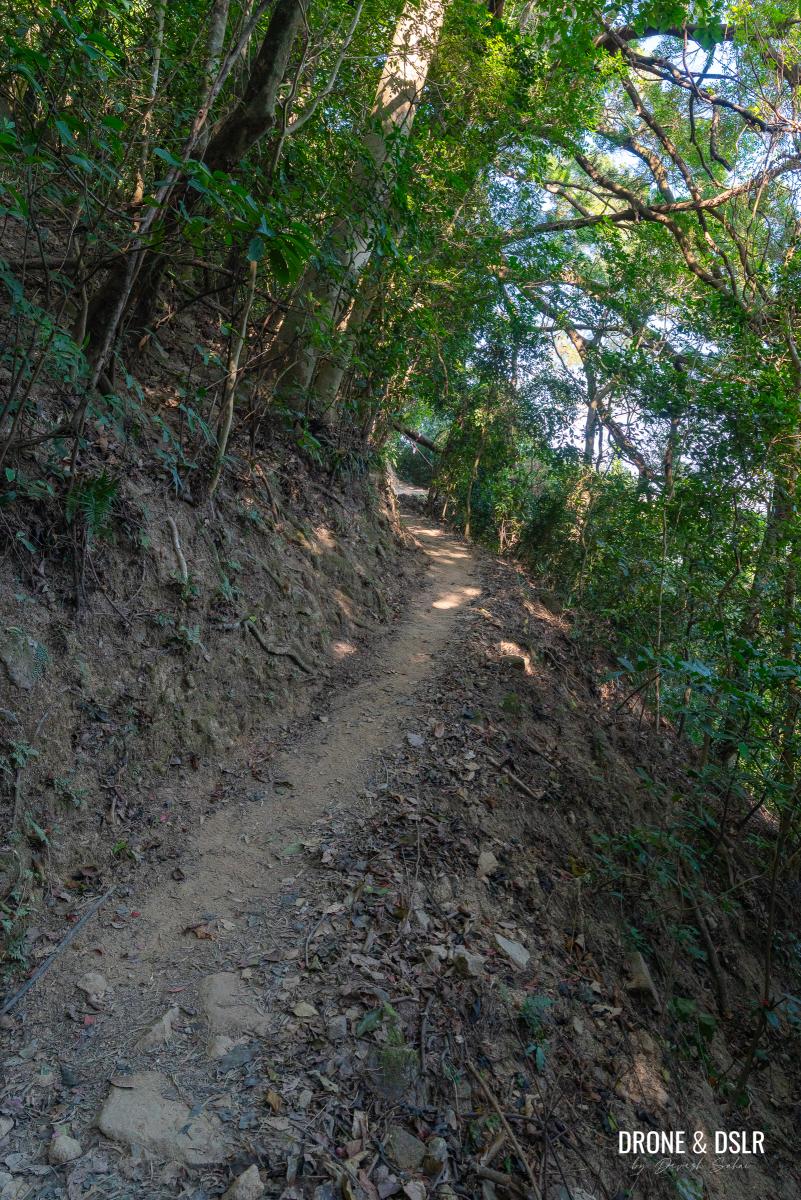
- After the boulders is a short, easy section
-
- The best views of Plover Cove (till now)
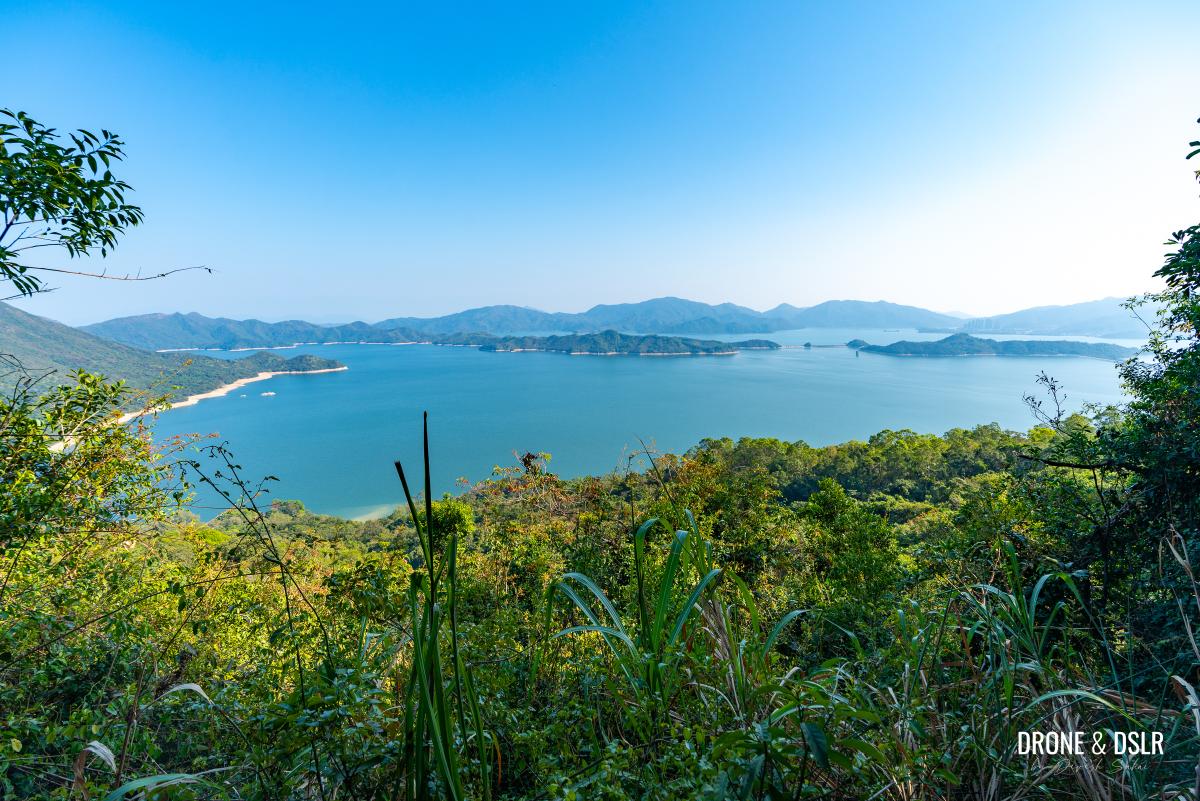
Catch your breath and enjoy the scenery, because the most punishing climb of this section is next. It begins deceptively with easy steps, but these quickly transform into a daunting, seemingly endless rocky staircase.
-
- Continue hiking after the vantage point
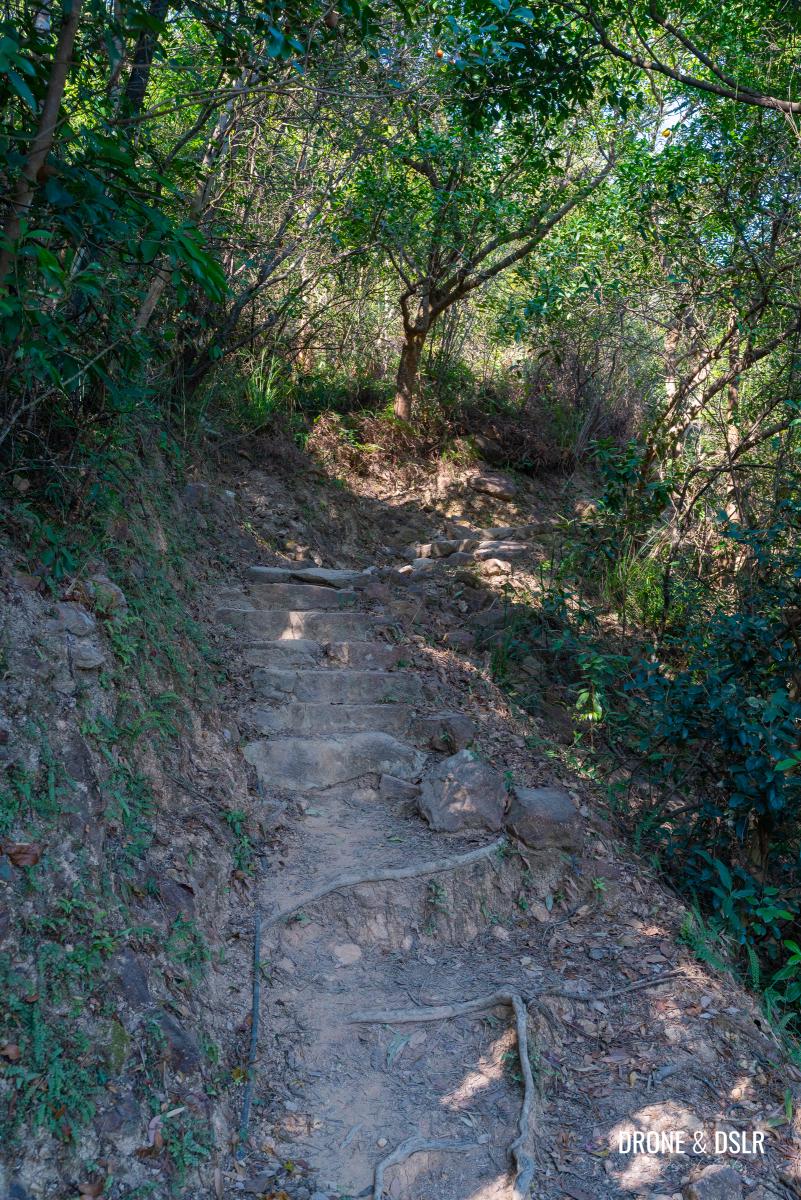
-
- The incline slow picks up now
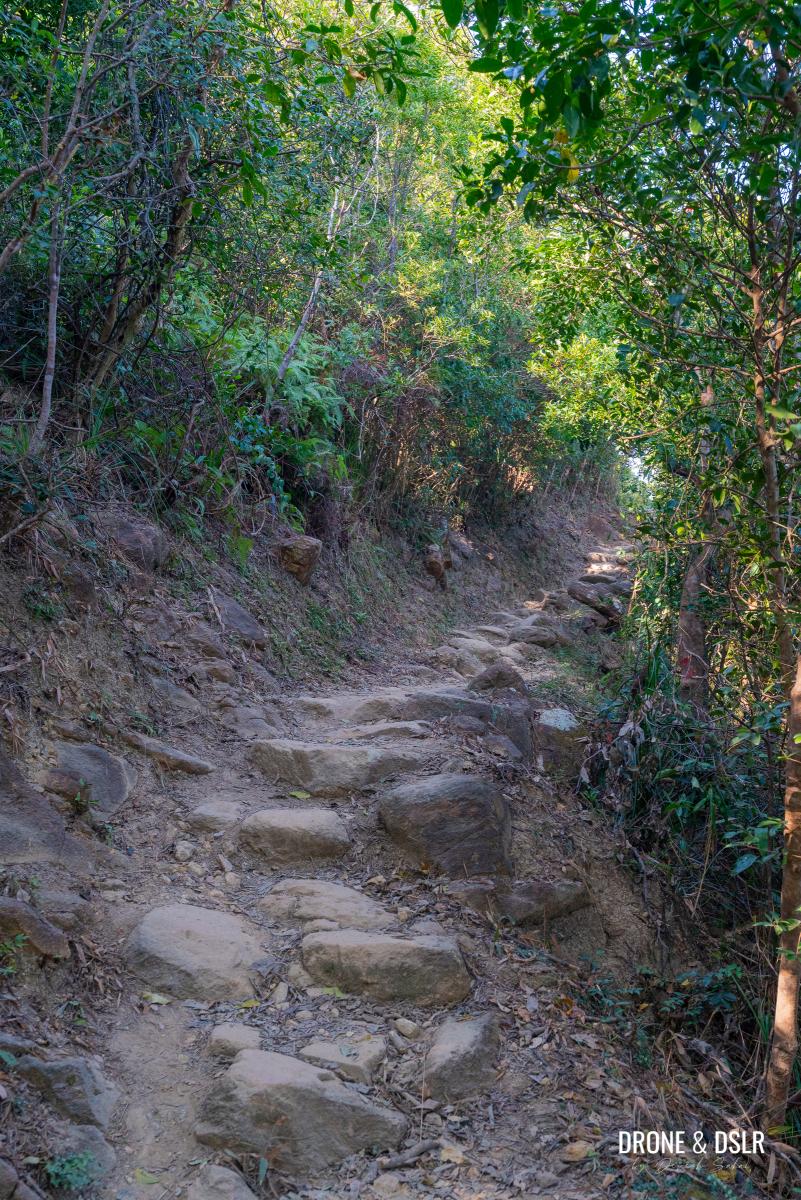
-
- Here come the rocky steps
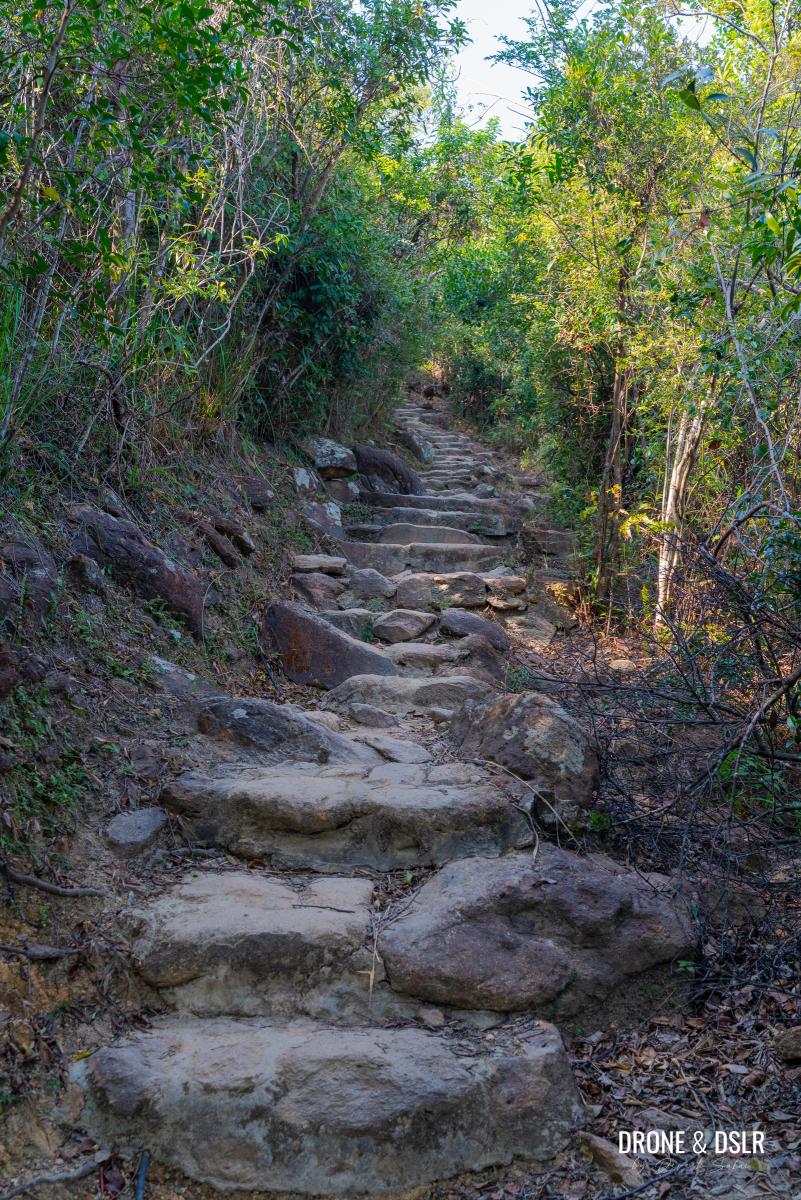
Conserve your energy and maintain a comfortable pace, slow and steady is the way to go. Take breaks whenever you need them. As the stairs finally end, the incline tapers off into a flat section.
-
- Go slow and easy, conserve your energy
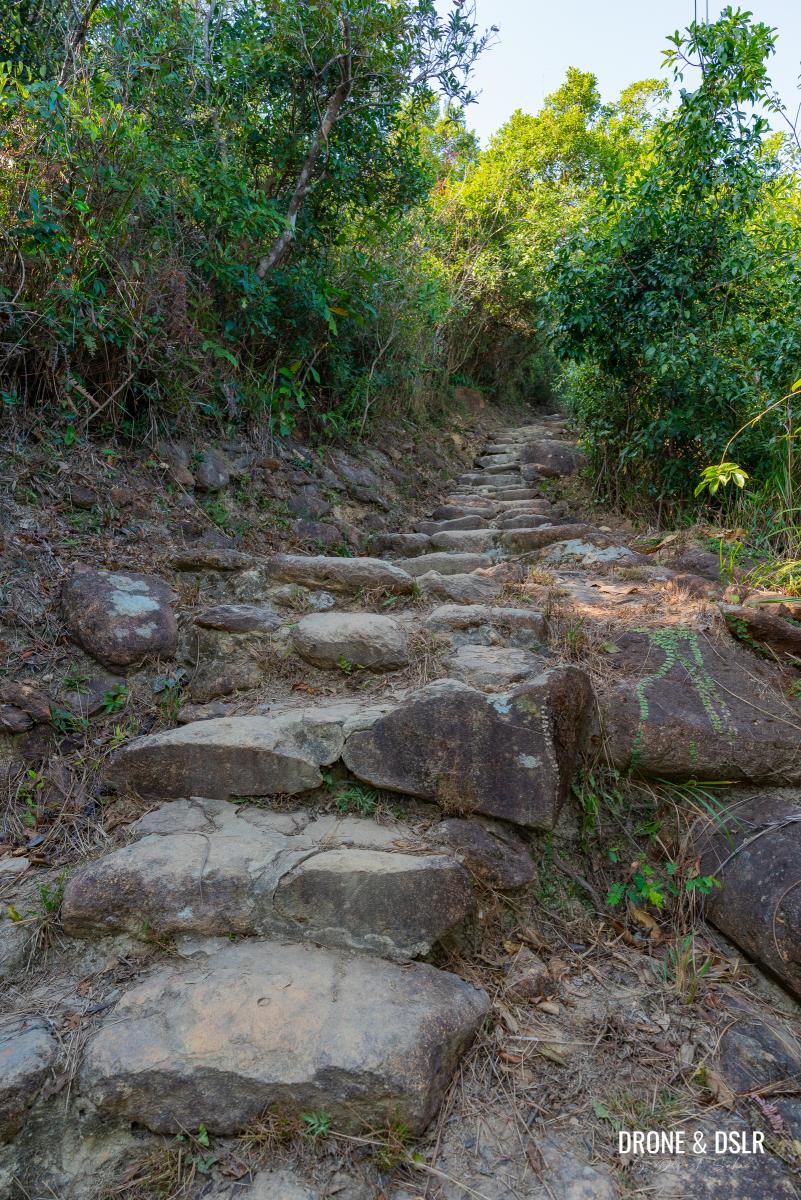
-
- These rocky steps are quite a challenge
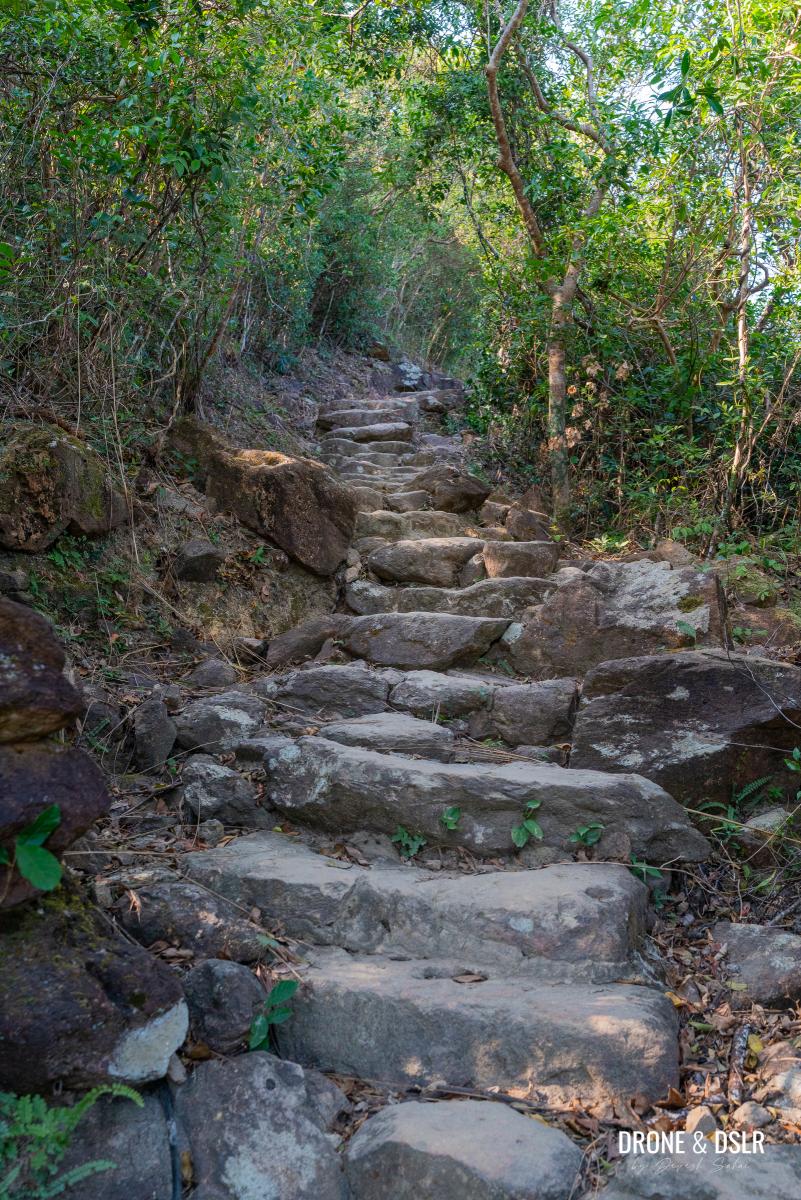
-
- Relief once the rocky steps end
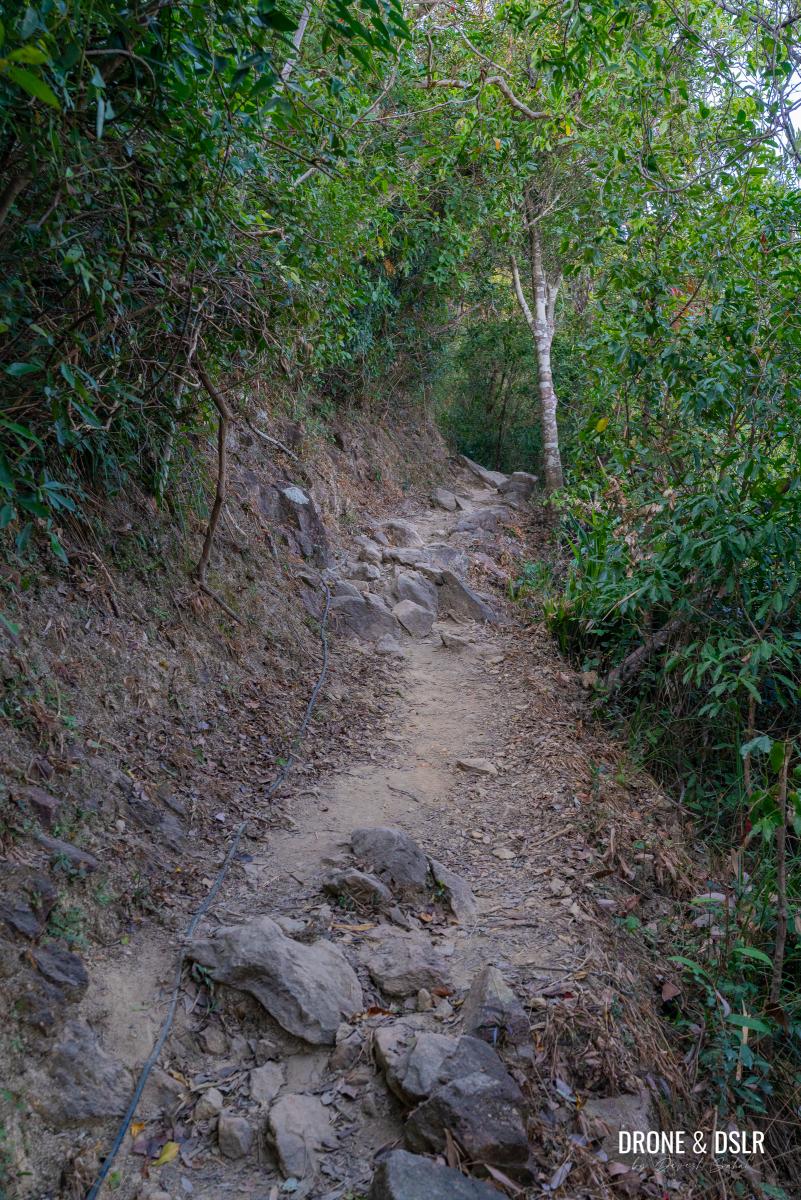
Shortly after, the trail turns sharply left (next to a pole), bringing you onto the northern face of the hill. Continue along this mostly flat, shaded path.
-
- The trail flattens out and offers some relief as you continue your hike to the Eight Immortals
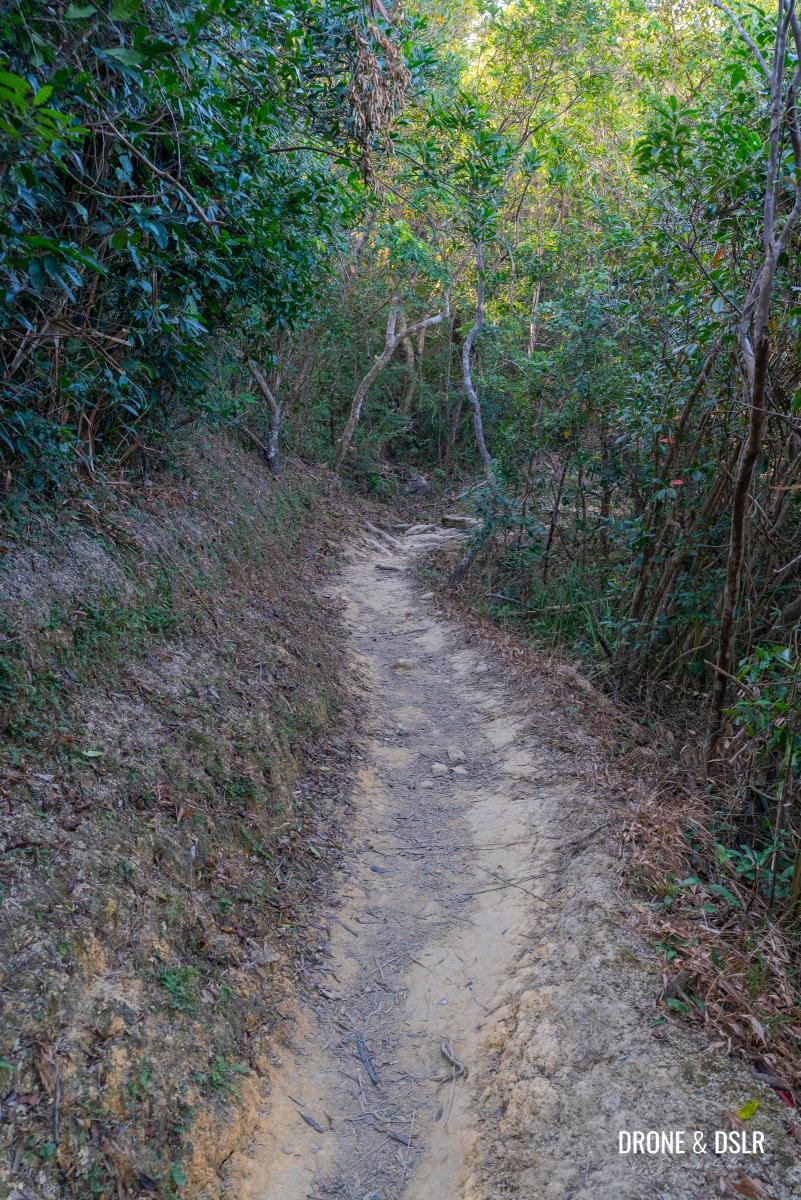
-
- The trail turns sharply and continues to stay flat
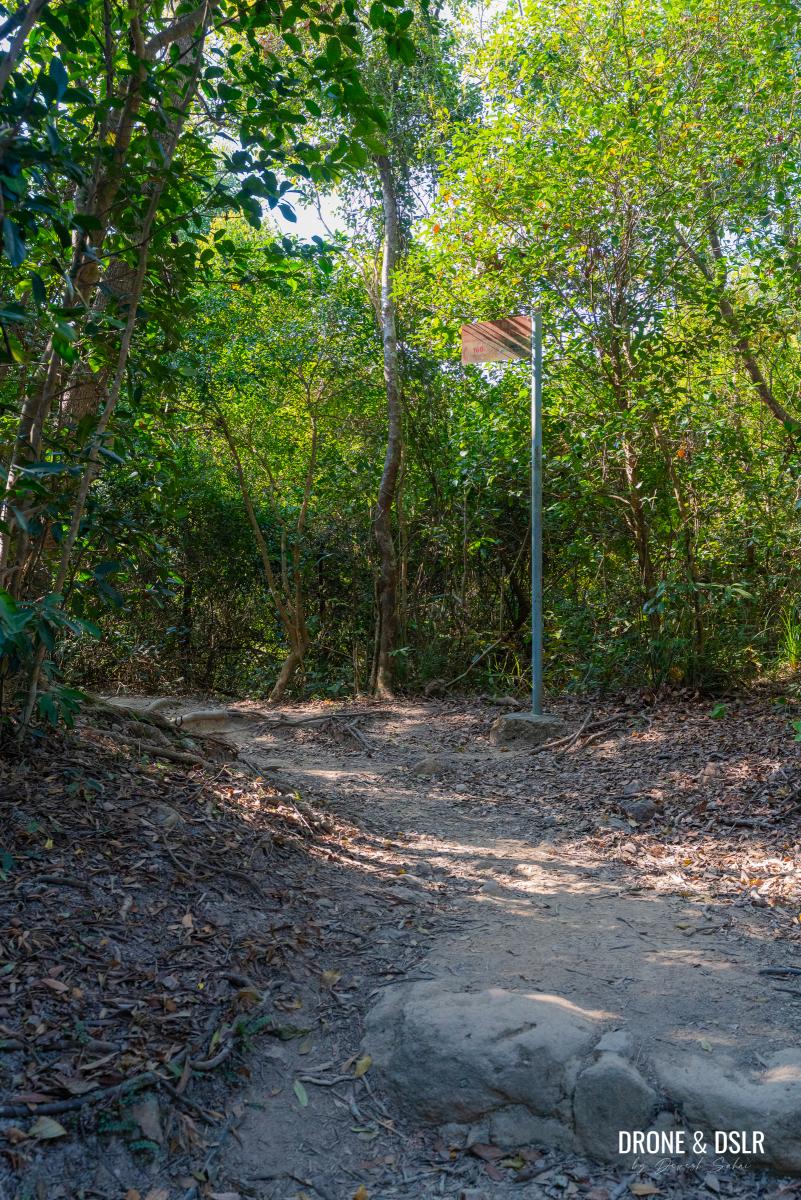
-
- Walk through this tunnel of trees
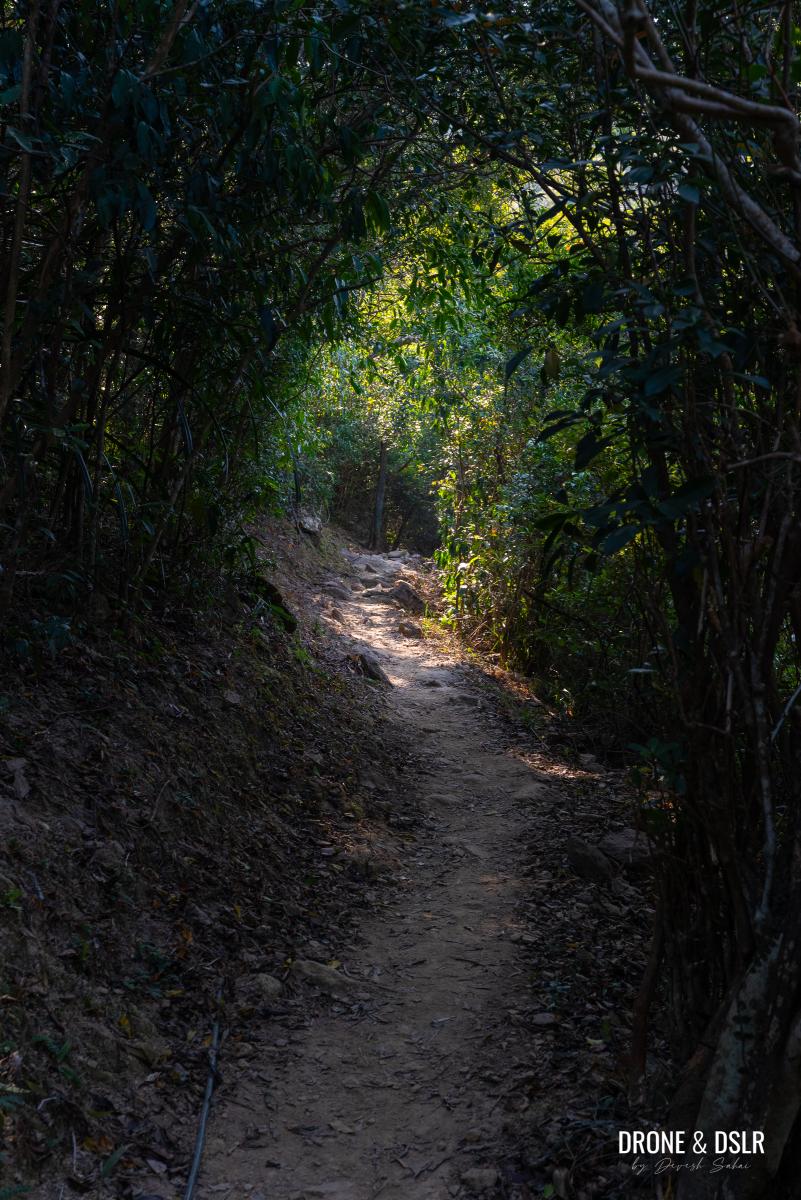
After crossing a dry stream bed, you’ll tackle one more flight of steps before the ground levels out again.
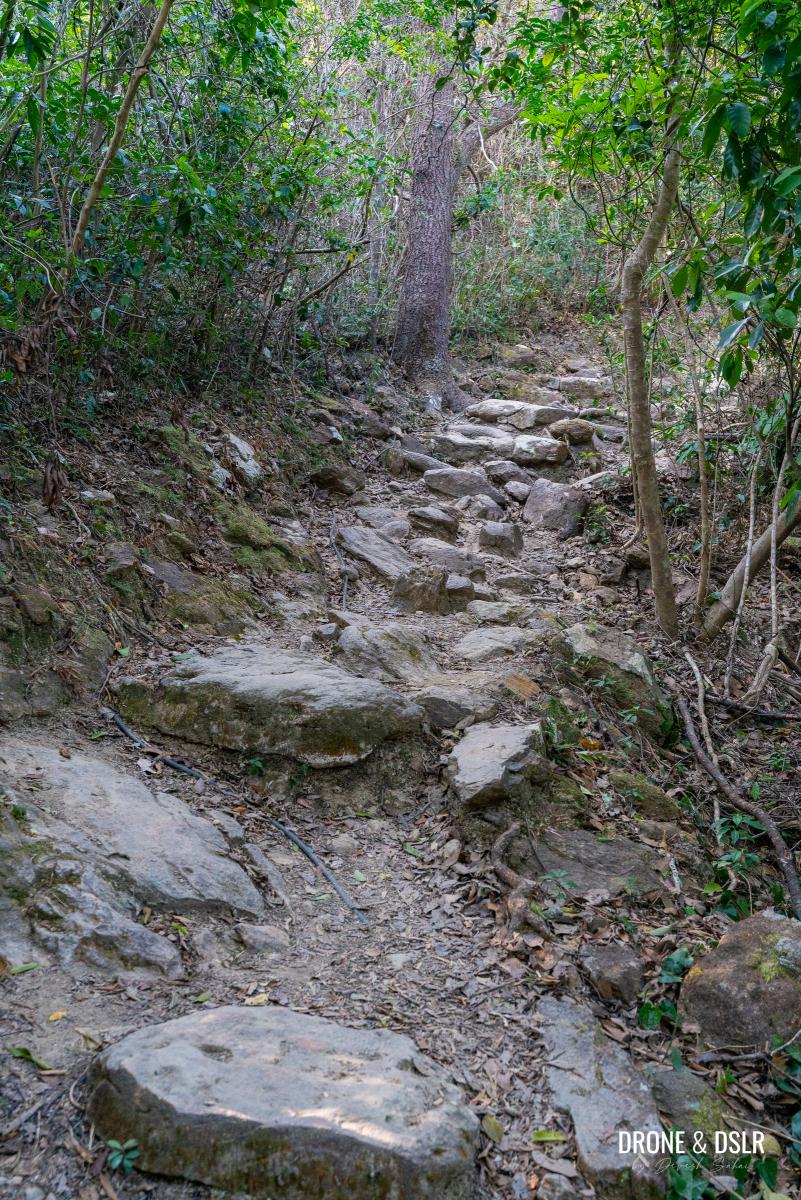
There’s a short climb after you cross a streambed
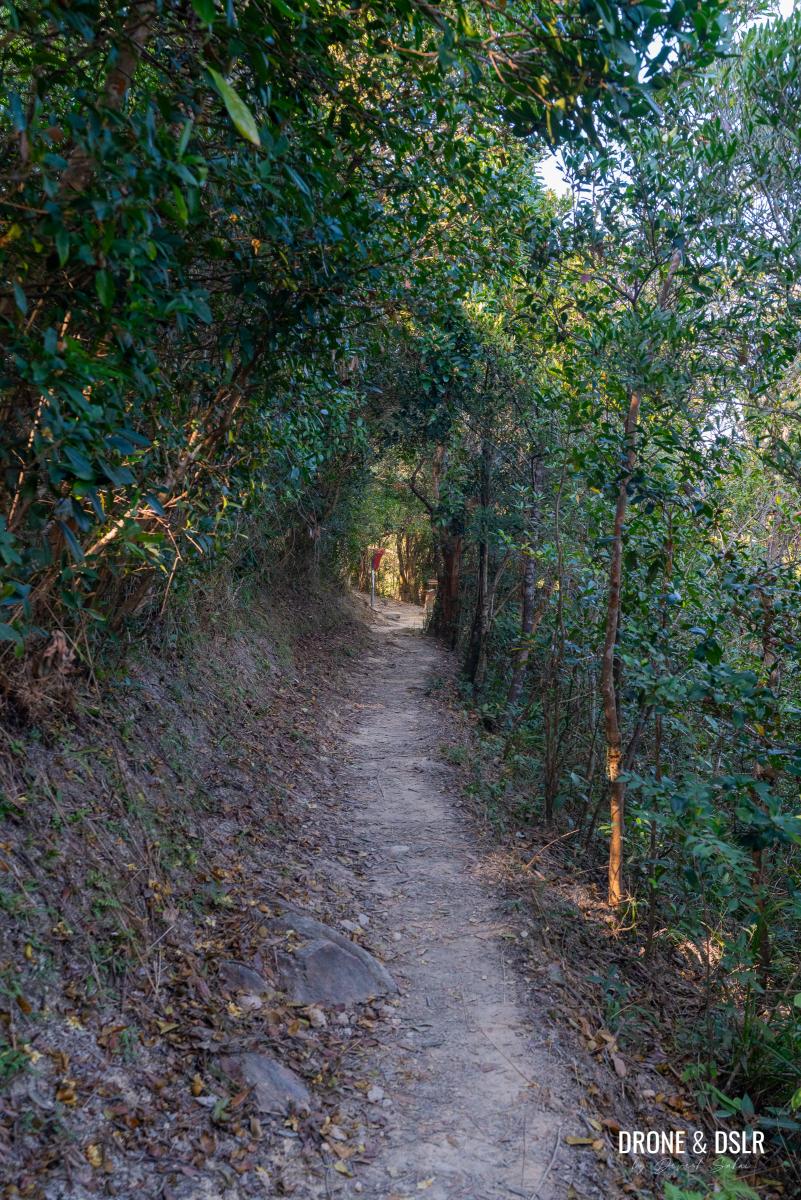
And just ahead, you’ll spot a red emergency phone and a signpost for “Pat Sin Leng Hsien Ku Fung.” Rest here if you need to because what follows is the steepest section of the entire hike.
-
- Keep walking on the Pat Sin Leng Nature Trail till you see the red emergency phone
-
- At this point, it’s time to turn left and climb towards the First Immortal
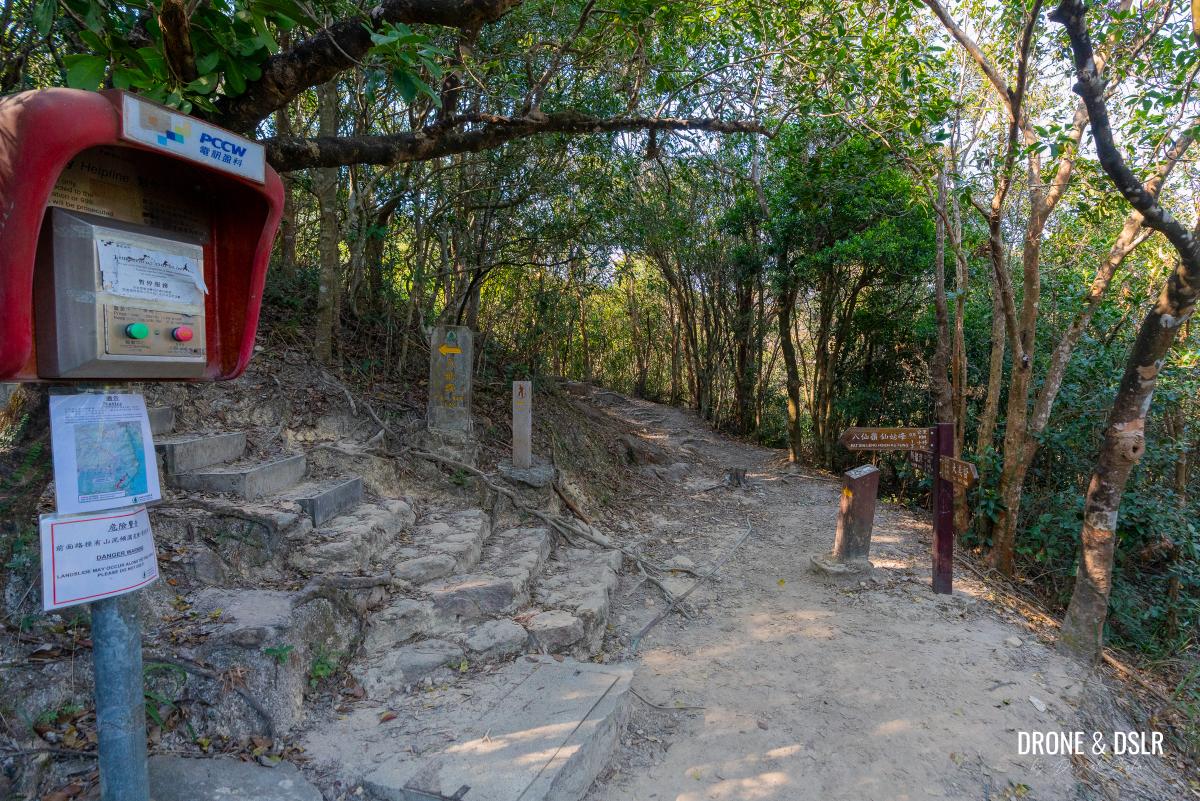
The Ascent To Hsien Ku Fung (The First Immortal) — Only 500 metres but difficult
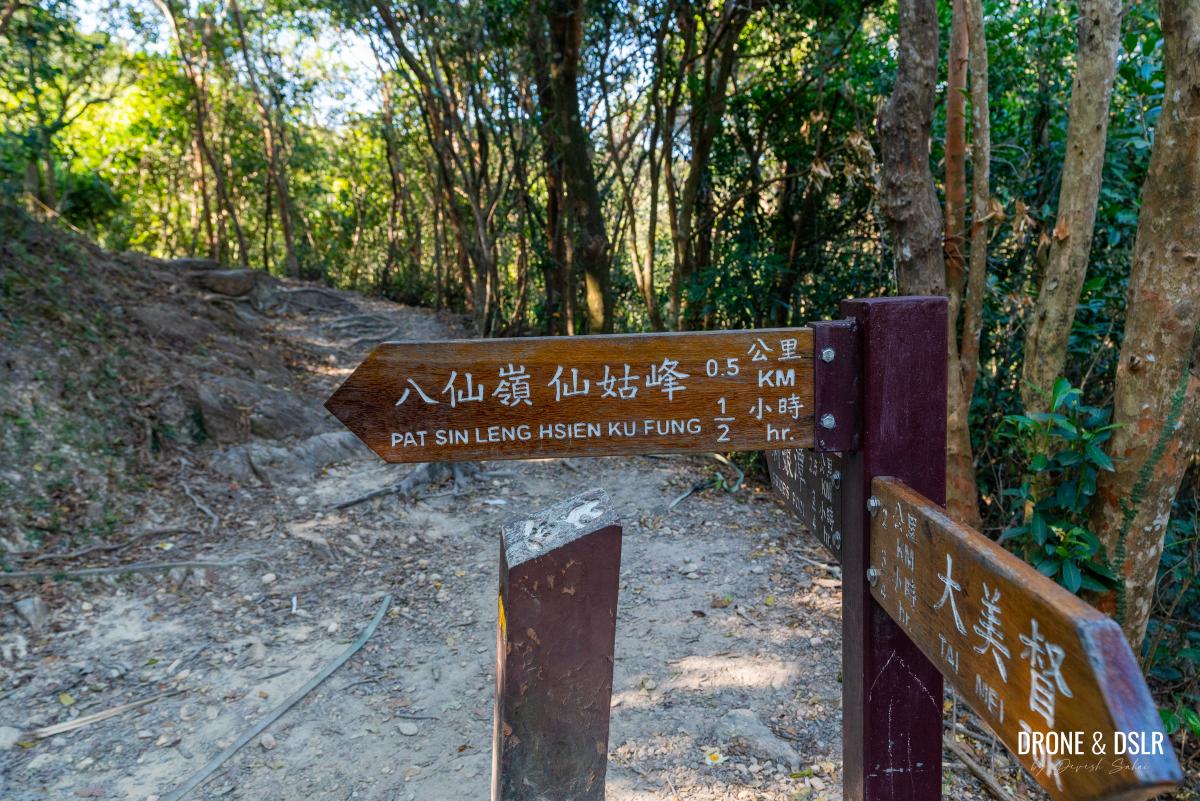
You are now on the trail leading to the first of the eight peaks. At this point, you are leaving the Pat Sin Leng Nature Trail and stepping onto Section 10 of the Wilson Trail.
-
- Follow the sign for “Pat Sin Leng Hsien Ku Fung”
-
- This is where you step off Pat Sin Leng Nature Trail and onto Wilson Trail Section 10
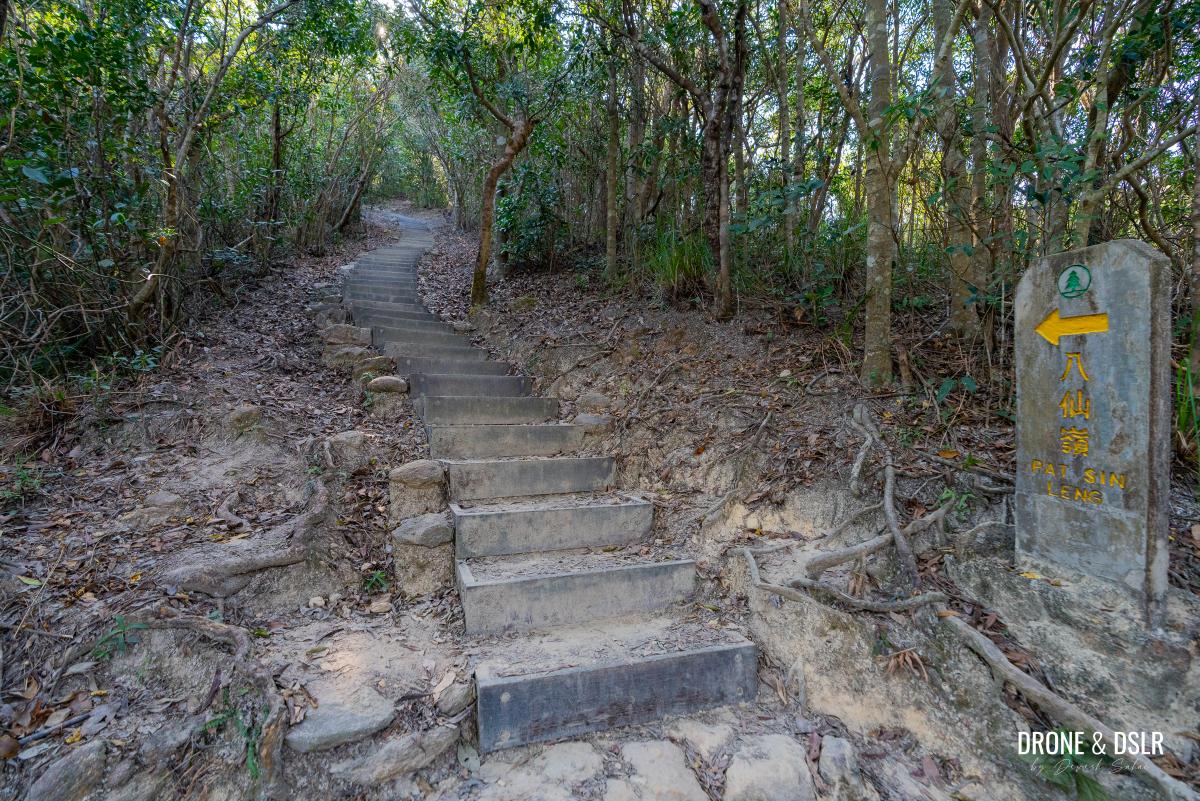
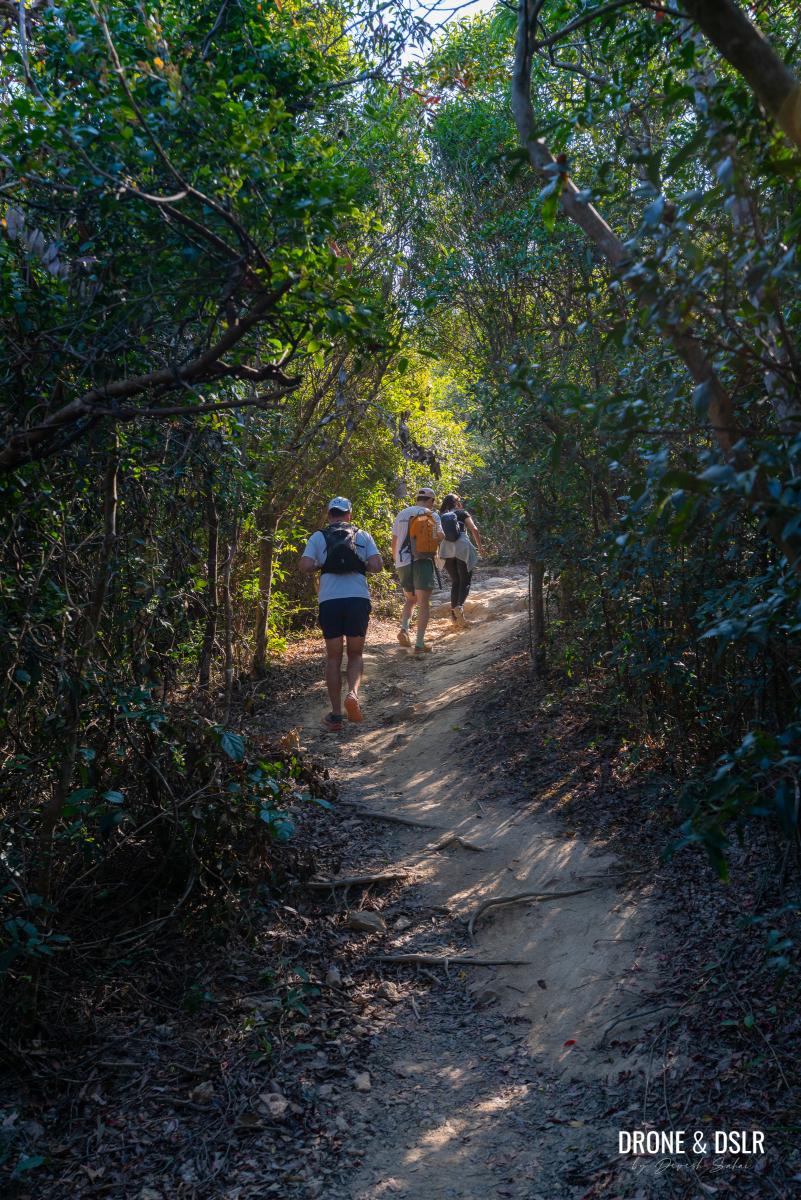
Although this section involves the steepest climb of the day, it strangely feels more manageable than the stretches you’ve already covered. This might be because the steps here are better maintained and more uniform than the uneven boulders from before.
-
- The ascent to Hsien Ku Fung begins
-
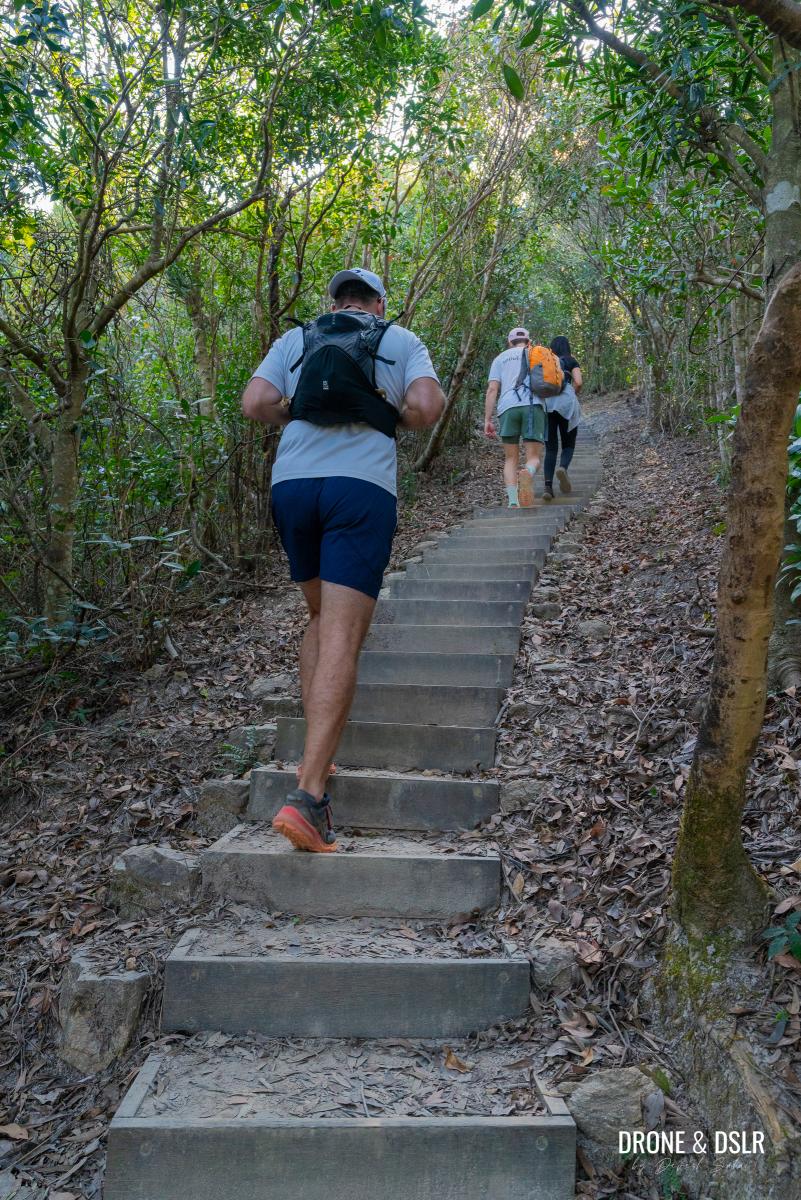
- After the initial steps, comes an incline
-
- After the incline, it’s back to more steep steps
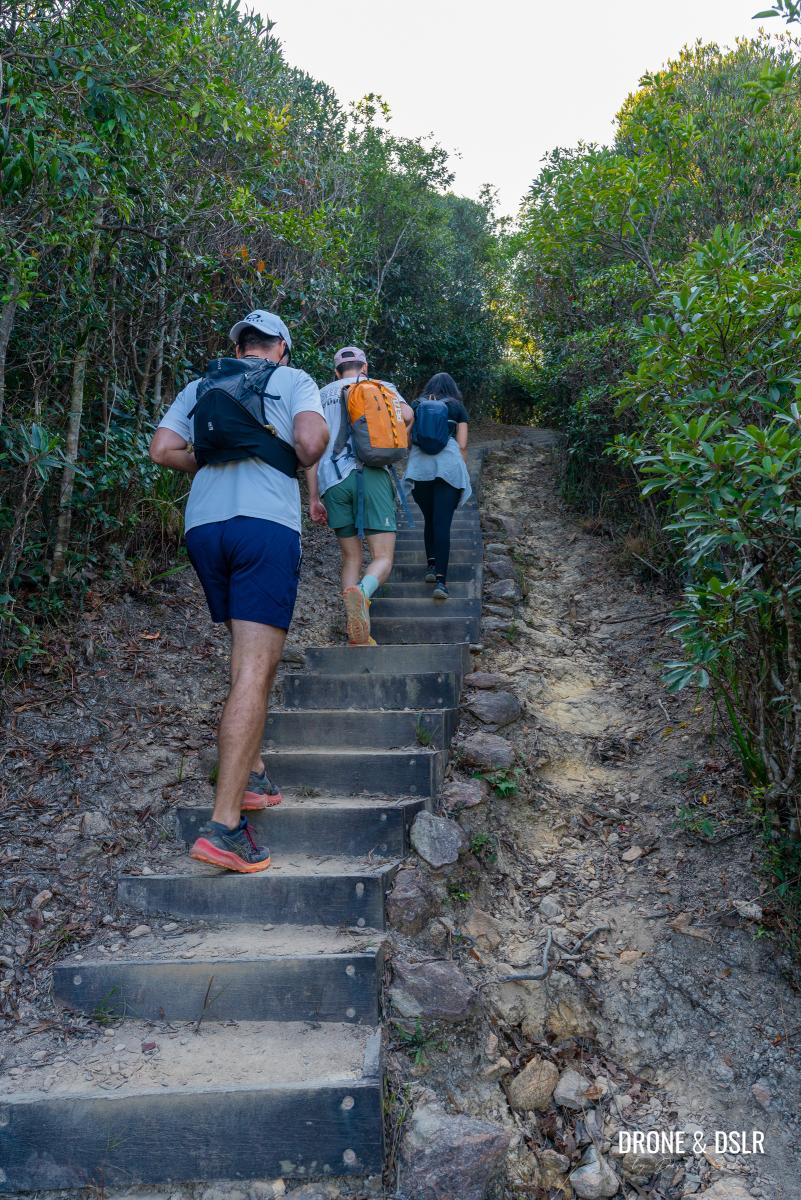
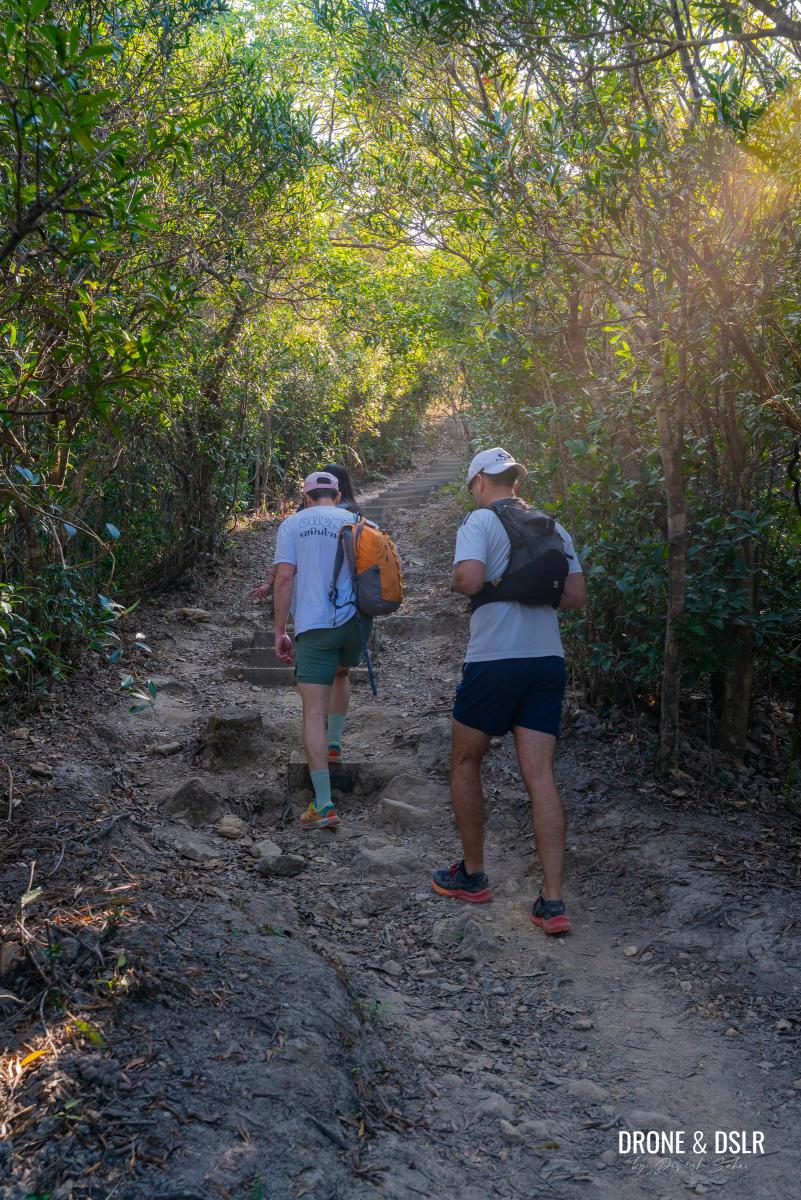
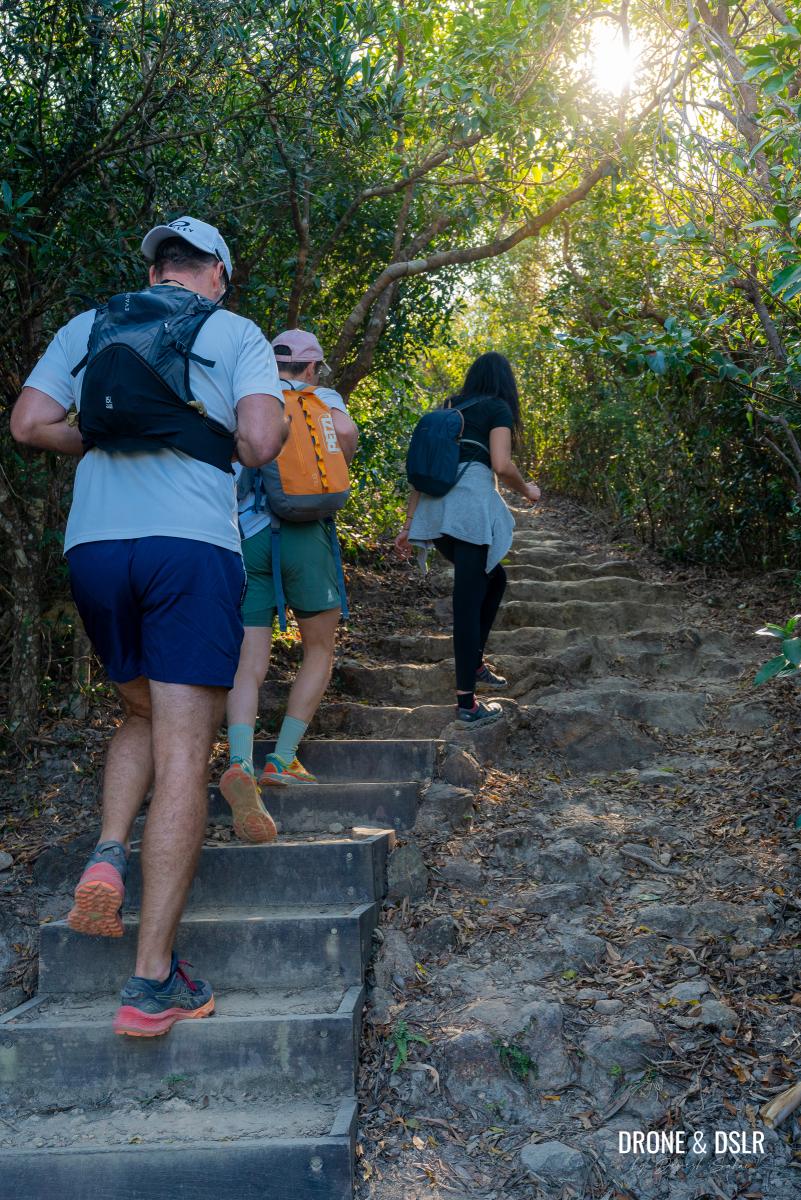
Still, the ascent is approximately 600 meters of constant incline. There are a few moments where the slope tapers off slightly, but overall, it remains a challenging climb. I’ll let the photos give you a better idea of the scale.
-
- The steps continue uphill to the Immortals
-
- These steps feel easier than the earlier ones because they aren’t uneven
-
- Almost seems never-ending getting to the Eight Immortals
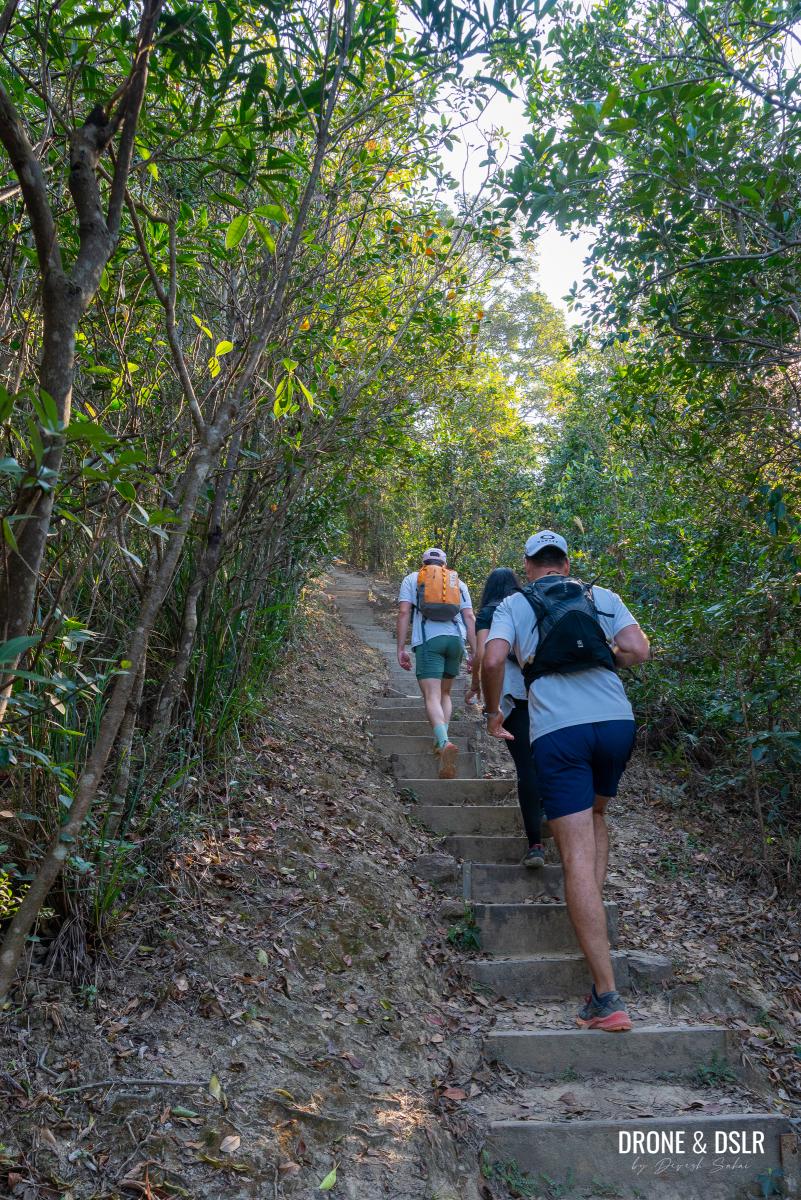
As always, pace yourself and take breaks as needed. As you approach the summit of Hsien Ku Fung, the trees will begin to thin out.
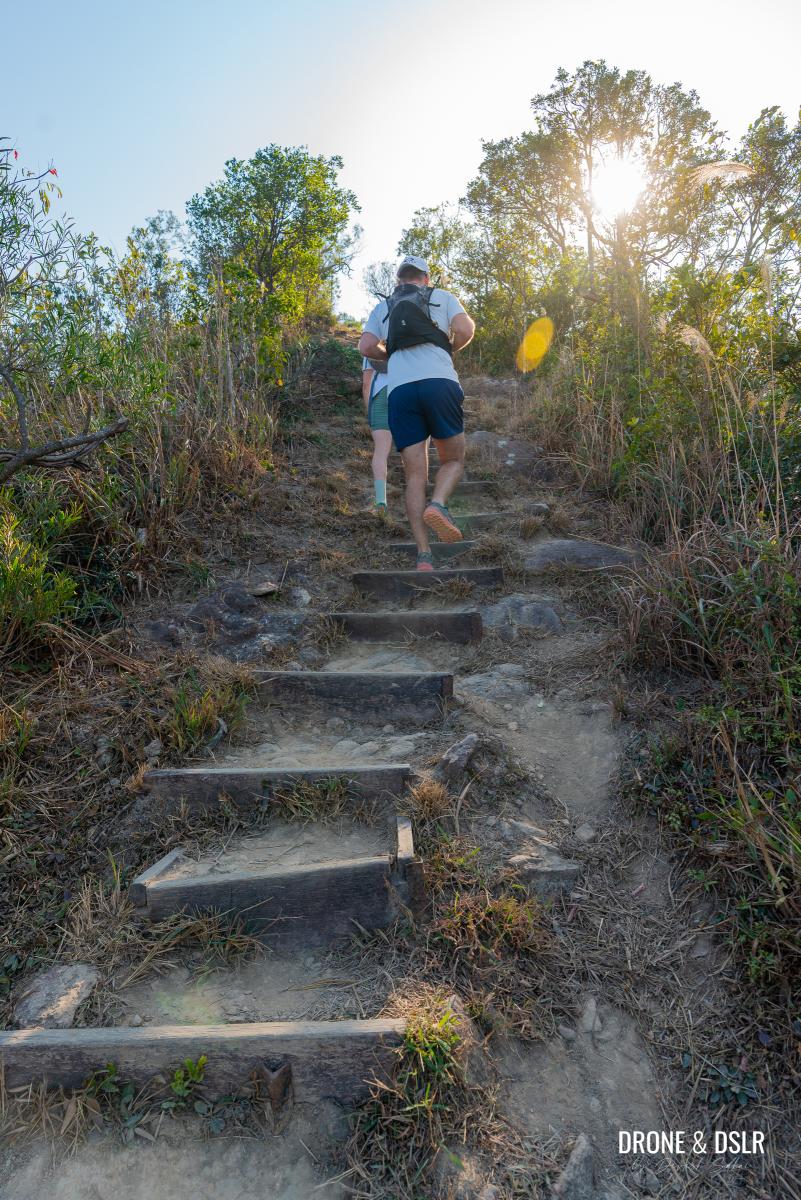
Fewer trees = Approaching the summit of Hsien Ku Fung
By the time you reach the triangulation station at the top, you’ll definitely be ready for a well-earned rest!
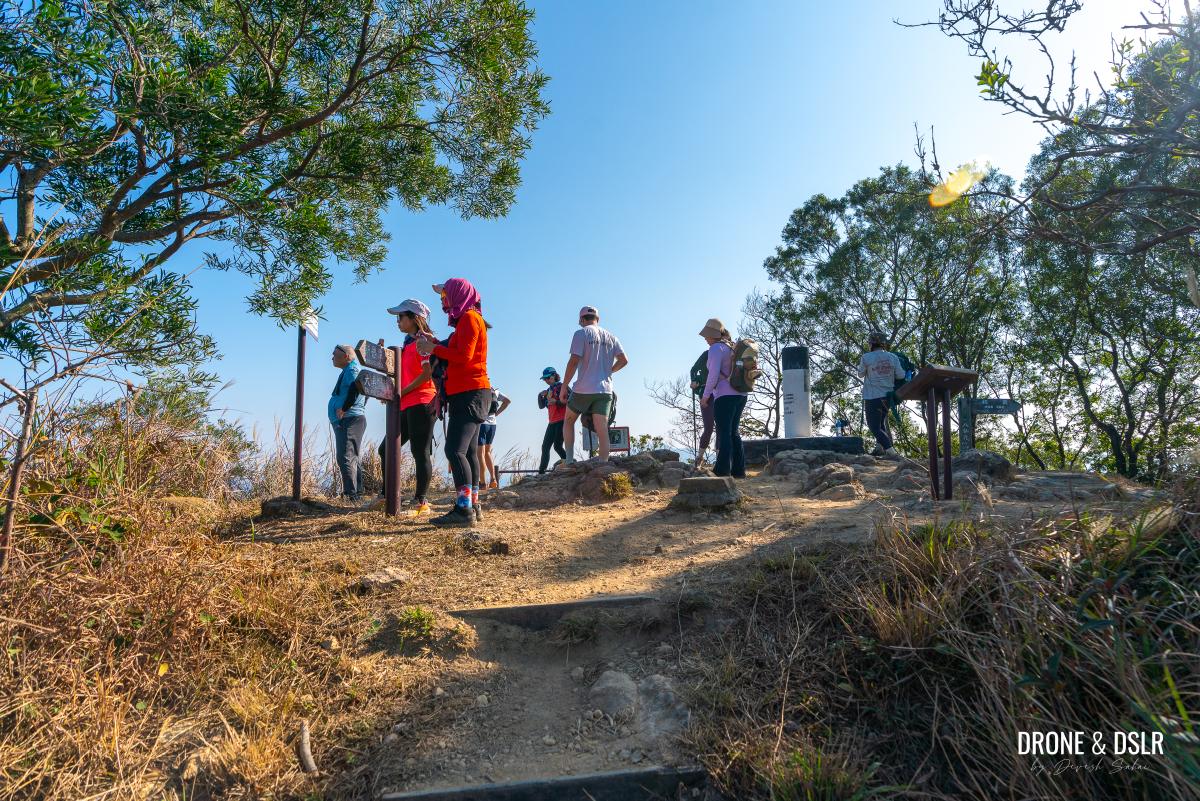
Made it to Hsien Ku Fung — The First Immortal!
Hsien Ku Fung (仙姑峰) – 511m
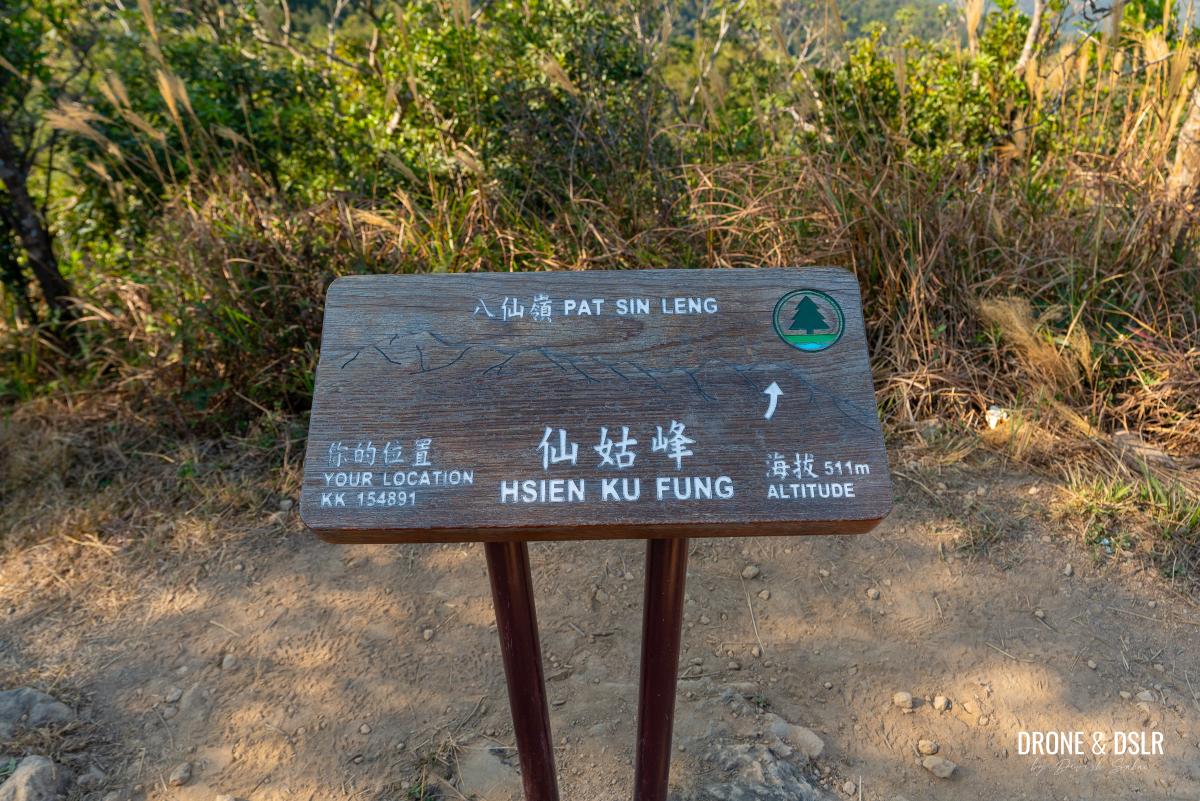
The summit of Hsien Ku Fung (仙姑峰)
As the easternmost peak, Hsien Ku Fung offers hikers magnificent views of Plover Cove Reservoir, Tolo Harbour, and the horizon beyond.
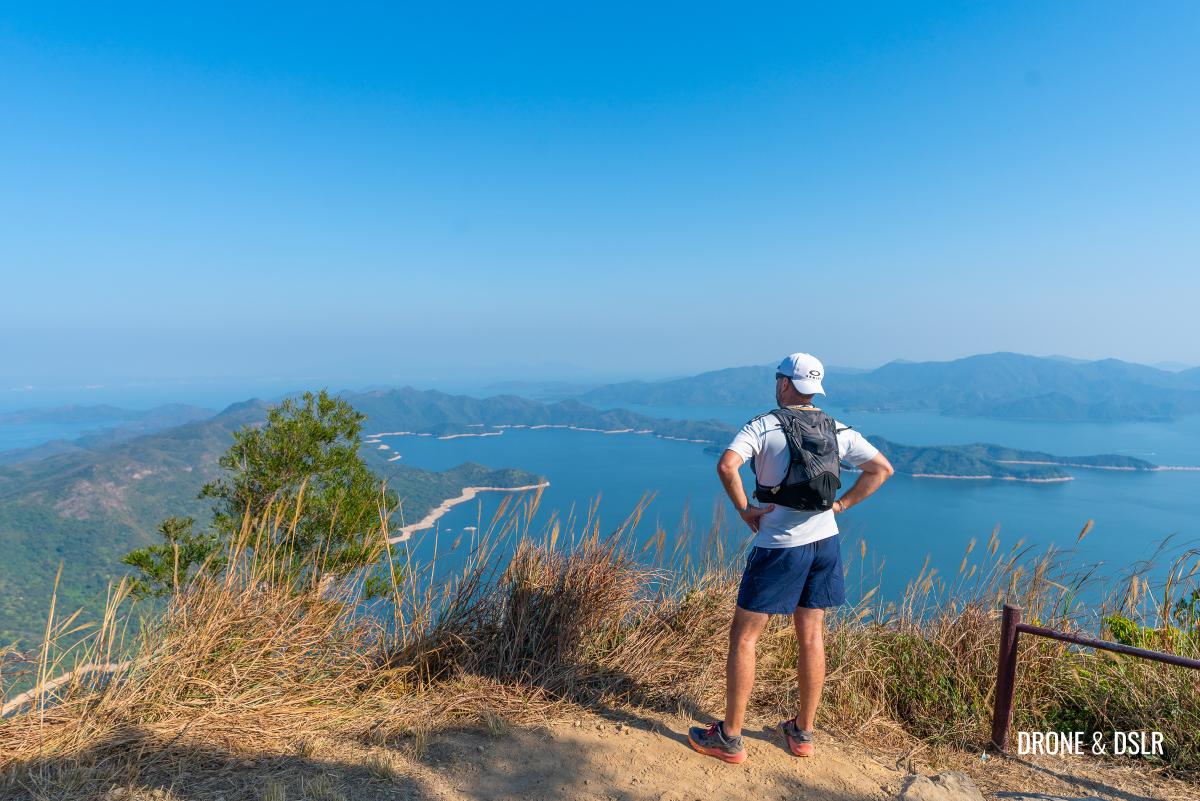
Admiring the views of Plover Cove from on top of Hsien Ku Fung
Fortunately, there is also some shade here where you can relax and recover from the climb.
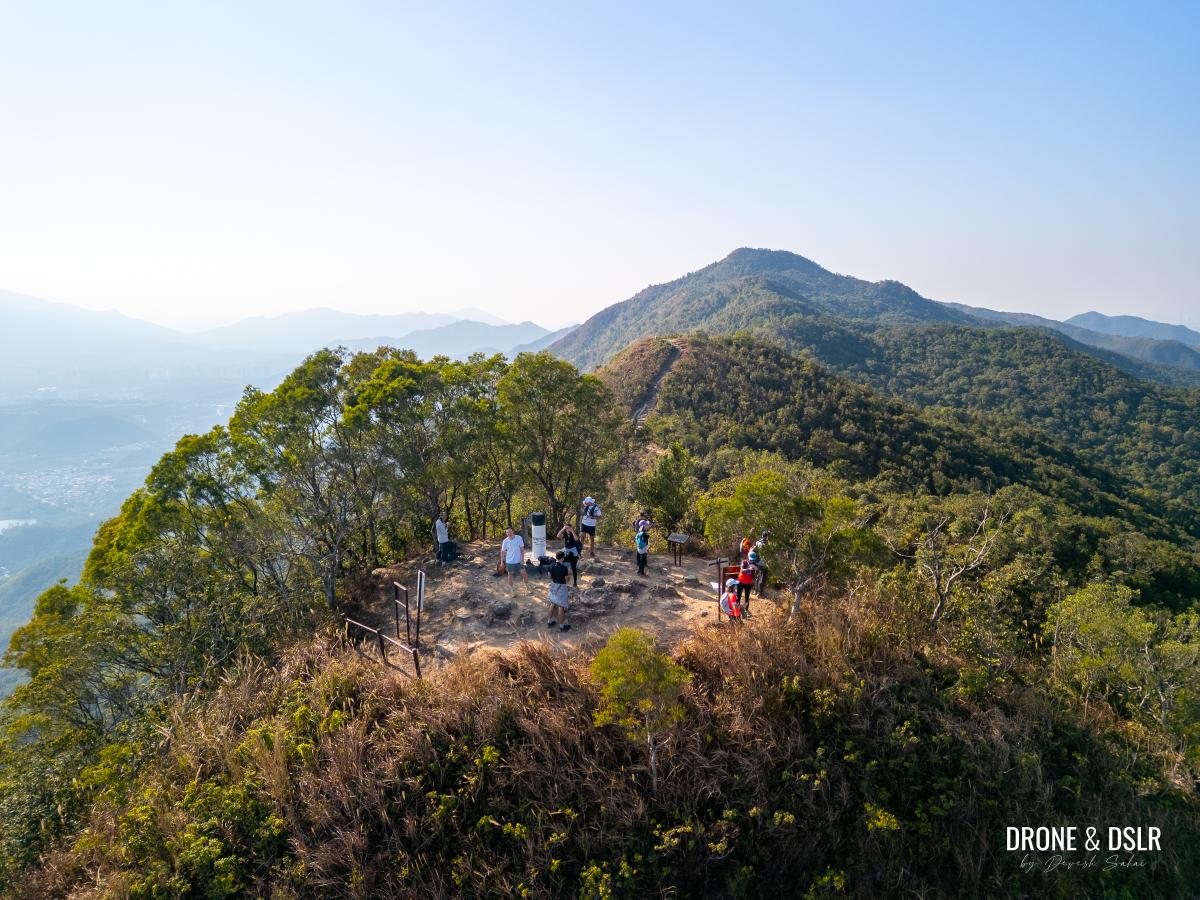
Taking a break on the shaded summit of Hsien Ku Fung
While the views to the east are fascinating, it is the view to the west that truly demands your attention. From this vantage point, you can see the entire Eight Immortals range (Pat Sin Leng) stretching out toward the final peak, Shun Yeung Fung.
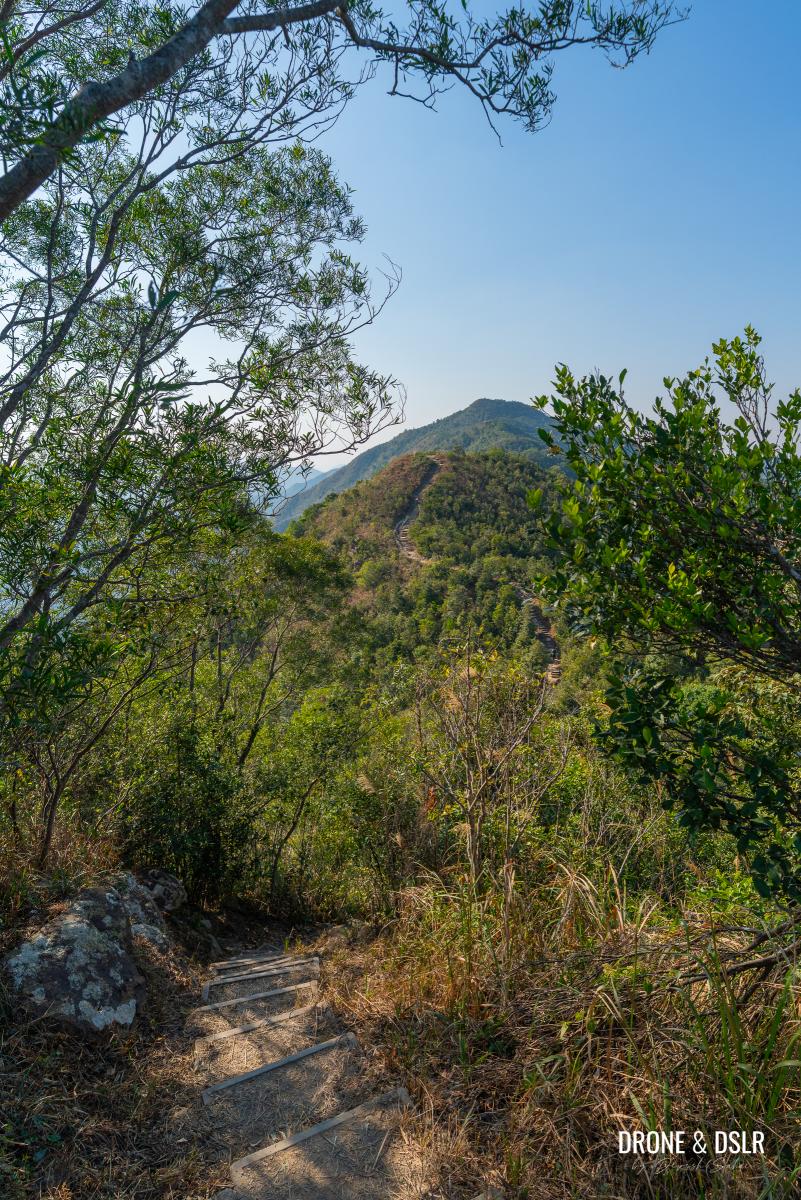
Getting ready to scale all Immortals!
It is certainly daunting to realize just how much ground you still have to cover.
So, are you ready to keep going?
Hsien Ku Fung to Sheung Tsz Fung
You’ll find the distance between Hsien Ku Fung and Sheung Tsz Fung to be quite short.
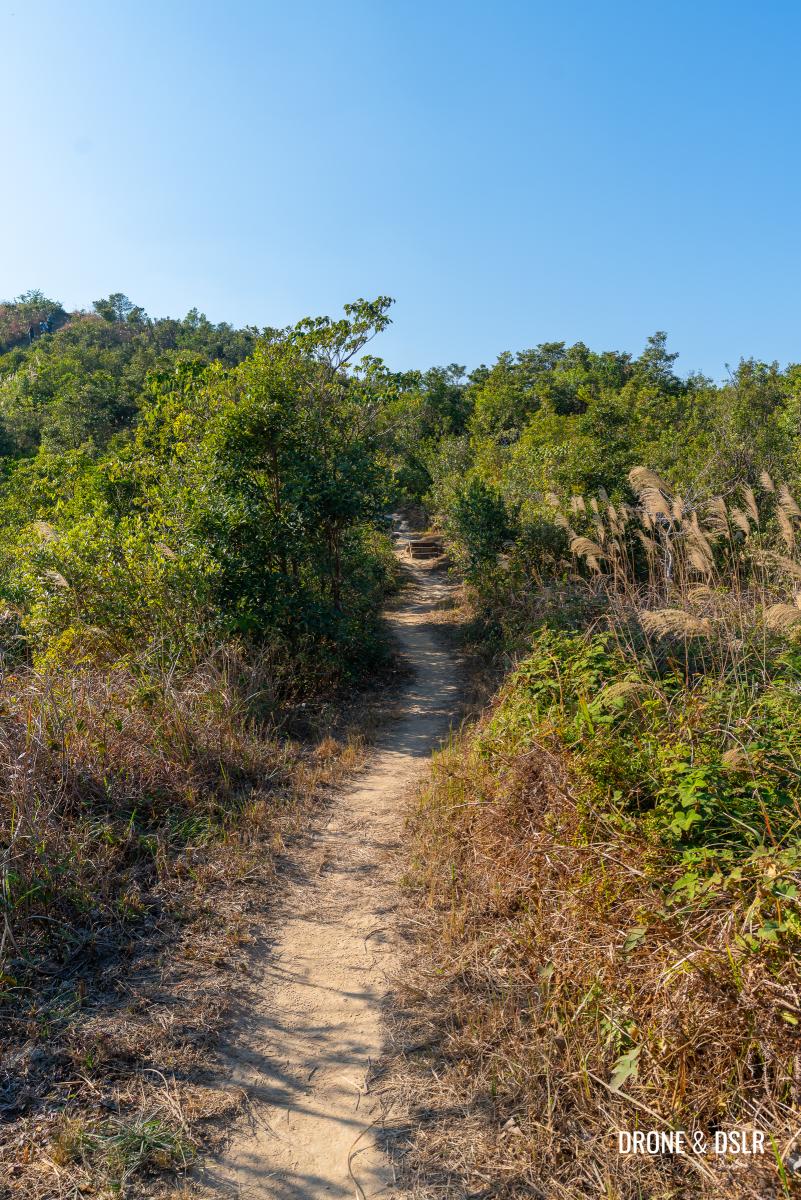
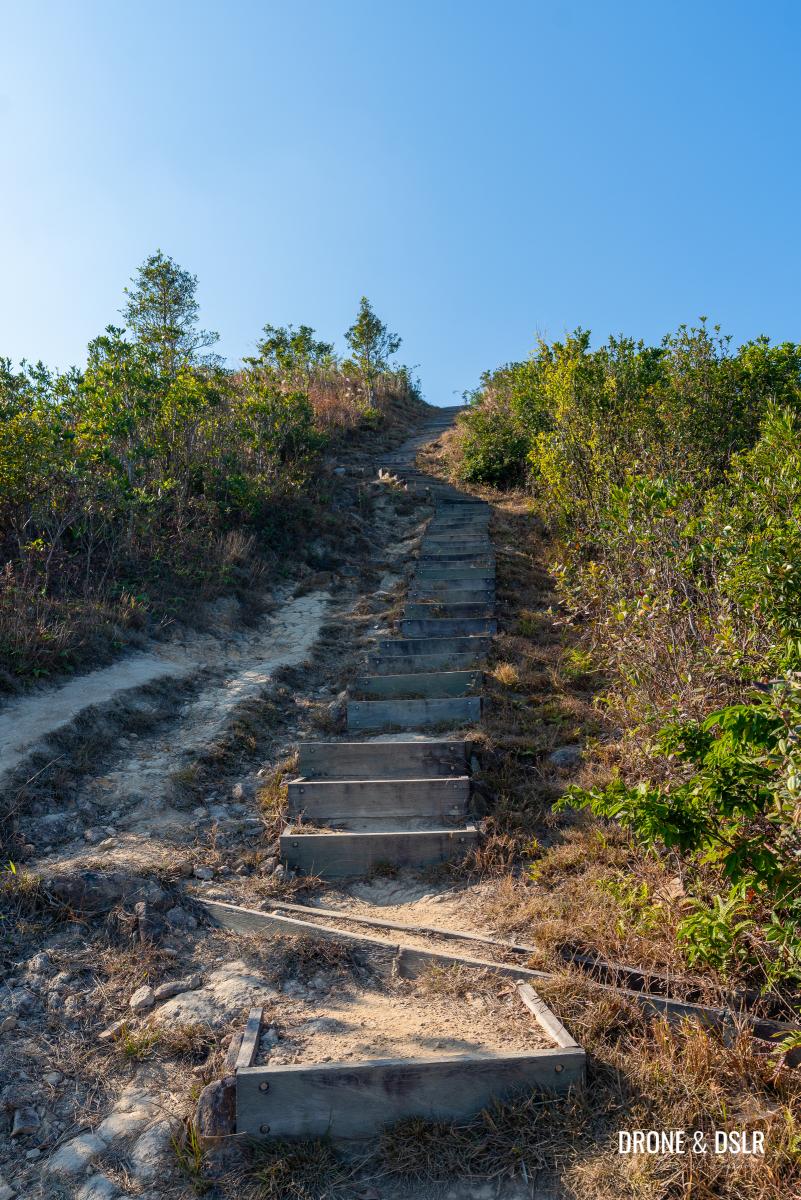
However, it involves a bit of a “V” shape: a sharp descent followed by a short, flat transition and a punchy, steep ascent.
-
- The descent from Hsien Ku Fung is sharp
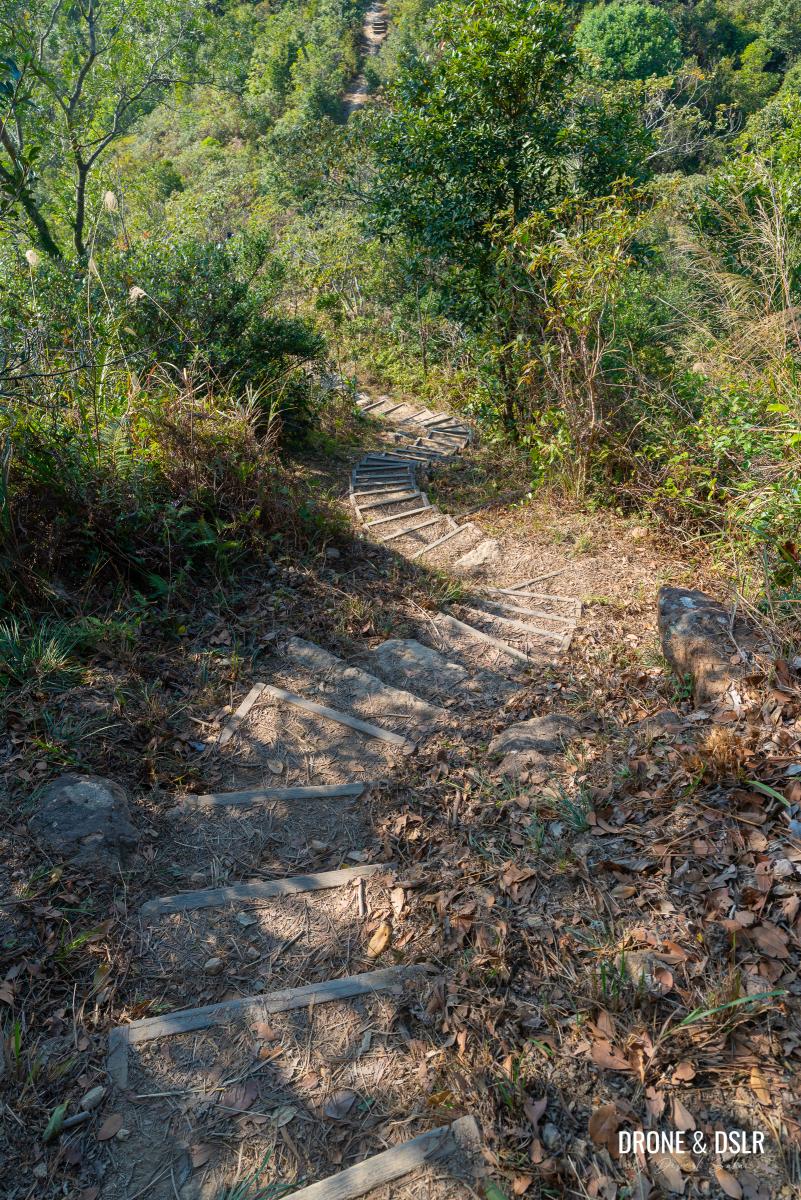
-
- Followed by a short flat section
-
- And a quick, steep climb to Sheung Tsz Fung
Sheung Tsz Fung (湘子峰 ) — 513m
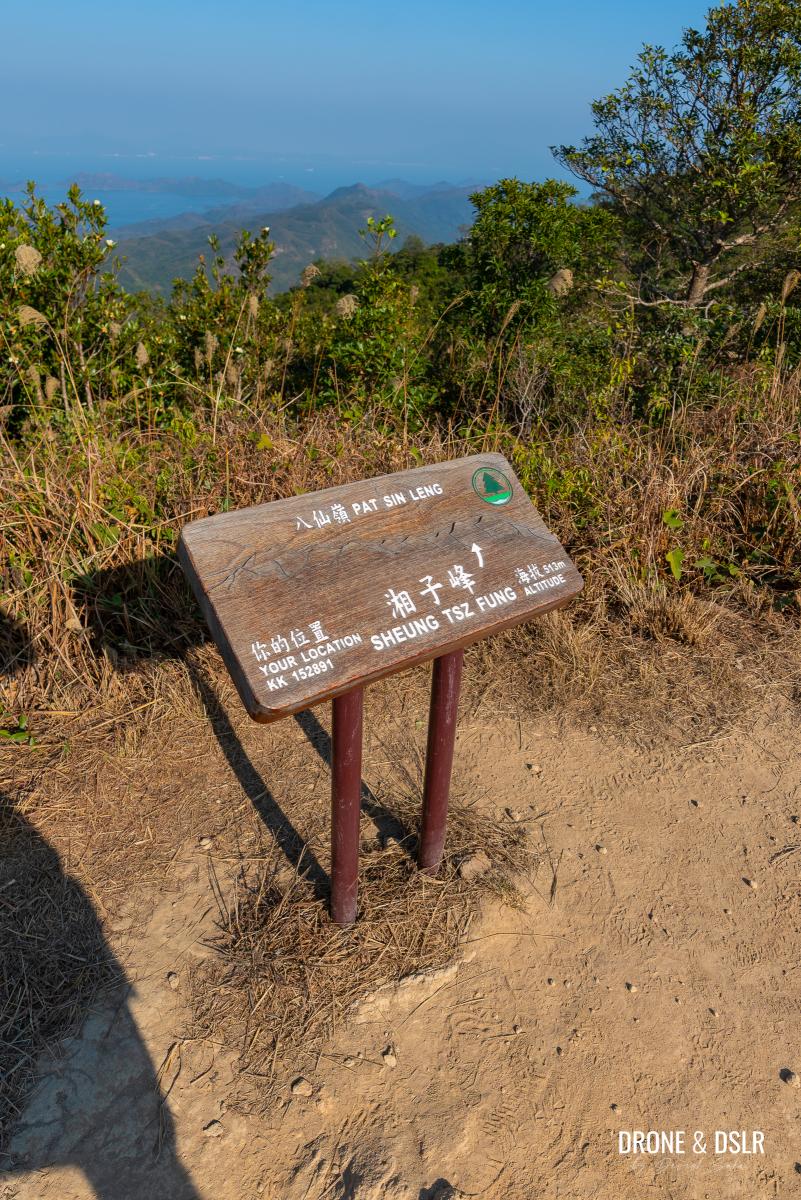
The summit of Sheung Tsz Fung (湘子峰 ) — 513m
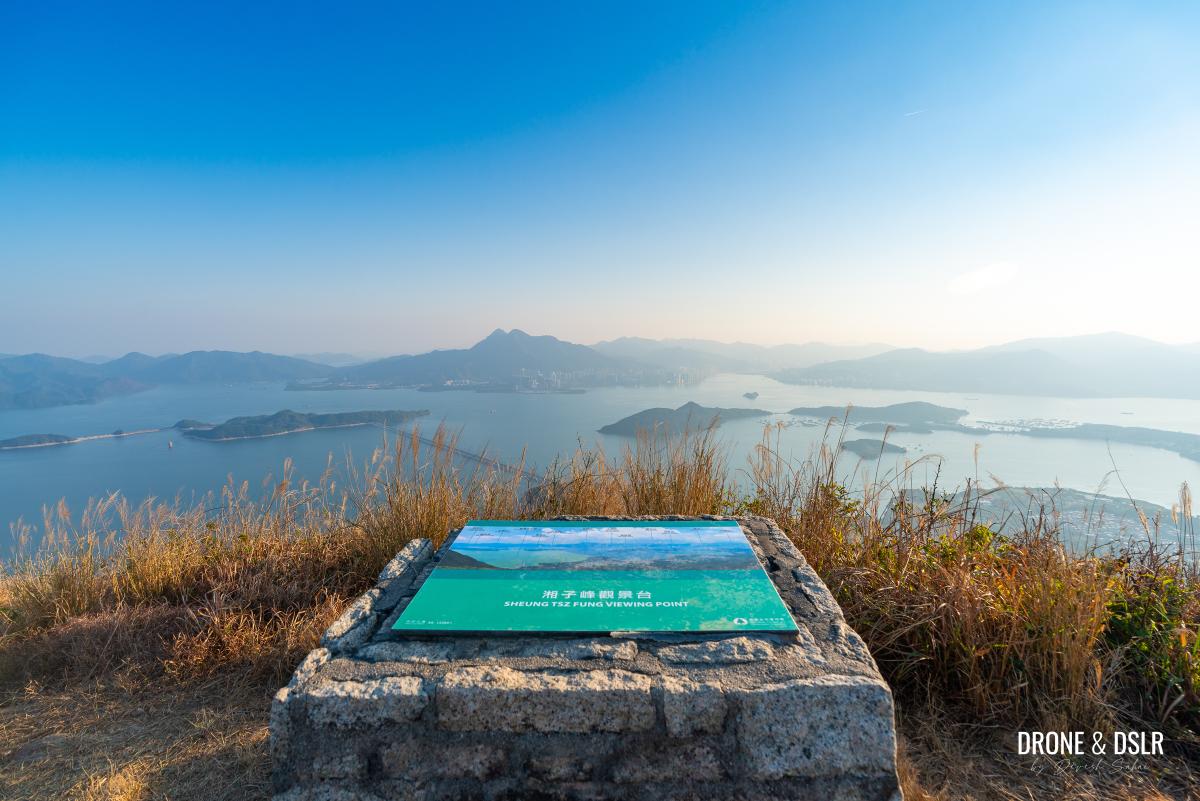
Named after the second Immortal, Sheung Tsz Fung is one of the few peaks along the ridge that offers completely unobstructed views.
-
- Sheung Tsz Fung probably has the best viewing point of all the Immortals
-
- Views of Tolo Harbour from Sheung Tsz Fung
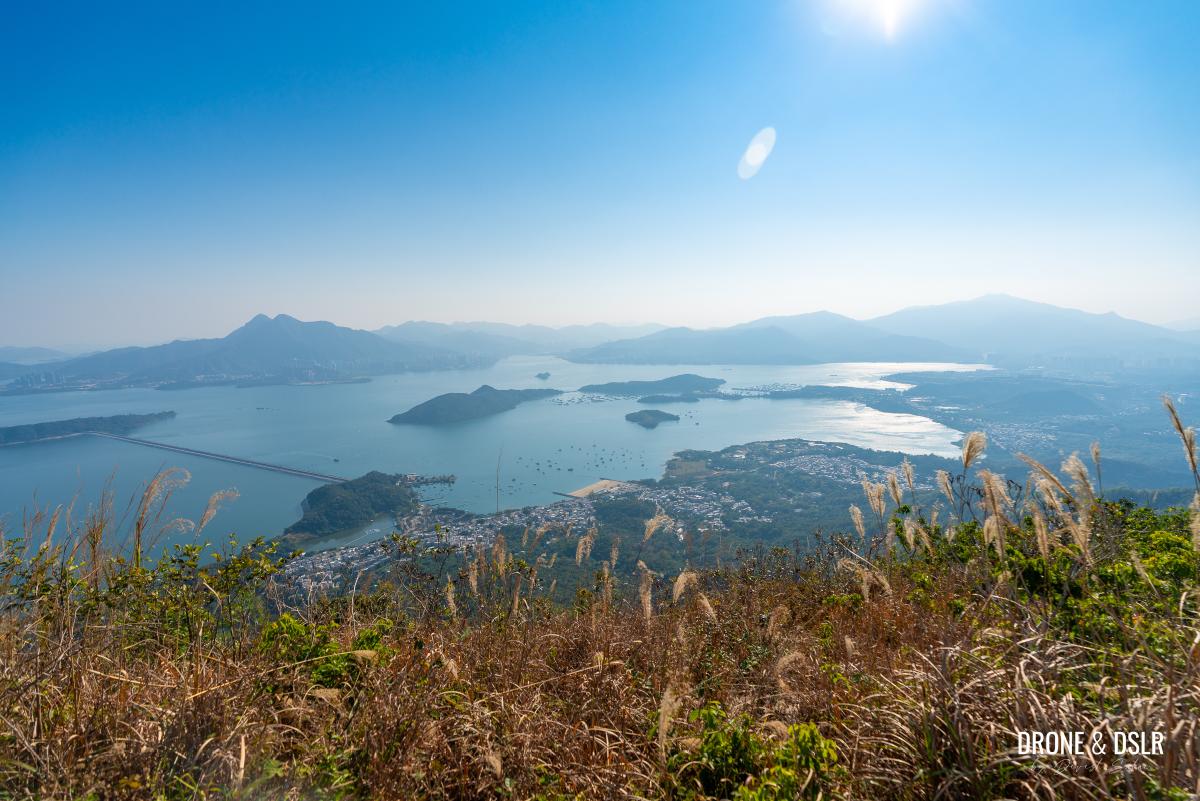
The panoramas from here are truly magnificent, stretching from the rolling hills of Sai Kung to the prominent peaks of Ma On Shan and all the way to Tai Mo Shan. It is simply incredible!
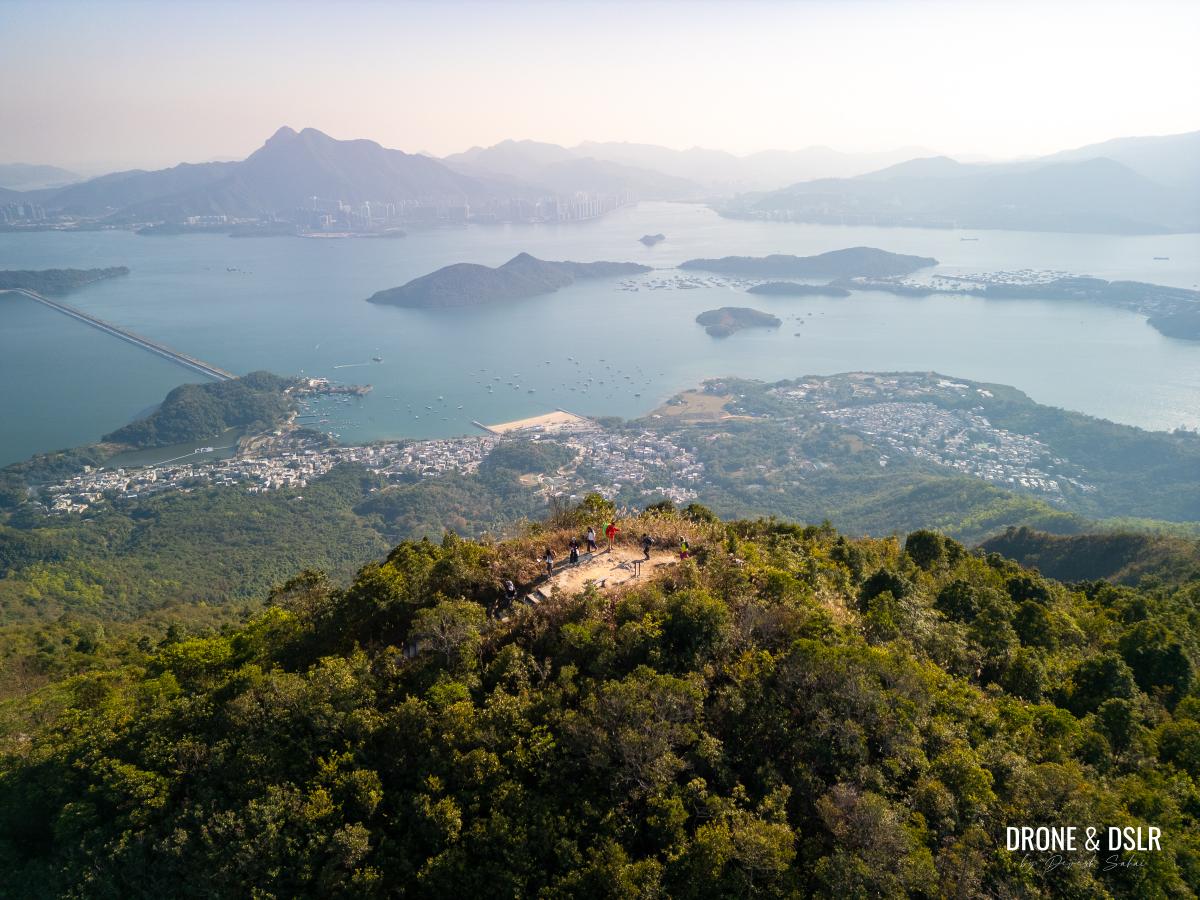
The summit of Sheung Tsz Fung offers plenty of views
Sheung Tsz Fung to Choi Wo Fung
The gap between Sheung Tsz Fung and Choi Wo Fung is much easier to navigate, largely because Choi Wo Fung is the lowest in elevation of the eight peaks.
-
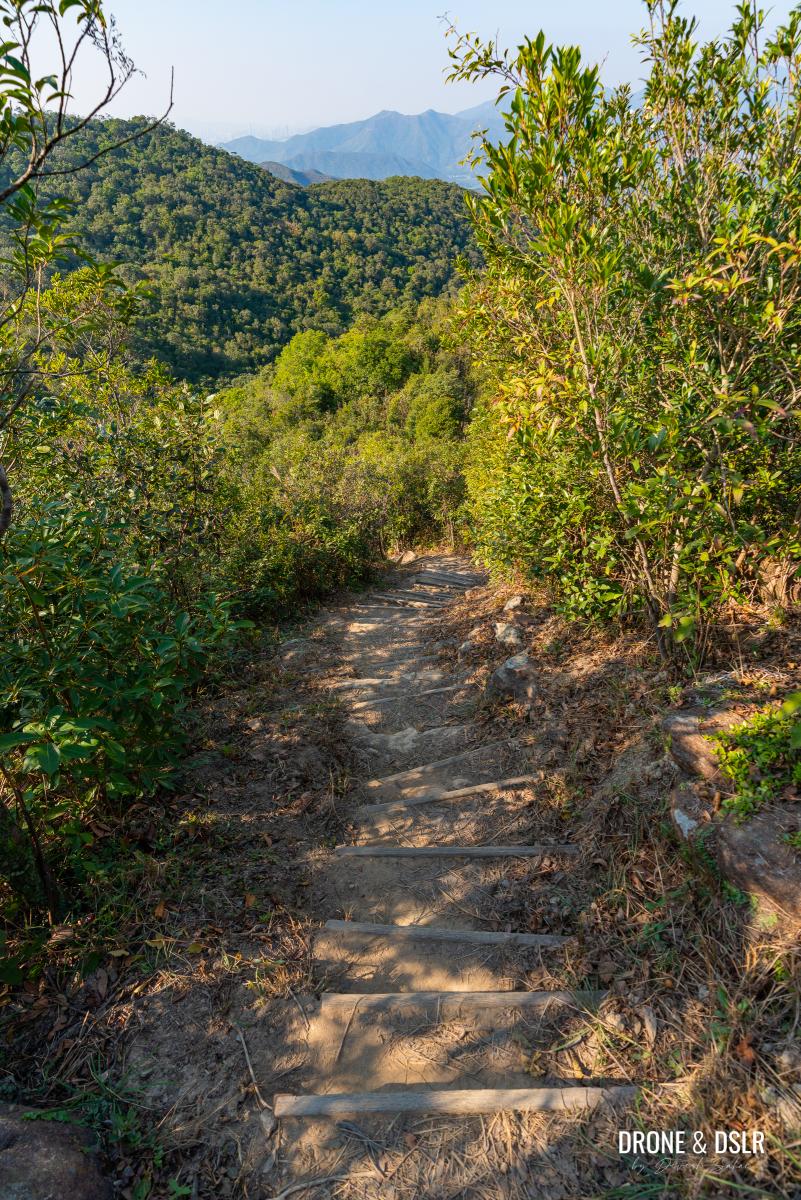
- Heading down from Sheung Tsz Fung
-
- The descent goes on for a while as the next peak is shorter
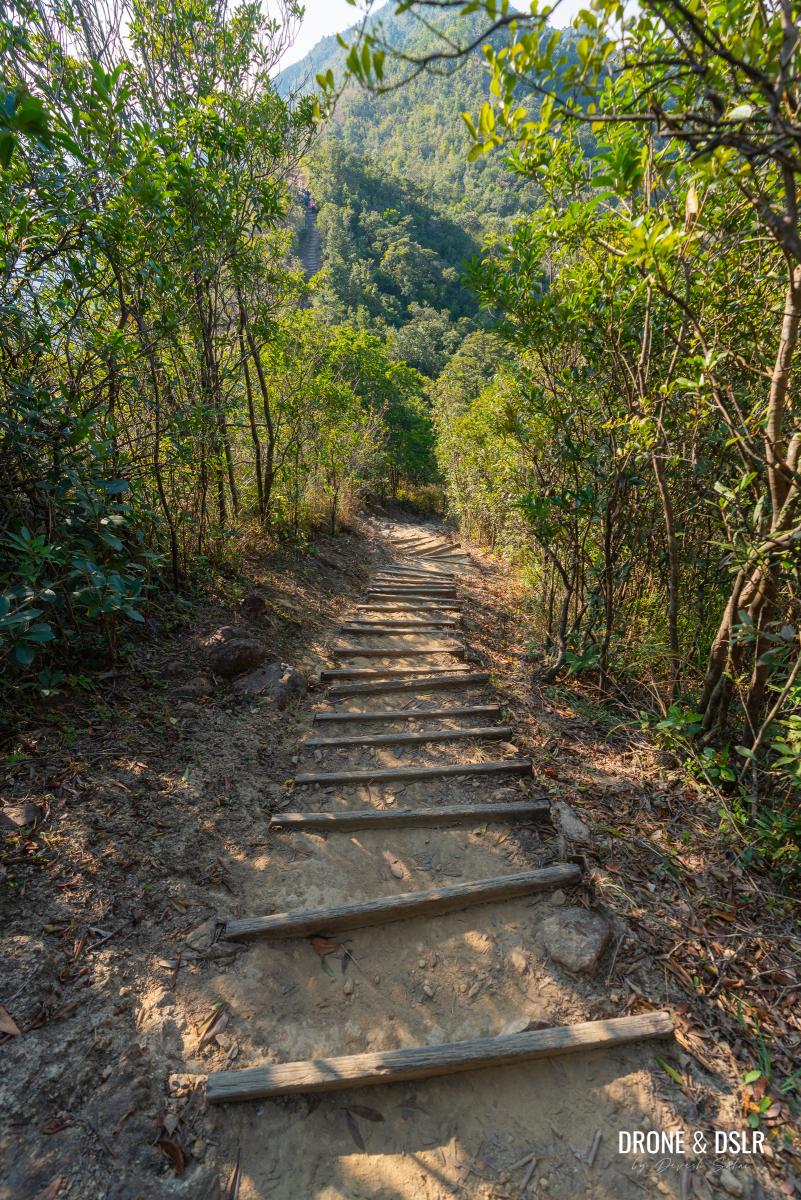
This means the descent from Sheung Tsz Fung is moderate and quite scenic. Once you reach the bottom, a flat trail leads to a final flight of steps that feels almost too easy for a peak ascent.
-
- A short flat walk again between Sheung Tsz Fung and Choi Wo Fung
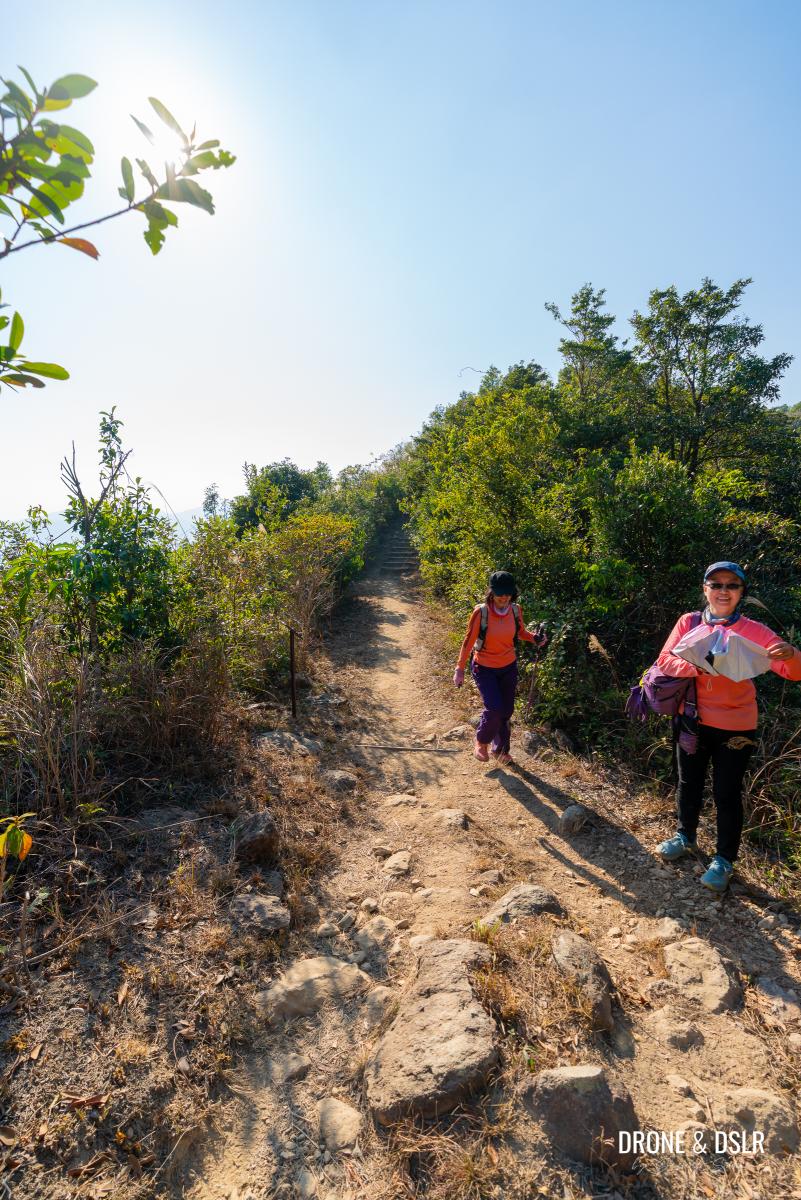
-
- Quick climb to Choi Wo Fung
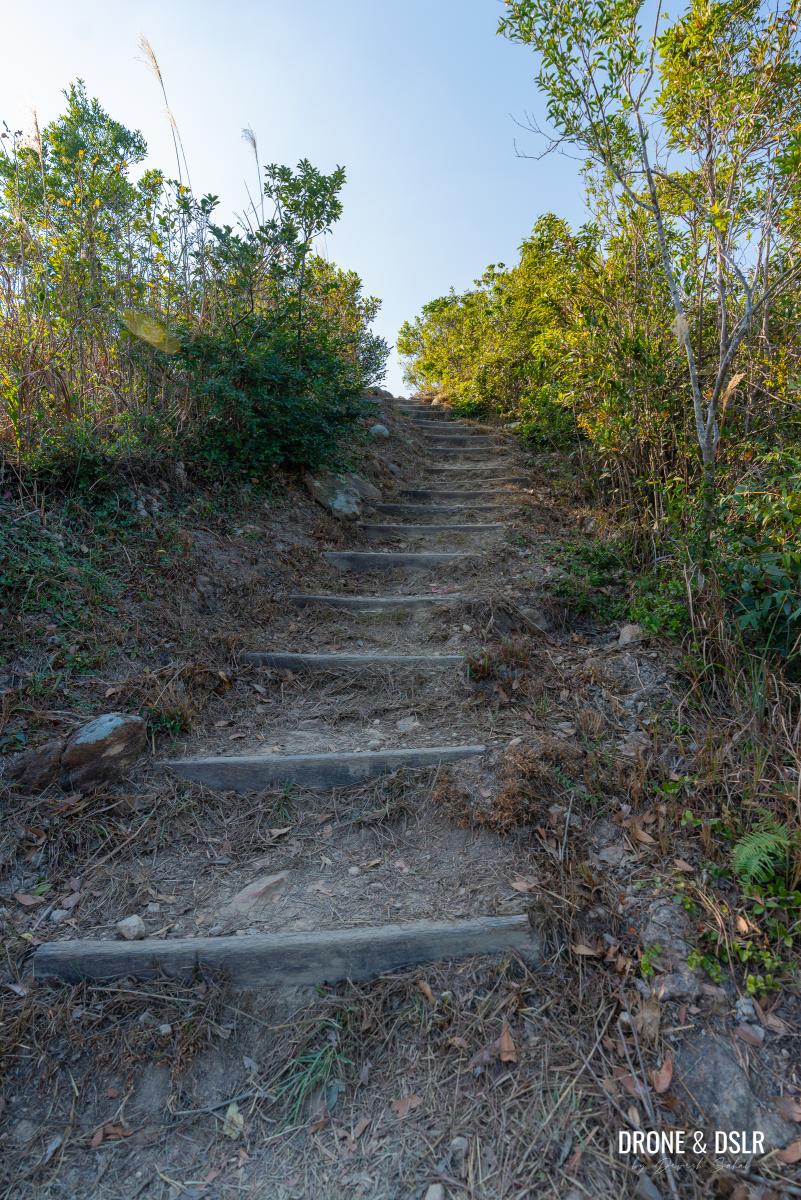
Choi Wo Fung (采和峰) – 489m
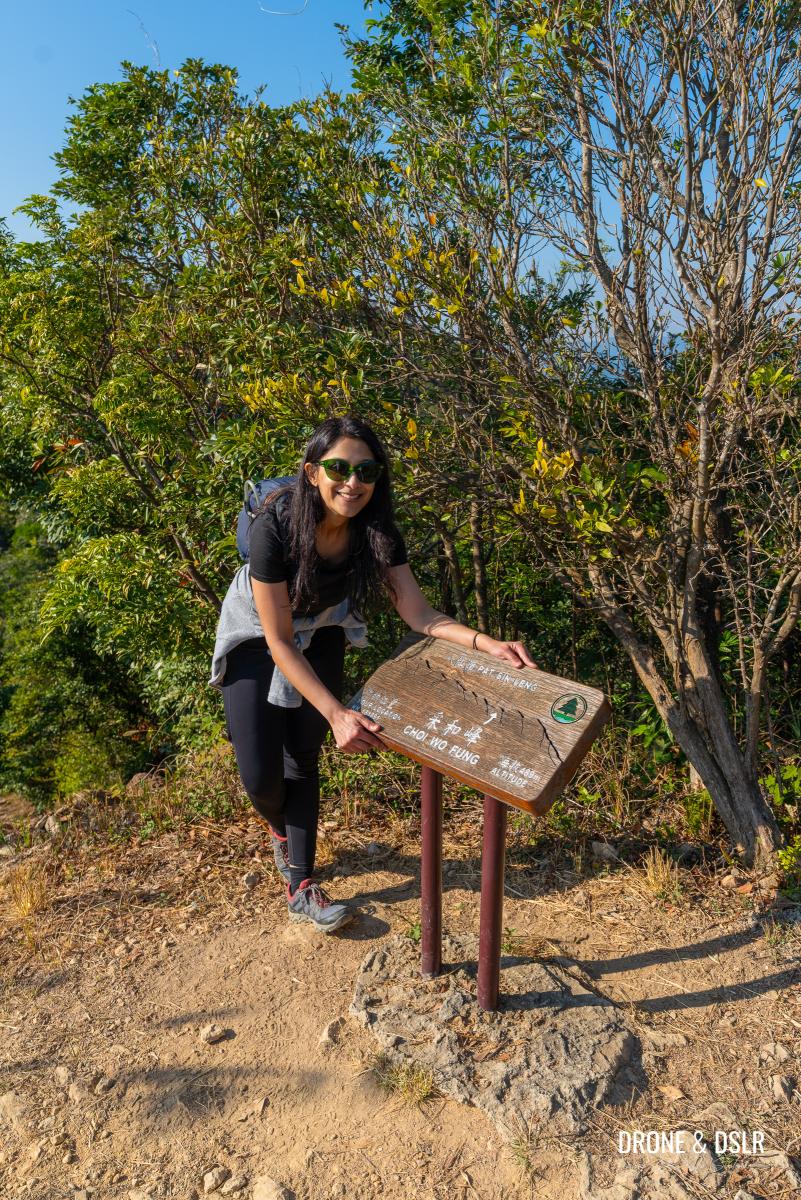
The summit of Choi Wo Fung (采和峰) – 489m
Standing at 489 meters, Choi Wo Fung is the lowest of the Eight Immortals.
There are hardly any views to enjoy from this summit, so we decided to move on quickly, only to realize that a lot more climbing lay ahead.
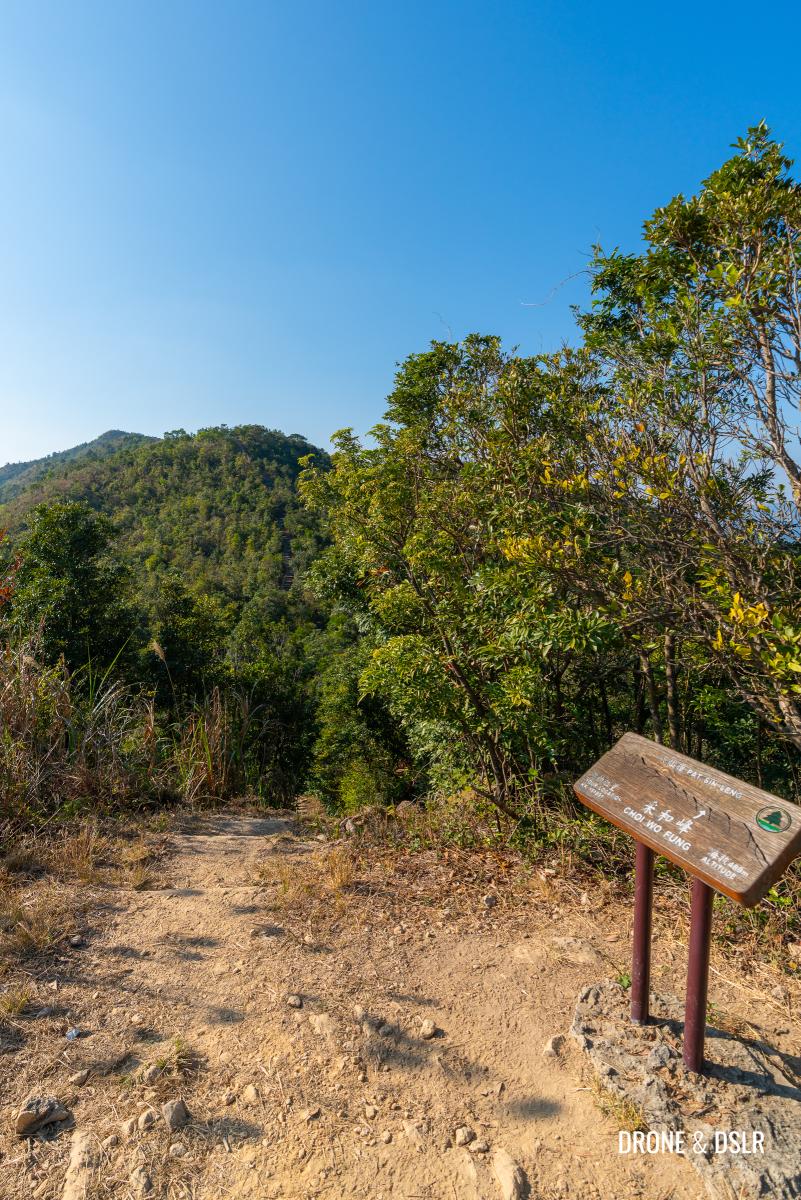
Choi Wo Fung is the shortest of the Eight Immortals
Choi Wo Fung to Tsao Kau Fung
From Choi Wo Fung, the trail begins with a short, easy flight of steps down into the gap between the two hills.
-
- Heading from Choi Wo Fung to Tsao Kau Fung
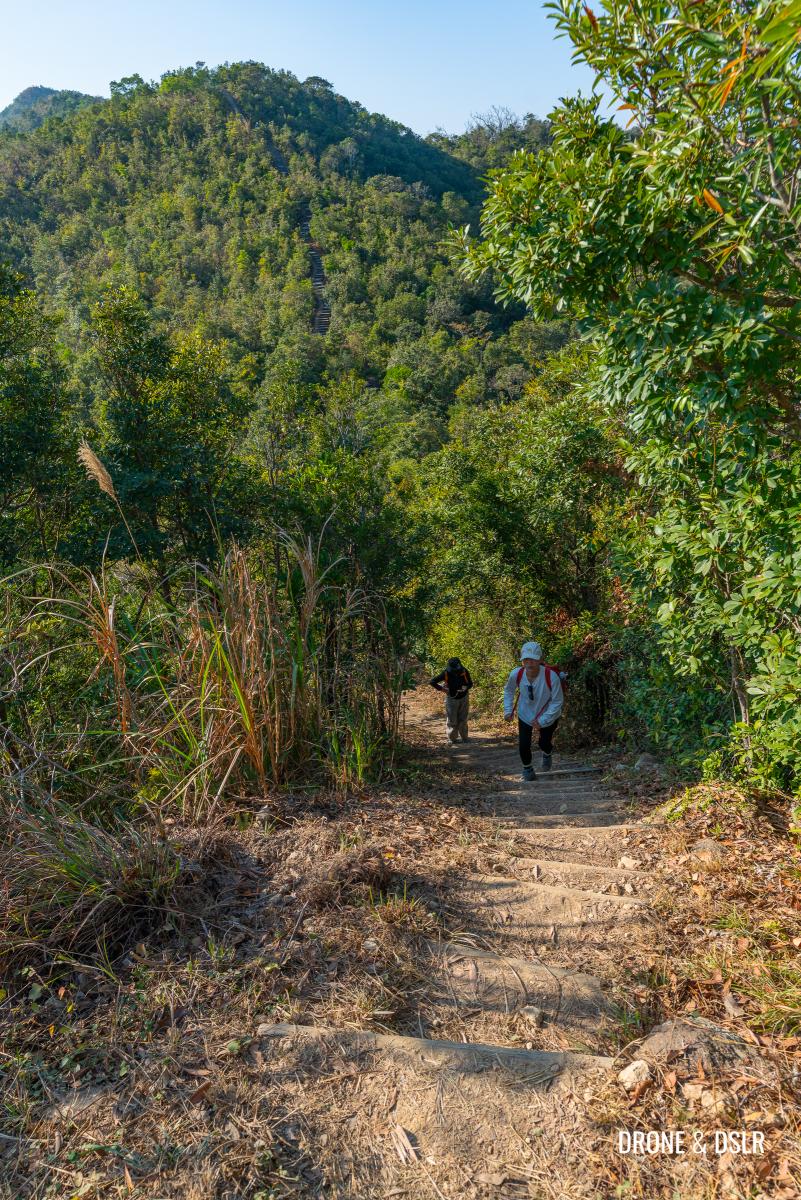
-
- The gap between Choi Wo Fung and Tsao Kau Fung
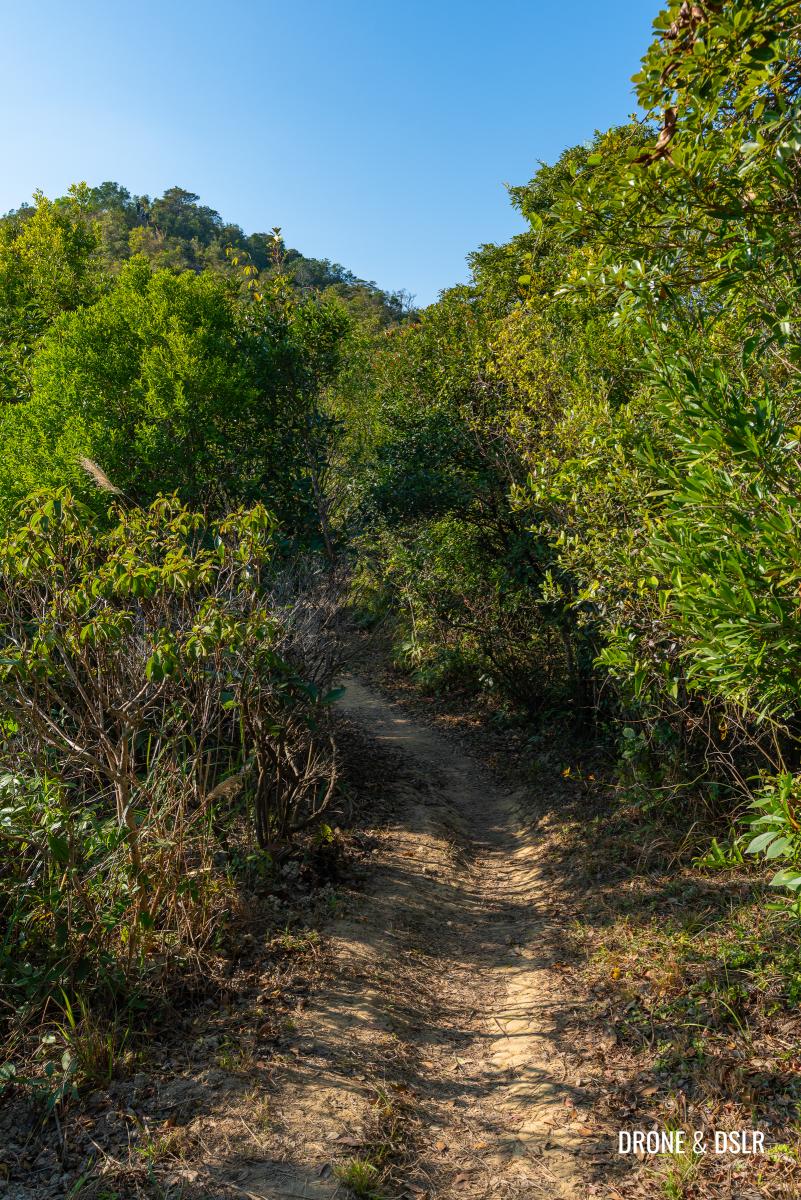
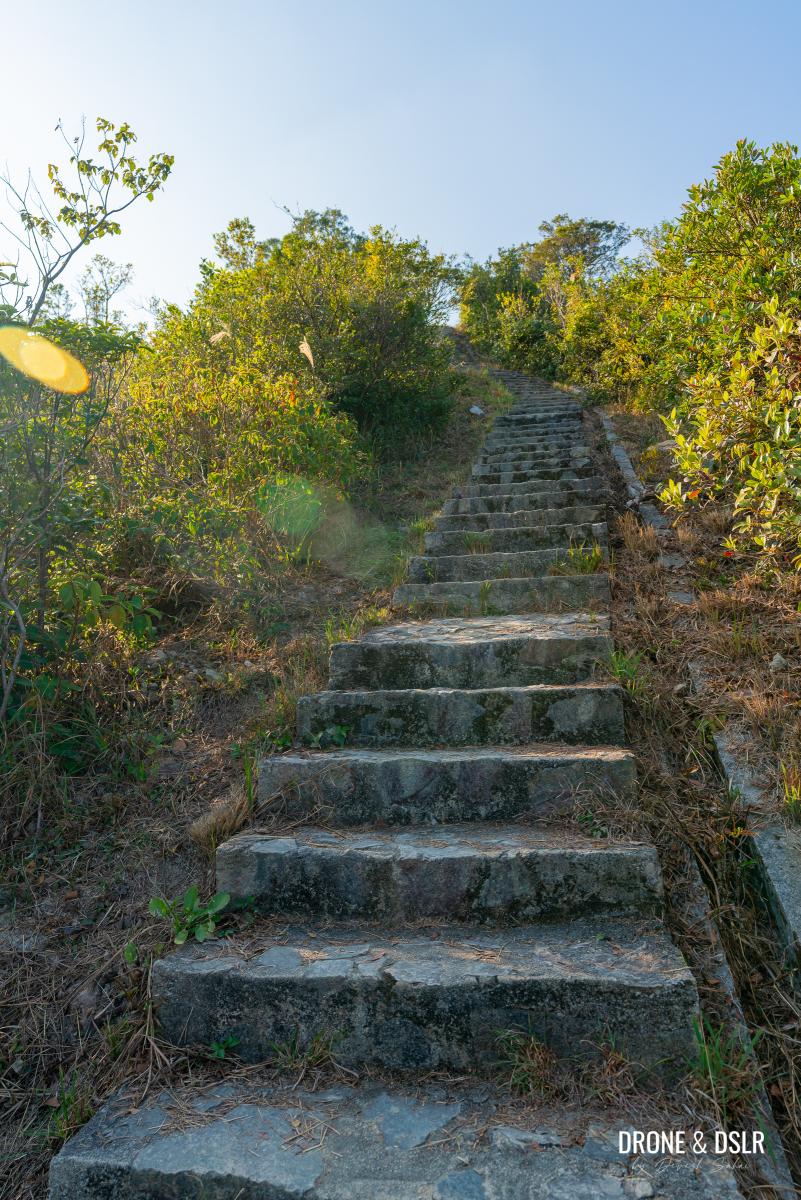
After a brief walk through the brushes, you’ll encounter another set of stairs. While the steps start off gently, they soon begin to twist and turn, seemingly stretching on forever.
-
- The climb to Tsao Kau Fung
-
- Except a longer climb because you’re coming from the shortest of the Eight Immortals
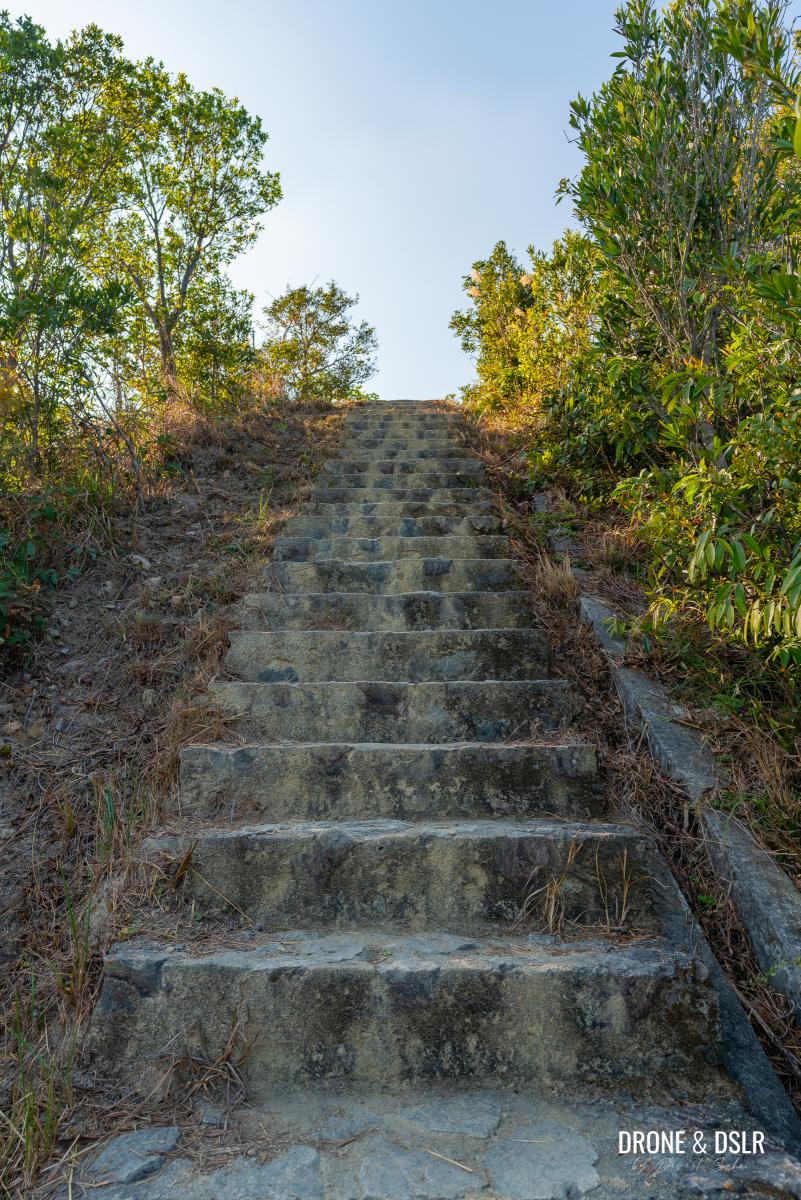
No surprises here because a tougher climb was to be expected after leaving the lowest peak of the eight.
Tsao Kau Fung (曹舅峰) — 508m
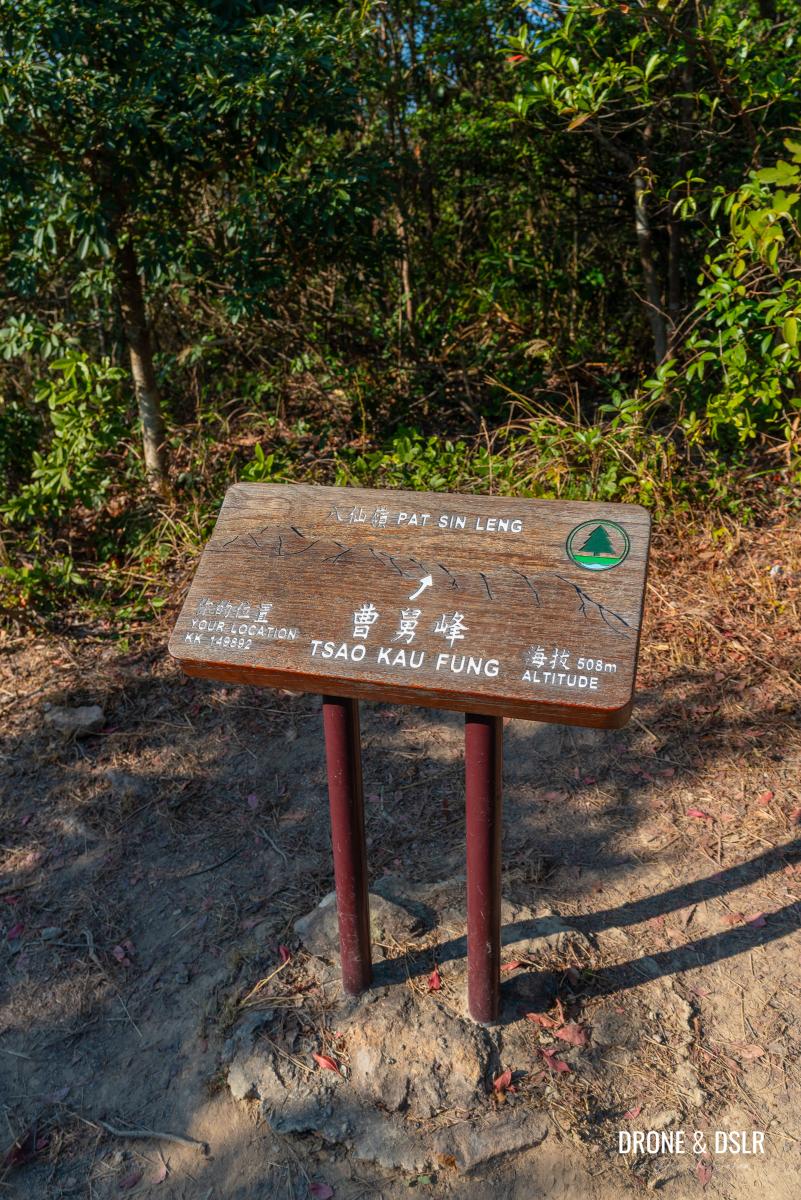
The summit of Tsao Kau Fung (曹舅峰) — 508m
After a relatively taxing ascent, you’ll reach Tsao Kau Fung.
The views here are somewhat limited, so once we had caught our breath and enjoyed a quick rest, we pushed on toward the fifth immortal.
Tsao Kau Fung to Kuai Li Fung
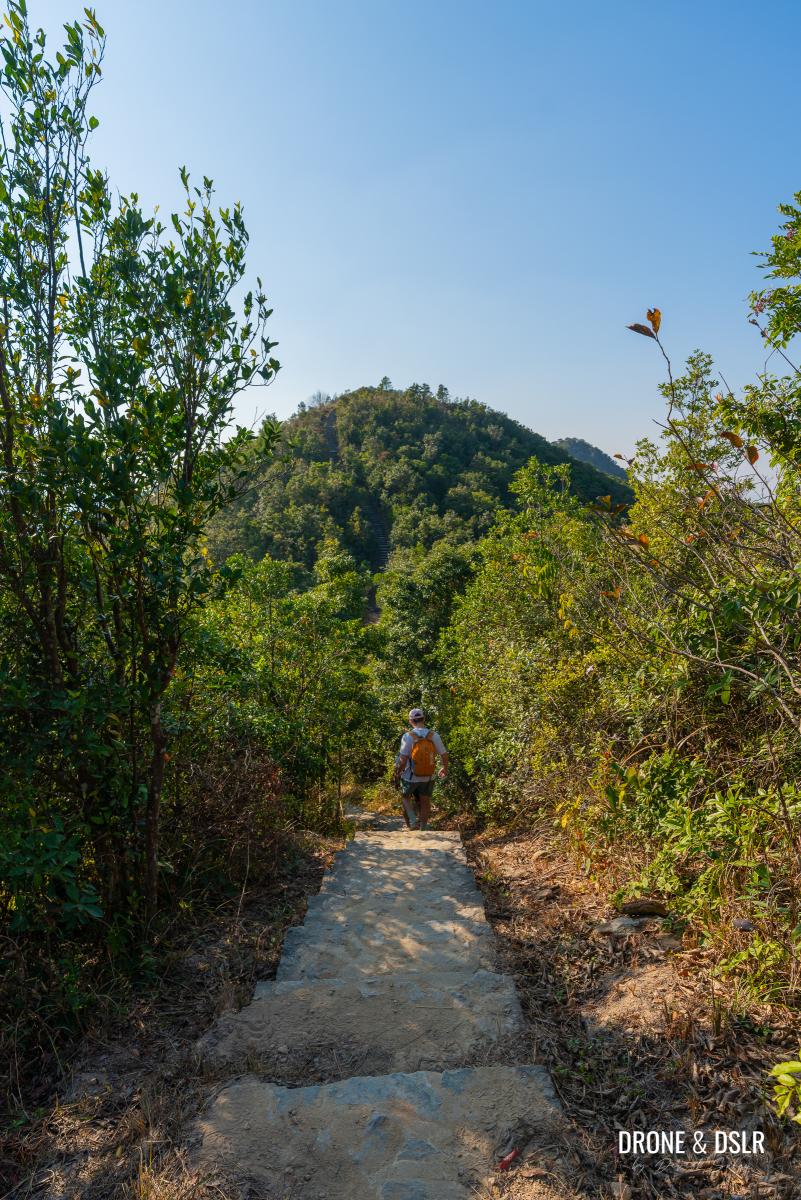
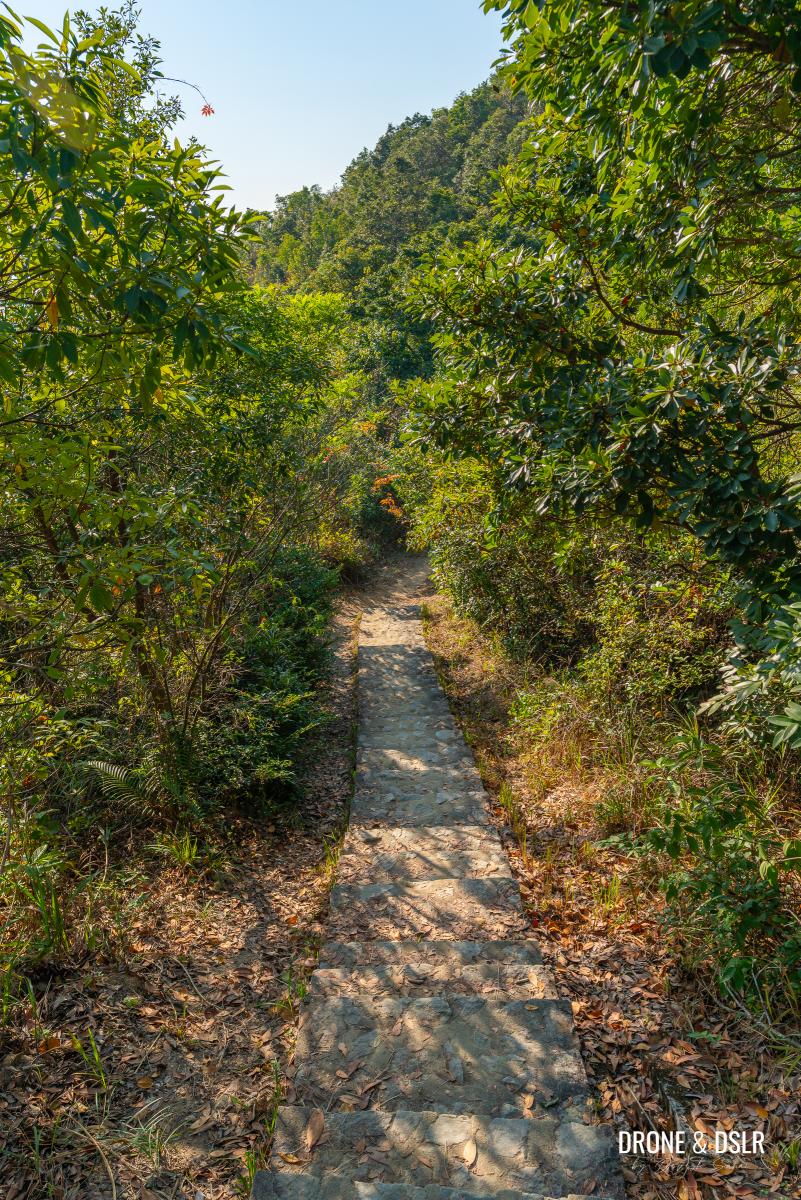
The gap between Tsao Kau Fung and Kuai Li Fung is relatively short.
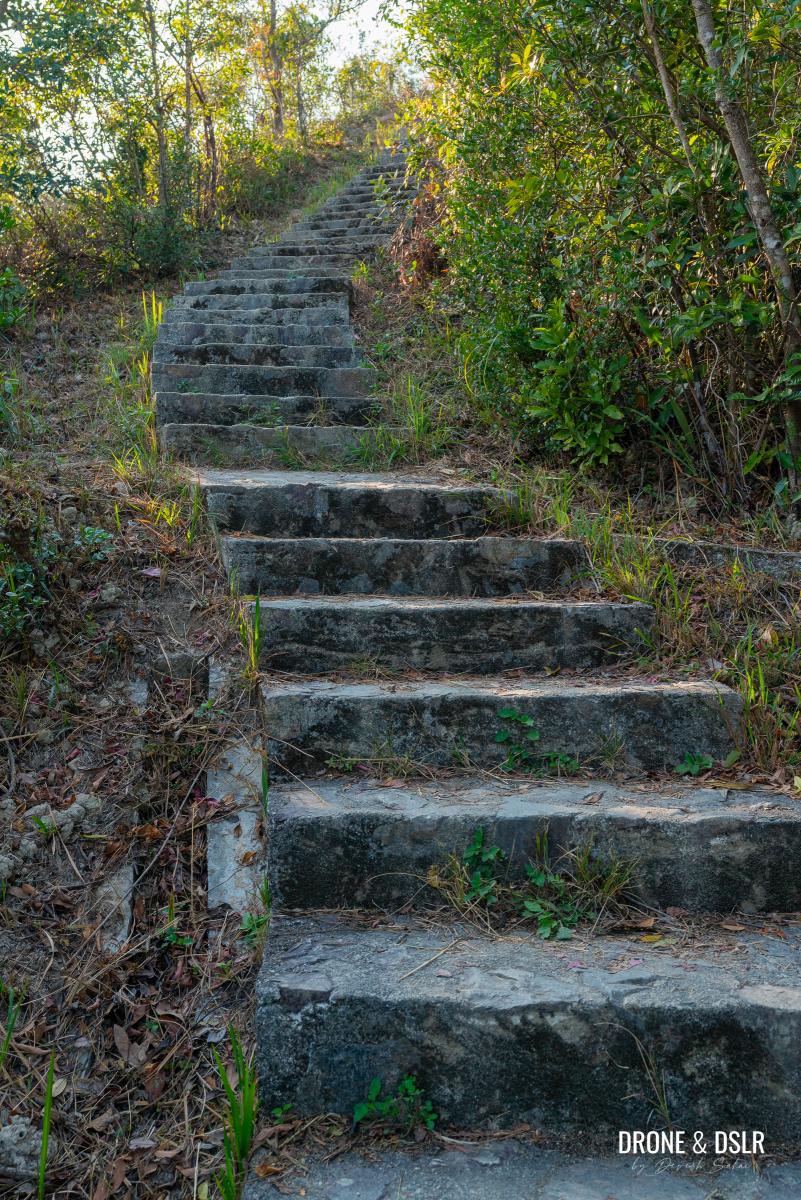
After an easy walk downhill, the trail kicks up into a slightly challenging climb, but you’ll reach the summit before you know it.
-
- Heading from Tsao Kau Fung to Kuai Li Fung
-
- A quick descent down Tsao Kau Fung
-
- The climb to Kuai Li Fung isn’t too bad
Kuai Li Fung (拐李峰) — 522m
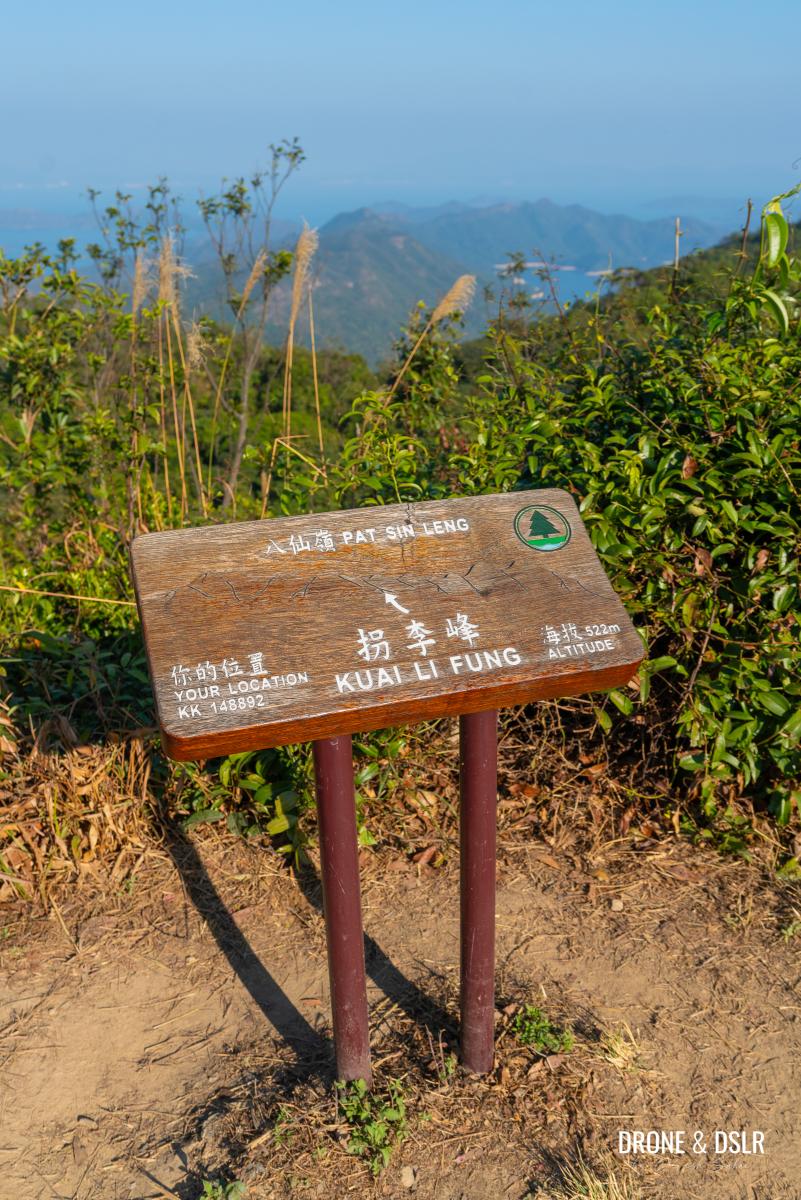
The summit of Kuai Li Fung (拐李峰) — 522m
Because Kuai Li Fung faces north, it primarily provides views of the Shenzhen.
We decided to take a longer break here, knowing that the final push across the remaining peaks was fast approaching.
Kuai Li Fung to Kao Lao Fung
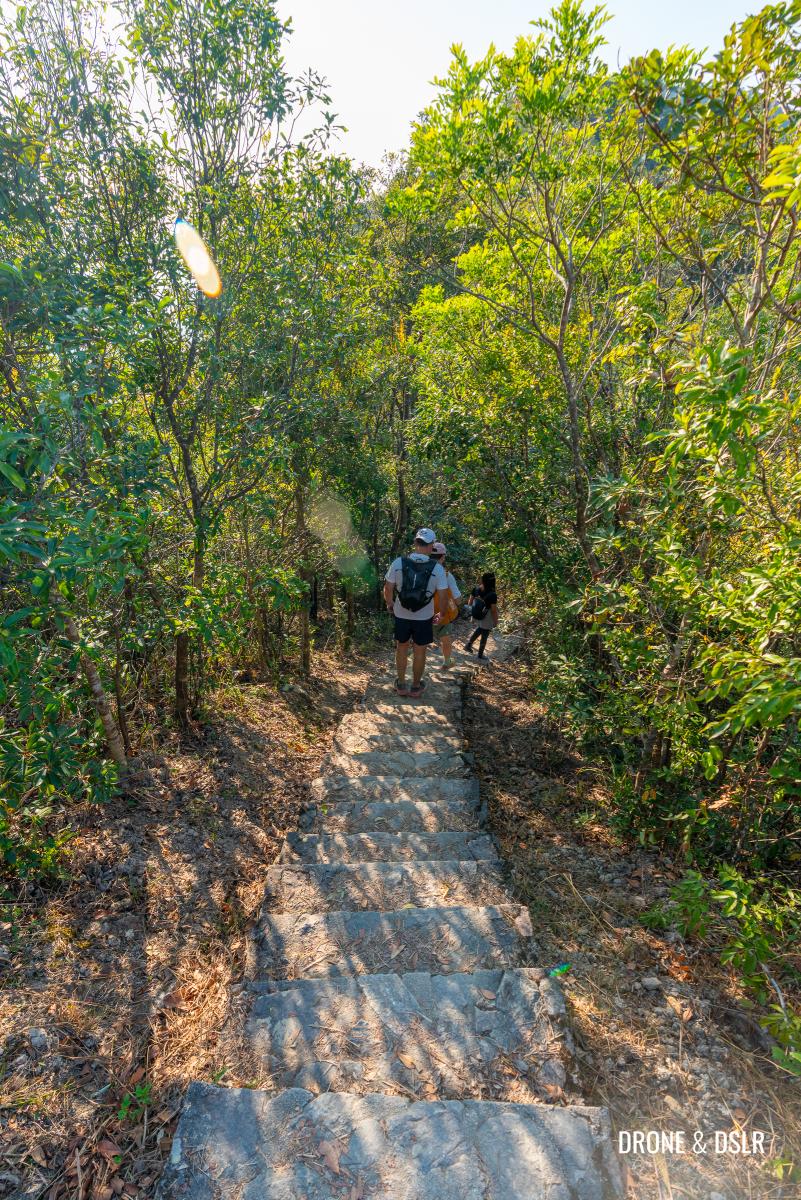
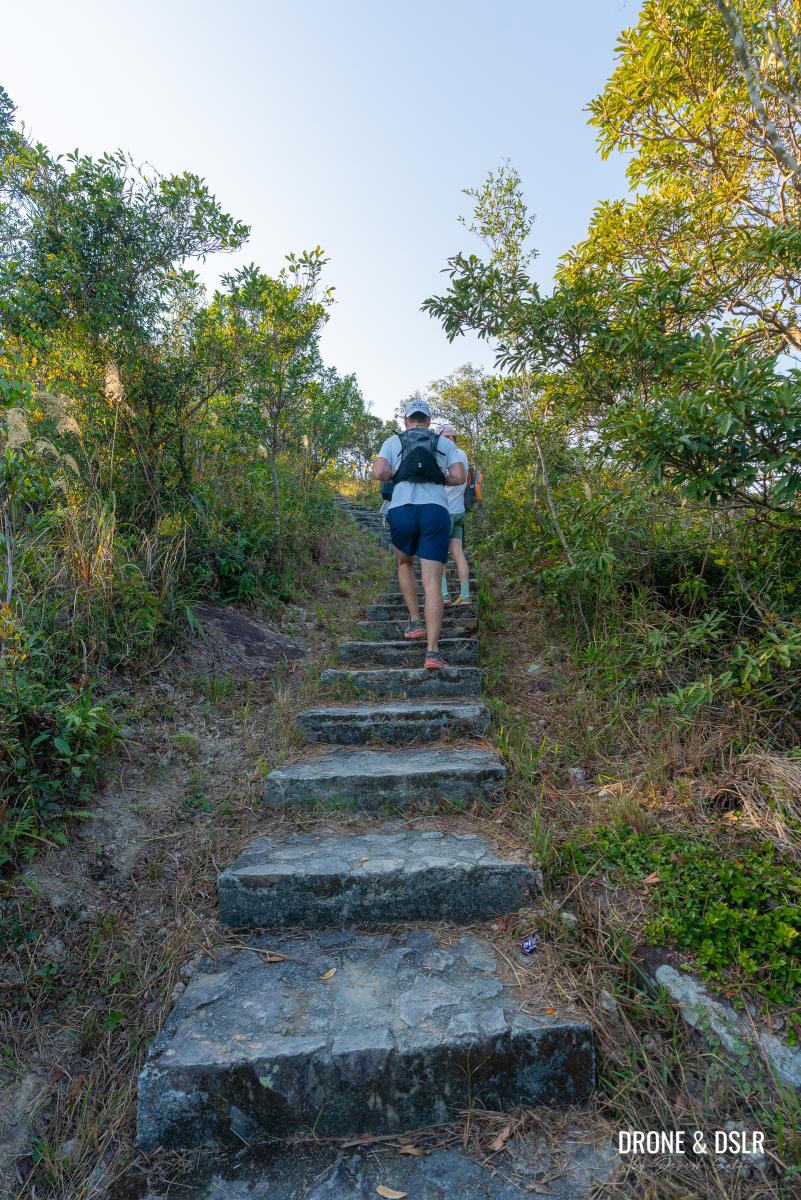
The gap between Kuai Li Fung and Kao Lao Fung consists of a short descent, followed by a gentle but longer ascent.
-
- After a slightly longer break, we descended Kuai Li Fung
-
- The steps to Kao Lao Fung are slightly longer
-
- Almost at Kao Lao Fung, the Sixth Immortal

Kao Lao Fung (果老峰) — 543m
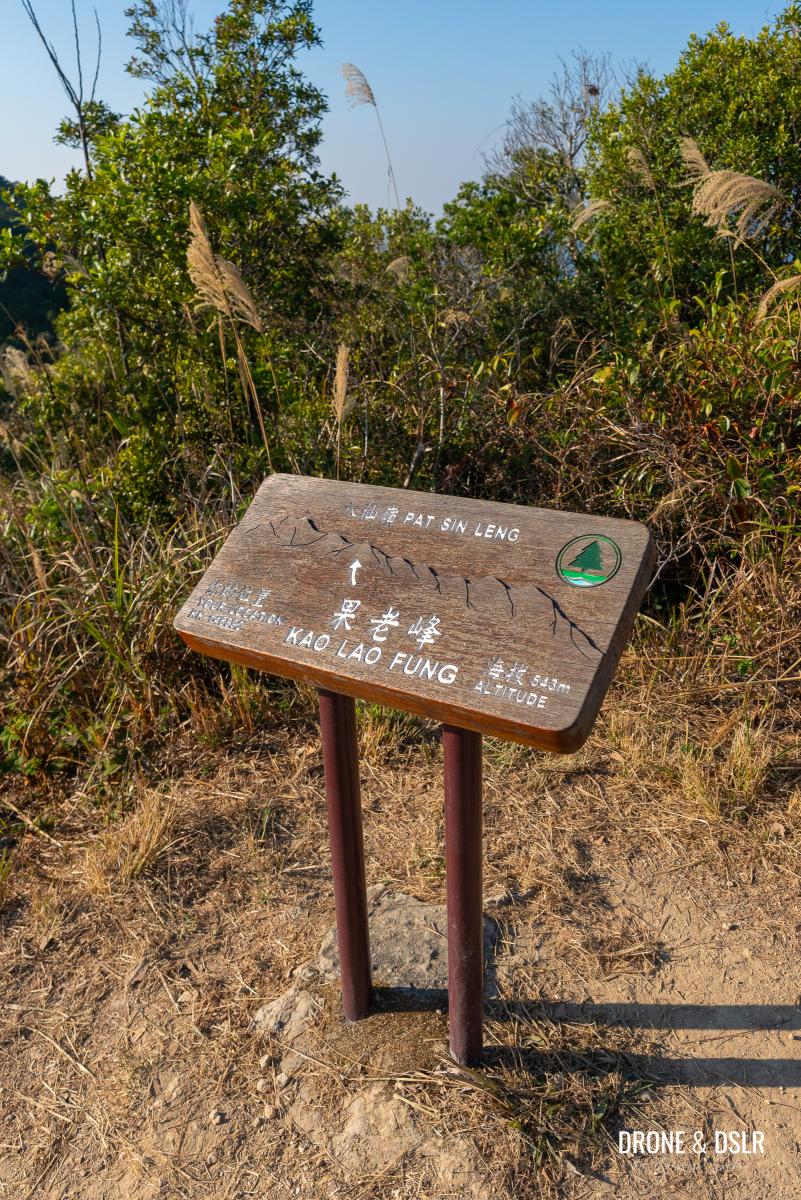
The summit of Kao Lao Fung (果老峰) — 543m
The sixth peak, Kao Lao Fung, unfortunately doesn’t offer much in the way of views. Or perhaps by that point, we were so focused on conquering numbers seven and eight that we didn’t even care to stop.
We could clearly see Shun Yeung Fung, the eighth Immortal, from Kao Lao Fung, and honestly, we couldn’t wait to get there! But first, we had to cross the seventh Immortal.
Kao Lao Fung to Chung Li Fung
As we descended from Kao Lao Fung, our eyes were fixed on the ultimate prize: Shun Yeung Fung. We were so focused on the final peak that we didn’t even notice there was still one hill missing between numbers six and eight.
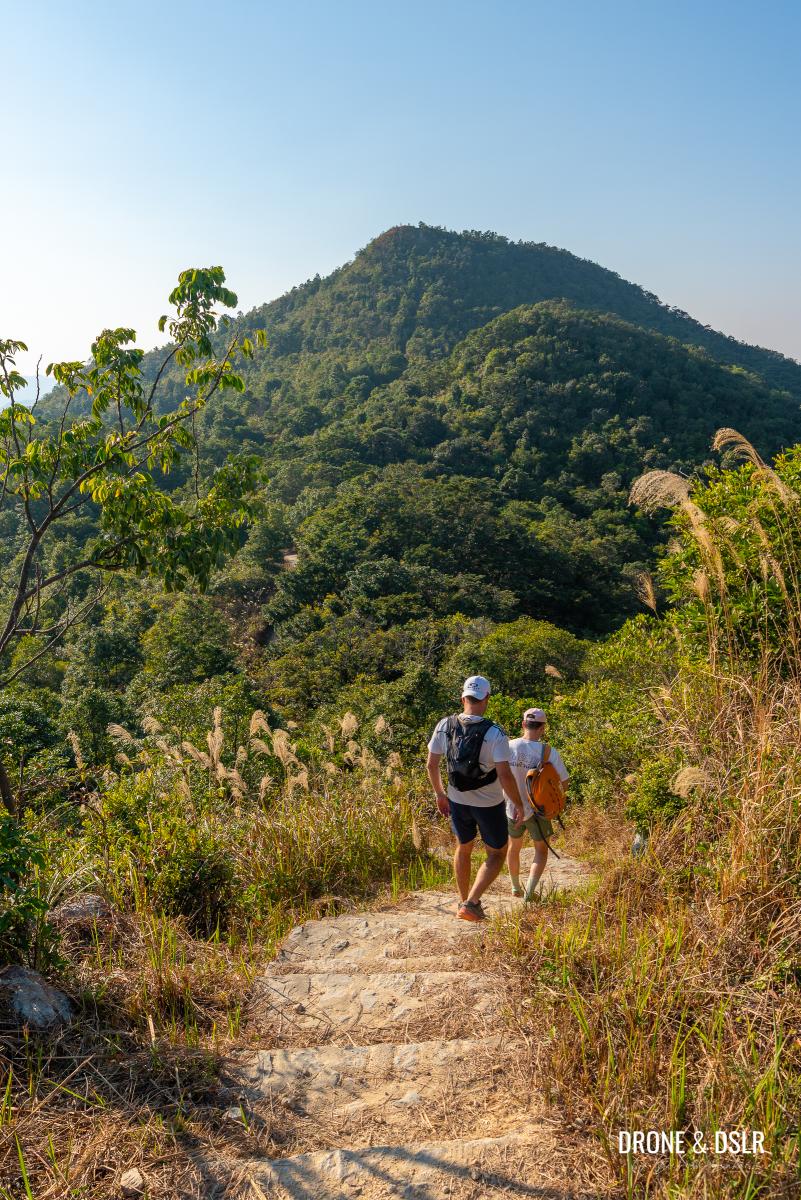
All eyes on the prize, as we head down Kao Lao Fung
The trail led us downhill into a gentle, flat area sheltered by a canopy of trees. In fact, if I hadn’t been paying close attention, we probably would have missed the sign for the seventh peak entirely.
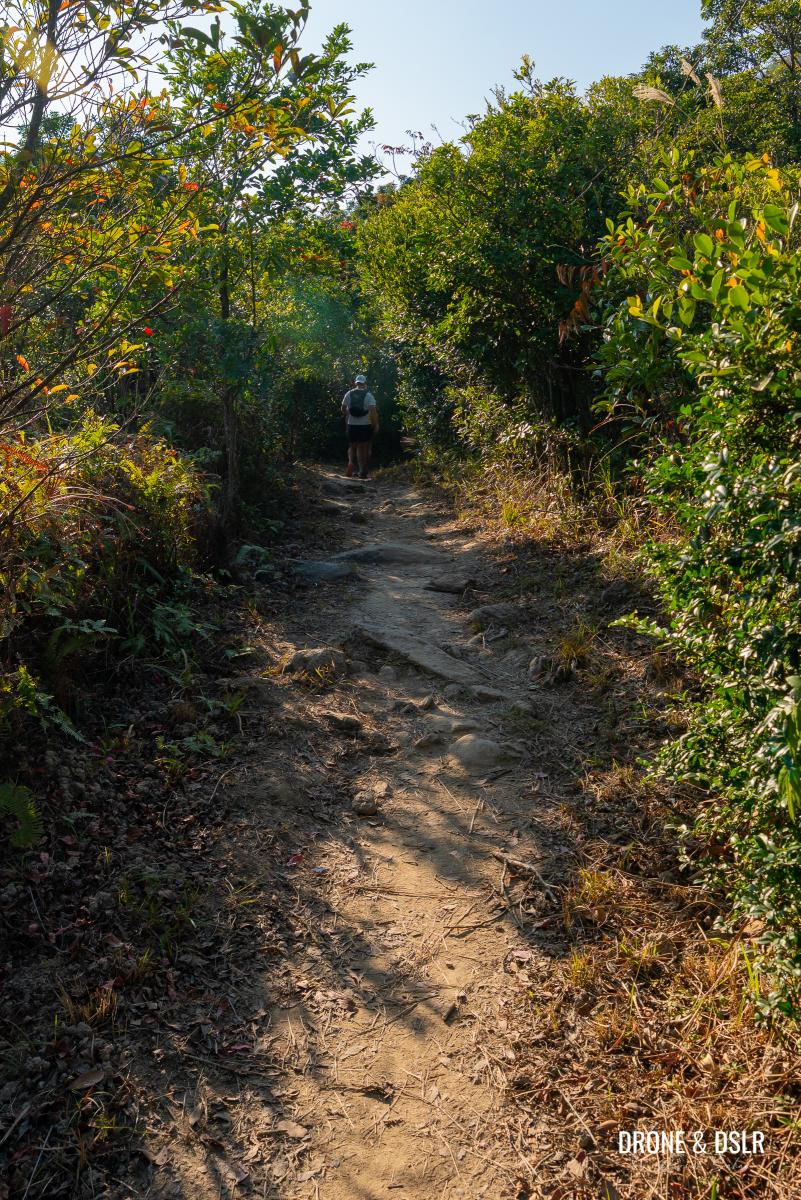
After the steps downhill, there is a longer flat path
Chung Li Fung (鍾離峰) — 551m
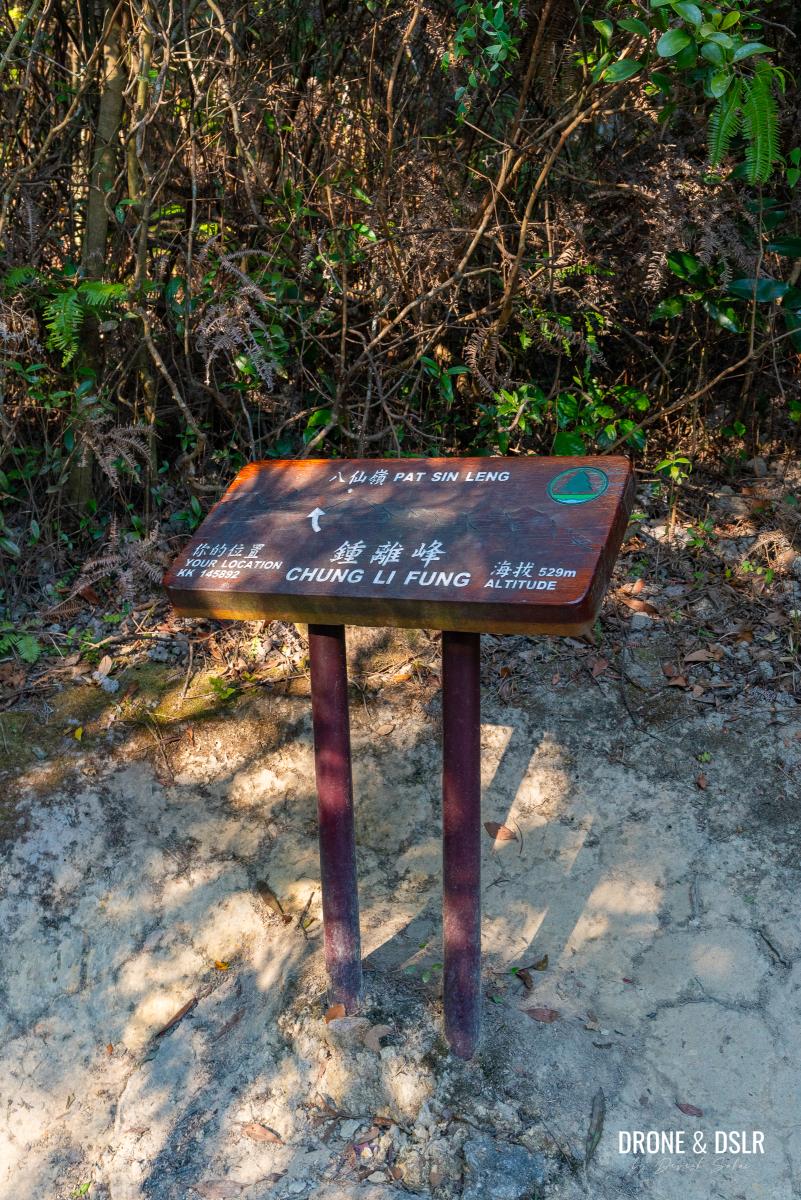
The summit of Chung Li Fung (鍾離峰) — 551m
Located beneath the canopy is the sign for Chung Li Fung. I was surprised to see it, as getting here didn’t involve the same strenuous climb as the previous peaks, it felt as though we just arrived here!
It was only later that I learned the actual summit is tucked away behind the dense shrubs and trees lining the trail. But my guess is that nobody ventures onto it. And likewise, we too decided to move on to the final Immortal.
Chung Li Fung to Shun Yeung Fung
If reaching the previous peak felt uneventful, the approach to the final Immortal was the exact opposite!
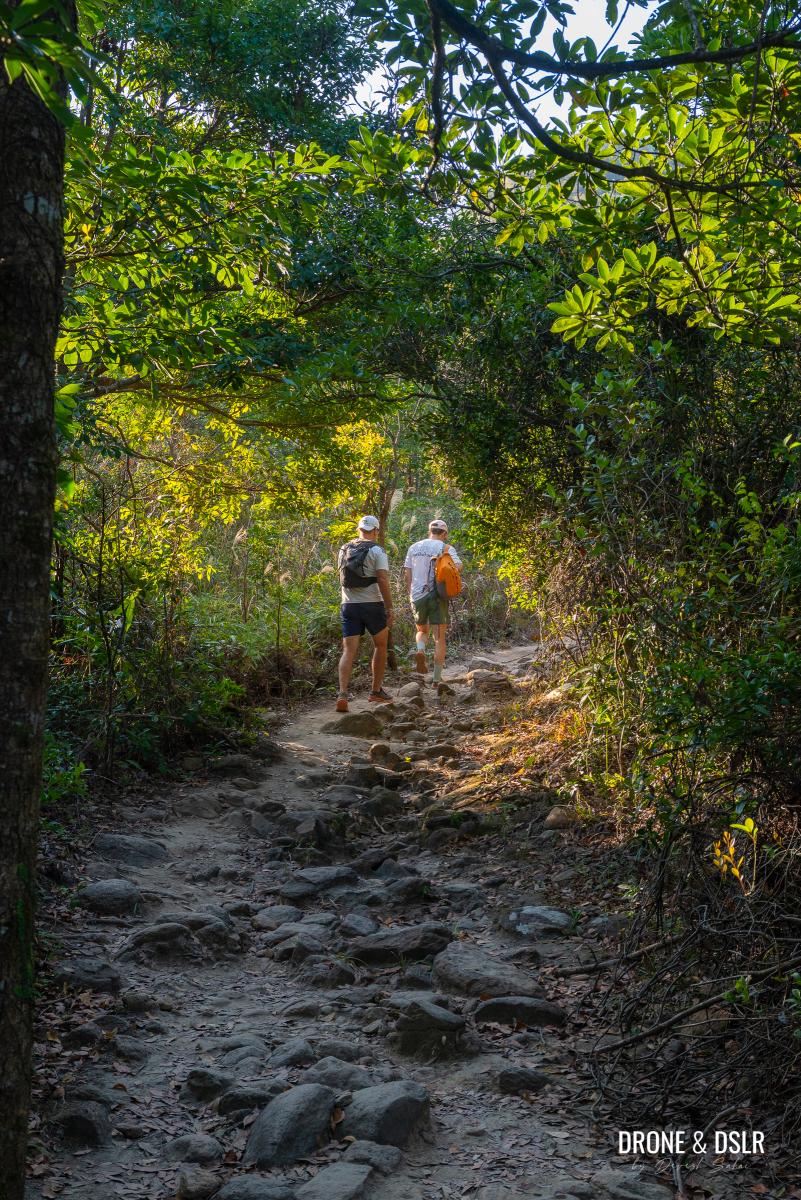
7 down, 1 more to go!
After crossing Chung Li Fung, the flat terrain turns rocky as you approach the final flight of steps to Shun Yeung Fung.
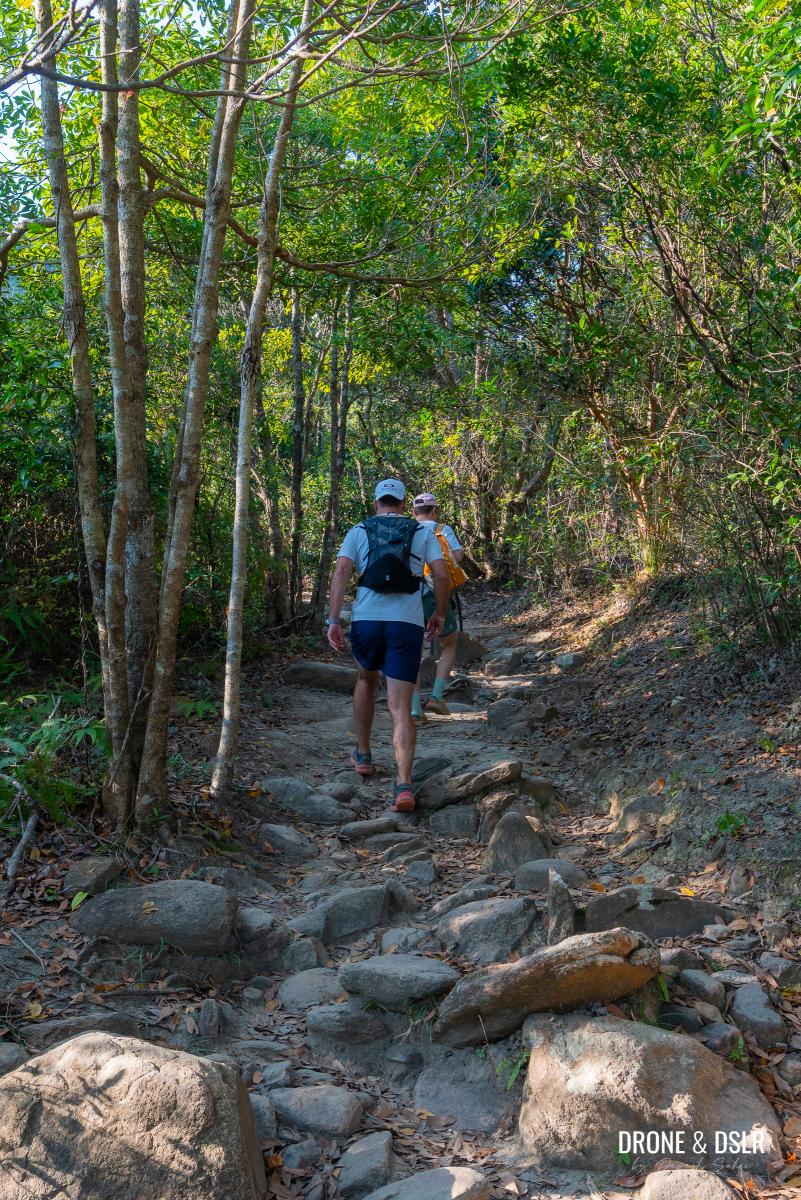
The trail turns rocky soon after crossing Chung Li Fung
Keep in mind that you have already scaled seven peaks to get here, and the last thing you want to see is another steep flight of steps with no end in sight.
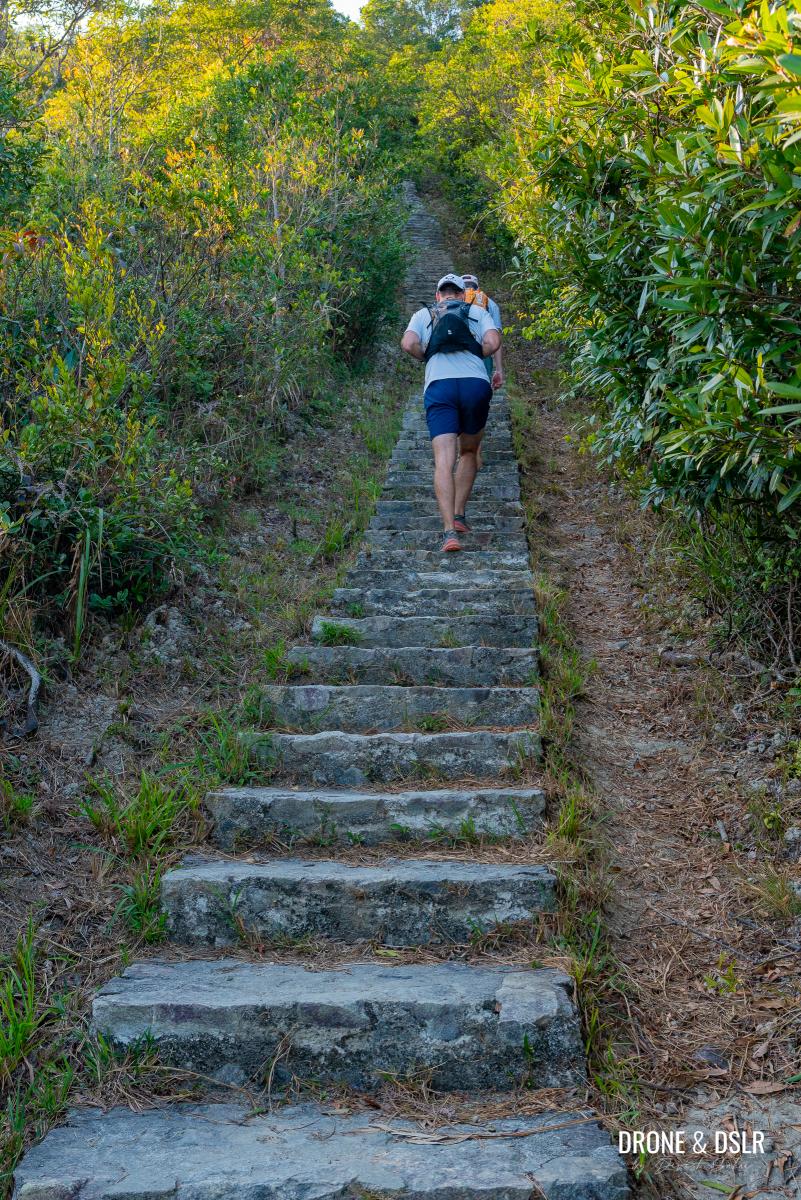
The final ascent to Shun Yeung Fung is quite a challenge, especially after crossing seven peaks
On their own, these steps are challenging, but when you’re exhausted from the previous seven peaks, they are unforgiving.
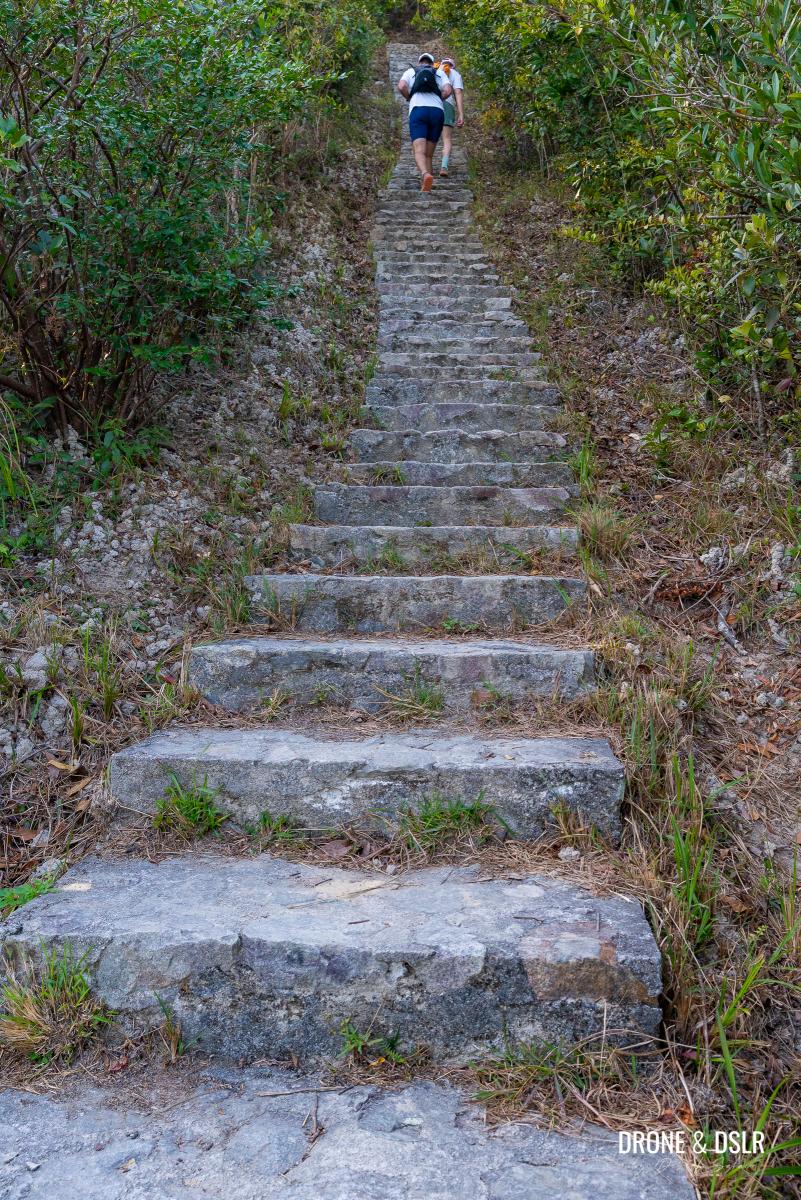
Climb at a comfortable pace, you’re almost at the Eight Immortal
Take your time, maintain your pace, and celebrate the moment you finally see the sky open up!
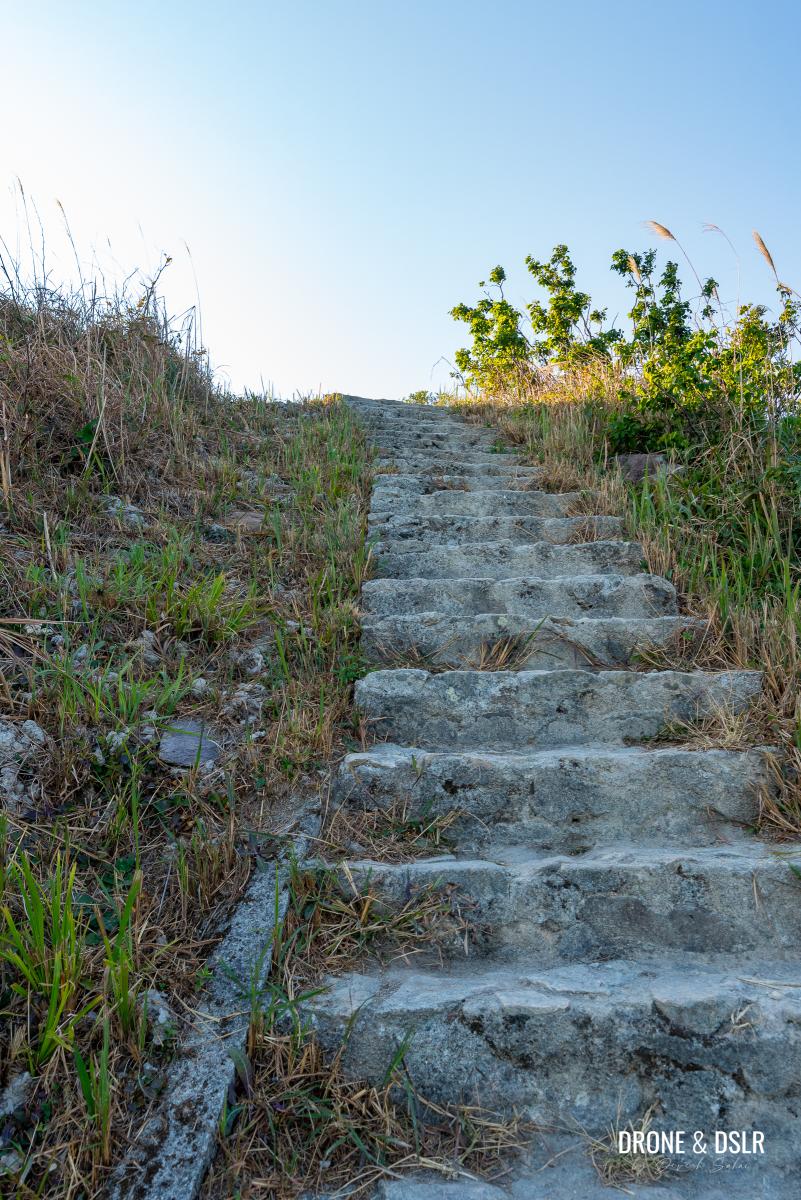
Finally, light at the end of the climb!
Shun Yeung Fung (純陽峰) — 590m
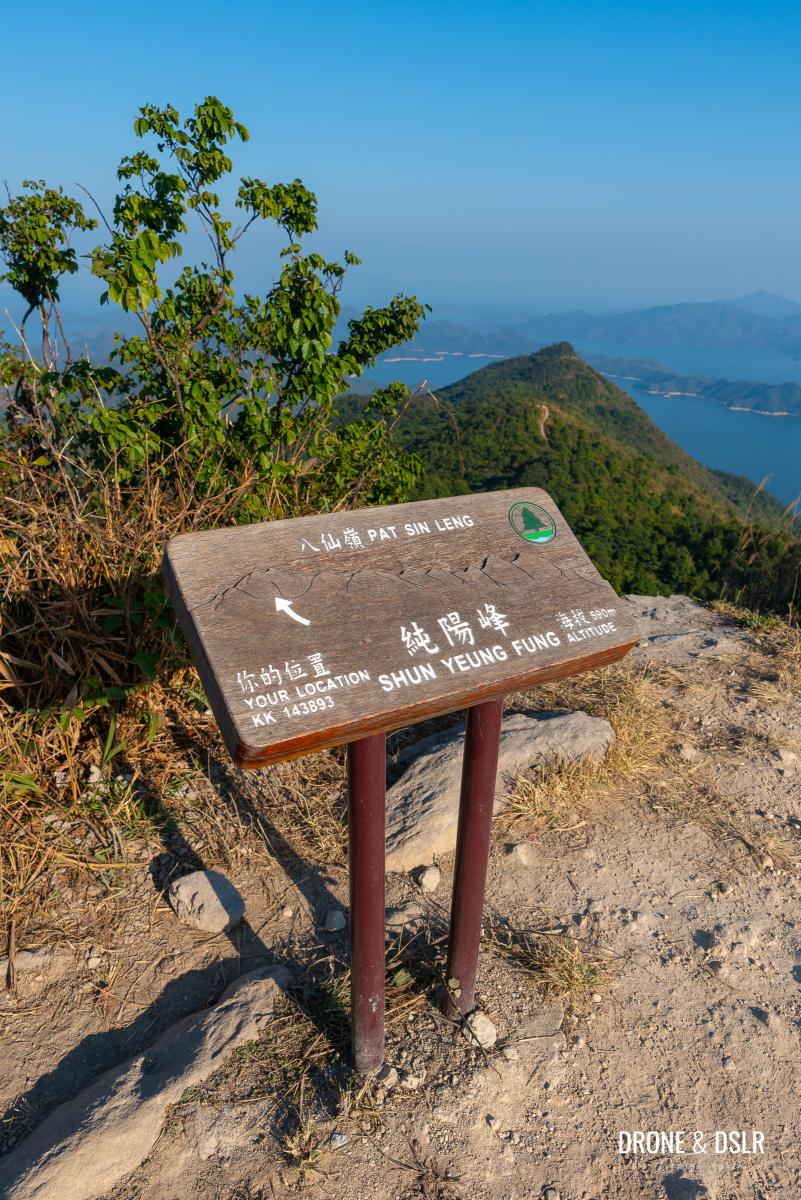
The summit of Shun Yeung Fung (純陽峰) — 590m
At 590 meters above sea level, Shun Yeung Fung is the tallest of the Eight Immortals.
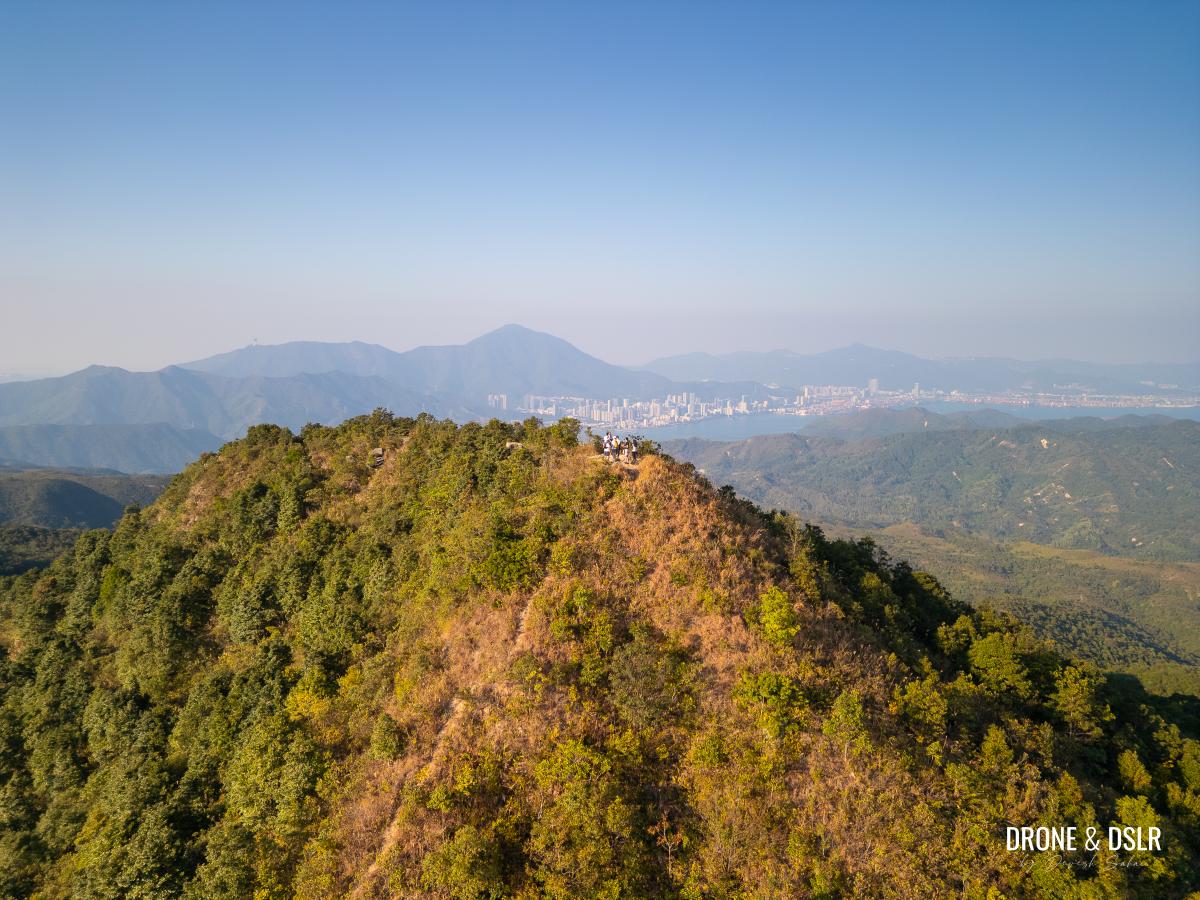
Shun Yeung Fung is the tallest of the Eight Immortals
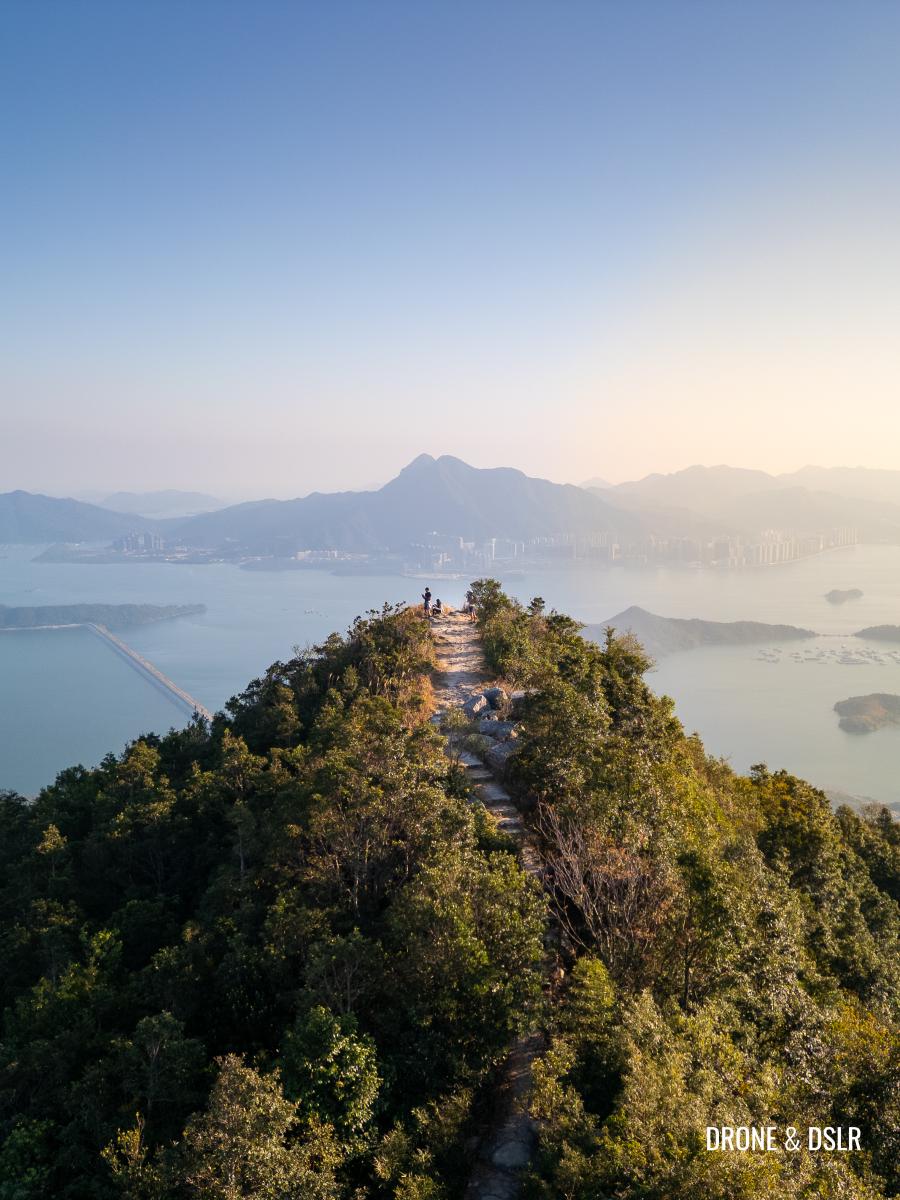
Standing at the summit, you can truly appreciate the vast landscape of this region in Hong Kong. To the south lie Plover Cove Reservoir, Ma Shi Chau, and Ma On Shan. I found the way Ma On Shan aligns with Shun Yeung Fung particularly fascinating.
-
- I love the way Shun Yeung Fung lines up with Ma On Shan
-
- The views from on top of Shun Yeung Fung to the south
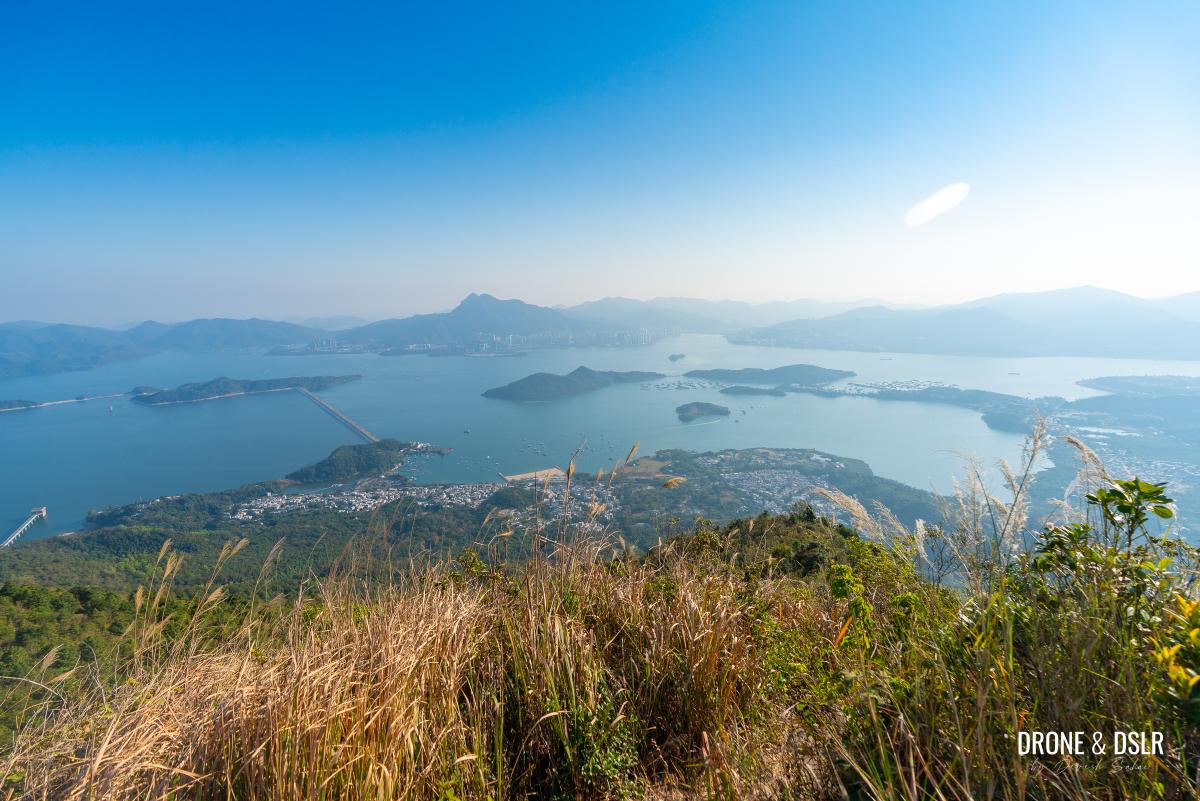
If you look back to the east, you can see the entire Eight Immortals range, the very ridgeline you just conquered!
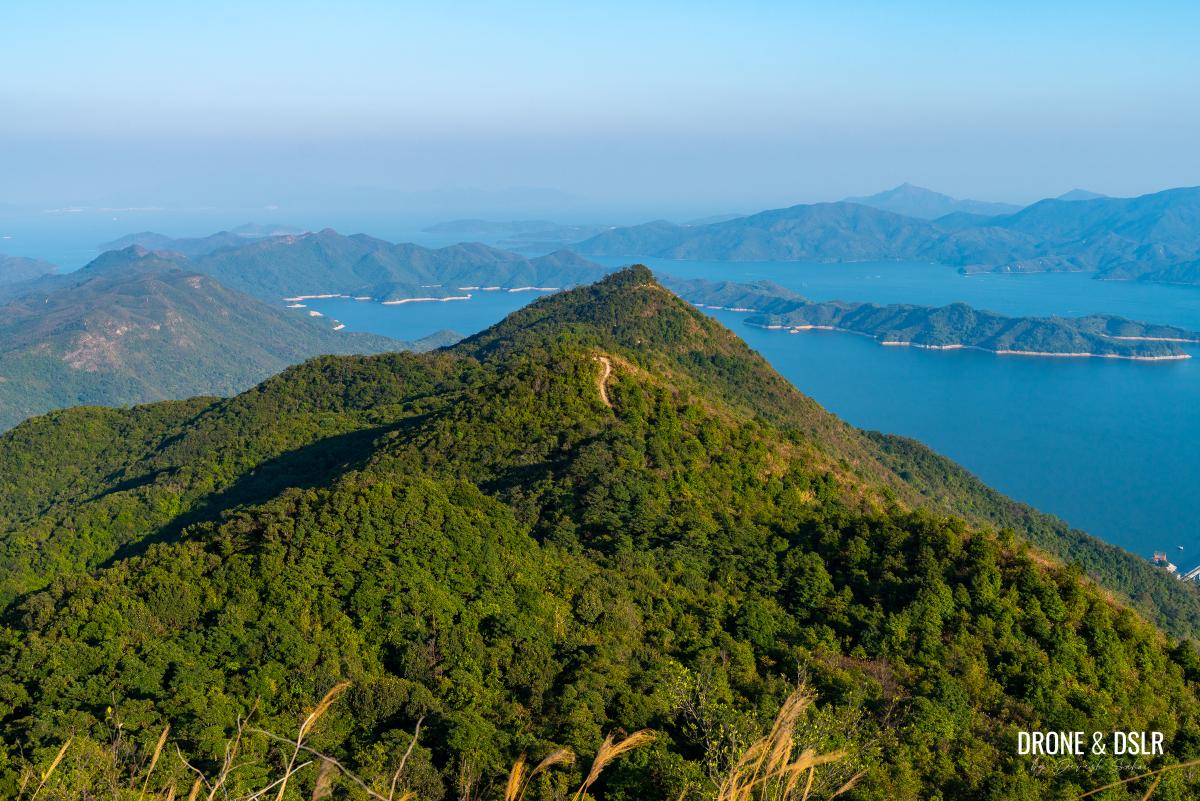
The views of Pat Sin Leng range from Shun Yeung Fung
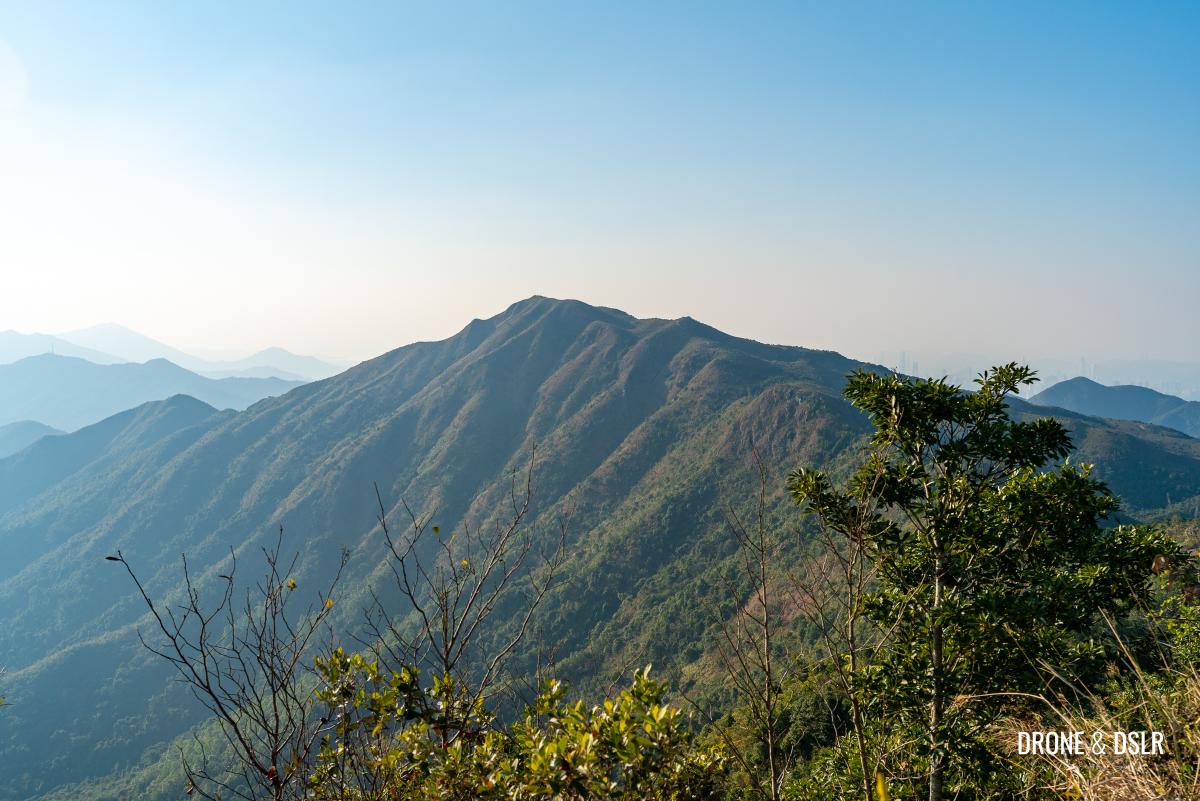
To the west, you’ll see Wong Leng, the highest peak in this entire mountain range. Needless to say, the 360-degree views are absolutely breathtaking.
-
- Wong Leng to the west of Shun Yeung Fung
-
- Shun Yeung Fung might be the last Immortal, but it’s still in the middle of the ridge
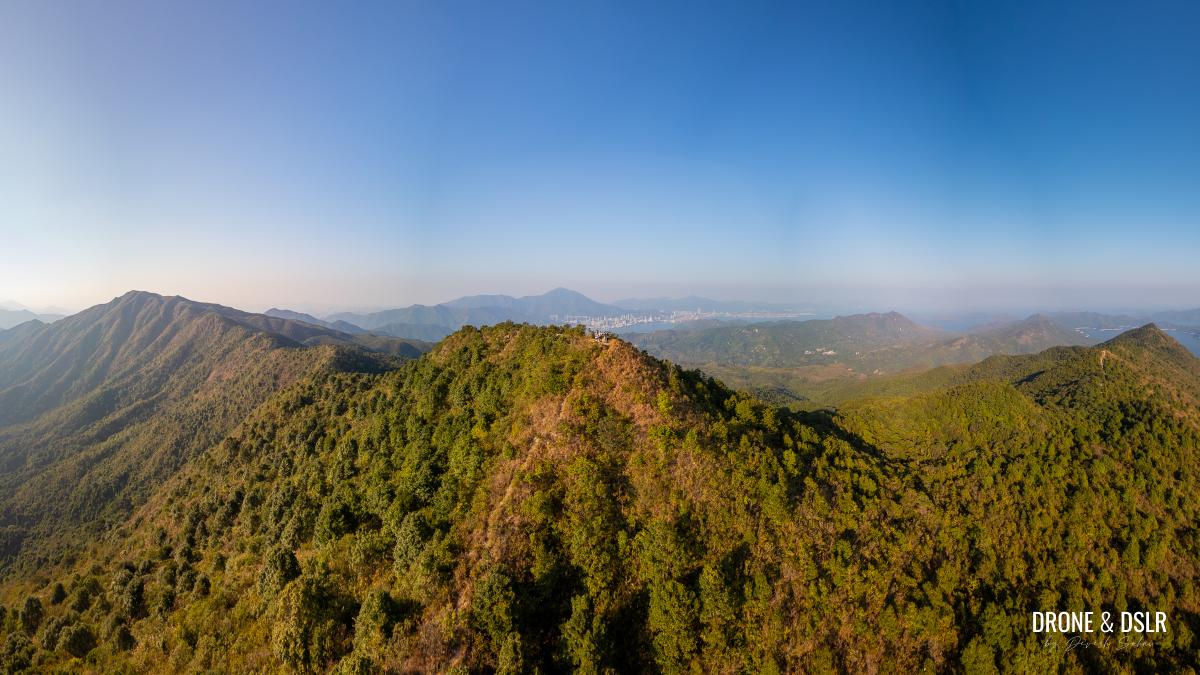
So, take your time to soak in the spectacular views from here!
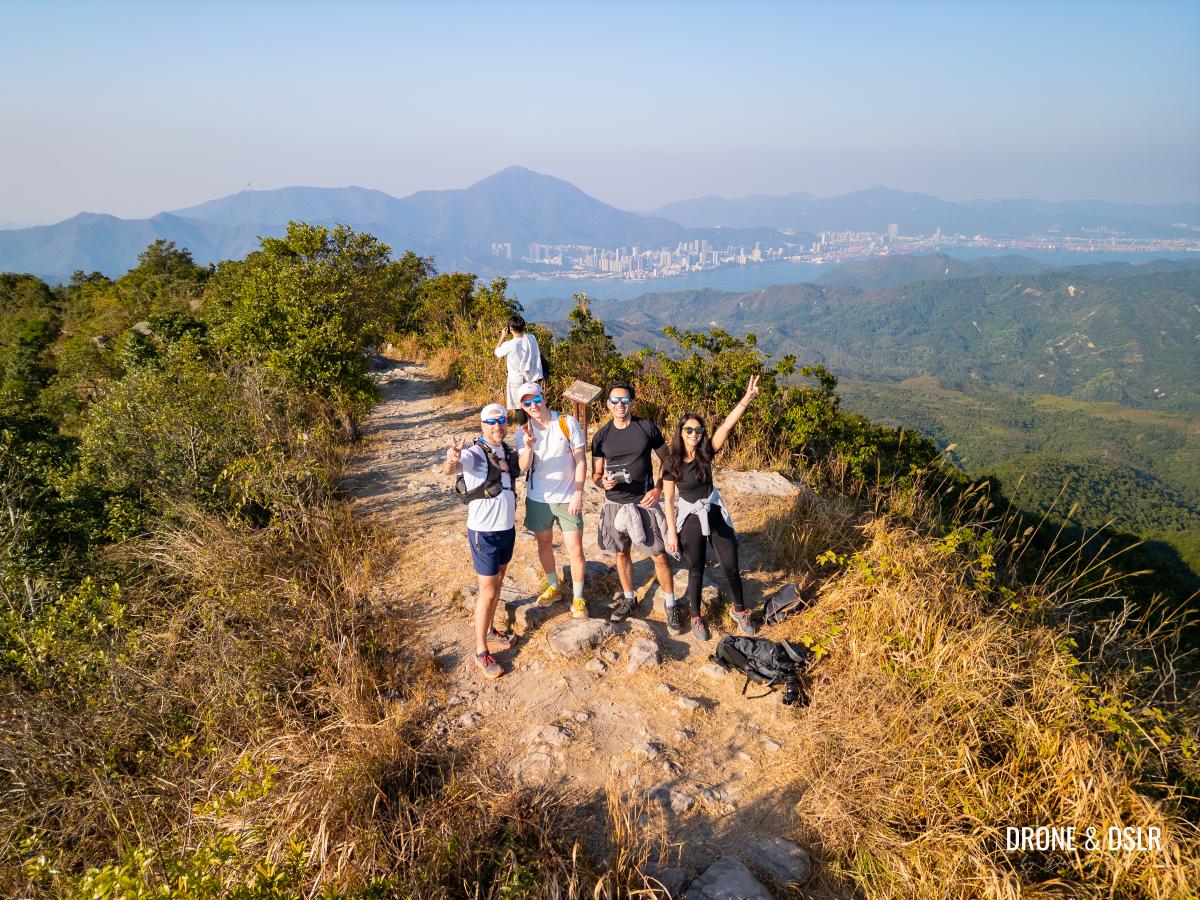
Us on top of Shun Yeung Fung
Ending The Eight Immortals Hike
The true scale of your accomplishment hits home when you realize that Shun Yeung Fung has no easy exit. While there are a few unmarked trails leading down from here or Wong Leng, I wouldn’t really recommend them.
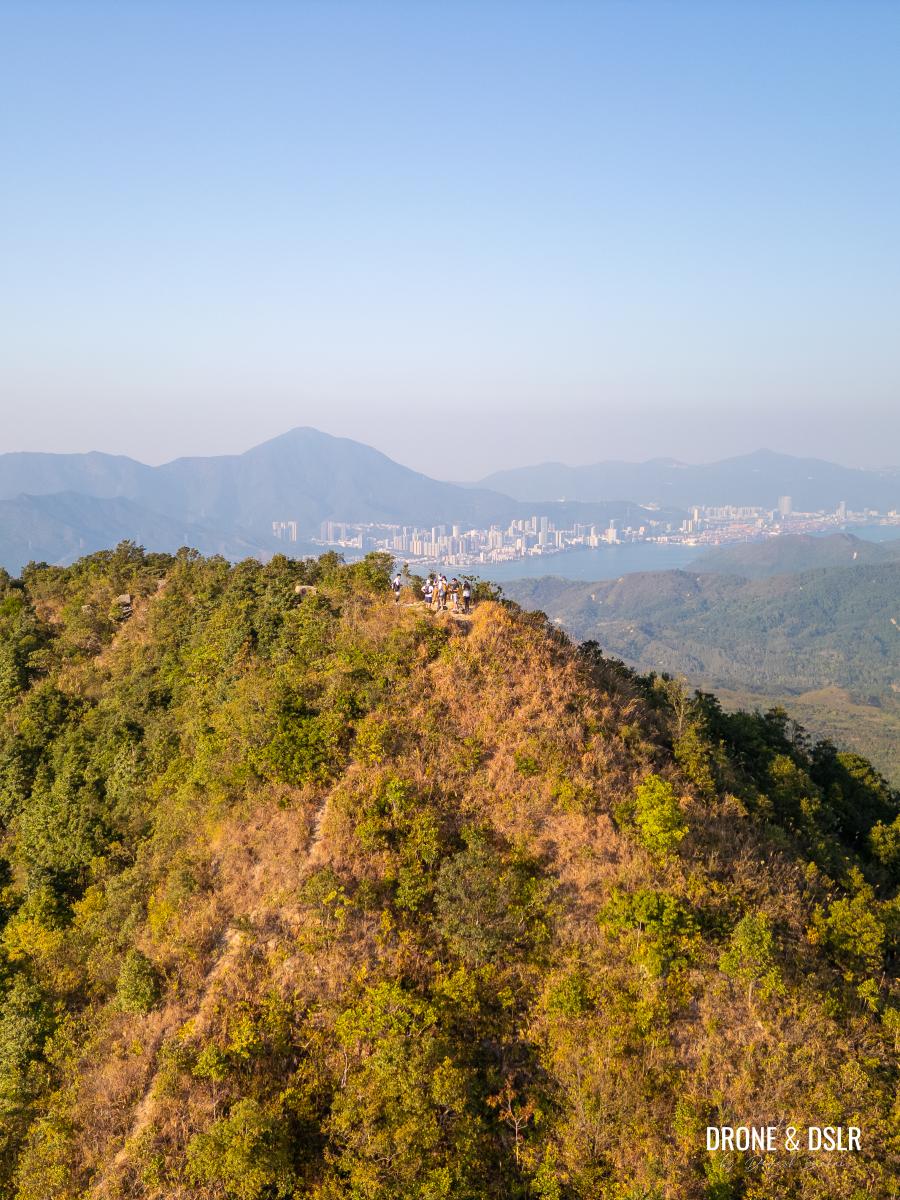
The unmarked exits from Shun Yeung Fung are steep and a bit dangerous
You could also finish the entire trail at Hok Tau Village, but as I’ve learned from experience hiking to Hok Tau Reservoir, finding transport out of Hok Tau can be a major challenge.
As strange as it sounds, the shortest and safest exit is often the way you came. While you are free to chart your own path, our recommended route is to turn around and return to Bride’s Pool Road.
Back To Bride’s Pool Road
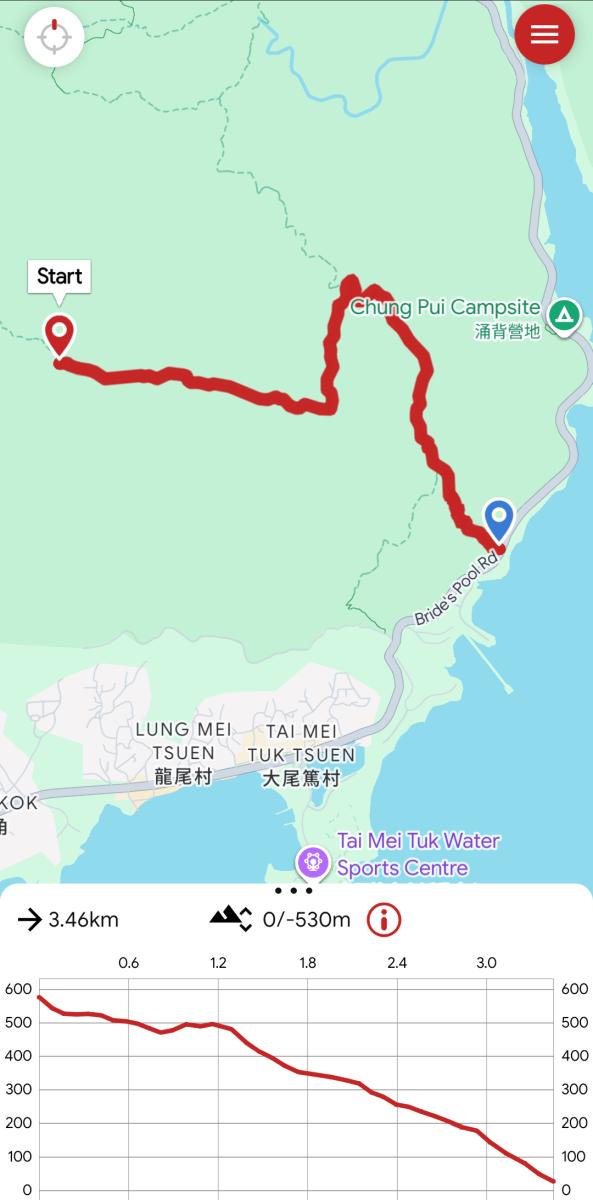
The Eight Immortals Hike (Pat Sin Leng) Trail Map Shun Yeung Fung to Bride’s Pool Road
As I mentioned earlier, this hike effectively turns from the “Eight Immortals” into the “Sixteen Immortals” if you decide to retrace your steps. That is exactly what we did, and honestly, it wasn’t too bad!
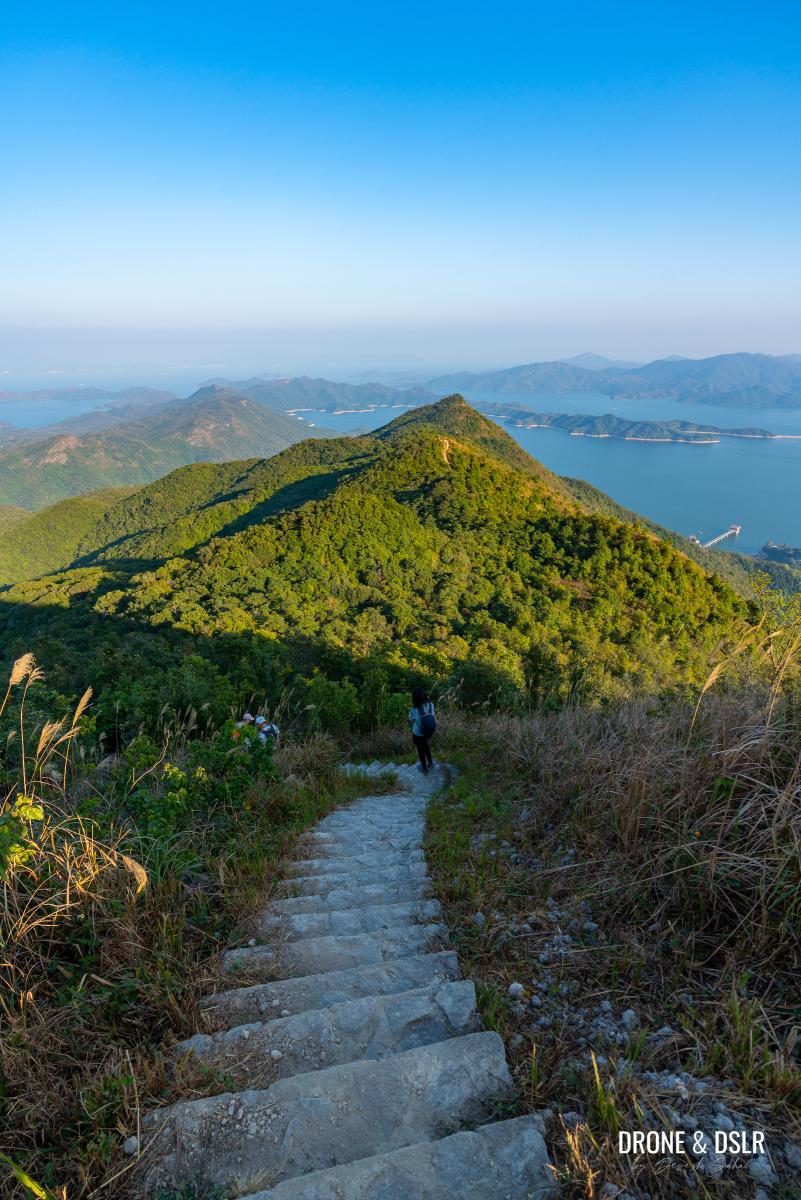
Heading back down from Shun Yeung Fung wasn’t too difficult
Crossing the peaks in reverse proved much easier since we were mostly descending. The only real challenge was the final climb back up Hsien Ku Fung, which remains steep regardless of direction.
Once we finished the range and began our descent to the Pat Sin Leng Nature Trail, the going was relatively easy. The only difference on our return was choosing the exit to Bride’s Pool Road instead of heading back to the Ting Kok Road entrance where we started.
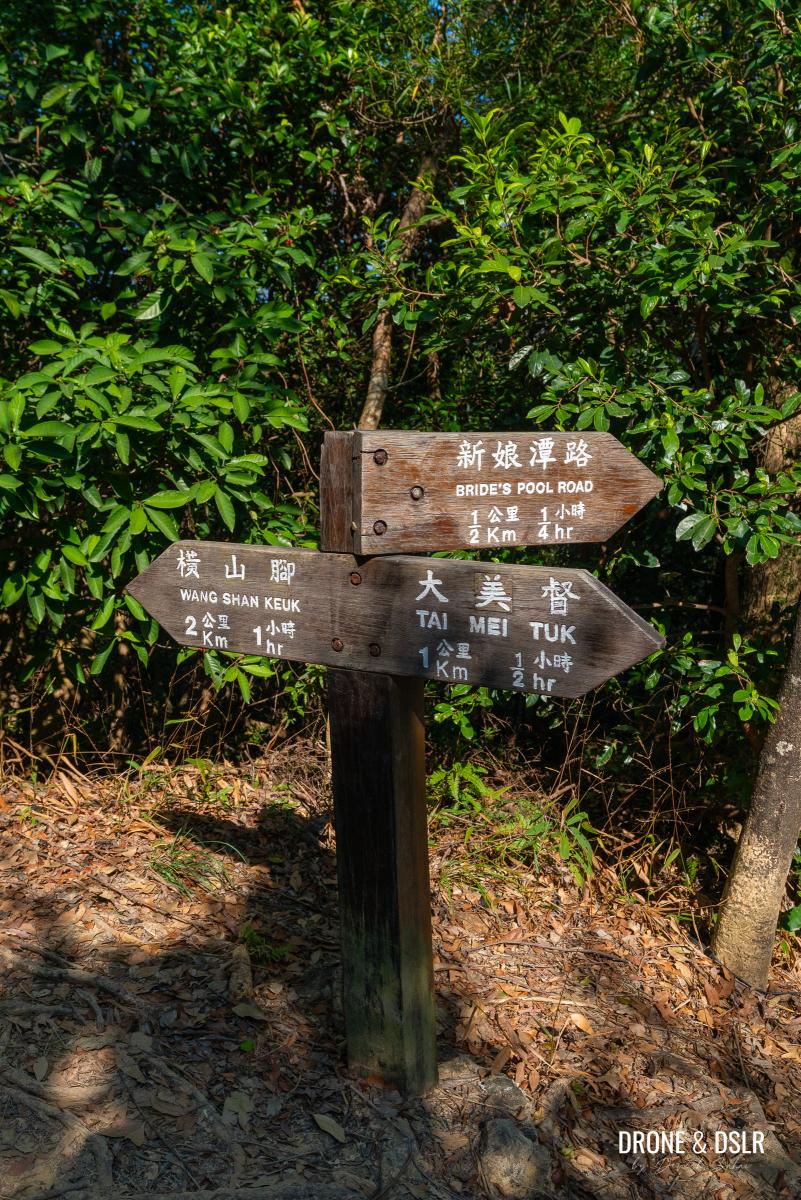
Whether you enter from Ting Kok Road or Bride’s Pool Road, both routes meet here
This also saved us an extra 500–600 meters of walking. Just keep in mind that Bride’s Pool Road is only served by GMB 20R and KMB 275R (the latter on Sundays and holidays only).
-
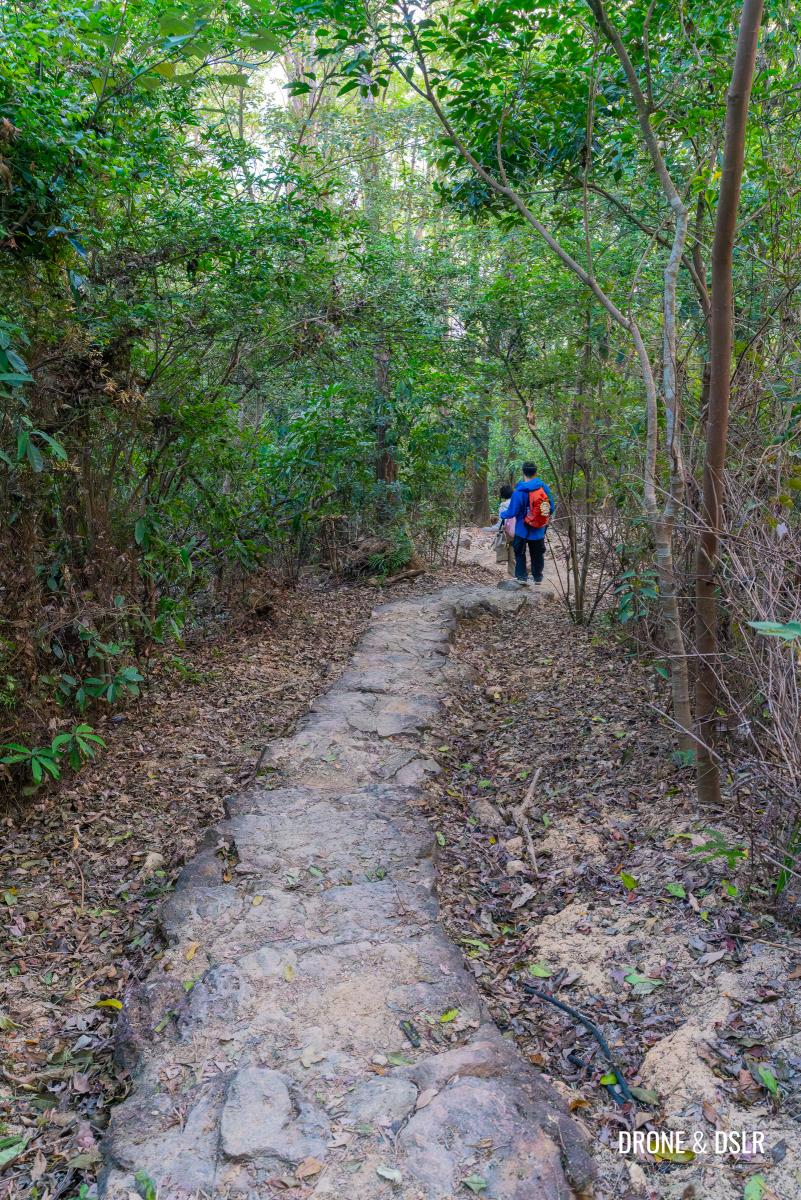
- Taking the exit to Bride’s Pool Road
-
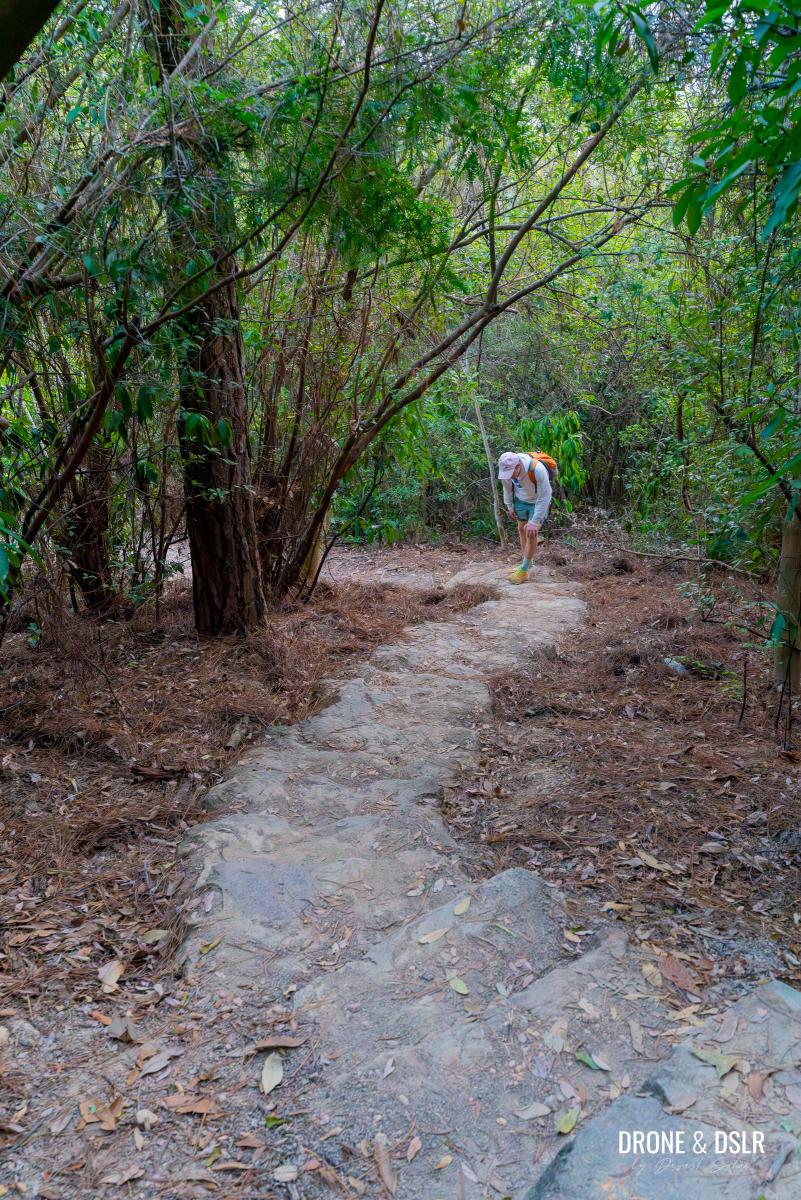
- It’s a steep exit, and it saves about 500–600 metres of additional hiking
-
- And we ended our Eight Immortals Hike here, on Bride’s Pool Road where it’s easy to get a taxi or bus
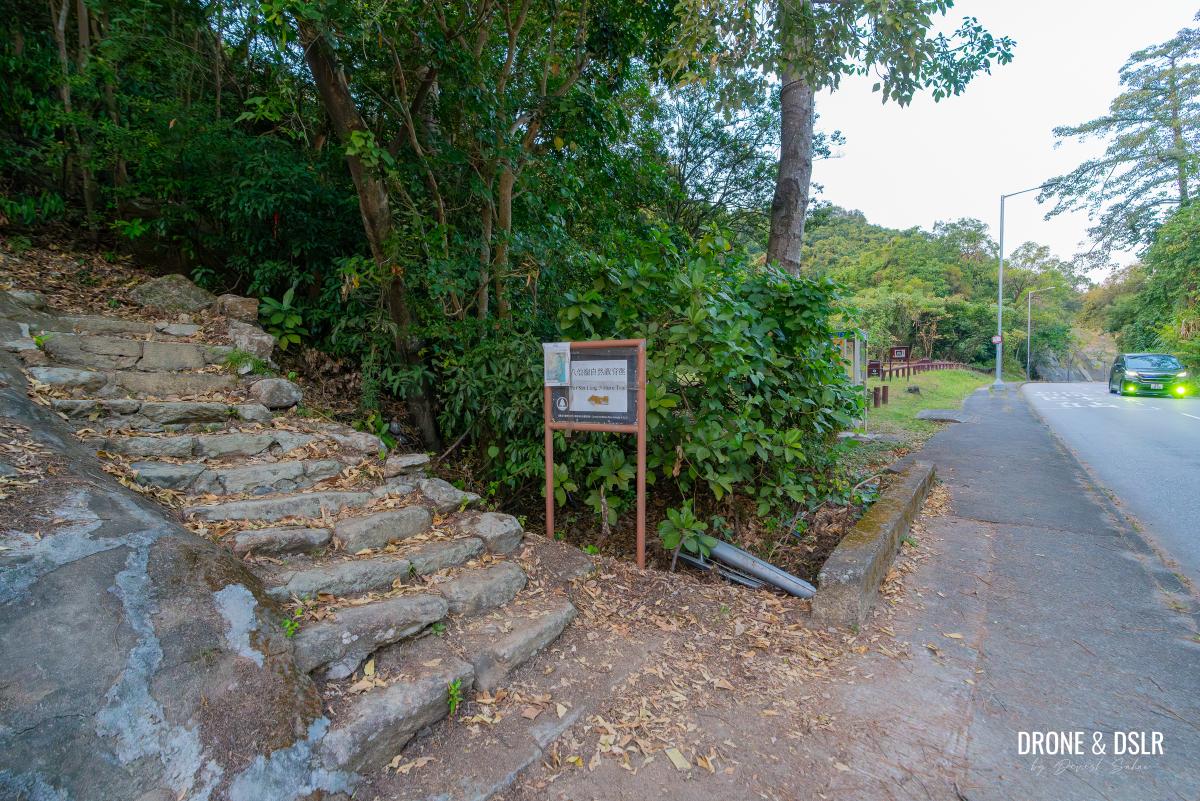
However, if you plan on calling a taxi, this exit is a very convenient pick-up point.
Pat Sin Leng — The Legendary Hike
We hope you found this detailed guide to the Eight Immortals (Pat Sin Leng) useful.
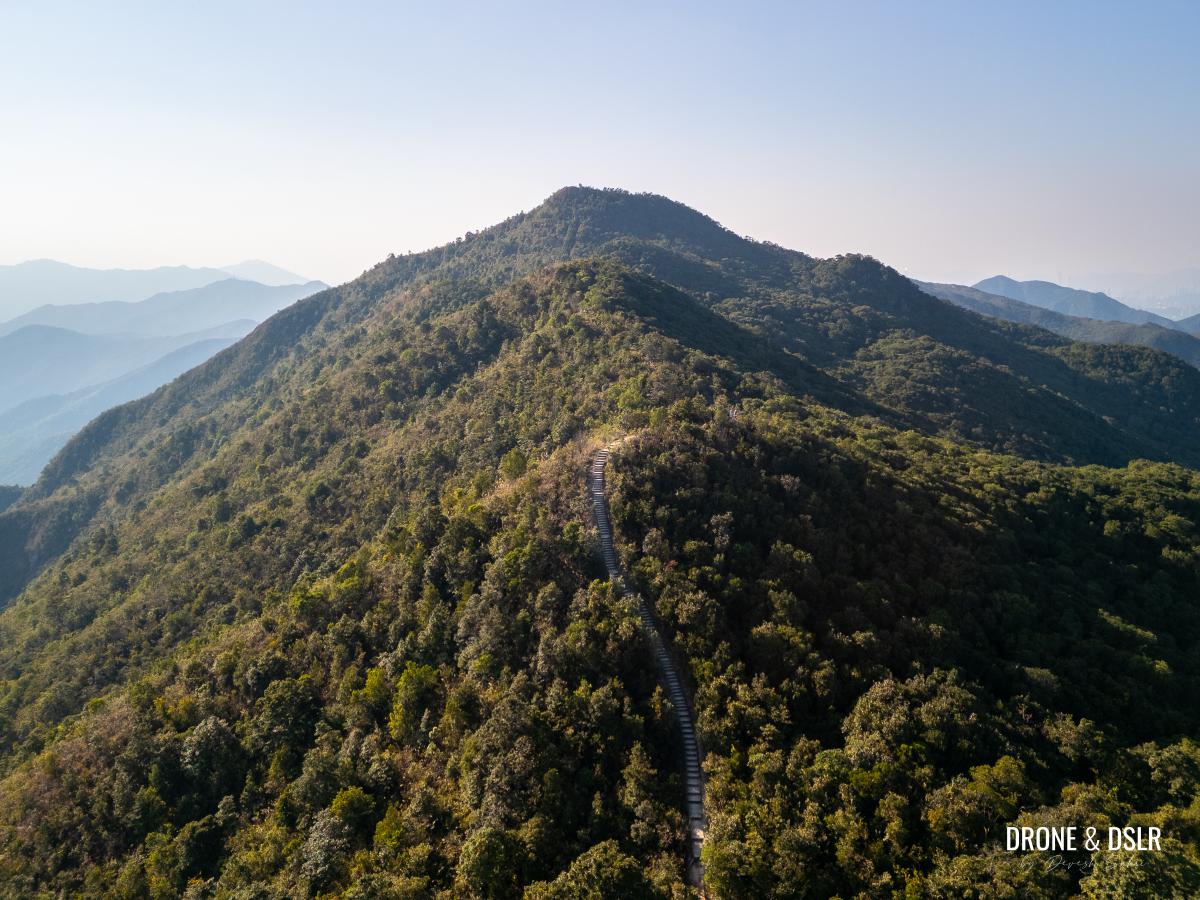
Pat Sin Leng, aka the “Ridge of the Eight Immortals”
Beyond the fascinating legends behind the peaks, this is truly a challenging hike, but the rewards are well worth the effort, much like the iconic Ma On Shan Hike.
If you enjoy the views from the ridge, I highly recommend spending a summer day at Tai Mei Tuk, it is easily my favourite summer outdoor destination in Hong Kong. While you’re in the area, be sure to explore Ma Shi Chau, an island in the middle of Tolo Harbour that is a geological wonderland.
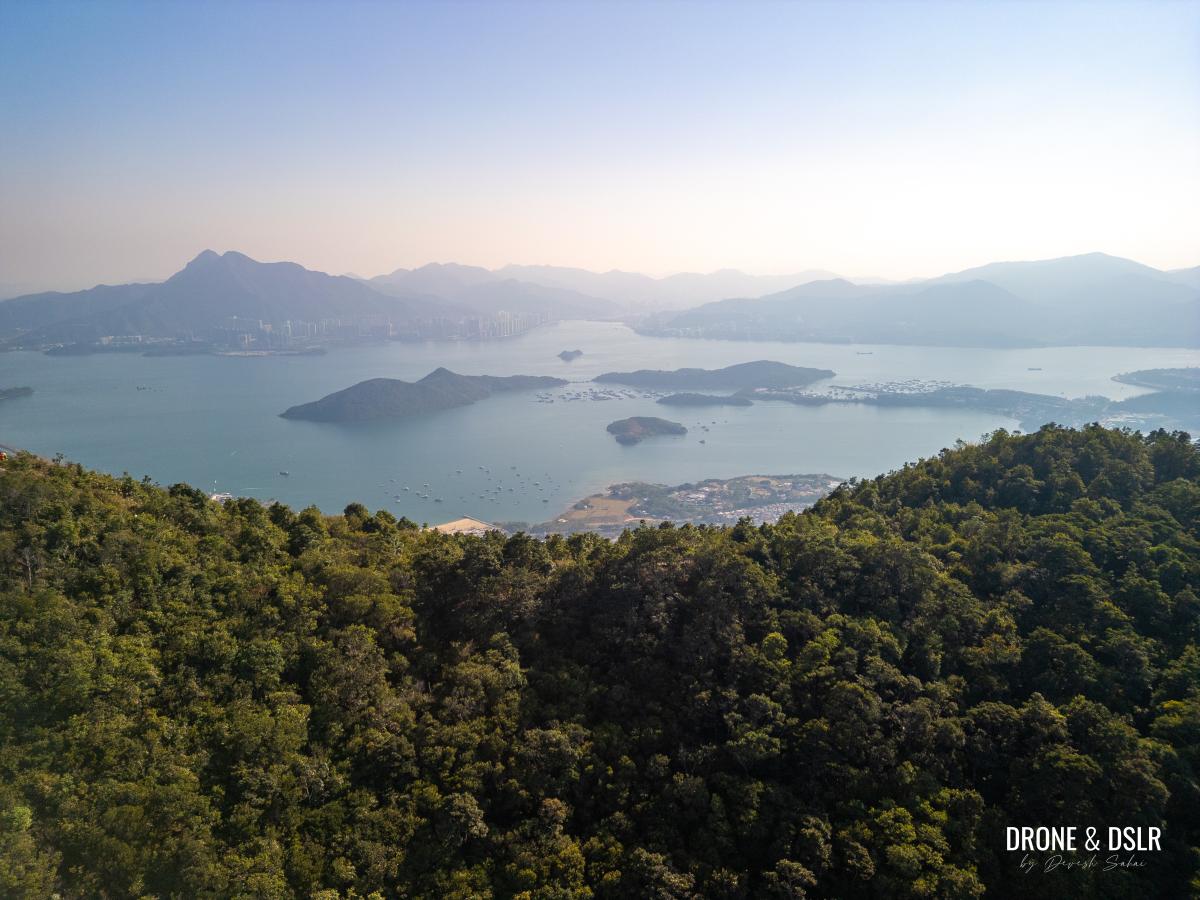
The views from the ridge (Pat Sin Leng)
And if you’re a fan of waterfalls, Bride’s Pool is another of my favourite waterfall hikes, though it is best visited shortly after a rainfall.
As always, feel free to share this guide with anyone thinking of tackling the Eight Immortals. If you found this information helpful, please drop us a comment below!
If you enjoy our work, come join us on Instagram and YouTube 🙂



You might also like



Leave a reply