


Fukuoka has many amazing day-trips to offer its visitors. Although many consider it a starting point for their discovery into the island of Kyushu, it’s also an incredible place to explore in its own right. From its unique food scene, and historical sites, there are many nearby towns that are just waiting to be explored.
So, if you’re wondering about taking a day-trip from Fukuoka, here are two fantastic options for you to consider: Nanzoin and Dazaifu. Both are a short distance from Fukuoka, and can easily be explored within a day, and on foot. And both offer something unique to explore.
What makes each of these day-trips special? Let’s find out.
Why Nazoin is a must-do day-trip from Fukuoka?
Nanzoin and its famous Nanzoin Temple are an idyllic day-trip destination from Fukuoka.
Famous primarily for its awe-inspiring giant Reclining Buddha statue (the largest bronze statue of its kind in the world), Nanzoin offers visitors a chance to connect with Japanese spirituality, and admire stunning natural surroundings just a short journey from Fukuoka’s city centre.
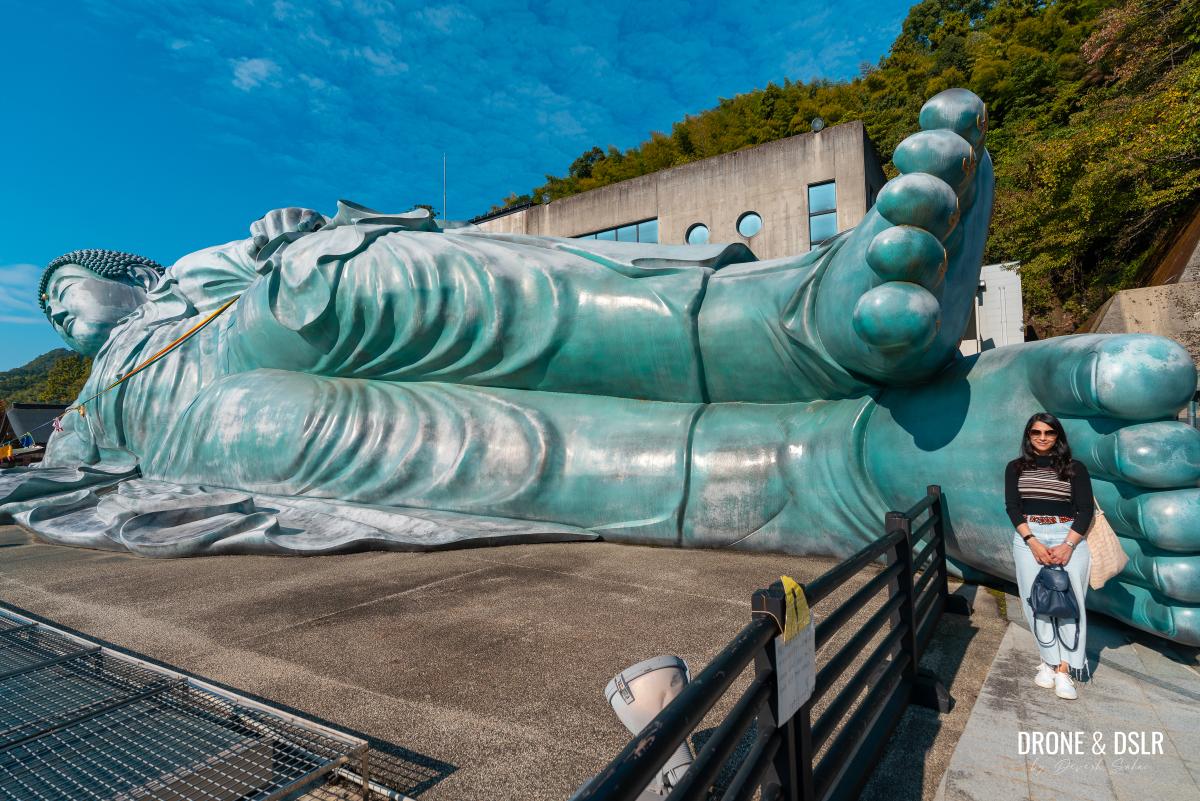
Human for comparison next to the Reclining Buddha in Nanzoin
Nanzoin itself is a small town, which is just a delight to walk around on foot. And the temple grounds offer you a chance to reconnect with nature and spirituality. Both are easy to discover on foot, and you probably need to budget half a day for it.
Getting to Nanzoin from Fukuoka
The Nanzoin Temple is a 20-minute rapid train ride from Fukuoka’s Hakata Station. You can take the JR Sasaguri Line, to JR Fukuhoku Yutaka Line (Sasaguri Line) Kido Nanzoinmae Station. From the station, the temple is 3-minute walk and the Reclining Buddha Statue is a 10-minute walk.

Welcome to Nanzoin
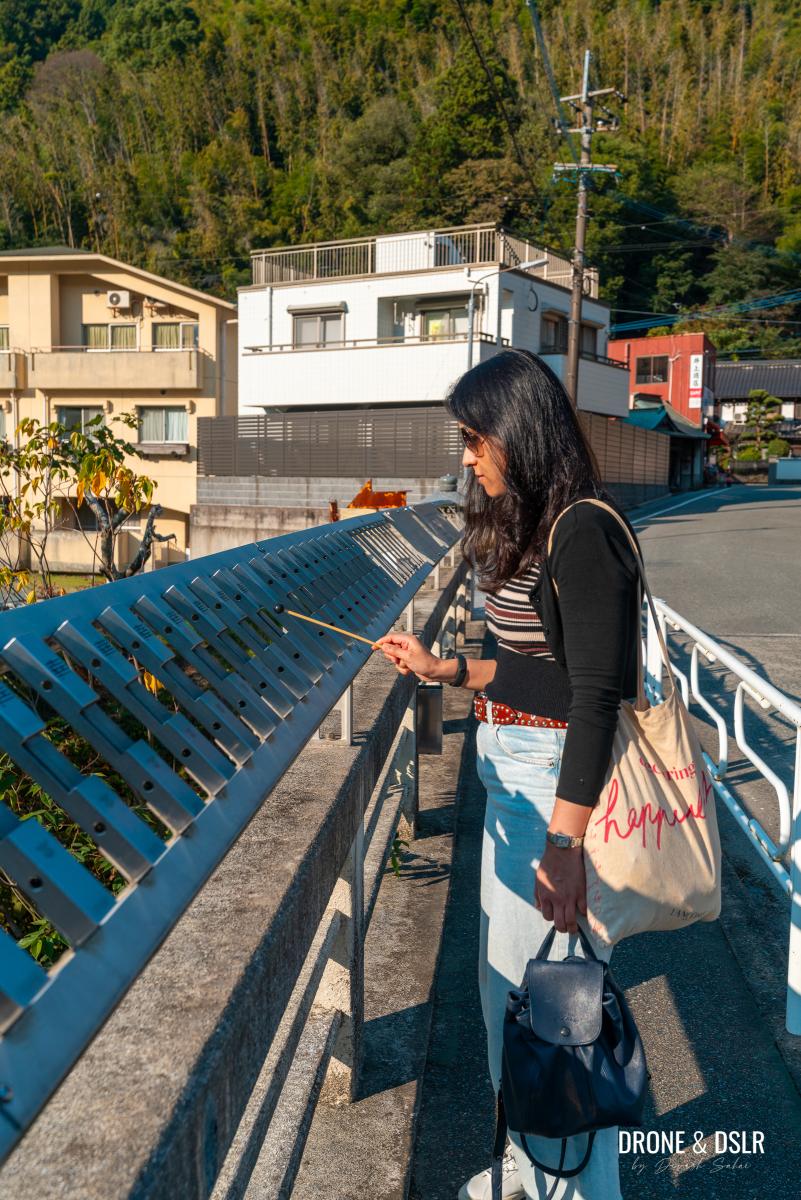
The bridge over the river as you exit the station, features a full-length xylophone. It’s called The Melody Bridge (メロディー・ブリッジ) after all! Don’t forget to entertain yourself as you make your way to the temple.
-

- The bridge as you exit the train station in Nanzoin has a hidden surprise!
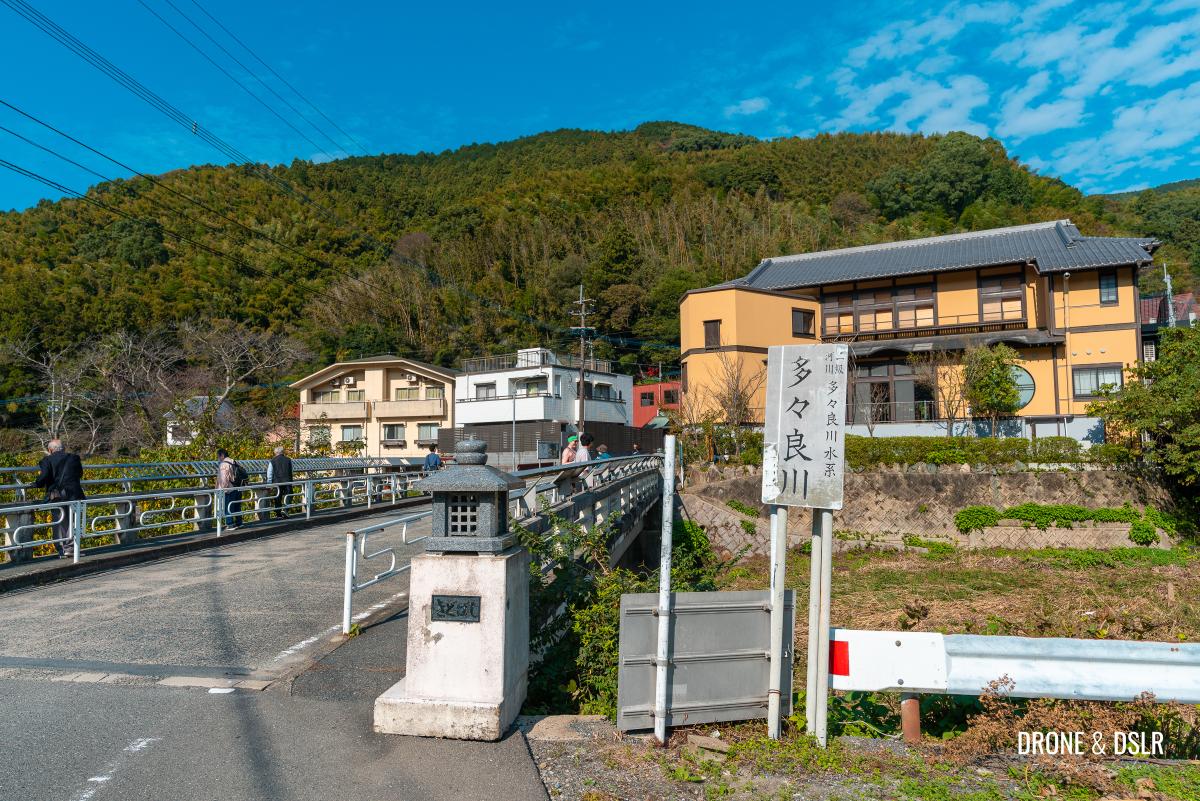
-
- What tunes can you play on The Melody Bridge (メロディー・ブリッジ) in Nanzoin
For those who prefer driving, the route from Fukuoka city centre is straightforward. Renting a car gives you some flexibility to explore the greater Sasaguri area and nearby attractions after your visit.
Nanzoin has three free car parks, the locations can be found on the temple’s map.
Hon-do (Main Hall)
Once you reach Nanzoin Temple, your attention will immediately be drawn to the colossal Reclining Buddha statue, or Nanzoin Nehanzo.

The entrance to the Nanzoin Temple
But first, take the time to explore the Hon-do (Main Hall) side.
The Hon-do is the site of events including the Monthly Festival and Kojin Festival as well as supplication rites and memorial services.
The Reclining Buddha: An Imposing Sight
To reach the Reclining Buddha statue, requires a bit of climb. But the climb allows you to explore the temples grounds and surrounding views, which are stunning during autumn.
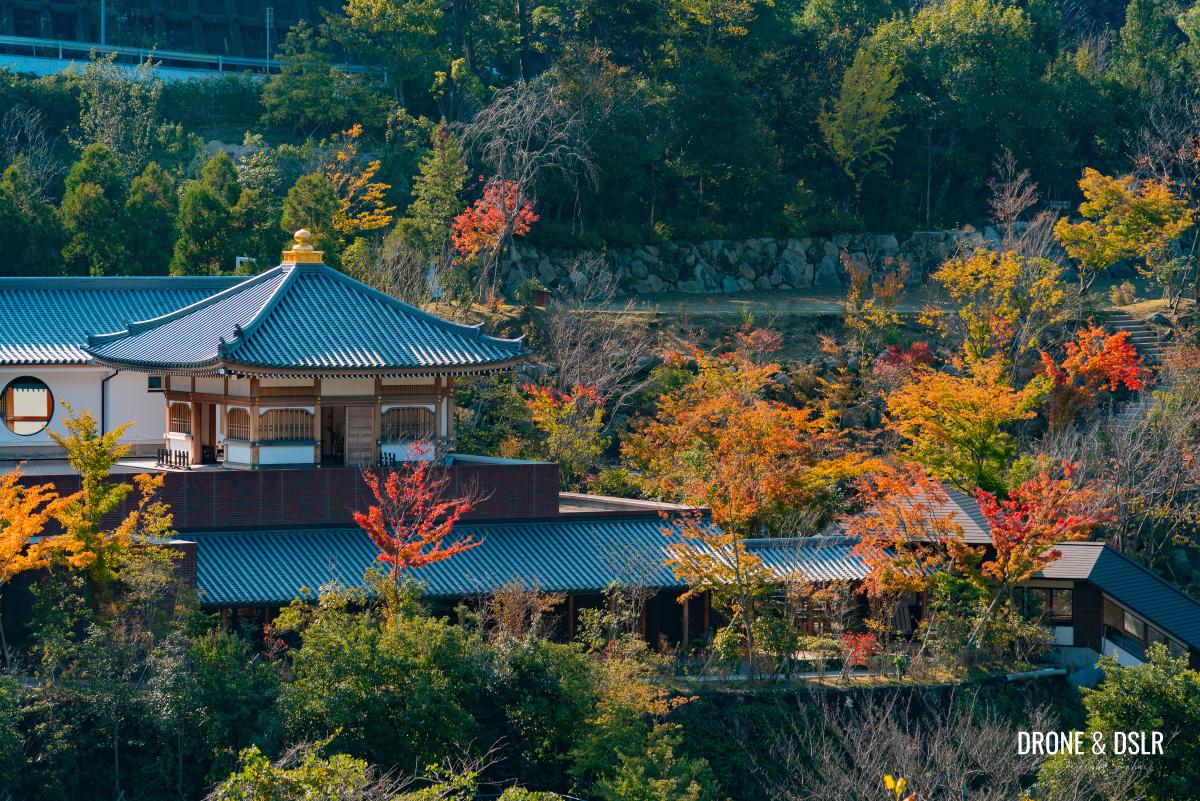
Nanzoin in autumn
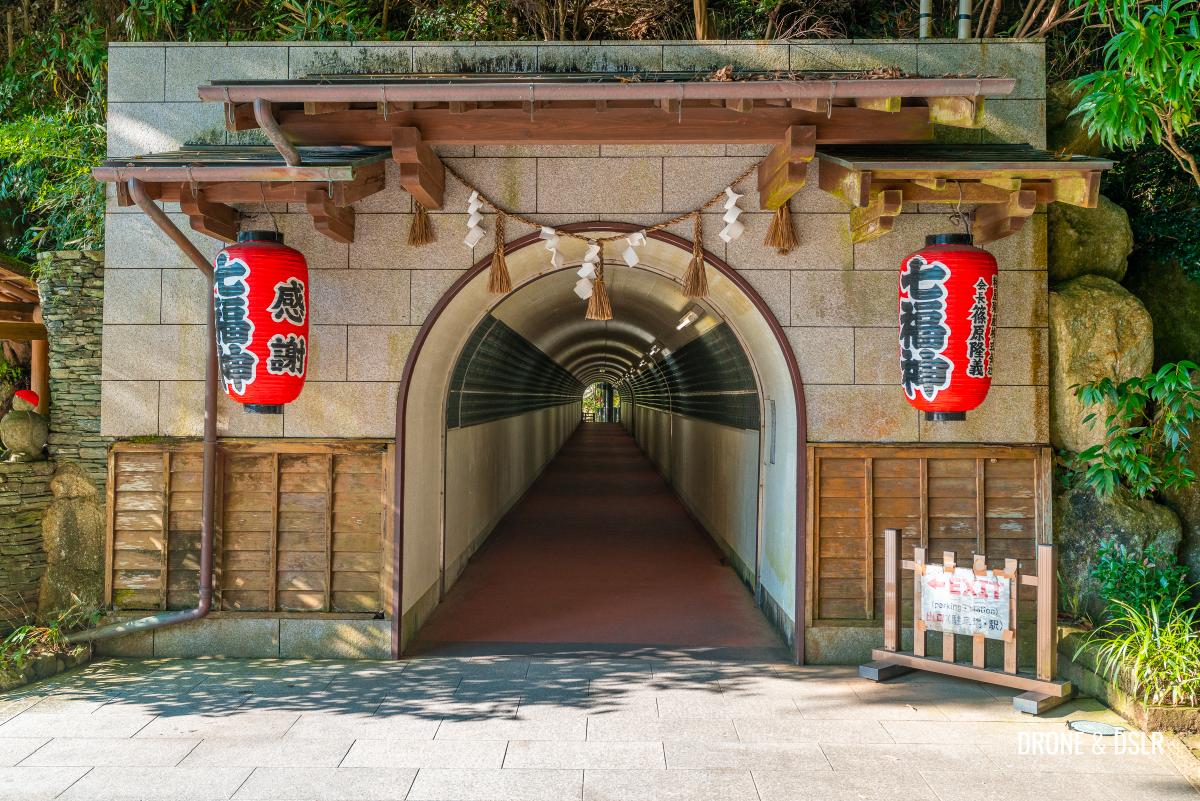
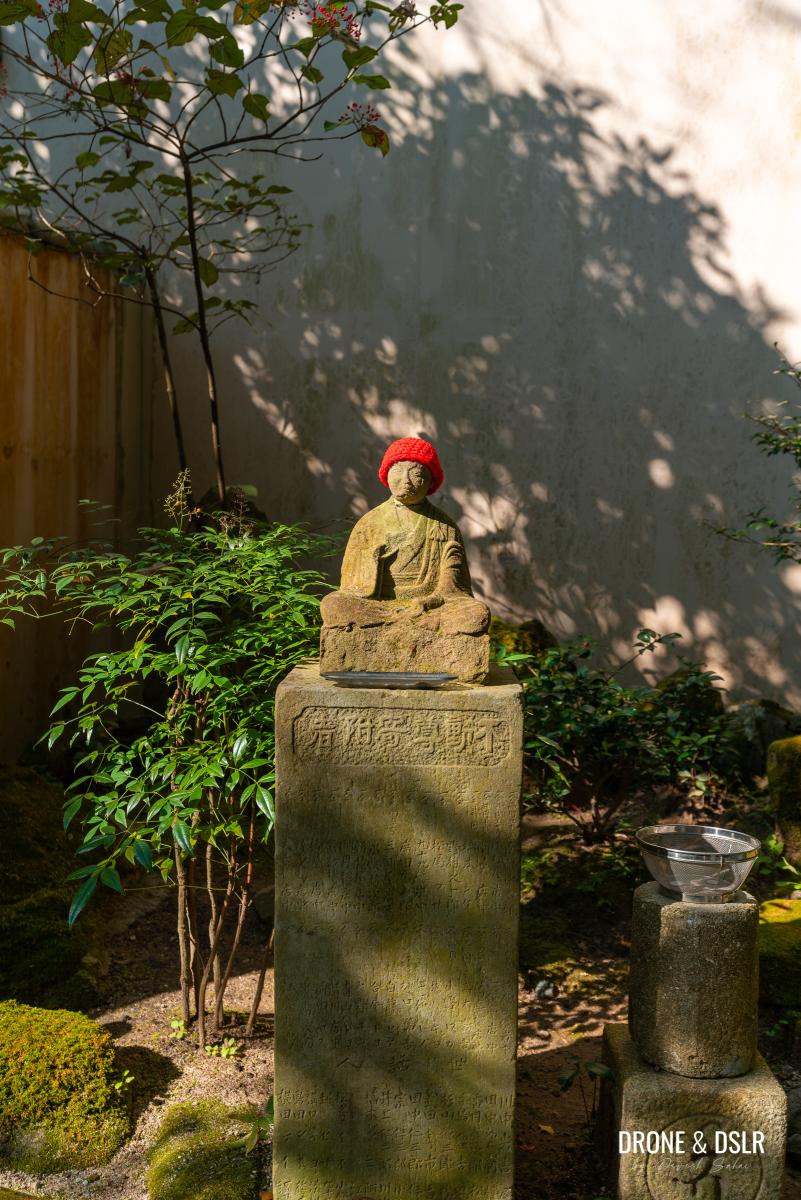
To exit the Hon-do side, you must first pay an entrance fee and take the beautiful “Tunnel of the Seven Gods of Fortune” to the other side. As you proceed, you’ll notice numerous torii gates, and statues of Arhat along the way. Don’t worry, you can explore them once you’ve seen the Reclining Buddha statue.
-
- The “Tunnel of the Seven Gods of Fortune” in Nanzoin Temple
-
- Arhat statues adorn the Nanzoin Temple
-
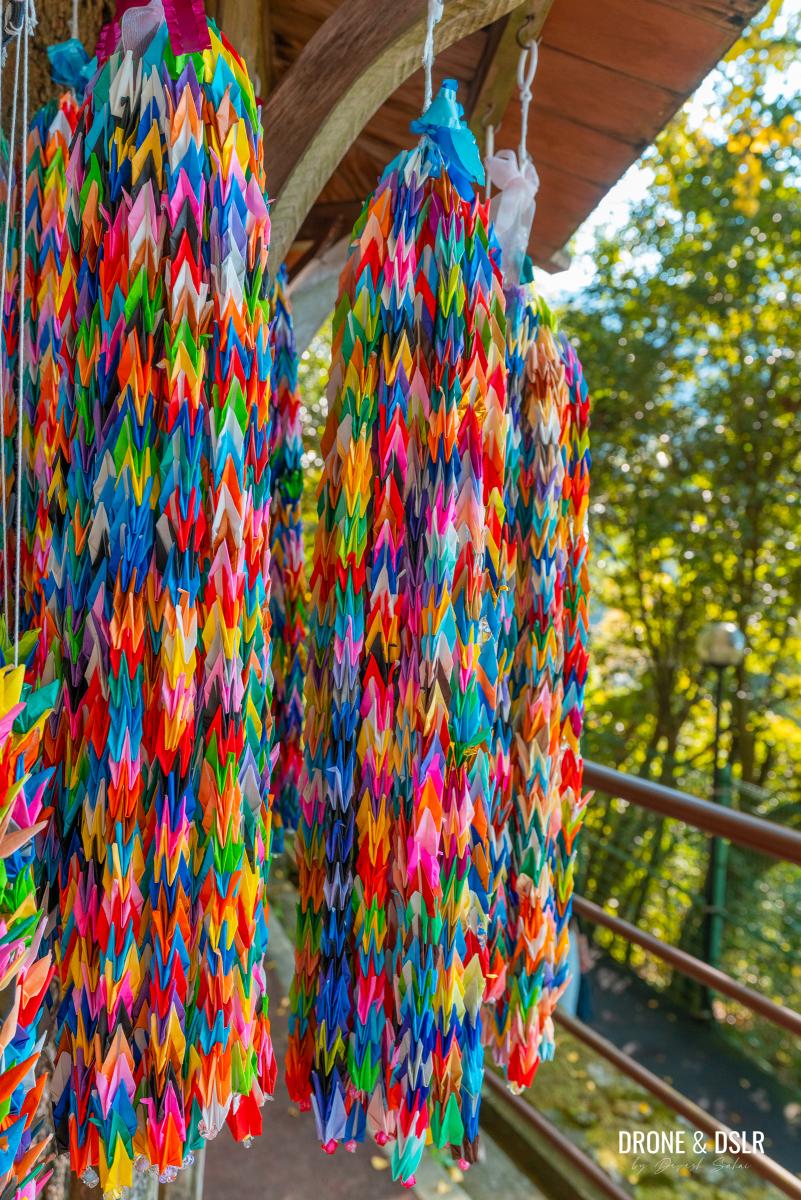
- We found these colour paper decorations while walking about Nanzoin Temple
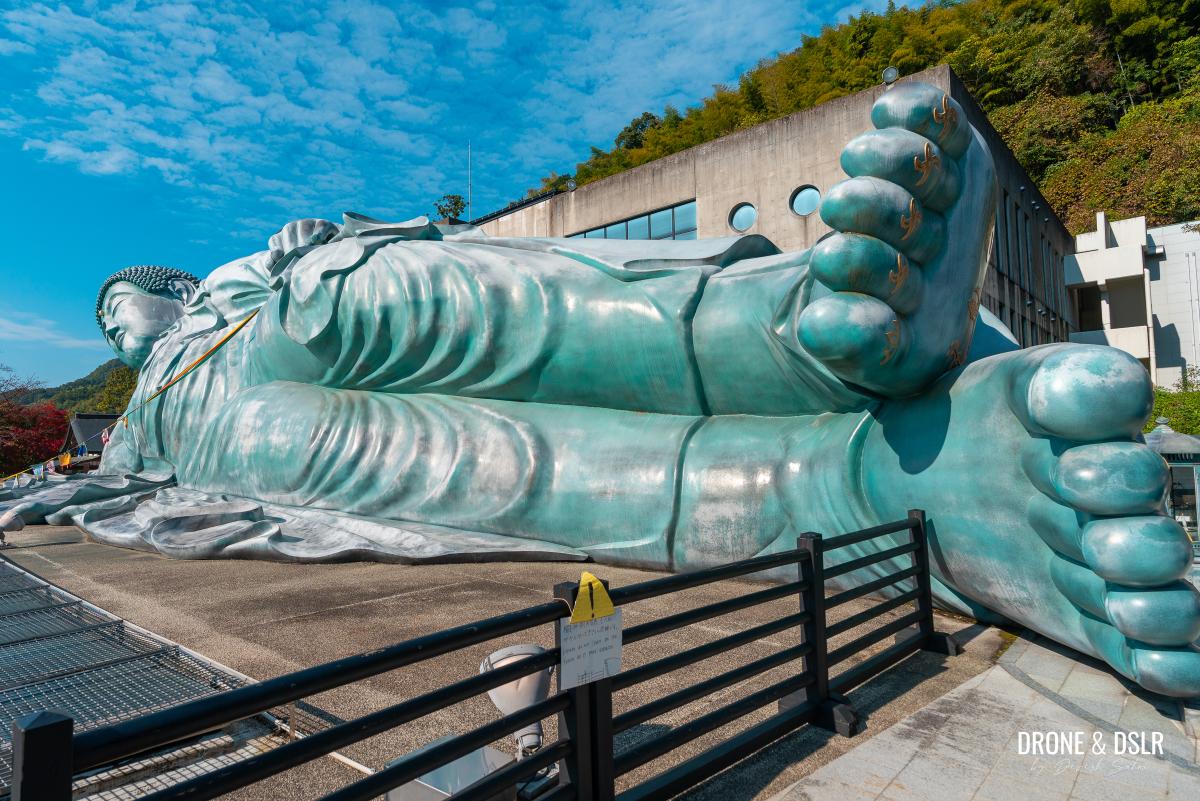
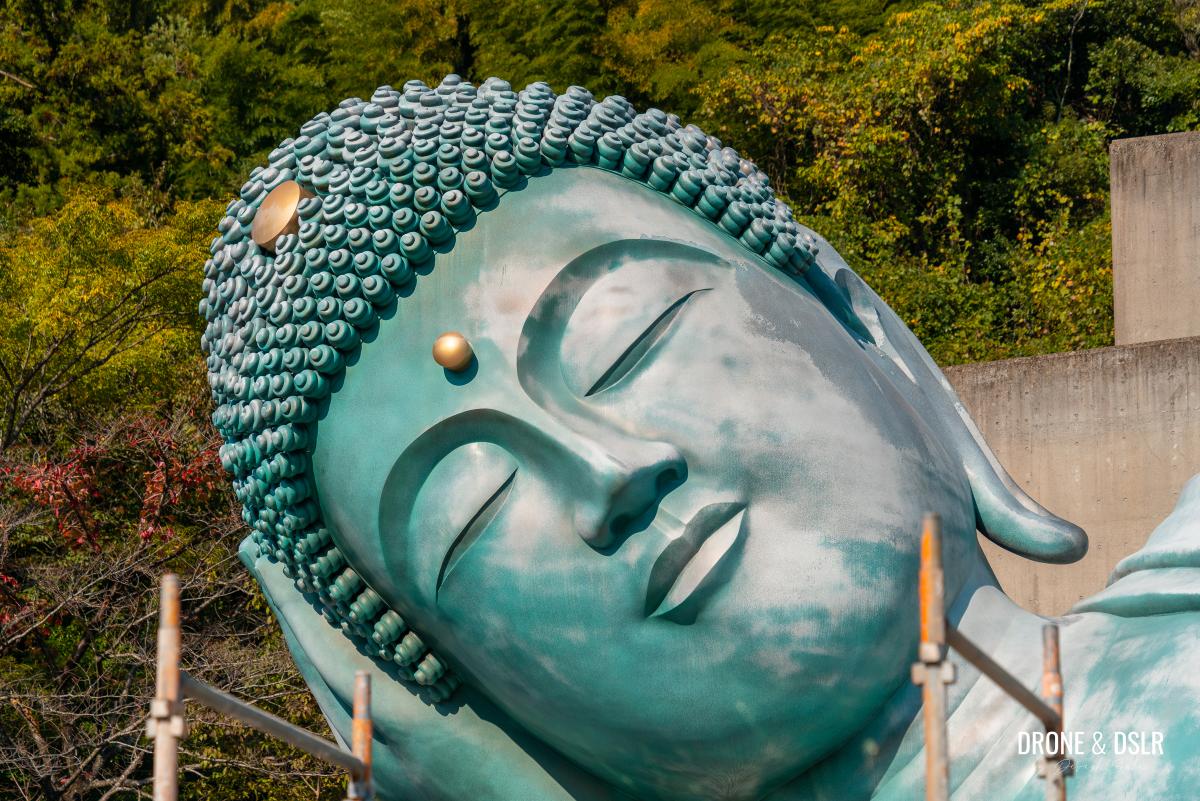
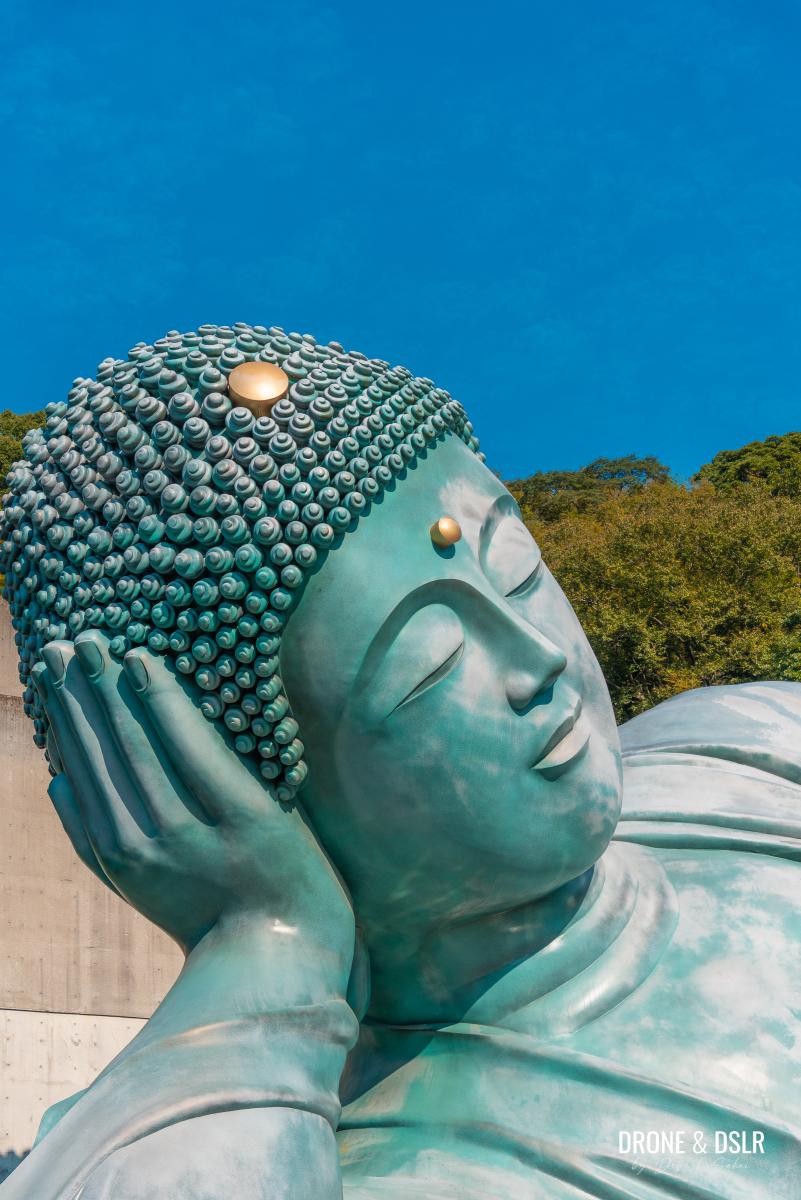
Follow the signs that finally bring you to the main attraction. Measuring approximately 41 meters in length and 11 meters high, and weighing about 300 tons, this bronze sculpture represents the Buddha at the moment of entering Nirvana, symbolizing the peaceful release from the cycle of birth and rebirth.
-
- The largest Reclining Buddha Statue
-
- The bronze sculpture represents the Buddha at the moment of entering Nirvana
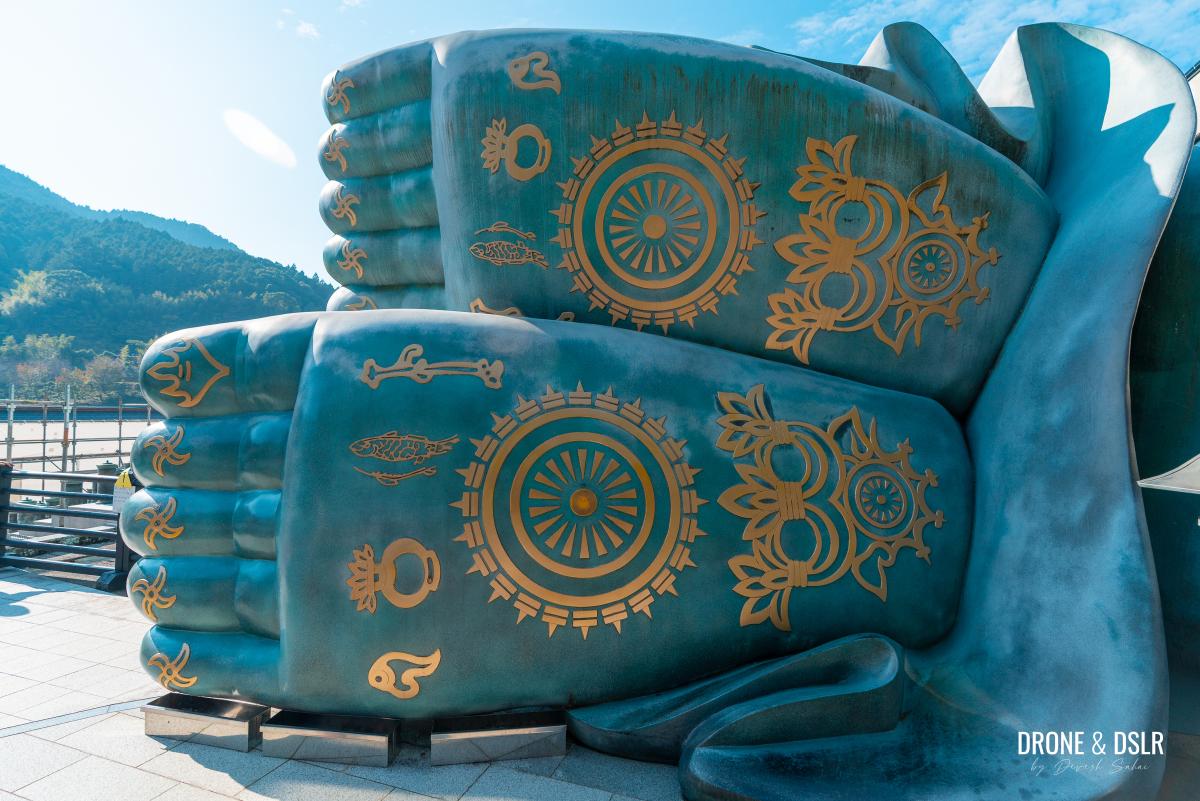
Walking along the statue’s length, visitors often pause to touch specific parts believed to bring good luck, health, and protection.
-
- Touching each symbol means something
-
- At 41 meters in length and 11 meters high, and weighing about 300 tons, this is the largest Reclining Buddha statue in the world
Exploring the Nanzoin Temple Grounds
Once you’re done visiting the Reclining Buddha, feel free to follow one of the other signs or take any path to discover the temple grounds. The temple grounds spread across a wooded hillside that provide a serene, and spiritual setting, ideal for a slow, meditative stroll.
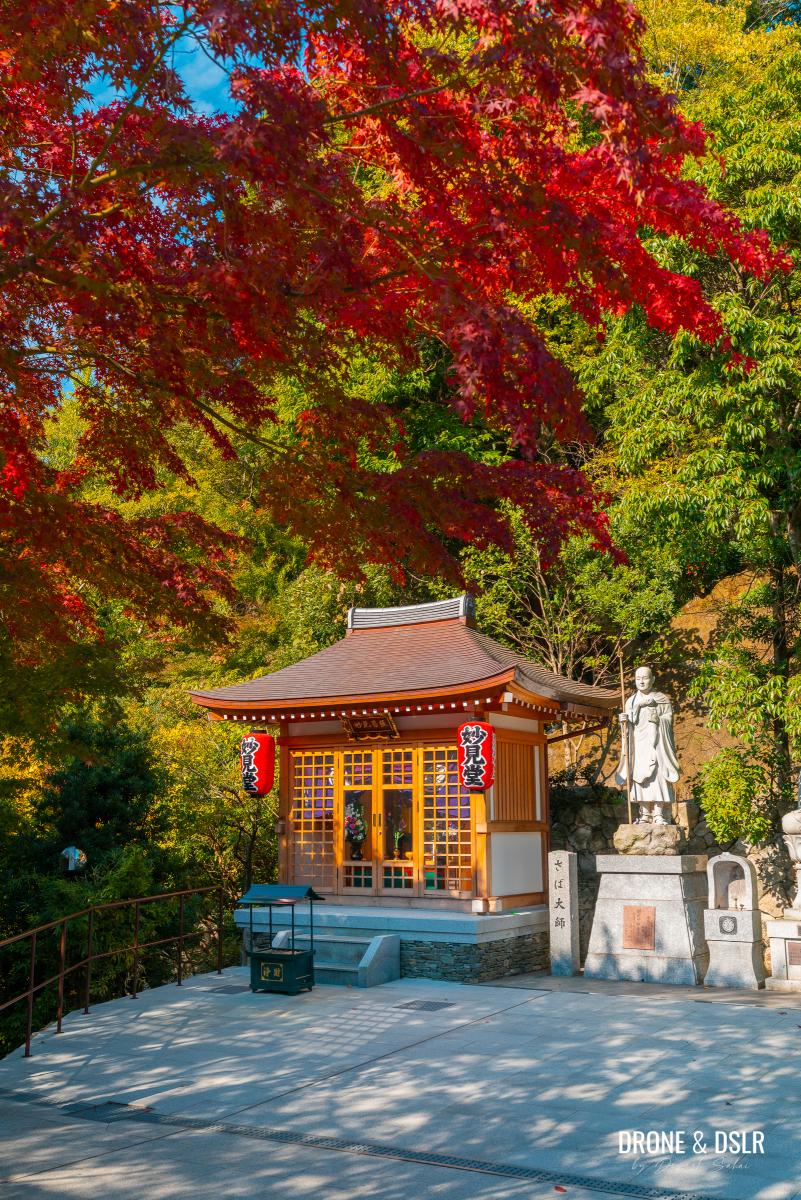
The temple’s lush forest setting changes with the seasons, featuring cherry blossoms in spring and a vibrant palette of autumn leaves later in the year. As you can probably tell from our photos that we visited in the autumn.
-
- Nanzoin Temple looks stunning draped in autumn hues
-
- Walking around the Nanzoin temple grounds in autumn
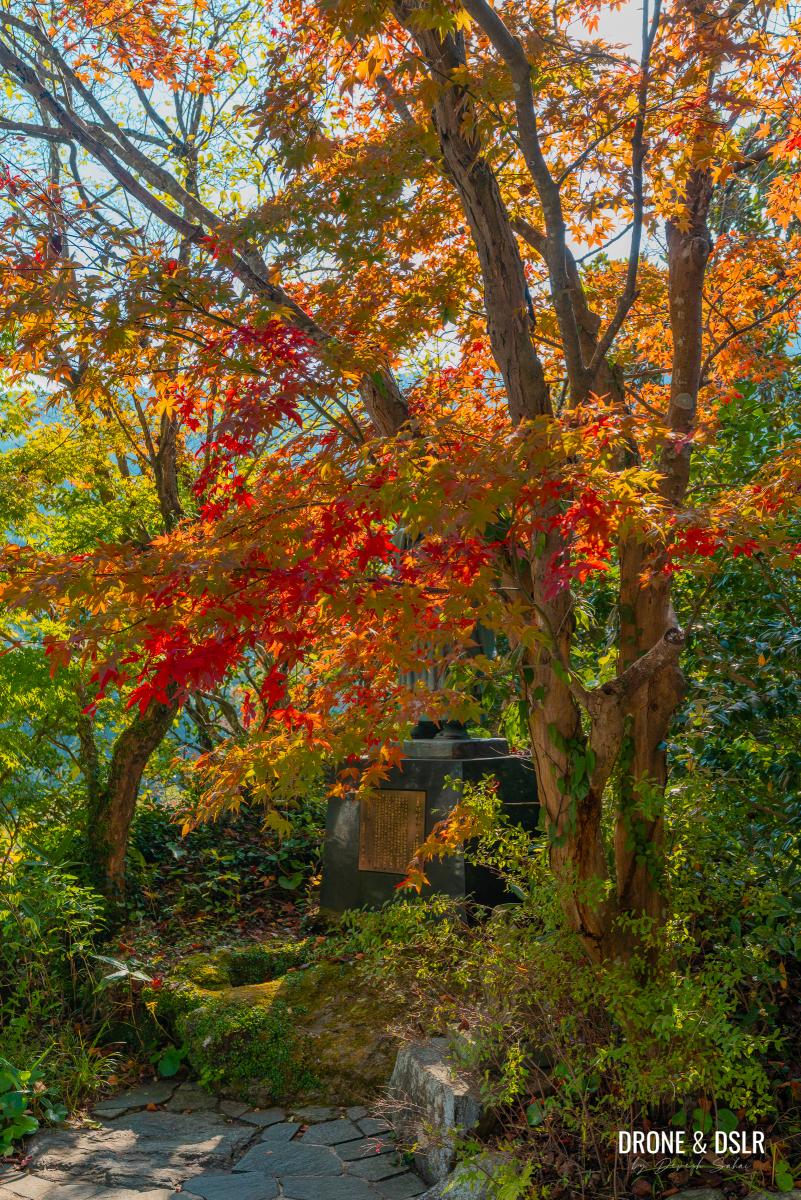
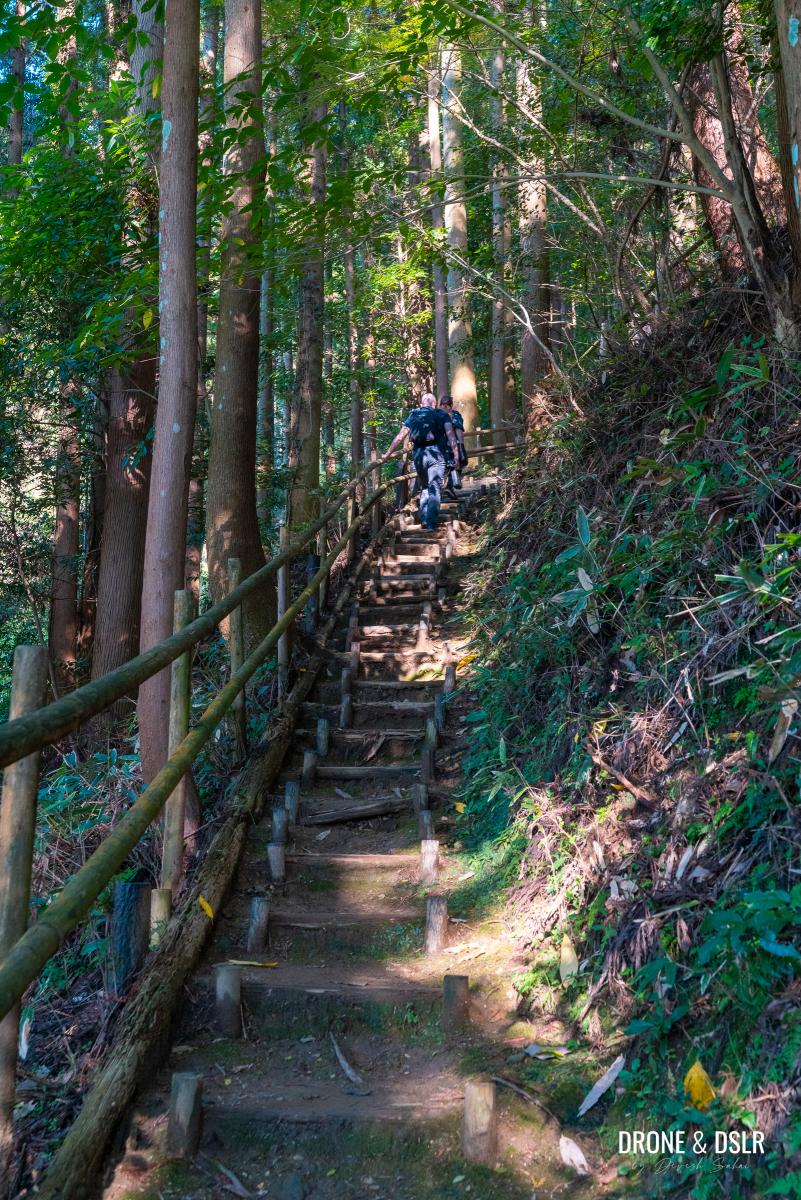
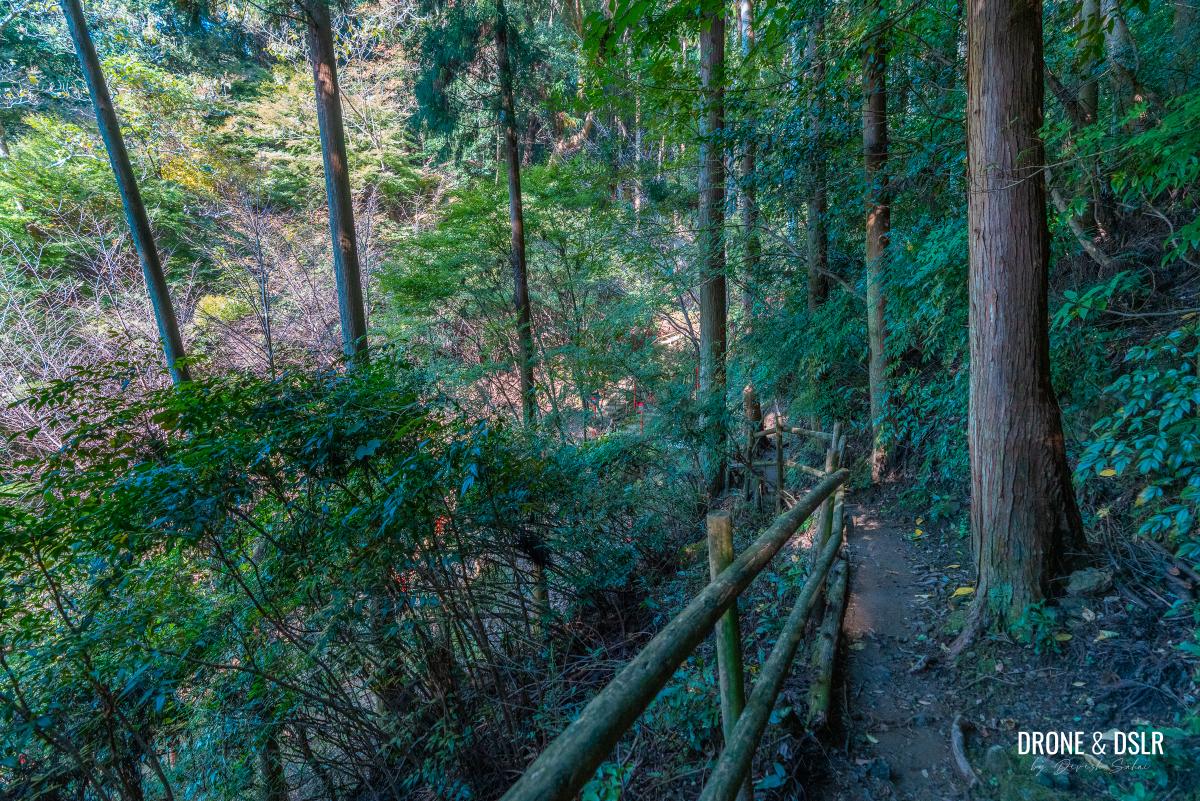
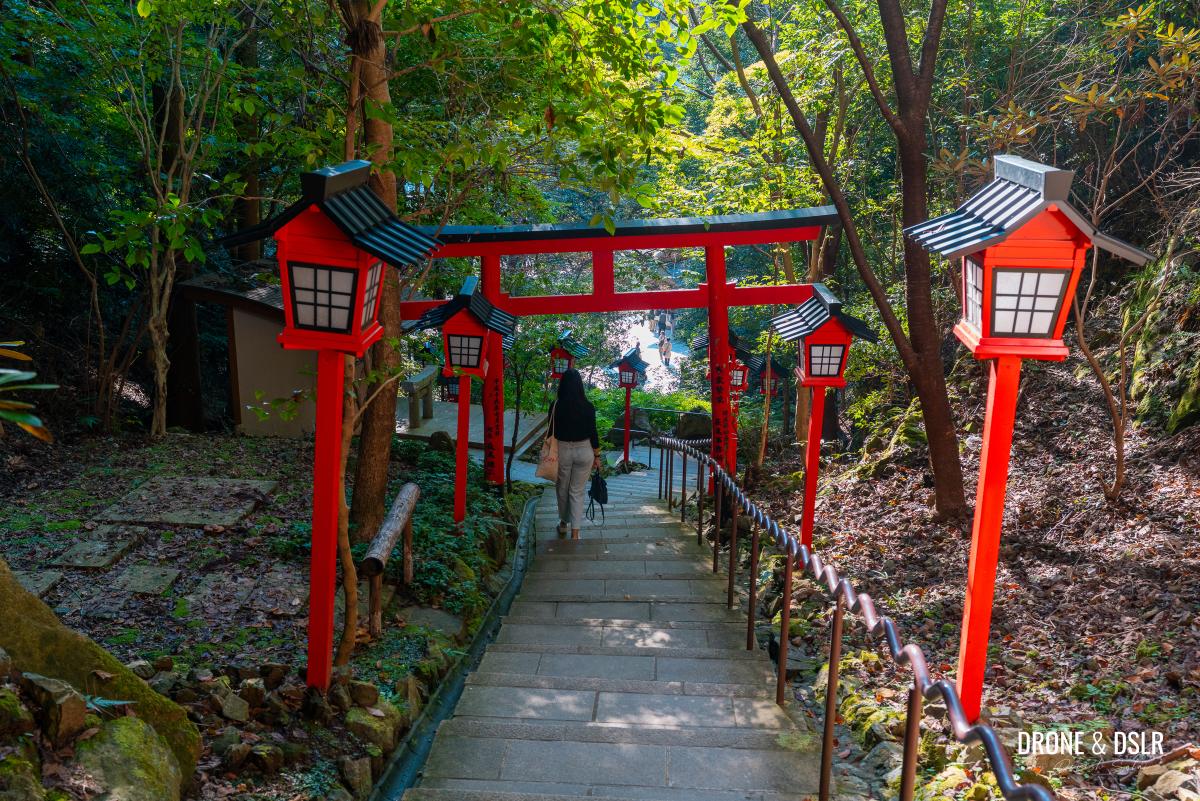
After visiting the Reclining Buddha, we spent our afternoon walking around the hillside, through torii gates, discovering small streams, and simply admiring the surrounding beauty.
-
- Take the path into the woods in the Nanzoin Temple grounds
-
- Go explore the hillside of the Nanzoin Temple grounds
-
- Walking through the torii gates at Nanzoin Temple
Practical Tips for Your Visit
- Nanzoin is open year-round, from early morning until late afternoon (usually around 8:30 AM to 5:00 PM). It’s best to visit on a weekday if possible, as weekends can be busier.
- Be prepared to walk on natural paths and some small inclines within the forested temple grounds. Comfortable walking shoes are recommended. Do not carry any heavy items with you.
- While there are small gift shops and food stalls near the entrance, it’s a good idea to bring water and snacks, especially if you plan to linger or hike some trails around Sasaguri.
- Please dress appropriately. According to the temple rules, please wear “clothing that covers your upper body up to your shoulders and stomach, and your lower body up to your knees.”
- Most importantly, the Nanzoin Temple is place of prayer and is very much in use on most days. Please show respect whilst touring the temple grounds.
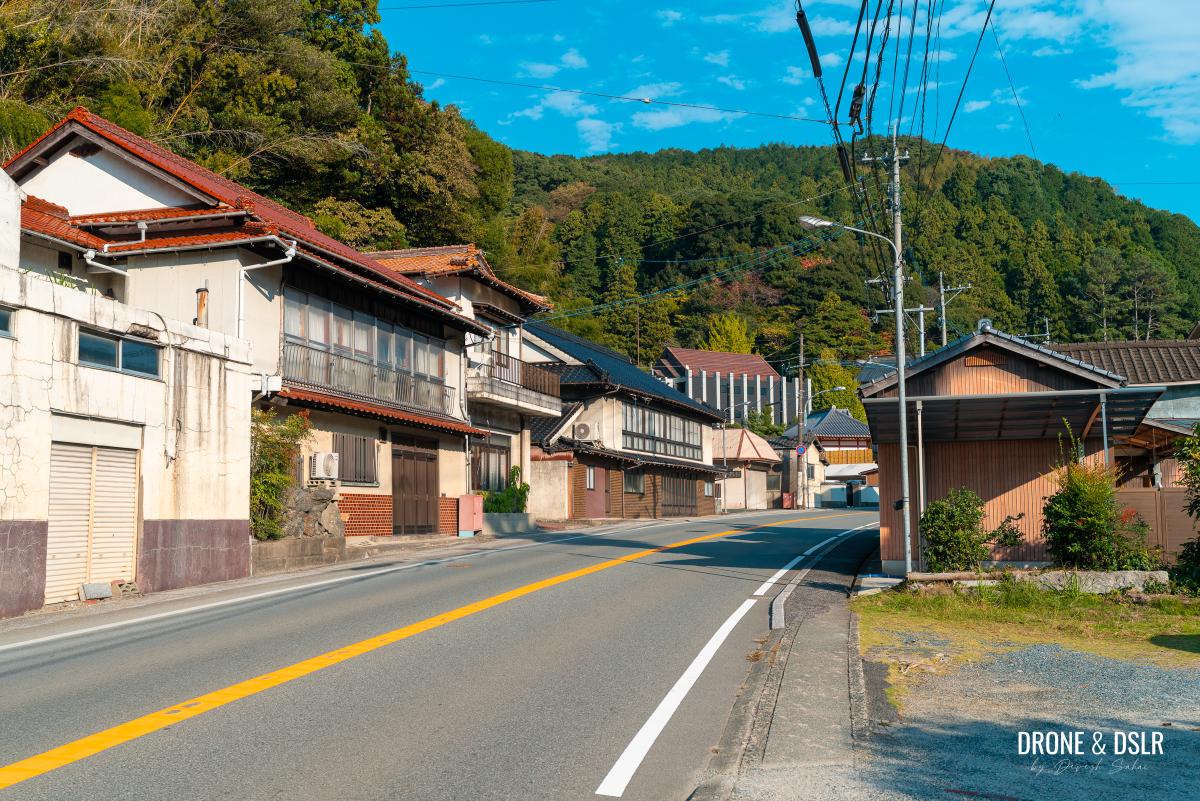
Nanzoin town is so quaint and quiet
More information can be found their website.
Why Dazaifu is a must-do day-trip from Fukuoka?
Located just 15 kilometres southeast of central Fukuoka, Dazaifu is a charming town known for its beautiful Dazaifu Tenmangu Shrine complex dedicated to Tenjin, the deified form of Sugawara no Michizane, a revered scholar and poet.
This easy day trip from Fukuoka offers a chance to visit a beautiful shrine, stroll through peaceful gardens, admire traditional Japanese architecture, and savour local dishes.

The Iris Pond, Dazaifu Tenmangu
Also, I recommend budgeting a full day to really explore and enjoy Dazaifu.
Getting to Dazaifu from Fukuoka
There are numerous ways to arrive at Dazaifu from Fukuoka, and there’s a full list on the Dazaifu website.
We took the train from Tenjin, and it took us 30 minutes to reach. The train station at Dazaifu literally exits onto the main path to Dazaifu Tenmangu. Make sure to ride the Nishitetsu-Tenjin-Omuta Line bound for Omuta or Nishitetsu-Ogori and change at Nishitetsu-Futsukaichi Station to the Nishitetsu-Dazaifu Line for Dazaifu Station.
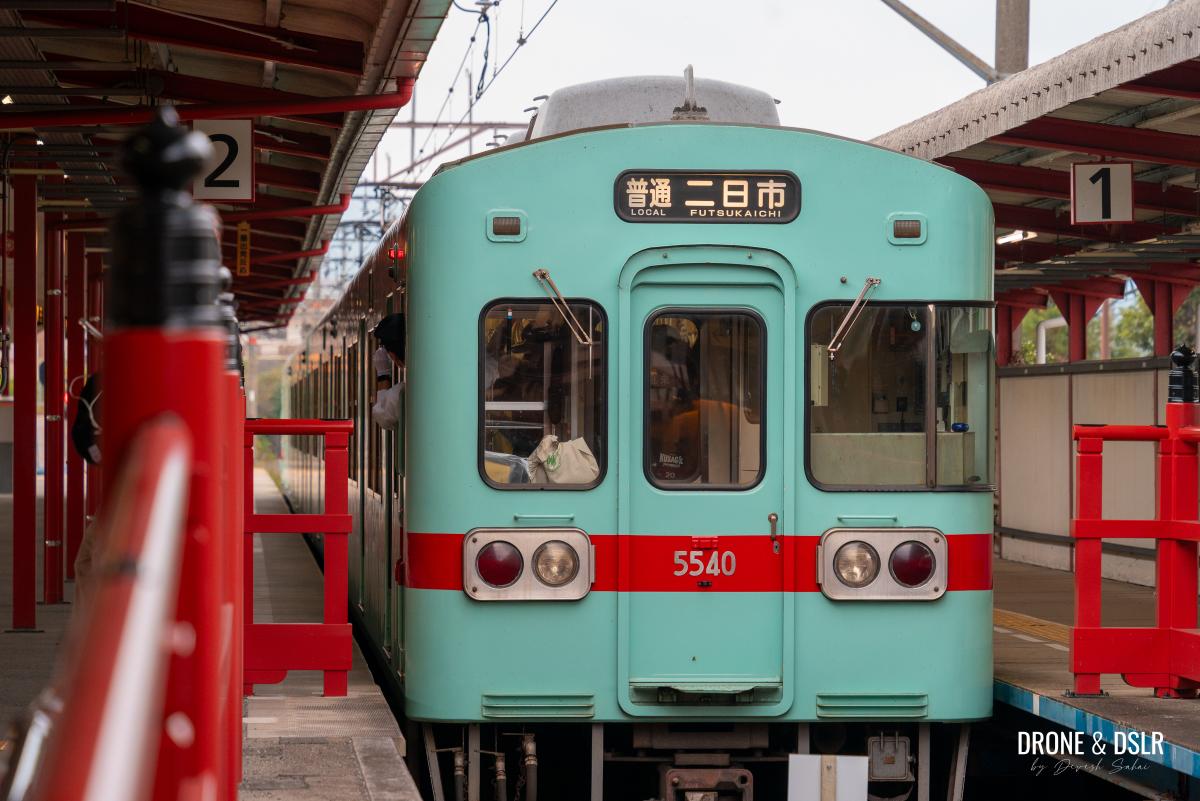
Arriving at Dazaifu in this retro train
Alternatively, the bus is also a good option. And a car or taxi takes approximately 30 minutes, depending on traffic.
Navigating Dazaifu
When you arrive at the main approach to the shrine take some time to wander the shops, cafés, and restaurants. You might find some interesting local handicrafts to take back as a souvenir.

The main path to the Dazaifu Tenmangu Shrine can get a little busy over the weekends
Also, there’s a fantastic soba and tempura restaurant called Dazaifu Namiman (縁結び食堂 なみ満), tucked away in a small alley. We highly recommend it if hunger strikes. It was honestly some of the best soba and tempura ever! But also be prepared to wait in a long line.
-
- Dazaifu Namiman (縁結び食堂 なみ満) – a must-visit restaurant in Dazaifu for soba noodle lovers

-
- The best soba and tempura we ate during our trip to Fukuoka

Discovering Dazaifu Tenmangu Shrine
Back on the main path, you’ll pass under two large gates before reaching the main torii serving as the entrance to the shrine grounds.
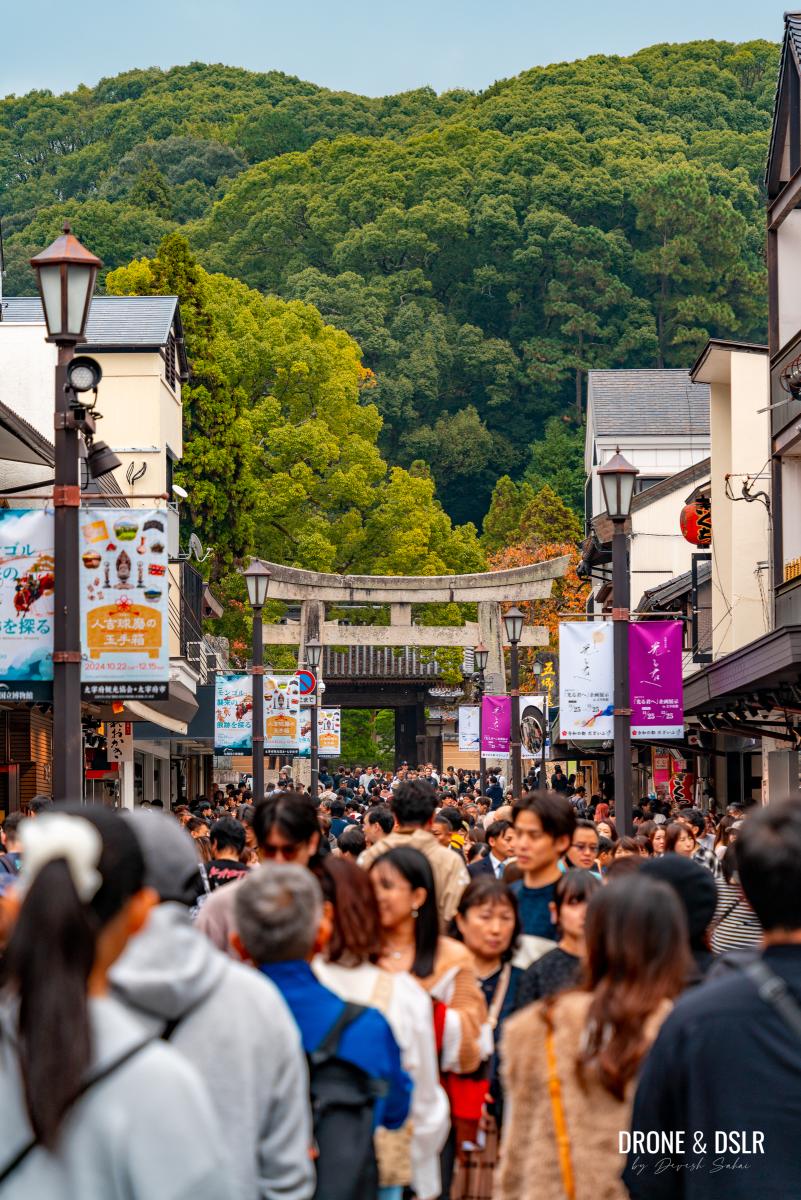
The torii gates that lead you to the main shrine
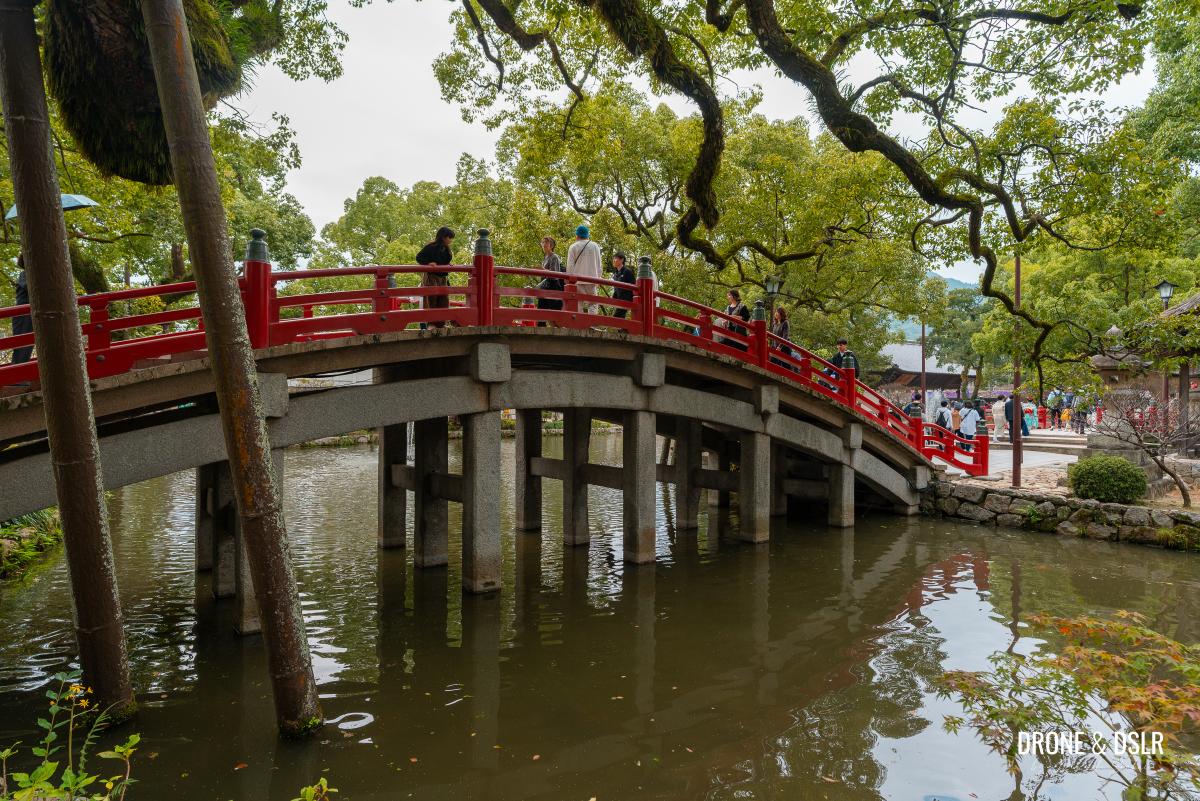
A fourth 700-year-old gate stands on the path before the arched taiko-bashi bridges, and a final torii gate marks the entrance into the inner sanctuary where the honden is located. The honden is the main sanctuary and centre of shrine activity. Here, visitors may observe morning prayers.
-
- The arched taiko-bashi bridge
-
- The final torii gate which marks the entrance into the inner sanctuary of Dazaifu Tenmangu Shrine

-
- The honden at Dazaifu Tenmangu Shrine

Dazaifu Tenmangu Shrine is dedicated to Sugawara Michizane, a Heian Period scholar and politician known for his intelligence and poetry. After his death, he was deified as Tenjin, the patron god of learning and scholarship.
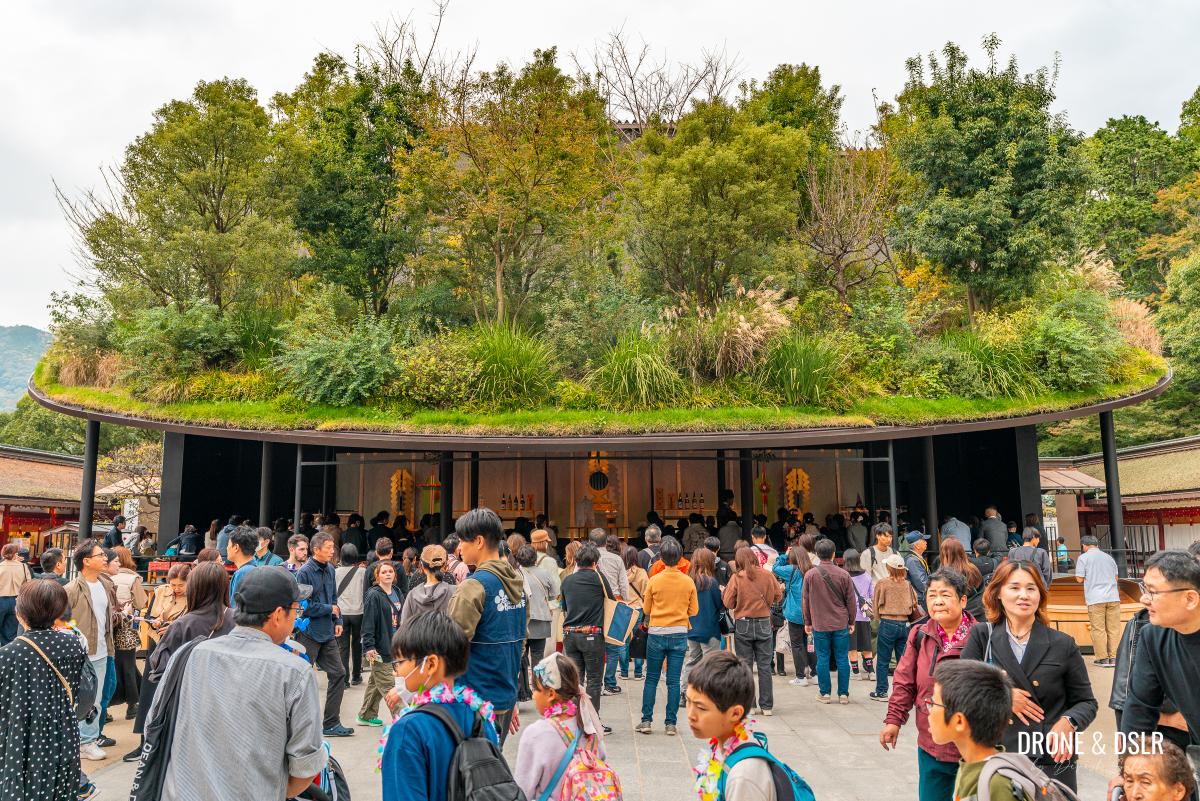
The Dazaifu Tenmangu Shrine
For students and scholars visiting Japan, this shrine is particularly significant. It’s a place where many come to pray for academic success and wisdom.
The shrine itself is an impressive sight. Constructed in traditional wood, with vermilion-painted gates and buildings complemented by lush greenery, the complex invites visitors to experience the elegance of classic Japanese shrine architecture.
Walk up to Tenkai Inari
Located adjacent to the shrine are the Nakashima Shrine and Dazaifu Tenmangu Museum. Nakashima Shrine is a serene, less-visited spot with miniature shrines, trees, and a pond. And the Dazaifu Tenmangu Museum displays 50,000 historic items, including Sugawara Michizane’s artifacts.

The trees behind the Dazaifu Tenmangu Shrine (human for scale)
But the highlight for us for visiting the Tenkai Inari, a small shrine in a quiet section of the grounds of Dazaifu Tenmangu. It is located on a hillside and is dedicated to a deity linked to commercial success and good fortune.
-
- Behind the Dazaifu Tenmangu Shrine is the entrance to the Tenkai Inari. Simply follow the torii gate trail

-
- The winding trail that includes steep stone steps through a forested area to Tenkai Inari

The path to the shrine starts from behind the Dazaifu Tenmangu Shrine and is a short, winding trail that includes steep stone steps through a forested area. Along the way, colourful banners line the path, and bright red torii gates are positioned closely together.
-
- Wear comfortable shoes if you plan visit the Tenkai Inari
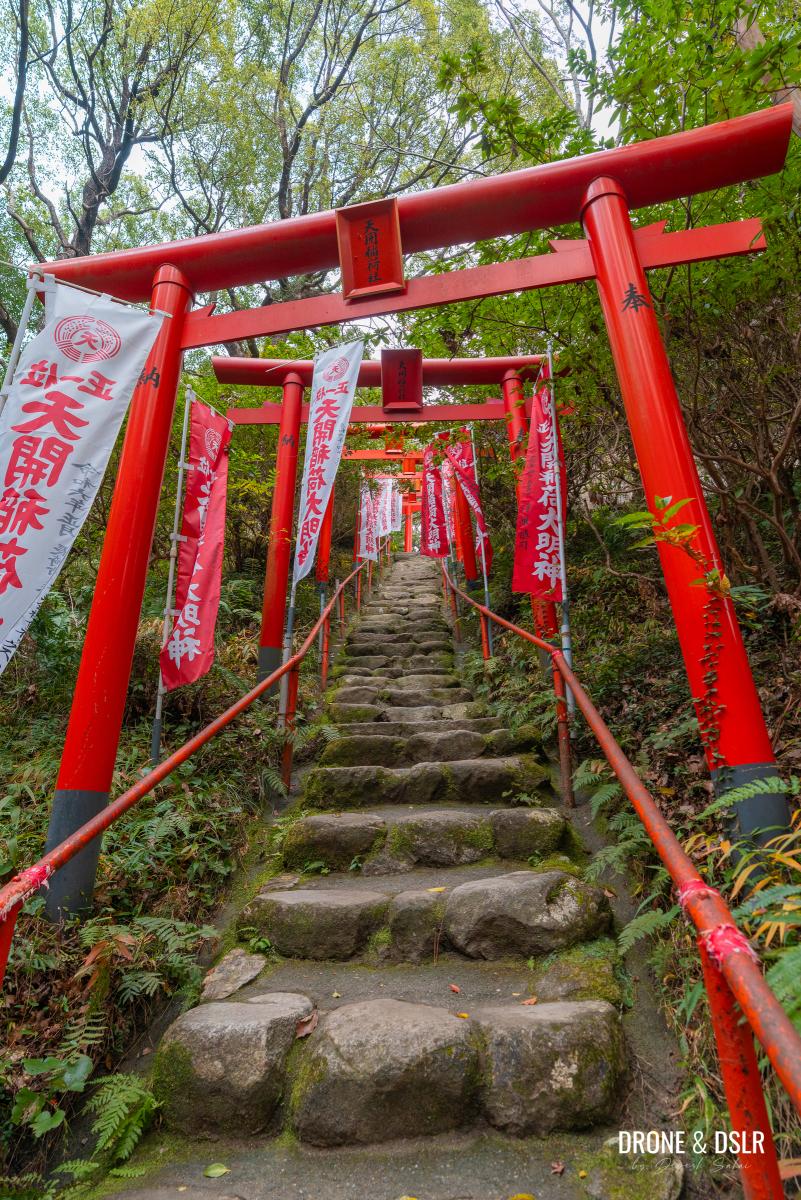
-
- The Tenkai Inari at Dazaifu

-
- The banners that line the pathway

If you explore beyond the main shrine building, you’ll find the inner sanctuary shrine nestled within a small cave-like enclosure.

Behind the Tenkai Inari is the inner sanctuary shrine, nestled within a small cave-like enclosure
Take a detour to the Dazaifu Tenmangu Museum
Instead of the returning on the same torii gate trail from Tenkai Inari, follow the signs for the Dazaifu Tenmangu Museum. The detour follows a beautiful trail through the forested area on the other side of the hill. You’ll thank us for taking this trail especially during cherry blossom or autumn seasons.
-
- Take the detour to the Dazaifu Tenmangu Museum from Tenkai Inari

-
- The trail on the other side of the hill is so peaceful and beautiful
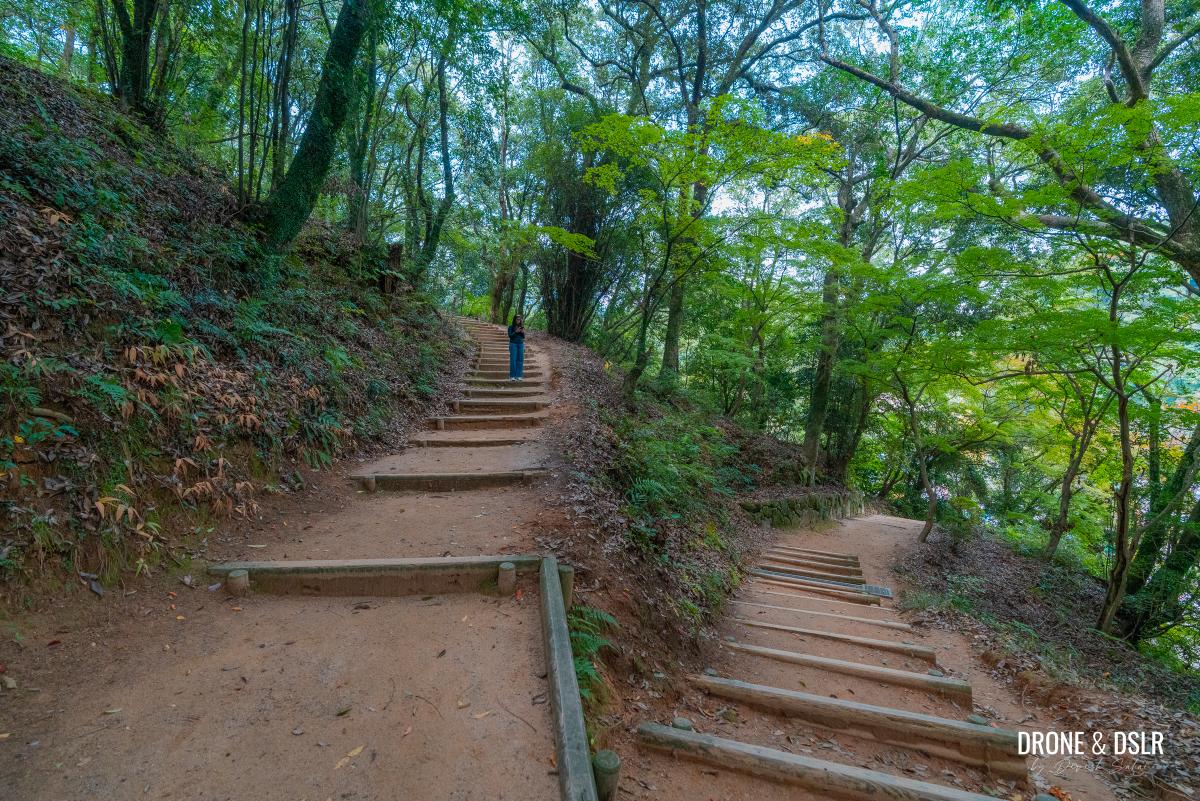
As the trail descends on the other side, there is a small theme park is quite inviting! But unless you have kids, follows the steps up to the Rainbow Tunnel, that leads you to the Kyushu National Museum. And yes, the tunnel is quite fascinating!

The area next to the Dazaifu Tenmangu Museum during fall
The museum is a large blue structure that looks more like a sports stadium than a traditional exhibition space. Inside, it contains an impressive collection of Kyushu artifacts displayed in a creative and informative manner. You can learn more about the museum and its current exhibitions on its website.
Practical Tips for Visiting Dazaifu Tenmangu
- Best time to visit: Spring (March-April) for plum blossoms and autumn (October-November) for colourful foliage. However, the shrine remains lovely year-round.
- Getting around: The shrine grounds are accessible by foot. There is no need for extensive walking gear, but comfortable shoes are recommended.
- Opening hours: The shrine is generally open from 6:30 AM to 6:00 PM, with slight variations by season.
- Admission: Entrance to the main shrine and grounds is free. The Kyushu National Museum has an admission fee if you choose to visit.
- Language: Signage and guides are often available in English, and locals are friendly and welcoming.

Dazaifu Tenmangu during autumn
All other information can be found their very informative website.
Nanzoin and Dazaifu Tenmangu: Two Unmissable Day Trips Near Fukuoka
Whether you’re drawn to the spiritual grandeur of the giant Reclining Buddha at Nanzoin or the historic elegance and scholarly blessings of Dazaifu Tenmangu, both destinations offer unique experiences just a short journey from Fukuoka.
Not only are these two destinations easy to cover within a day, but also essential stops for anyone eager to explore the depth and diversity of the Kyushu region beyond Fukuoka.
If you enjoyed this guide, drop us a comment below or share it with anyone travelling to Fukuoka soon. And if you’re looking to explore Fukuoka’s food scene, read about our experience.
You might also like





Leave a reply