


Tai Po Kau Nature Reserve is a one of the most tranquil areas that we’ve explored in Hong Kong. It makes for a wonderful escape when you want to immerse yourself in nature and not be bothered by the city.
What makes Tai Po Kau Nature Reserve unique is that it offers visitors numerous trails to explore its flora and fauna. Depending on your mood, level of fitness, or even the weather, you can choose between four trails that range between 3 km to 10 km.
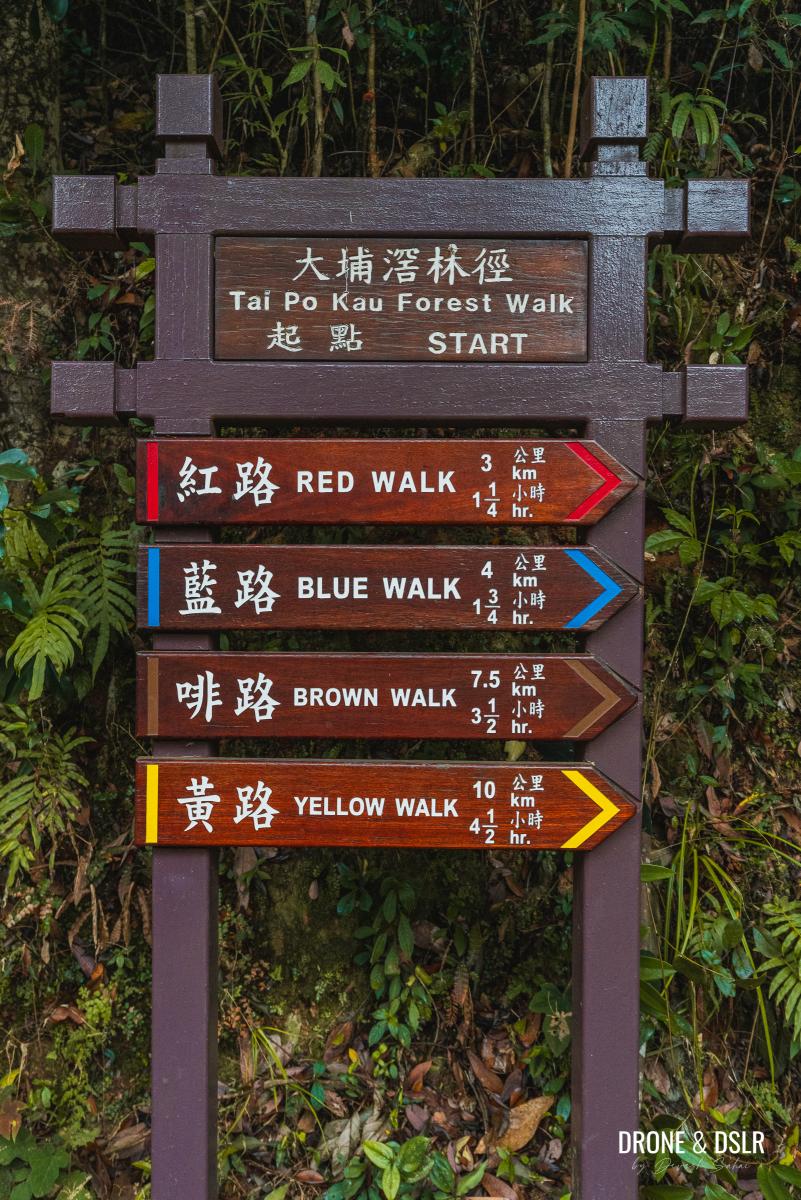
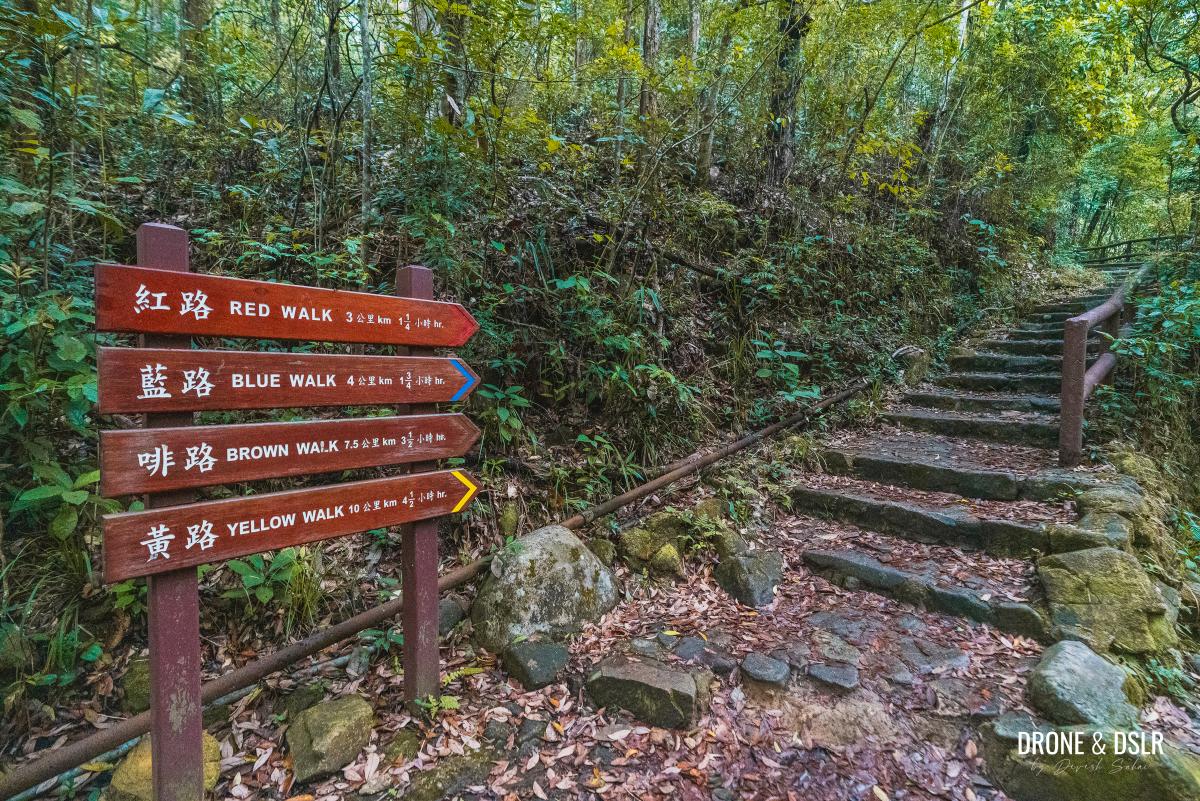
There are four Tai Po Kau Forest Walks, from 3 km to 10 km. Choose your adventure!
So, if you’re planning on visiting the nature reserve, and are looking for information about it and its trails, then you’ve come to the right place.
About the Tai Po Kau Nature Reserve
Spanning approximately 460 hectares, the Tai Po Kau Nature Reserve was originally established as a plantation in 1926, and features over 100 tree species. The reserve extends from the foothills of Grassy Hill down to the streams and woodland paths next to Tai Po Road.
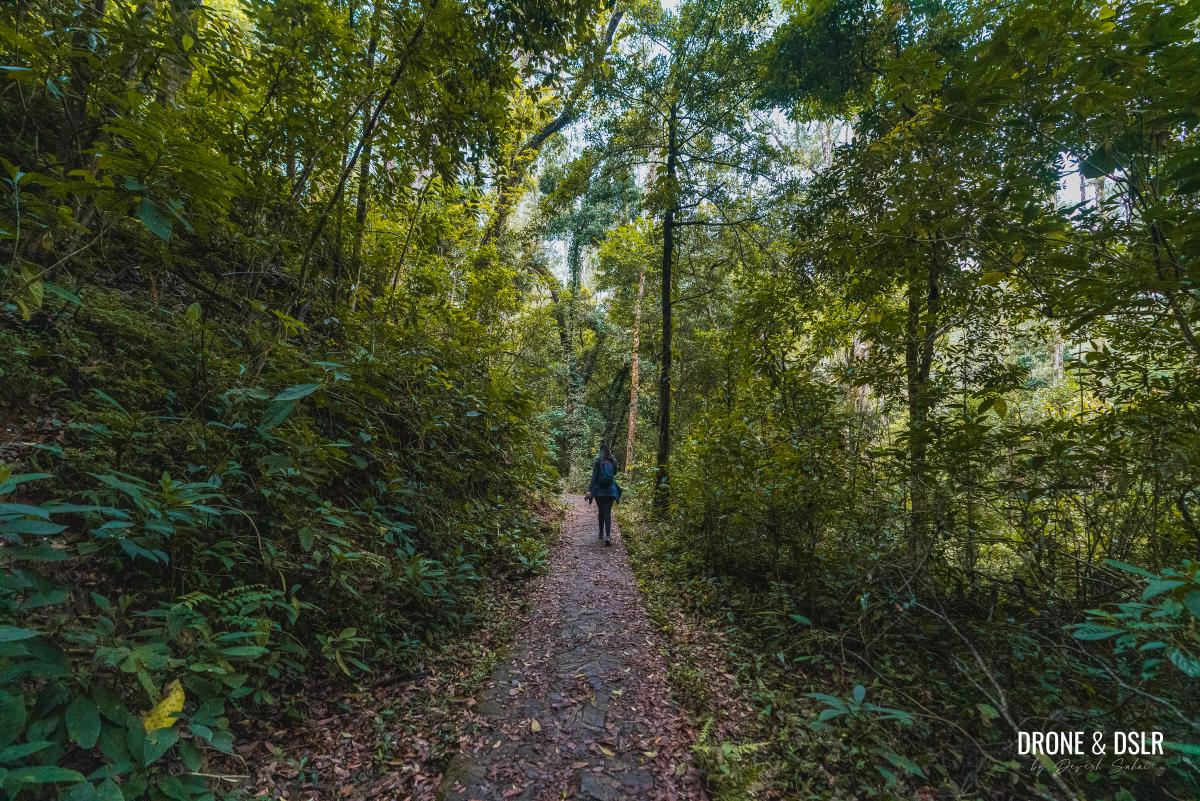
Tai Po Kau Nature Reserve is a perfect getaway for those who want some peace and quiet
The reserve is a lively sanctuary for birds, and occasionally visitors can catch glimpses of barking deer, civets, pangolins, and porcupines.
Tai Po Kau Nature Reserve Trails & Forest Walks
Tai Po Kau Nature Reserve offers five well-marked walking trails, including four colour-coded routes ranging from 3 to 10 kilometres, and a shorter one-kilometre Nature Trail with interpretive signs about local birdlife and habitat.
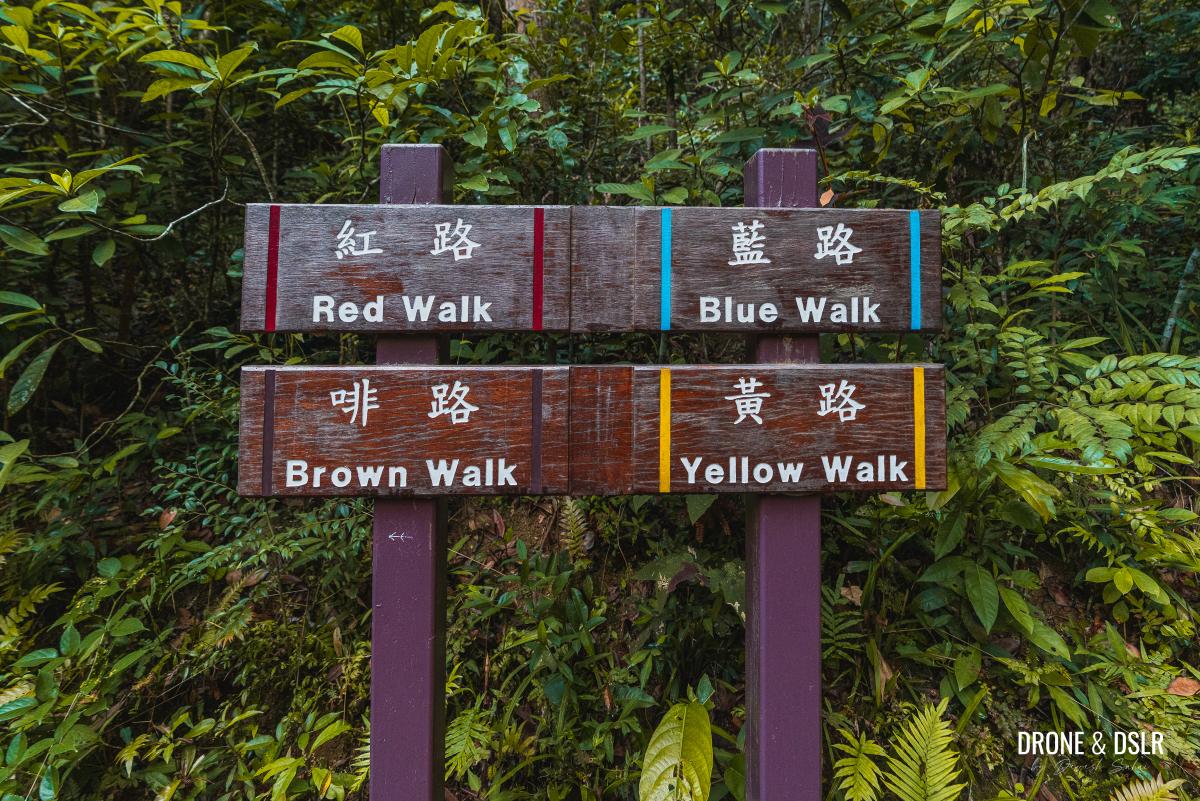
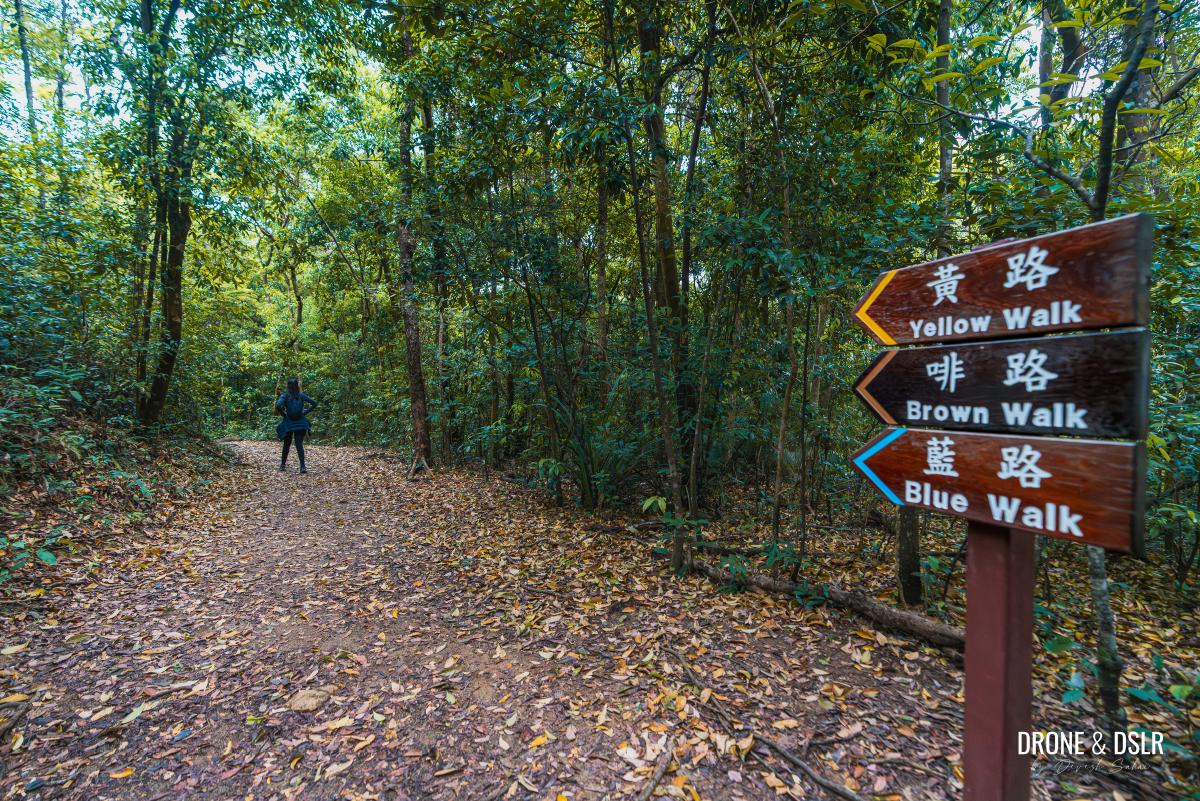
Tai Po Kau Nature Reserve offers four colour-coded routes to pick from
The four colour-coded walks are:
- Red Walk: 3 km
- Blue Walk: 4 km
- Brown Walk: 7.5 km
- Yellow Walk: 10 km
The walks not only vary in distance but also their elevation profile, as the longer walks take you up the slopes of Grassy Hill.
During our visit, we opted for the Blue Walk. This seemed like a good middle ground of exploring the nature reserve, and also keeping the hike relatively easy because we were in the mood for an easy nature walk.
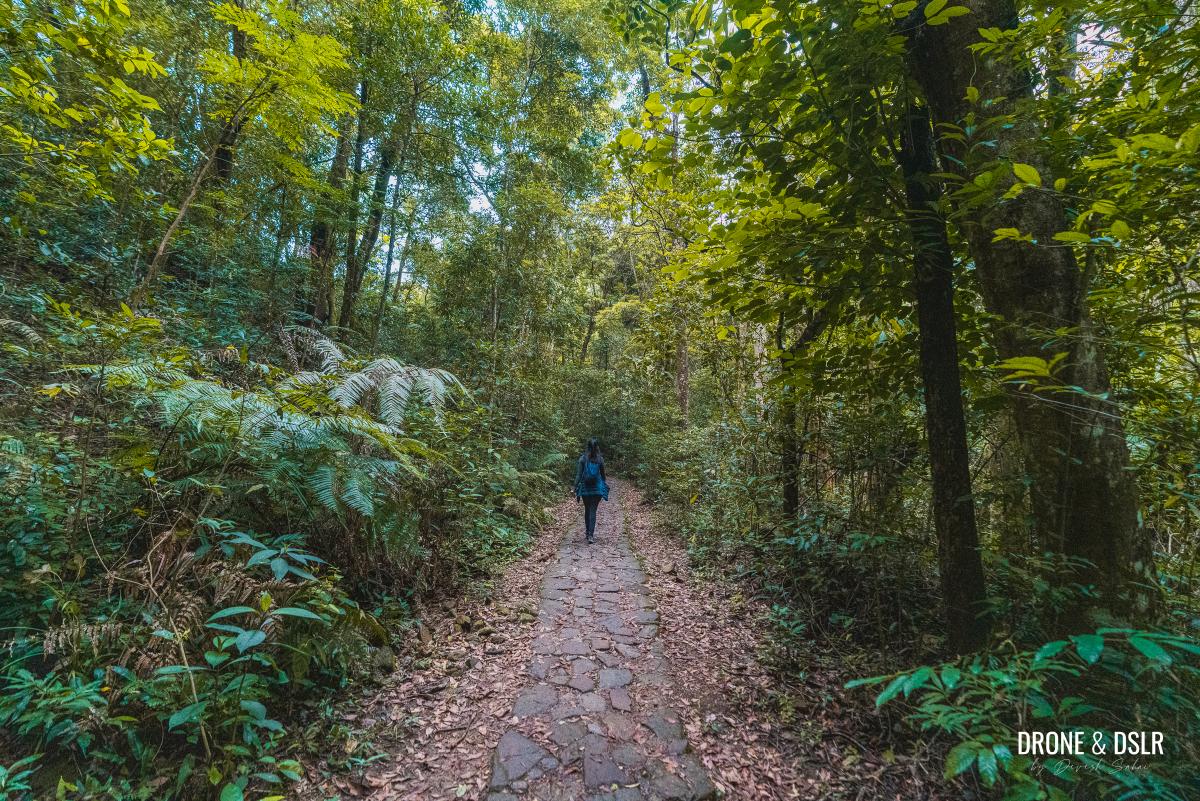
Immerse yourself in nature on the Tai Po Kau Nature Reserve
Each of the trails is well-marked and easy to follow. So, rather than make this a detailed guide about the walk or walks, we thought we’d share our experience of visiting this natural oasis in Tai Po. Like a review.
How to get to the Tai Po Kau Nature Reserve
The entrance to the Tai Po Kau Nature Reserve is located on the Tai Po Road, which has limited connectivity.
The road is served by buses 72, 72A, 73A, and 74A. For most, it might be easiest to arrive at Tai Wo and catch one of these buses to the Chung Tsai Yuen bus stop.
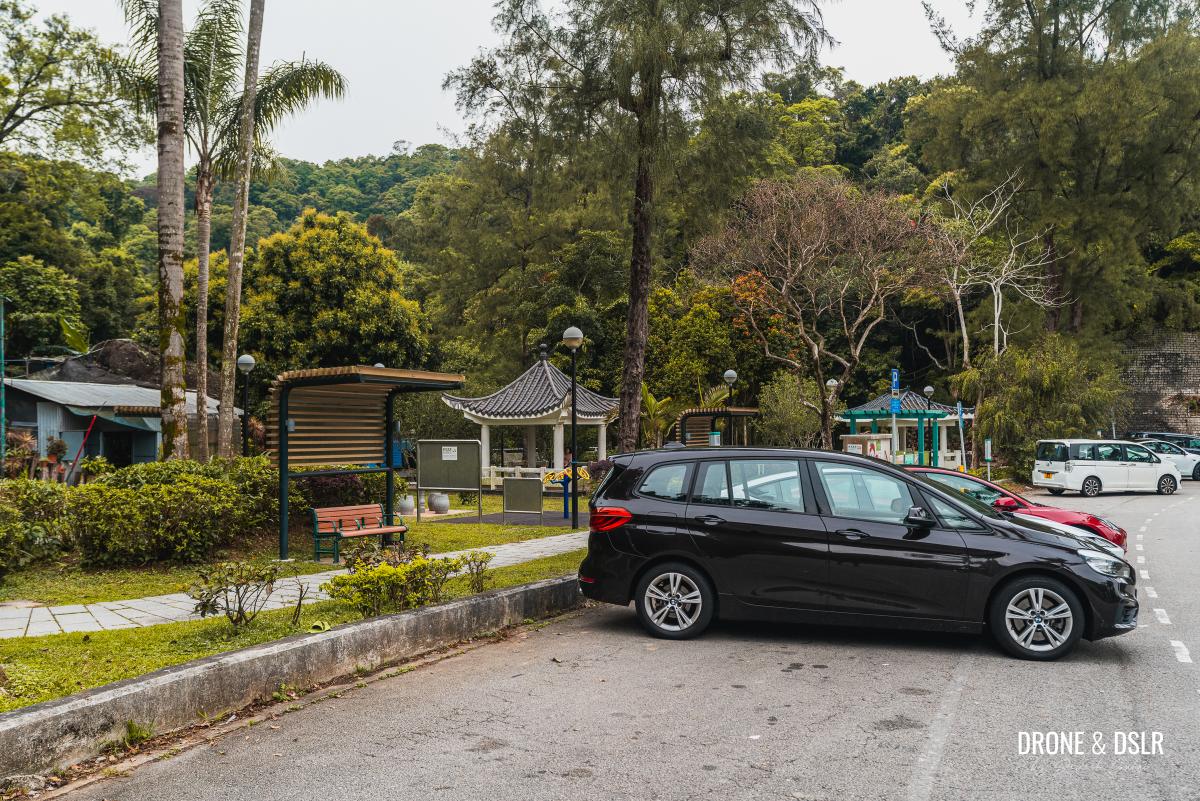
The car park just outside the Tai Po Kau Nature Reserve
If you’re driving, it’s good to know that there’s a decent amount of parking space at the entrance.
Once you arrive at the entrance of the Tai Po Kau Nature Reserve, get ready to walk to the Forest Walks.
Get To The Entrance Of The Forest Walks
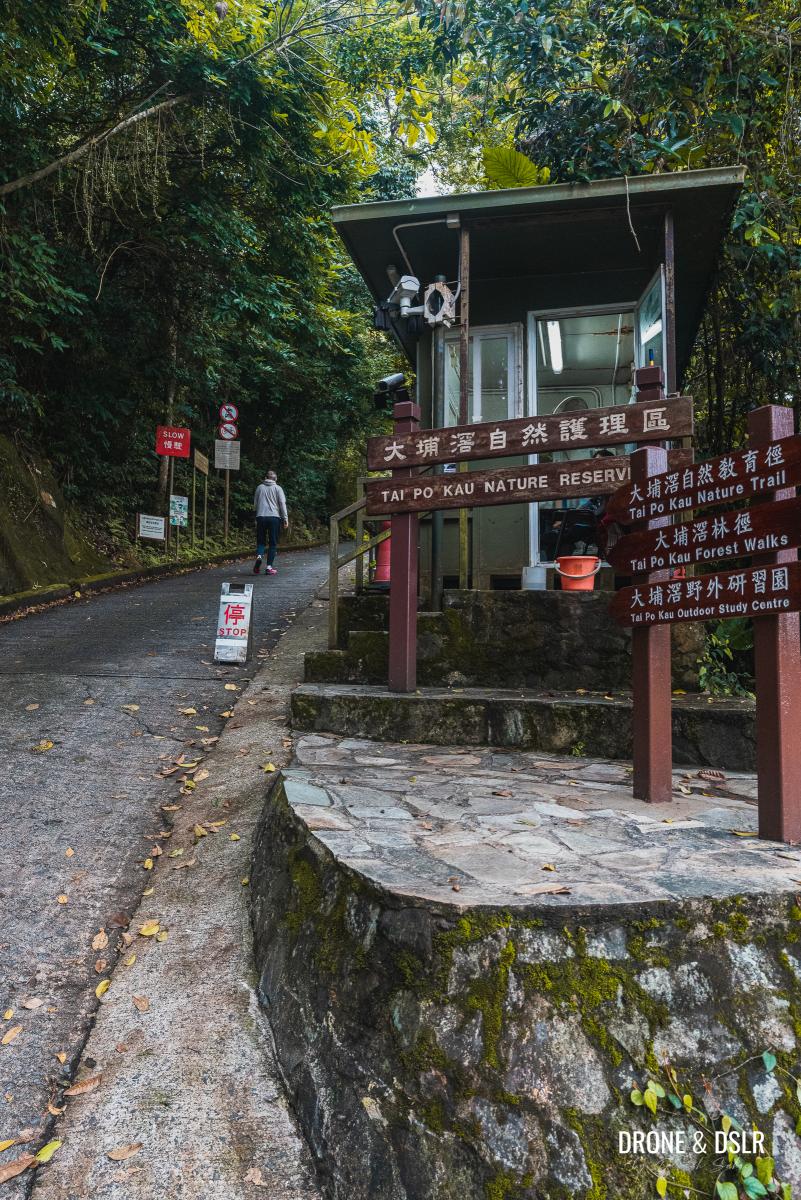
From the entrance of the Tai Po Kau Nature Reserve, it’s an 800-metre walk to the start of the Forest Walks, that runs on the Tai Po Kau Forest Track – Kau Lead Section.
-

- Entrance to the Tai Po Kau Nature Reserve
-
- Walk past the entrance on the Tai Po Kau Forest Track – Kau Lead Section
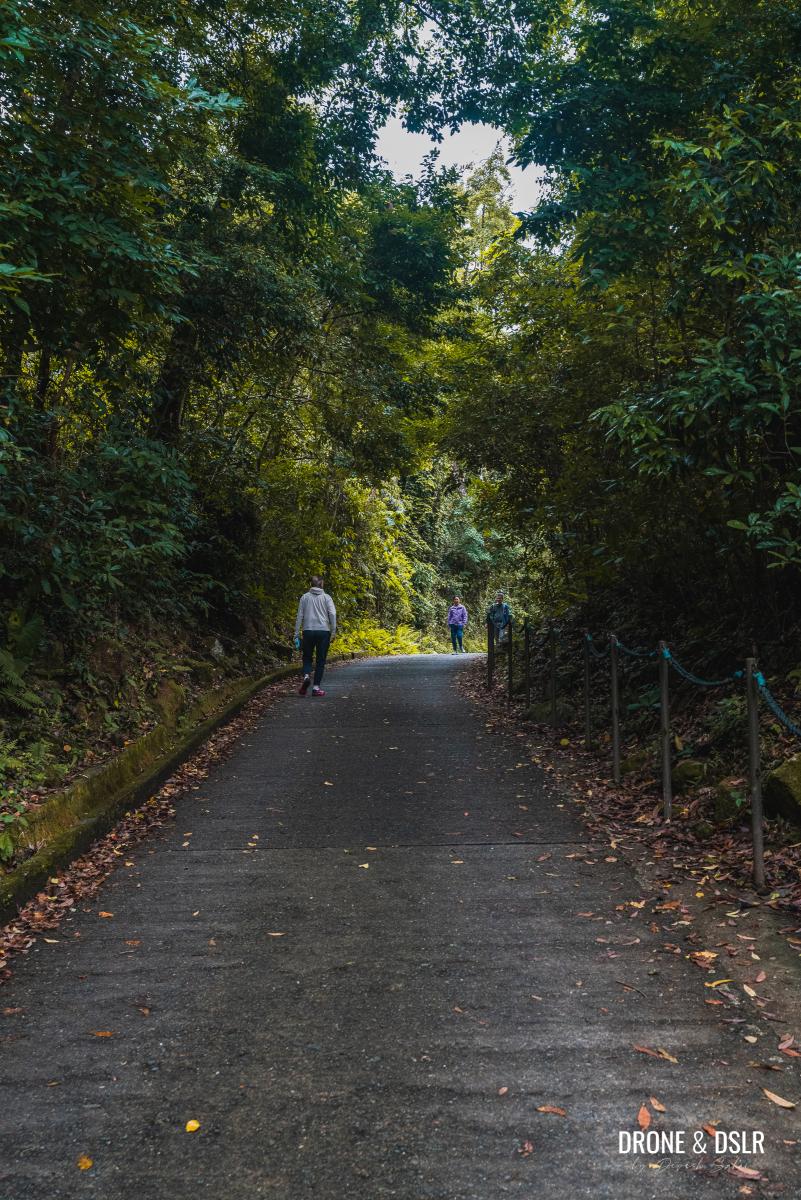
This paved road follows a gentle incline as makes its way to the starting point. Along the way, you’ll come across the entrance to the Tai Po Kau Nature Trail, which isn’t one of the four Forest Walks, but is an easy 1 km trail.
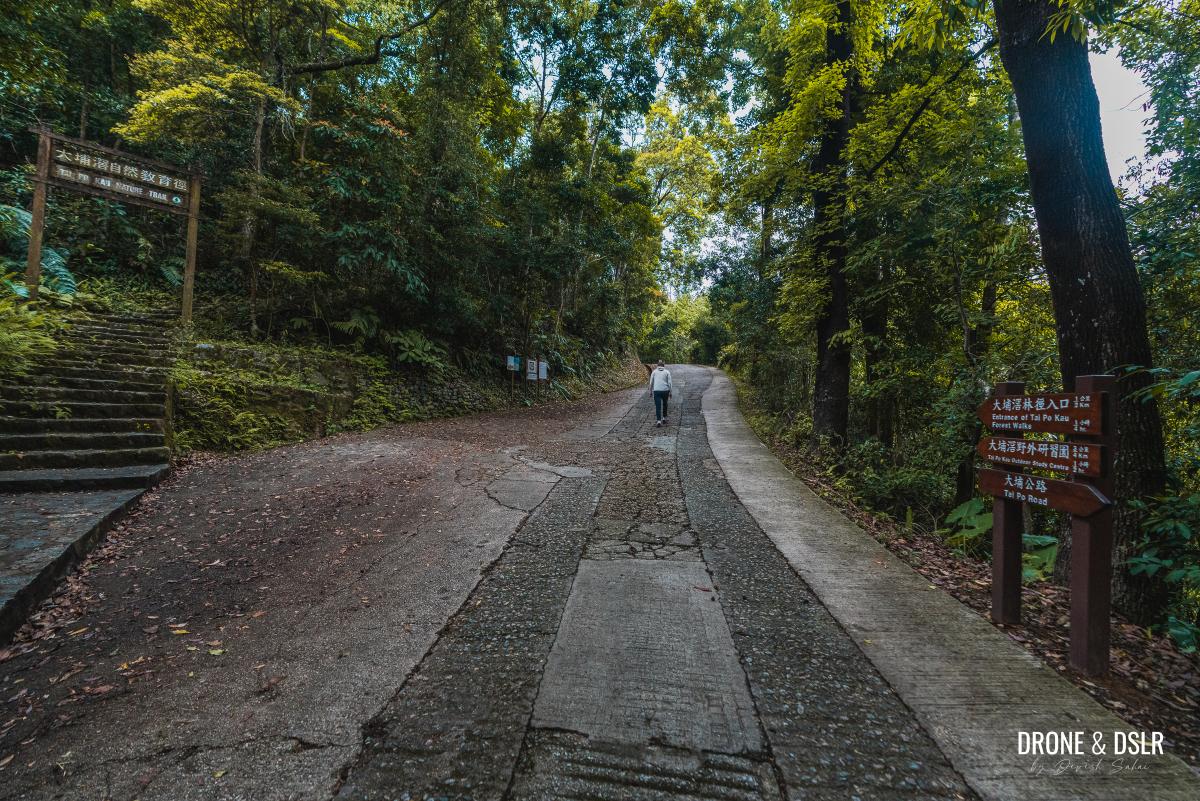
The entrance to the Tai Po Kau Nature Trail is a short distance from the entrance
After the entrance to the Nature Trail, continue walking along the road, admiring the flora along the way.
-
- Follow the signs for the Forest Walks
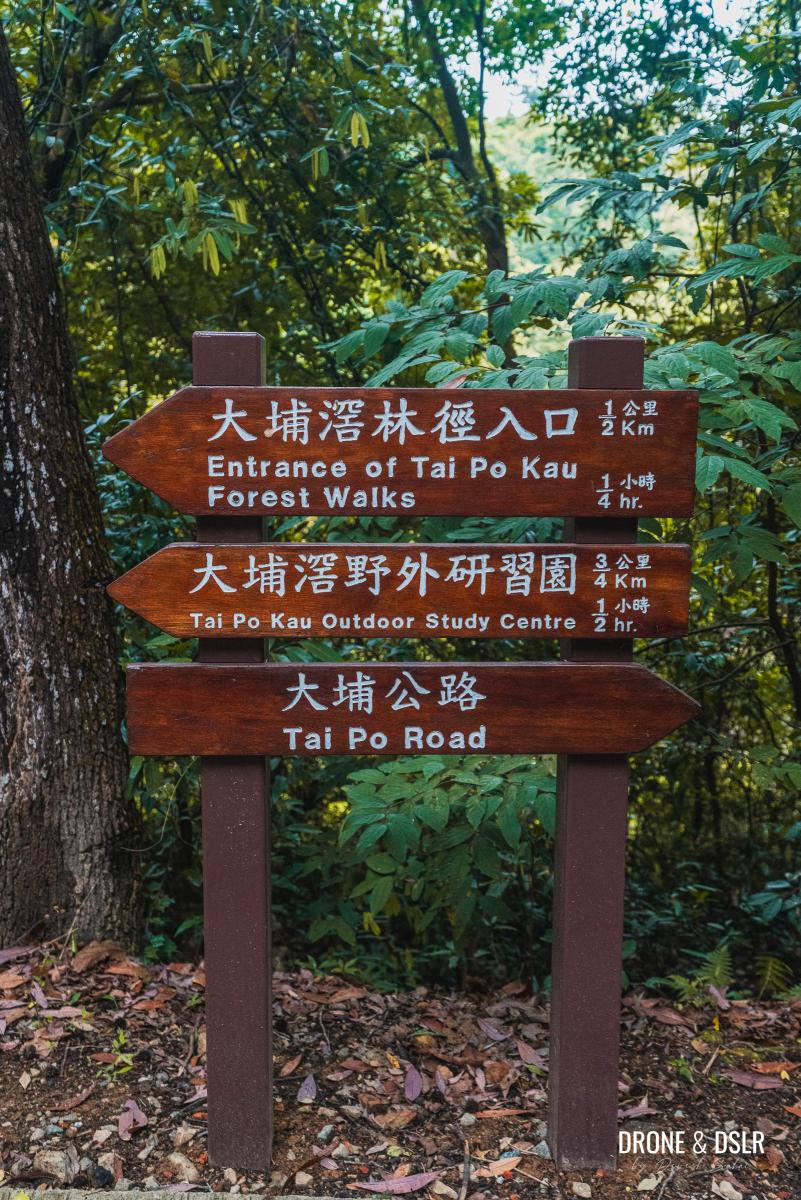
-
- We found trees full of this flower in bloom at the Tai Po Kau Nature Reserve
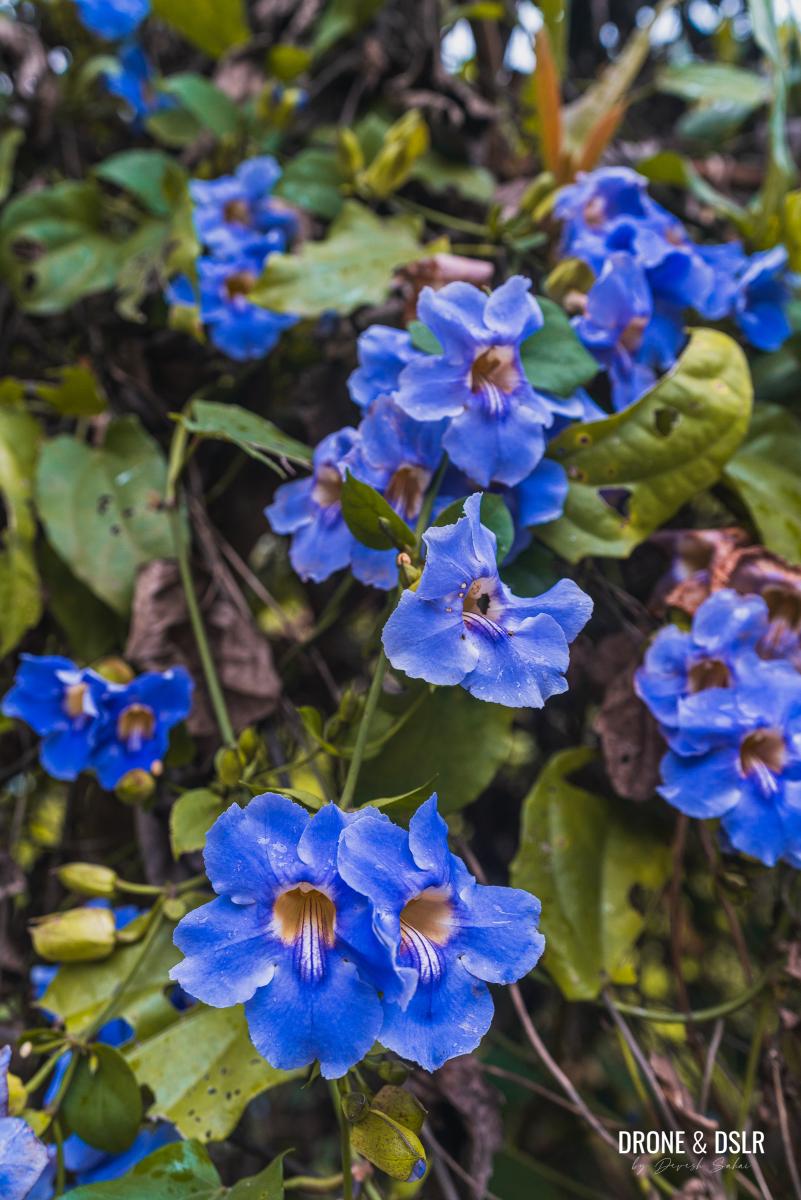
-
- Keep walking on the Tai Po Kau Forest Track – Kau Lead Section
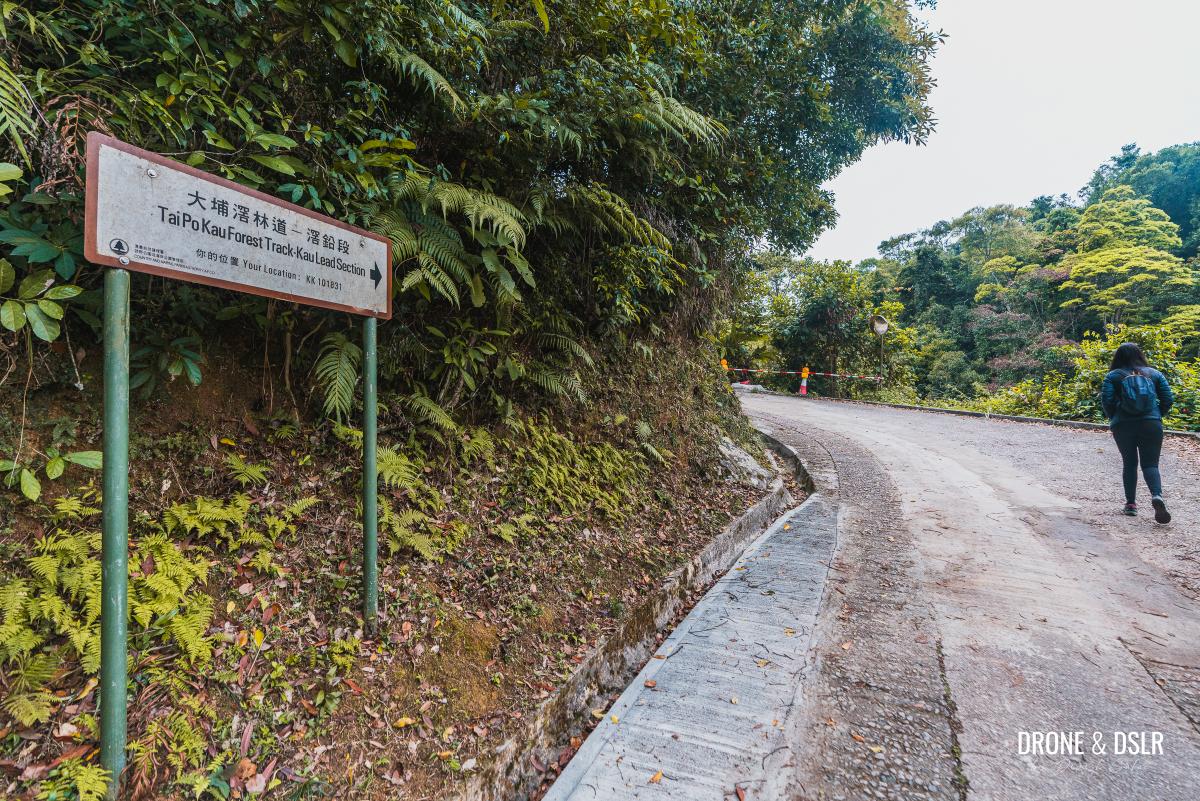
When you finally make to the entrance of the Forest Walks, you’ll notice that all the walks start and end from the same point. Essentially, each walk is a loop of a different length, starting and finishing from the same location.
-
- Finally arriving at the entrance of the Forest Walks
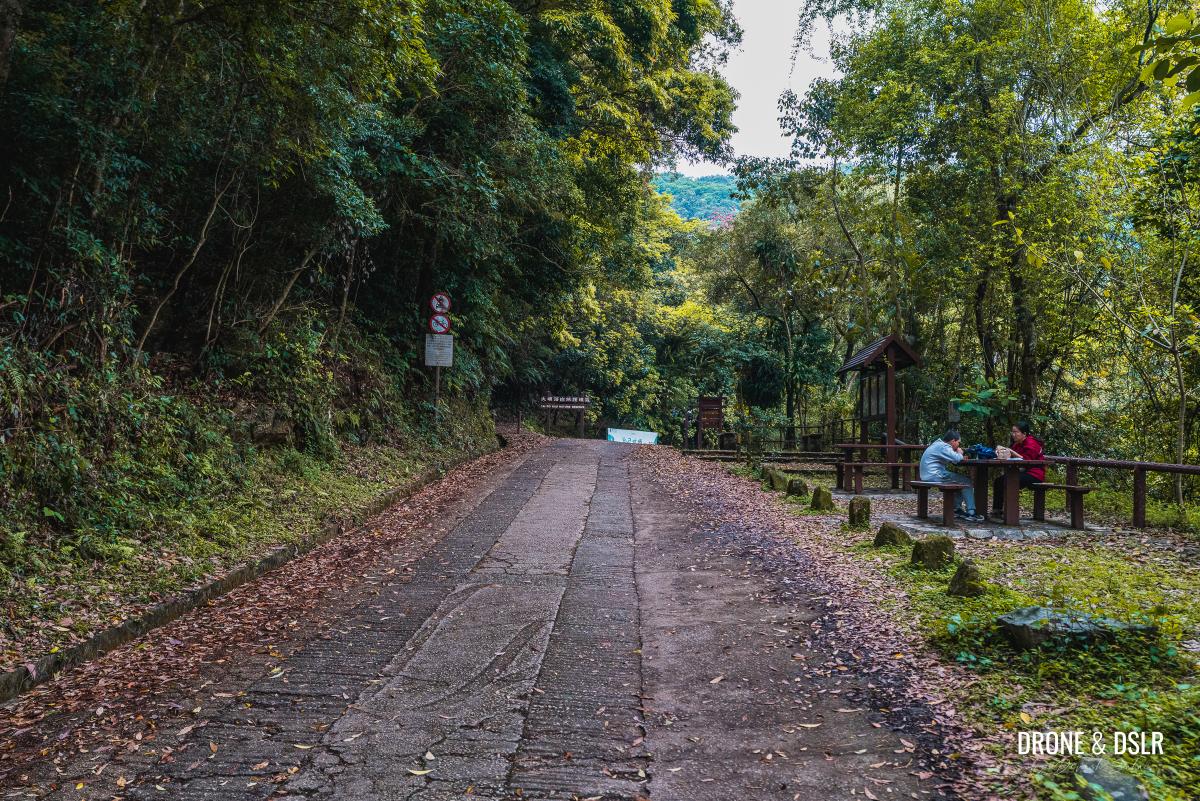
Which Forest Walk To Pick?
It’s now time to pick your adventure, which Forest Walk do you want to embark on?
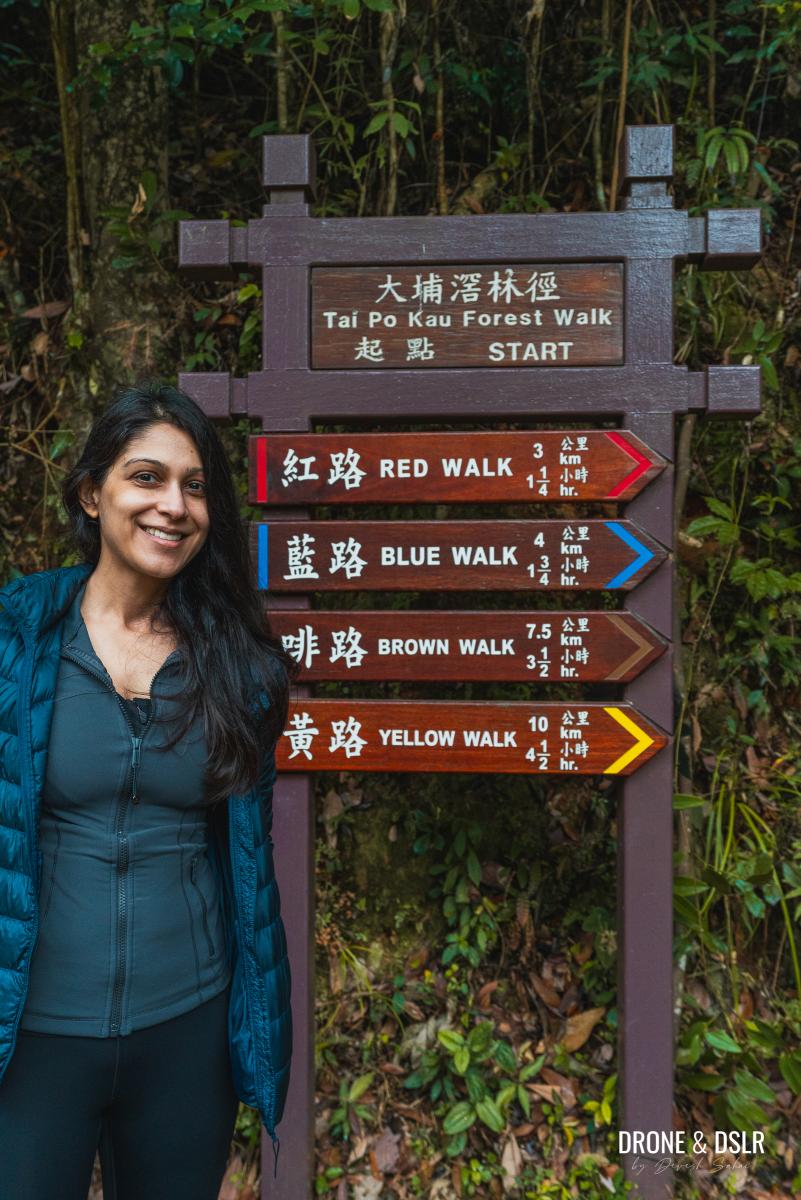
Are you ready to pick your Forest Walk?
We picked the Blue Walk because we wanted a leisurely stroll that wasn’t too long or too short. Blue somehow fit the bill. During our excursion, we noticed that most visitors picked the Red Walk. But I also choose the Blue over the Red because I noticed that it’s the only walk that runs alongside a stream.
Anyway, the Blue Walk turned out to be a perfect fit for us, and I’ll talk more about the highlights along the walk below.
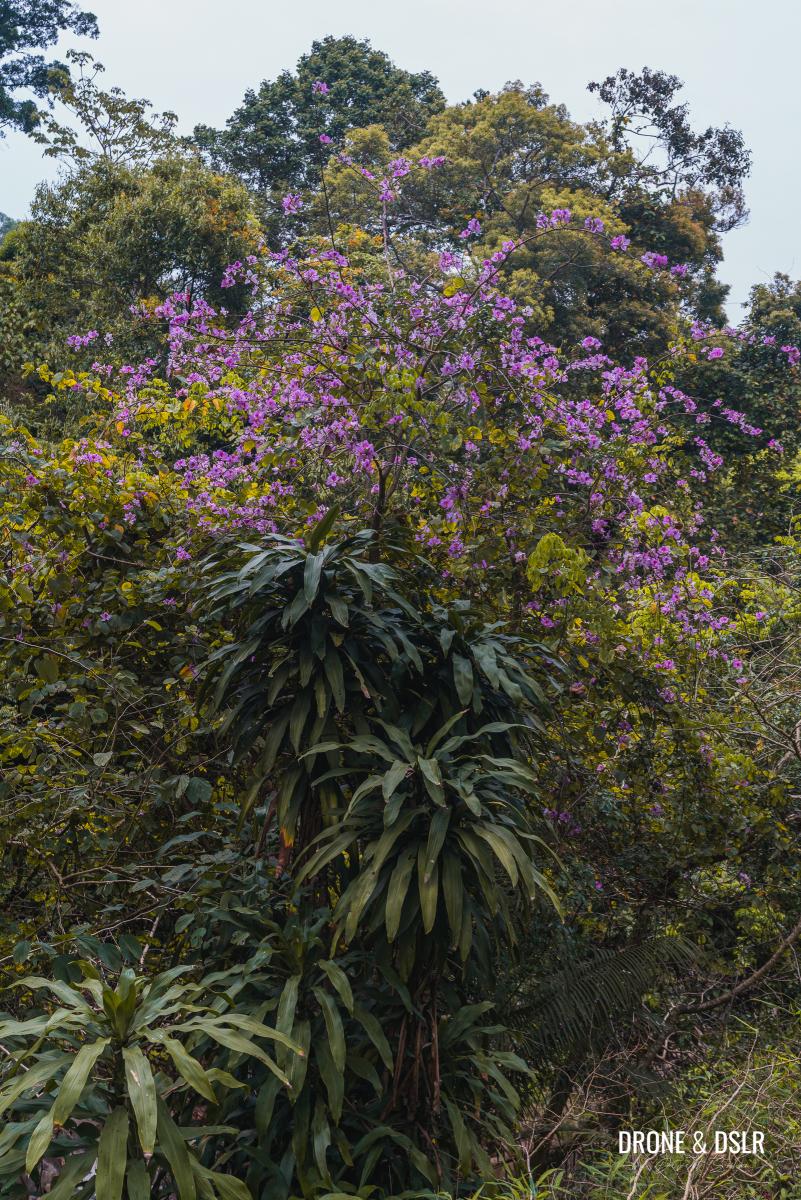
Flowers in bloom at the Tai Po Kau Nature Reserve
And final note. All the walks are a loop, and the area with the signs show a start and end. But I do advise following the recommended path.
Tai Po Kau Nature Reserve — Blue Walk Highlights
As you begin your journey, the trail initially crosses a fitness area, with a few picnic tables, and toilets.
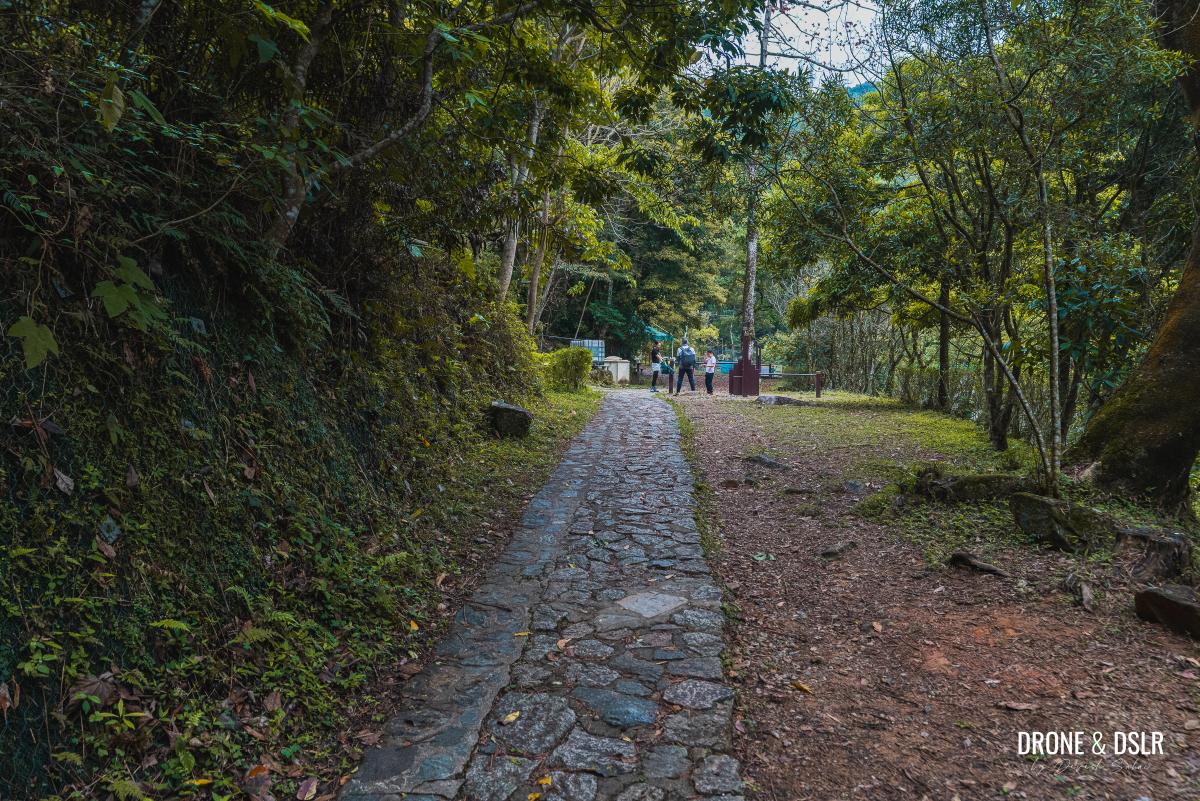
The Tai Po Kau Forest Walks begin
After the picnic tables, the trail reaches a narrow path with towering trees, providing ample shade. And just ahead, you’ll hear the sounds of a stream.
-
- Walking past a picnic area
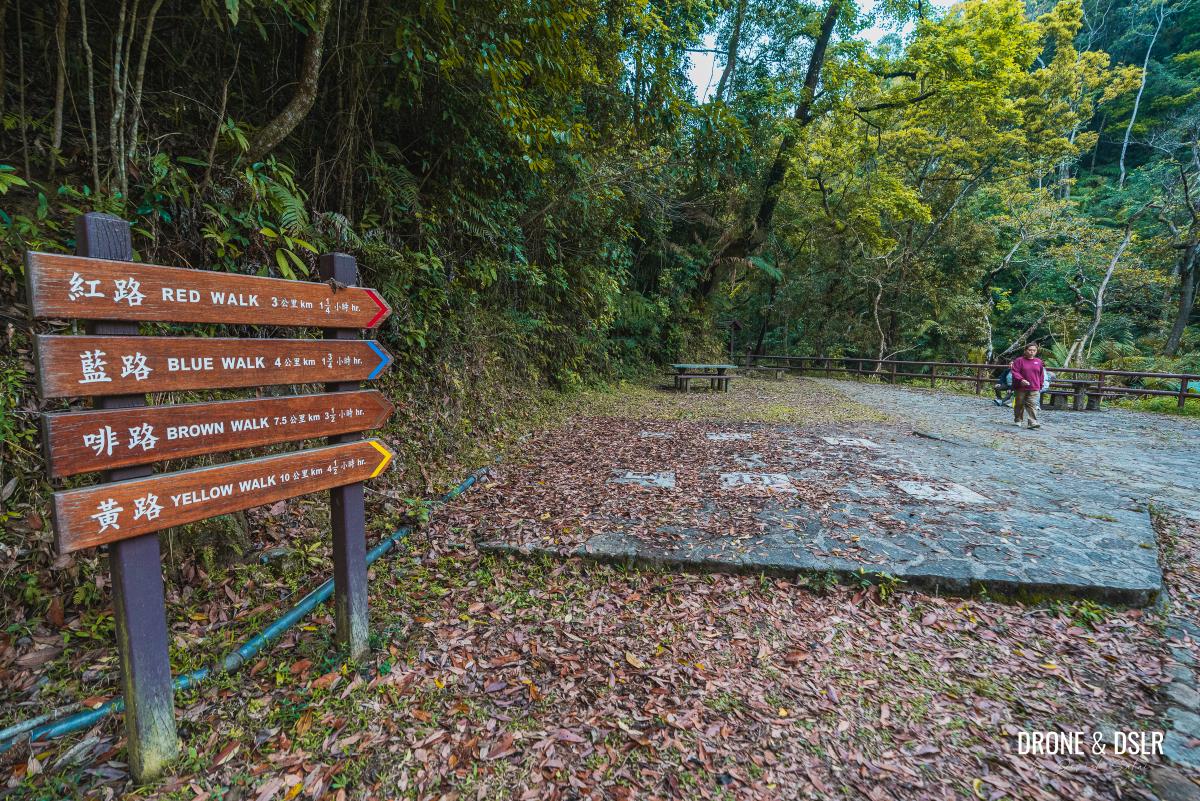
-
- The initial section of the walk is beautiful and lush
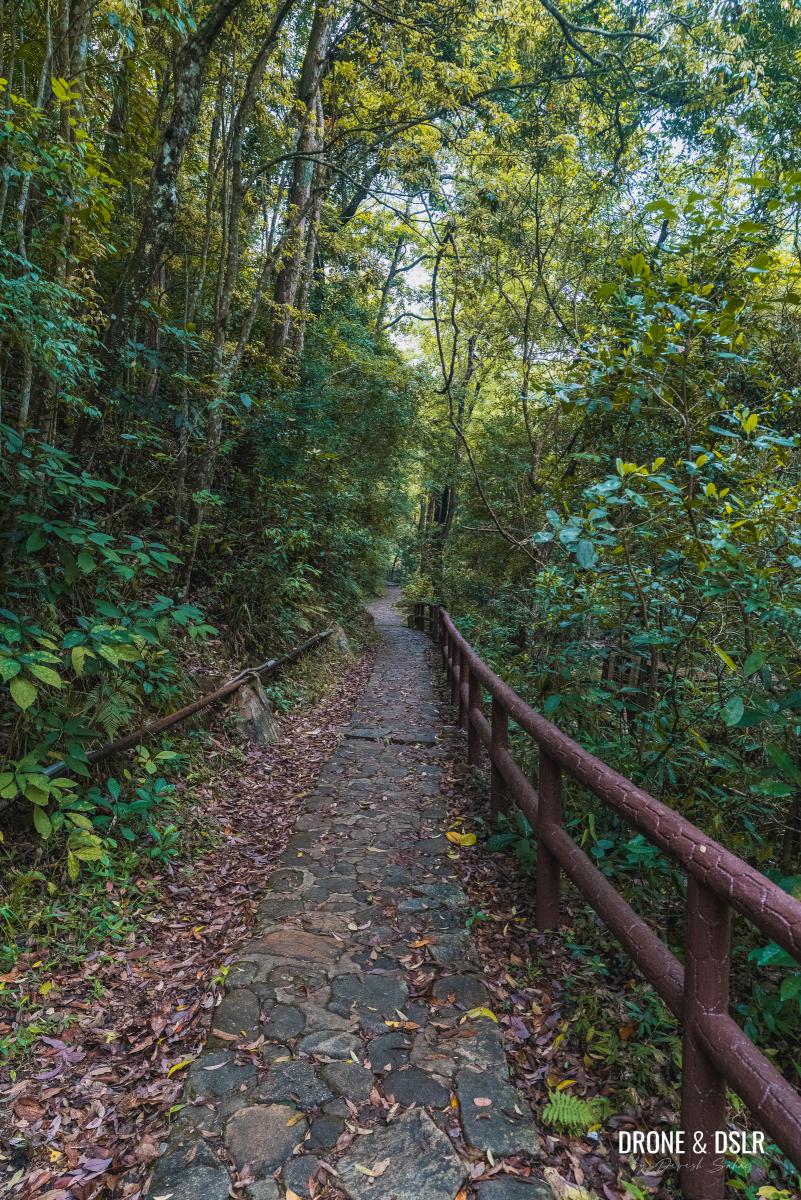
Stream Encounter
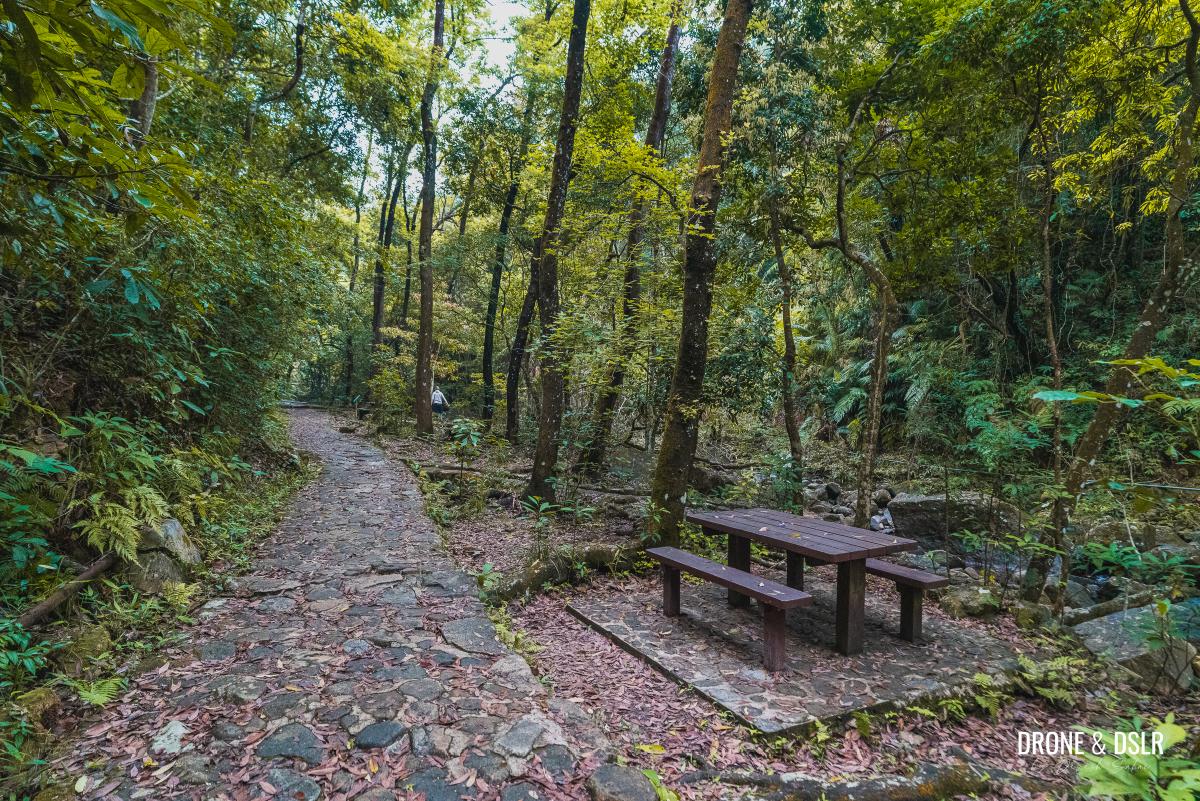
The stream at the start offers more picnic tables for visitors to rest and listen to the sound of the water flowing.
-
- The bench next to the river
-
- Fellow visitors enjoying the stream
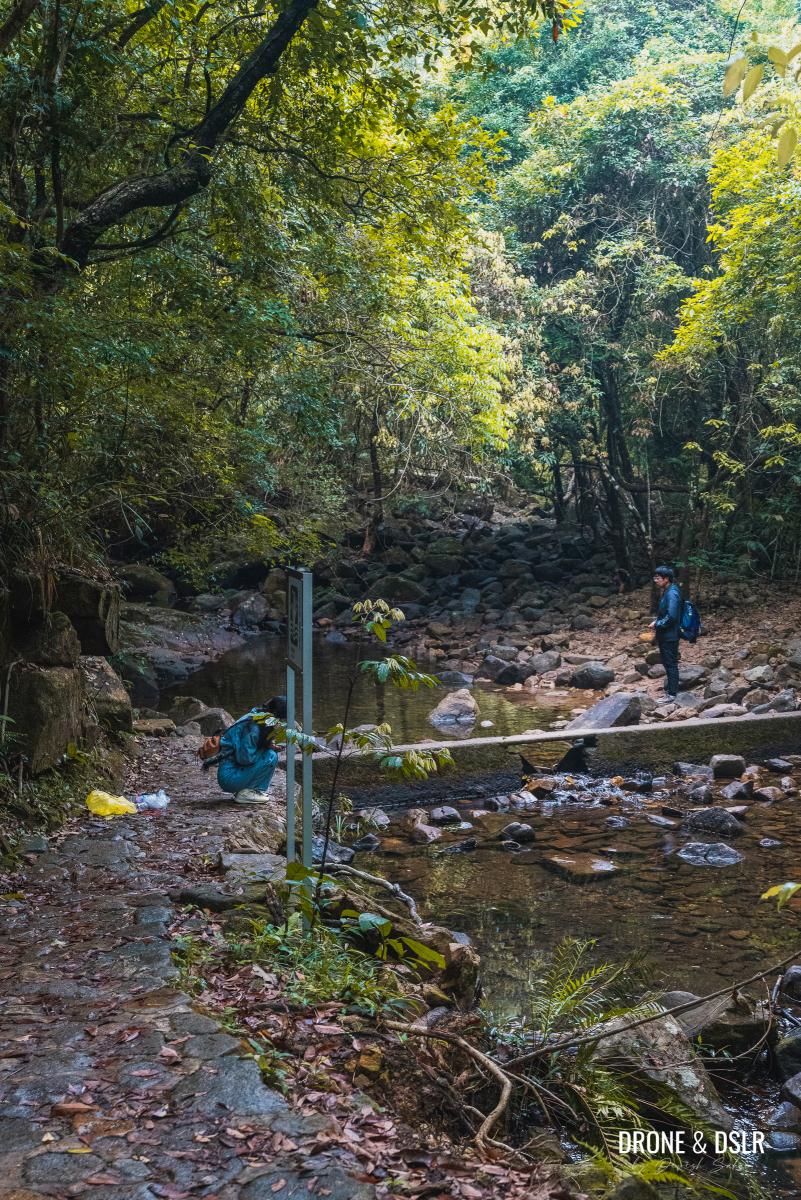
The stream is also a popular area to look for birds, with signs educating you about frequent visitors.
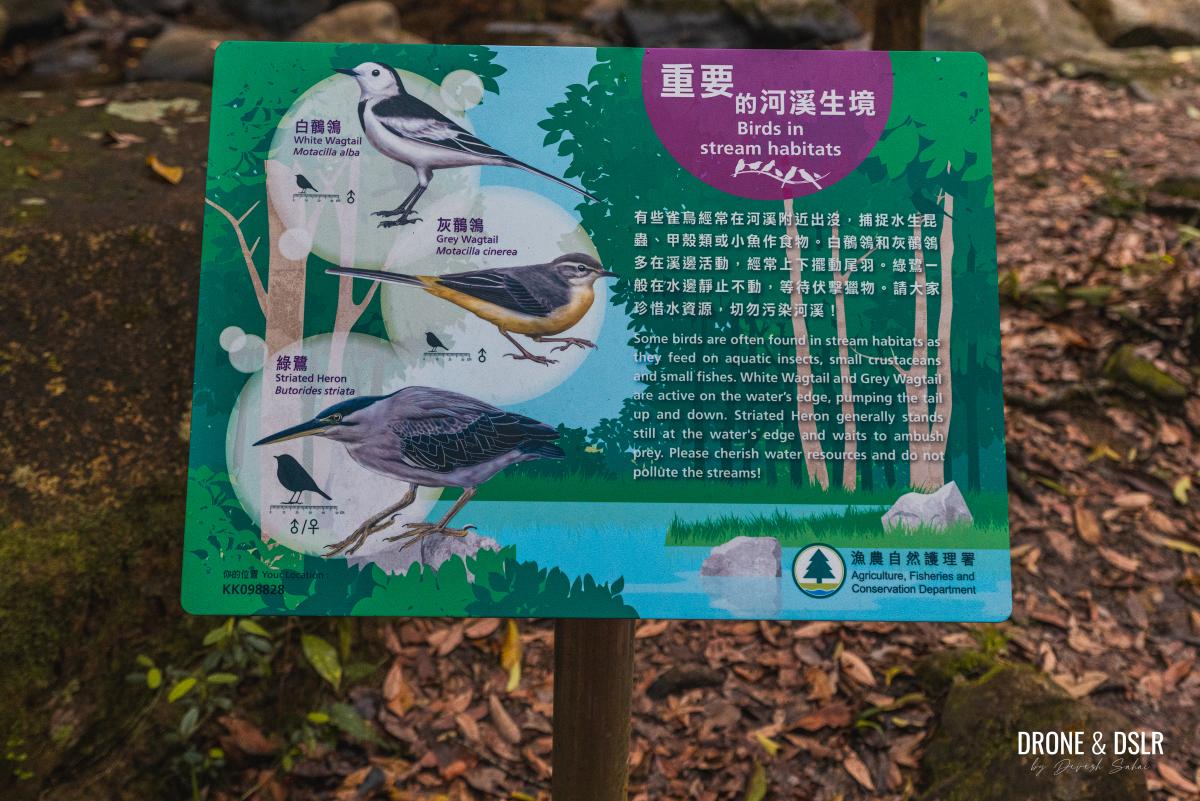
You’ll observe signs like this all over the walk
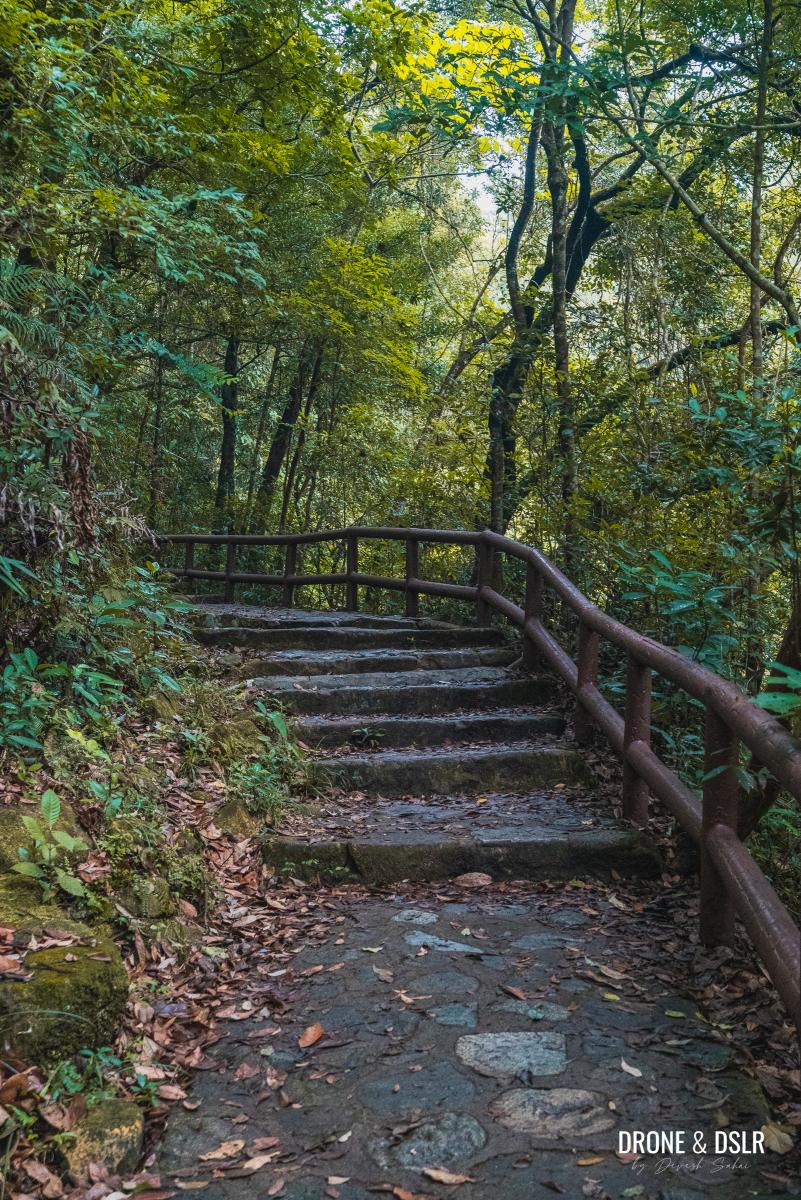
Just beyond the stream, the trail approaches its first flight of steps. The steps are fairly easy, with all four walks overlapping at this point.
-
- The Forest Walks continue up the steps
-
- The steps are quite easy
But just after the steps end, the Red and Blue Walks turn right, and the Yellow and Brown Walks breakaway and go straight.
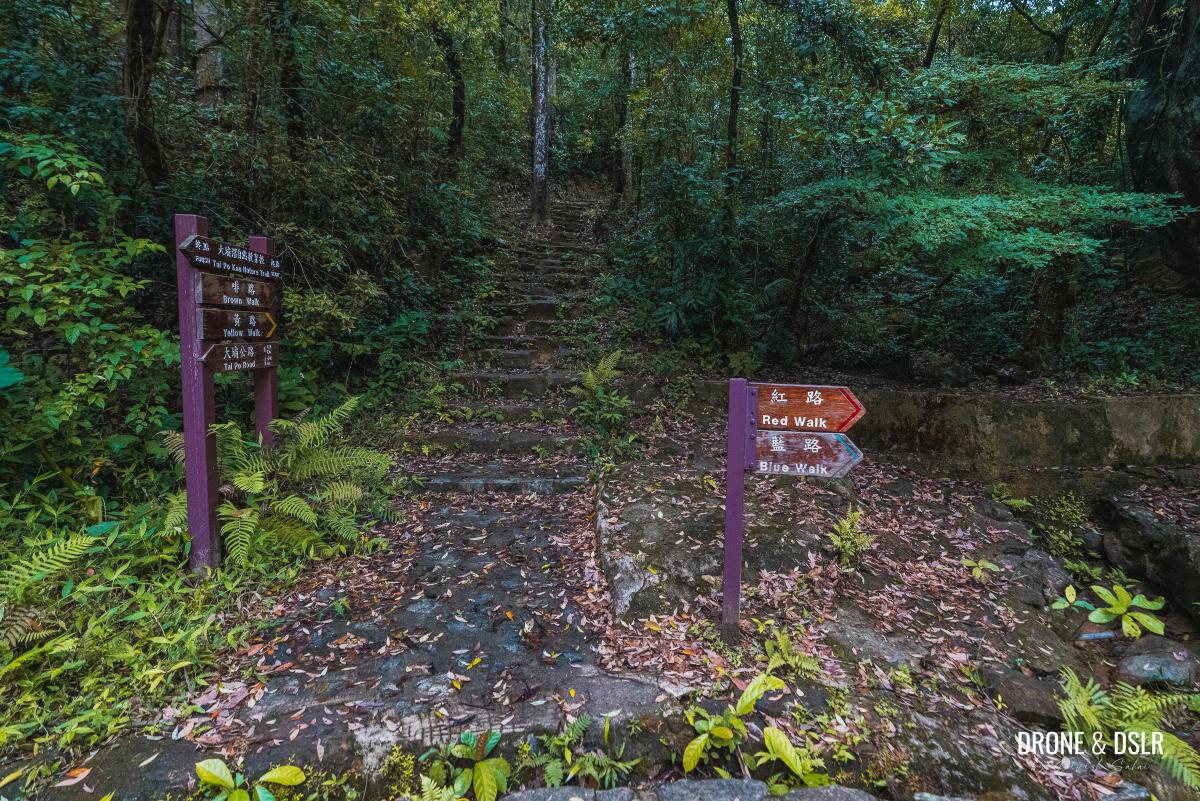
The Red and Blue Walks split from the Yellow and Brown Walks after the steps
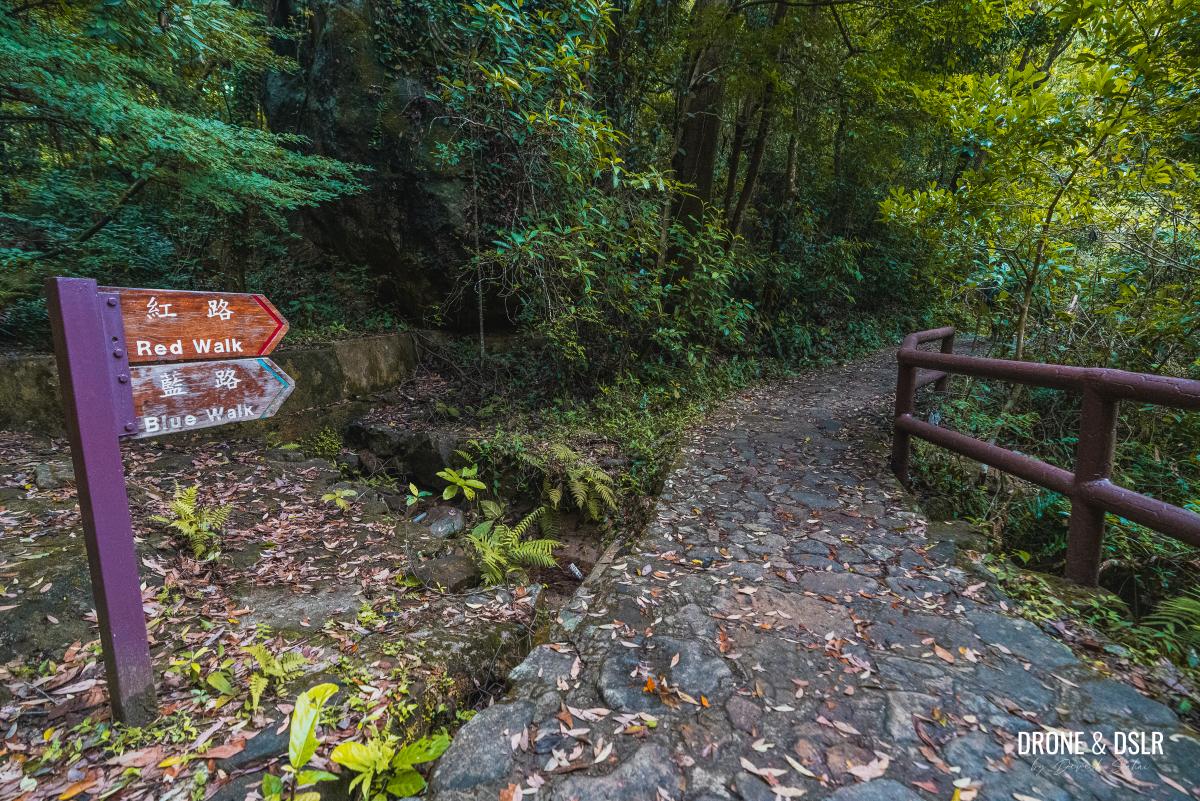
Continue walking on the Red/Blue Walk, and soak in the sounds of nature. All we heard was silence, accompanied by birds chirping.
-
- From this point, we follow the Blue Walk (also Red for a while)
-
- Trying to spot a monkey or a bird in the branches above
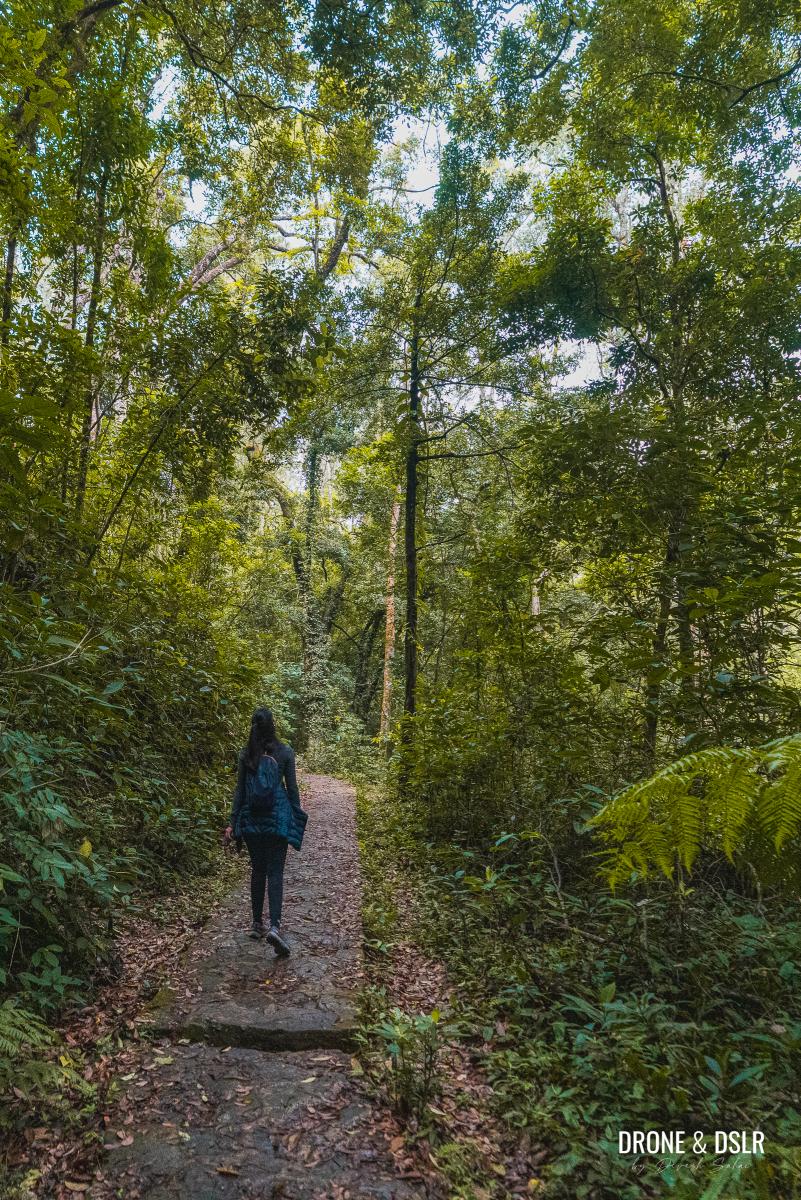
But that tranquillity was broken as we approached a large picnic site.
Tai Po Kau Nature Reserve Picnic Site 2
This multi-level picnic site was quite picturesque, with numerous benches, and open spaces. We noticed a guided tour in action, and even a group of kids playing outdoor games.
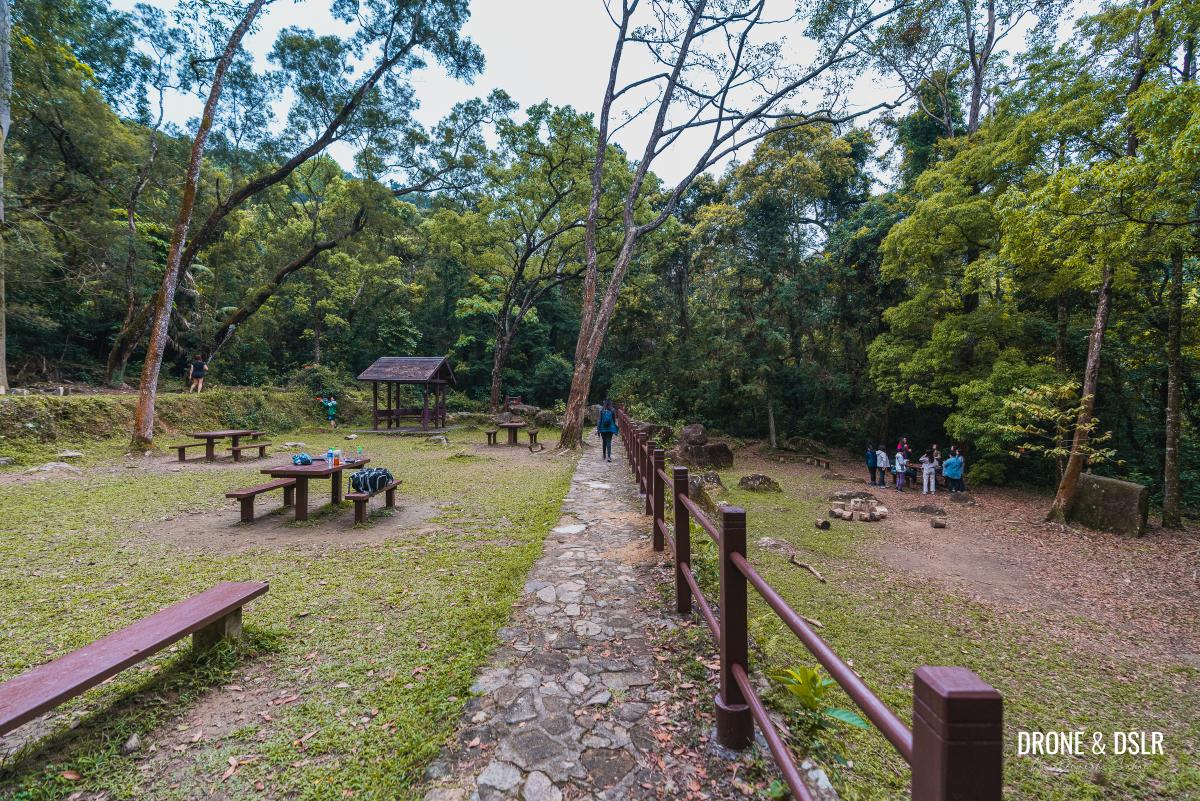
Tai Po Kau Nature Reserve Picnic Site 2
After the picnic site, the peace and quiet of the nature reserve returns. Along the way we heard the sounds of numerous birds, and even monkeys.
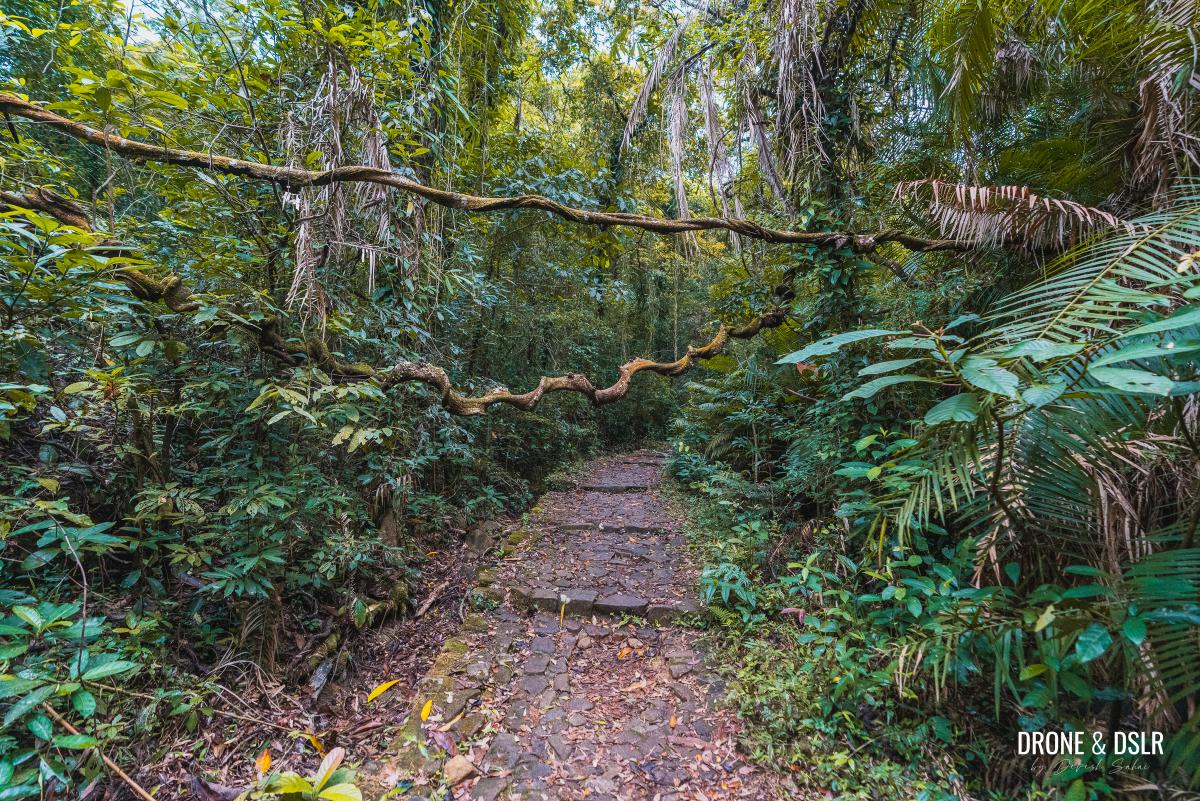
I loved this twisty branch we came across
To my surprise, there were quite a few photographers along the trail looking for the right moment to capture a bird.
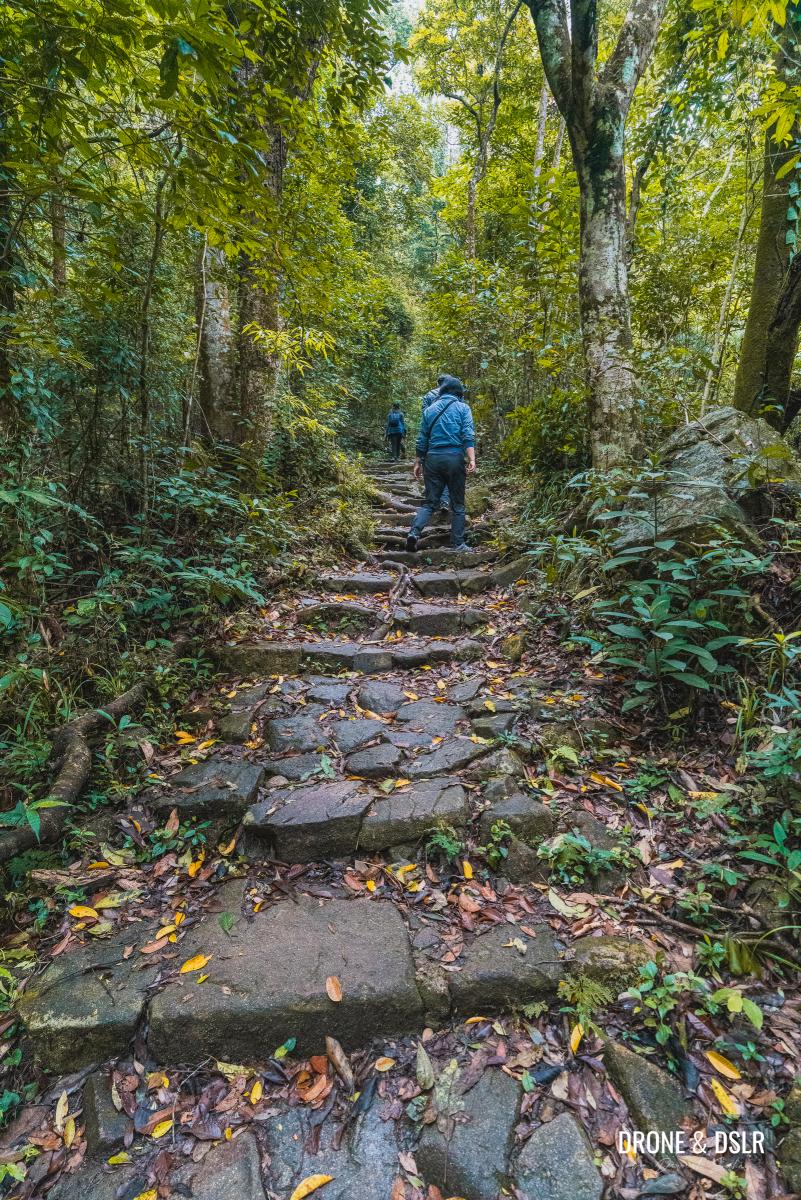
Continuing our walk on the Blue/Red Walk
After about 400 metres of walking, the Blue and Red Walk diverge. But, don’t just follow the sign for the Blue Walk yet.
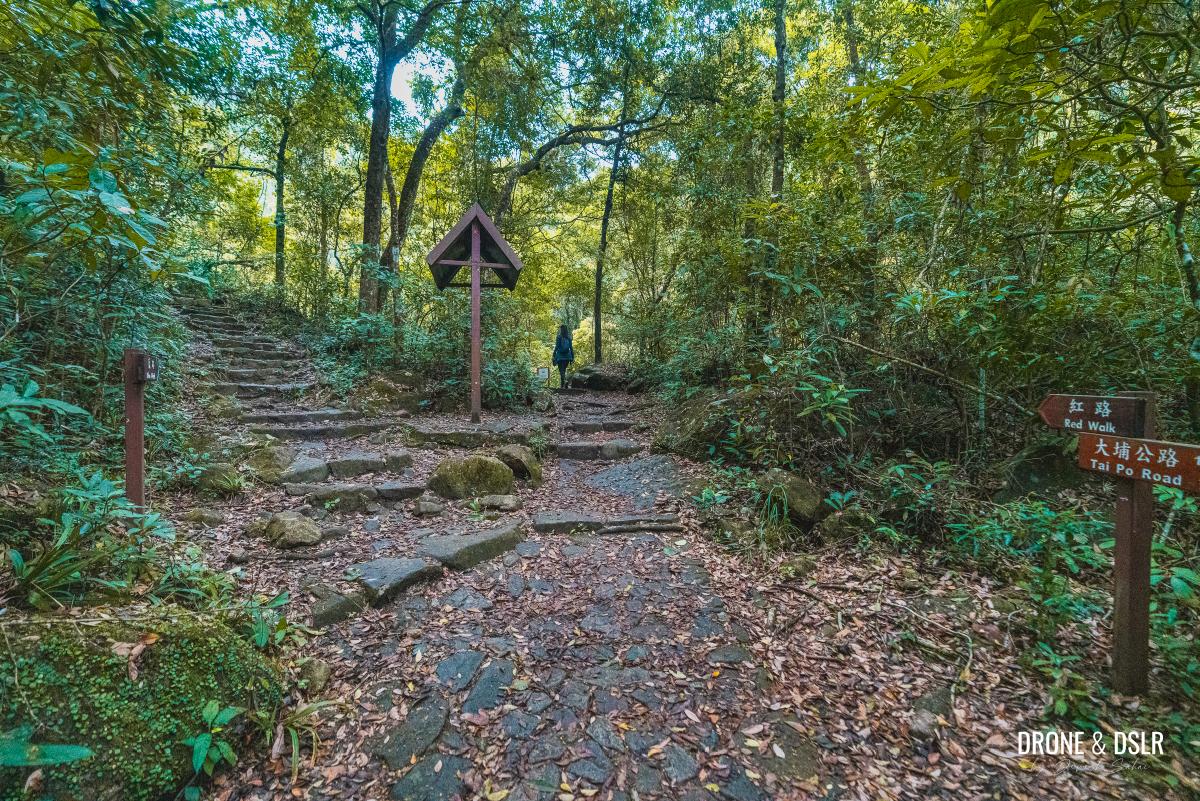
Although the Blue Walk turns left, continue on Red Walk, and you’ll come across another stream crossing just ahead
The Stream Returns
Stay on the Red Walk for now, and just a few metres ahead you’ll approach a quaint bridge crossing the stream.
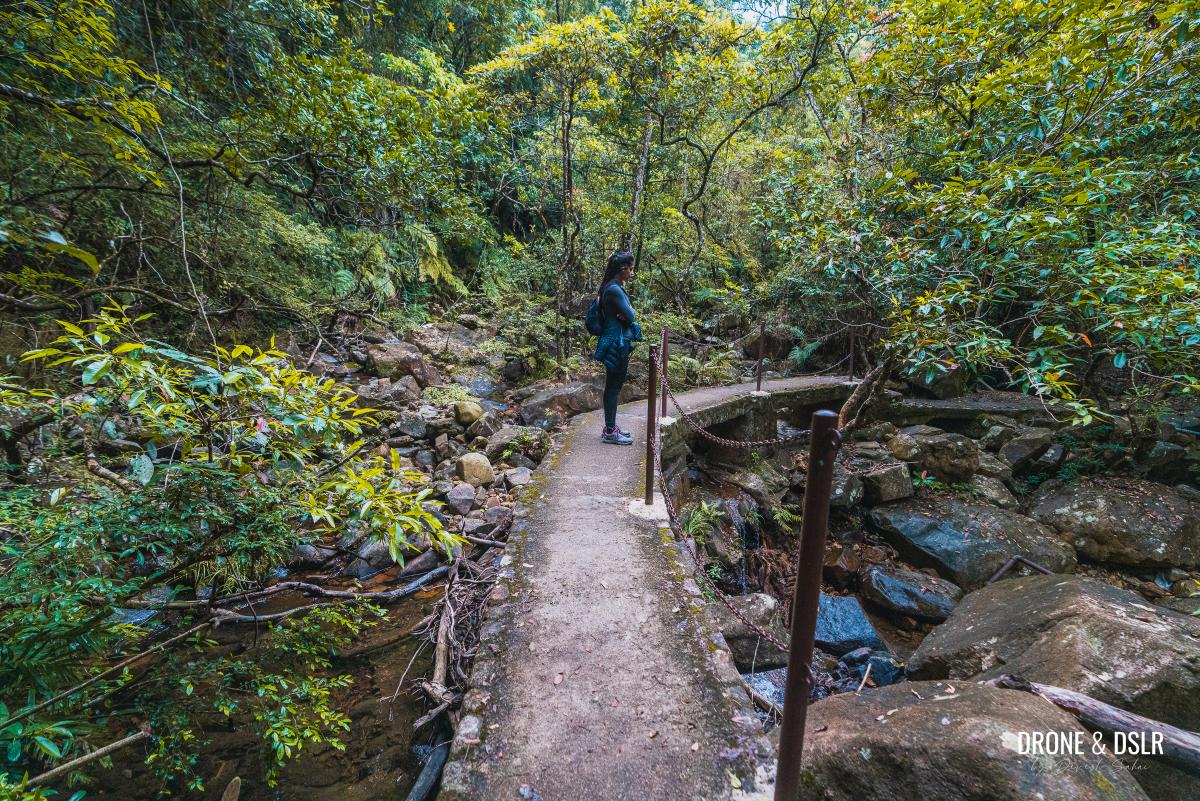
We walked ahead to admire the stream
For us, this was the most picturesque spot to explore and admire the stream from. We sat on the rocks, as the river flowed past us. It was honestly quite a serene experience.
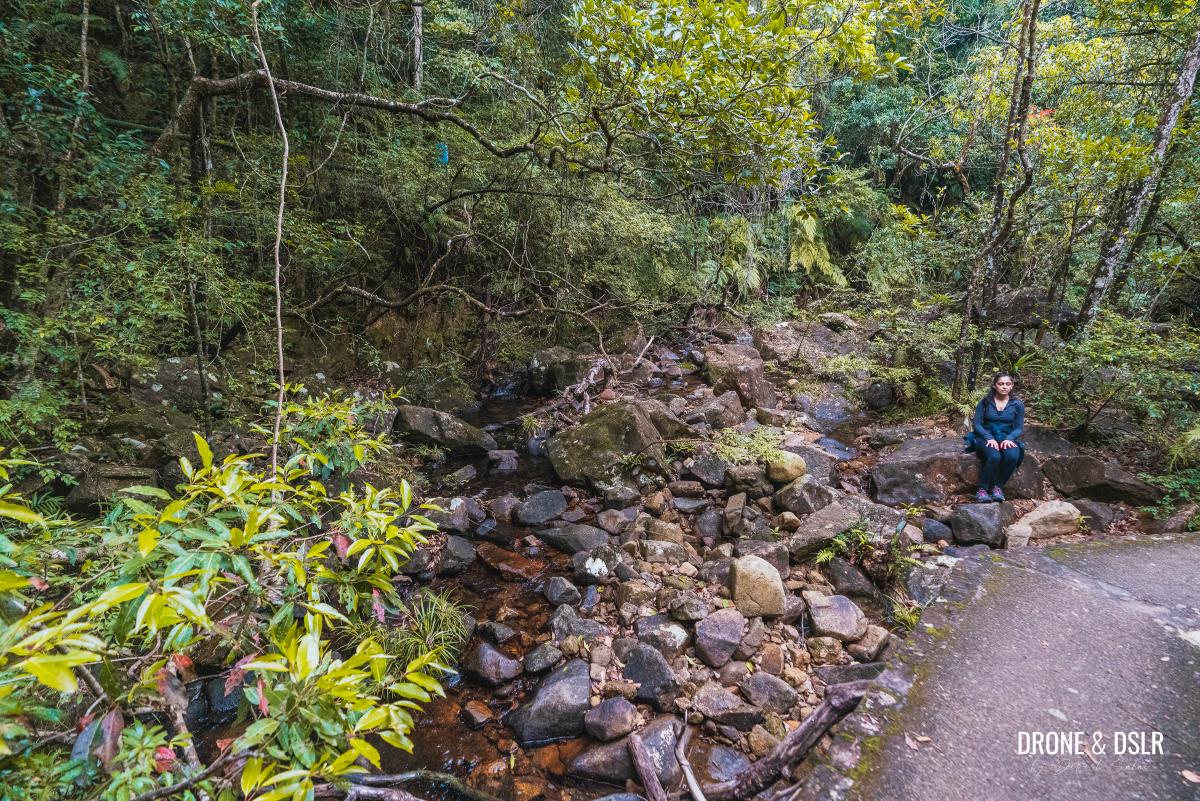
It was so beautiful and peaceful that we decided to sit by the river and hear the sounds of nature
After that, return to the Blue Walk, and continue walking up the steps.
-
- After admiring the stream, we returned and continued on the Blue Walk
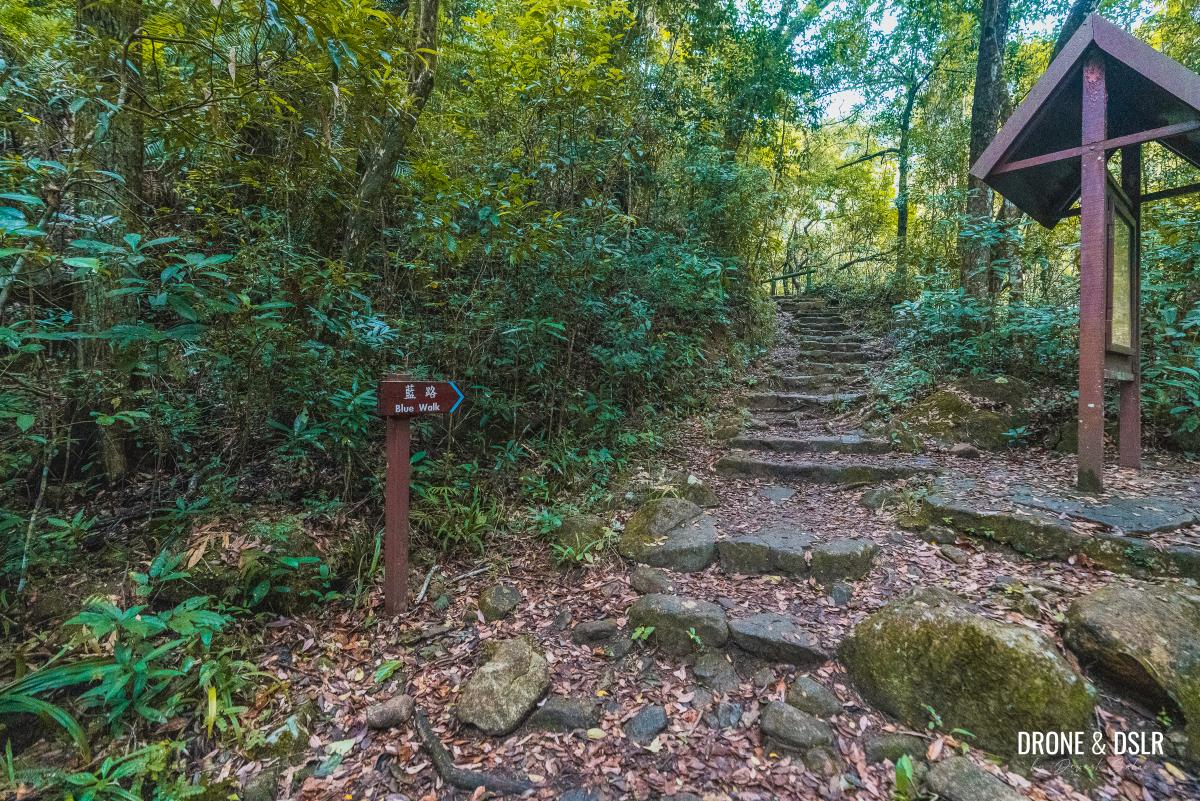
-
- Continuing on our Blue Walk journey
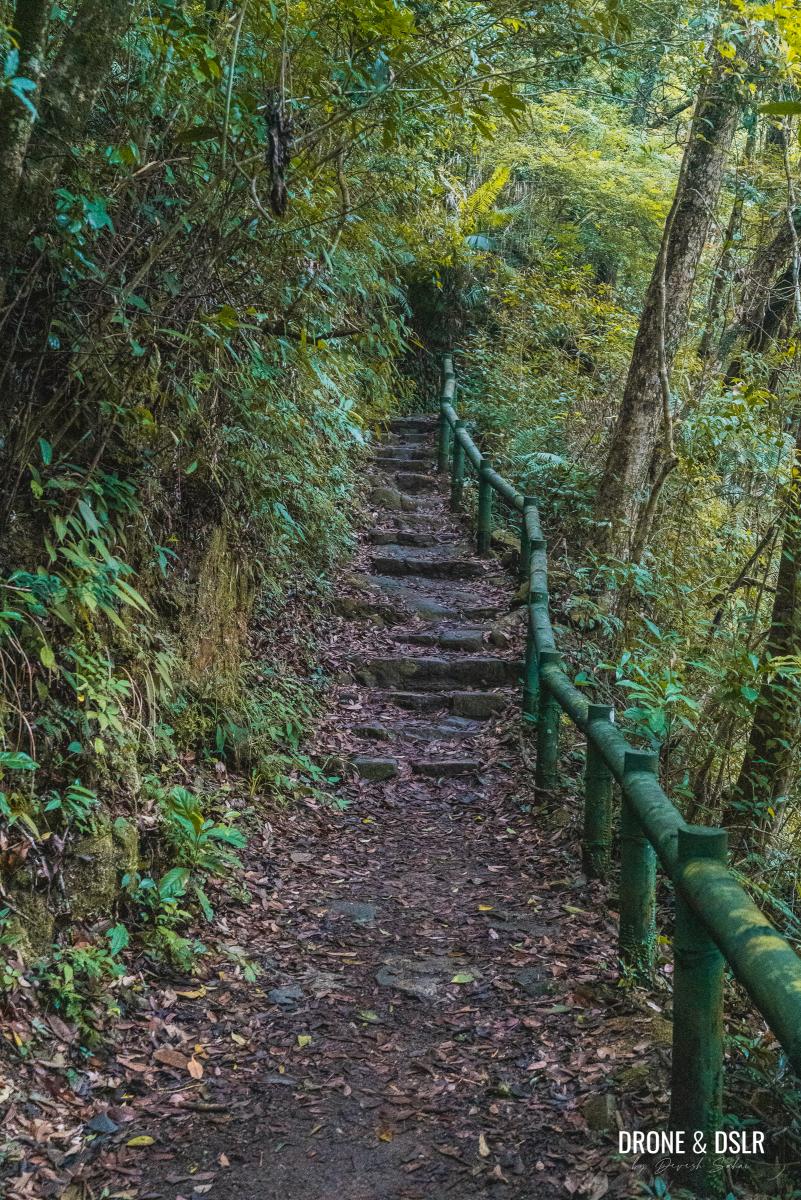
You’ll notice that the sound of the stream continues as you keep walking. That’s because this section of the Blue Walk continues alongside the stream, and follows it upstream.
-
- The Blue Walks make its way upstream
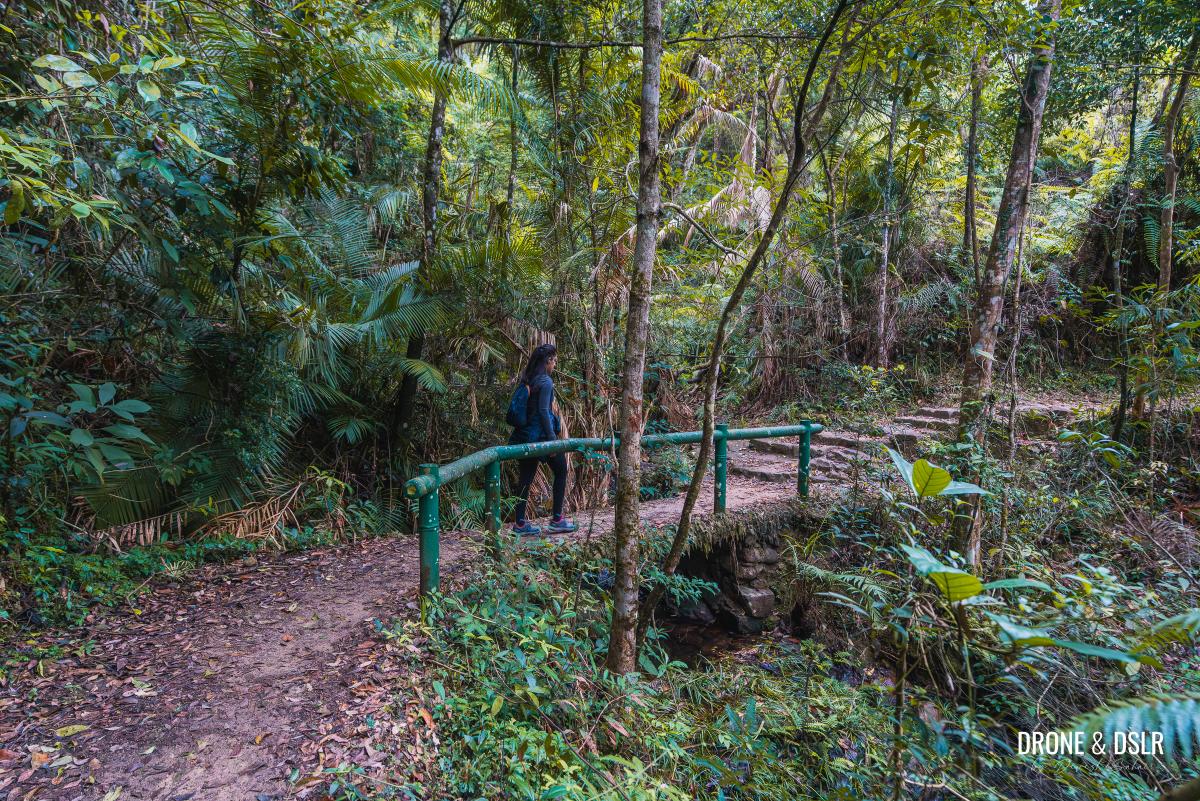
-
- Lush and beautiful – Tai Po Kau Nature Reserve
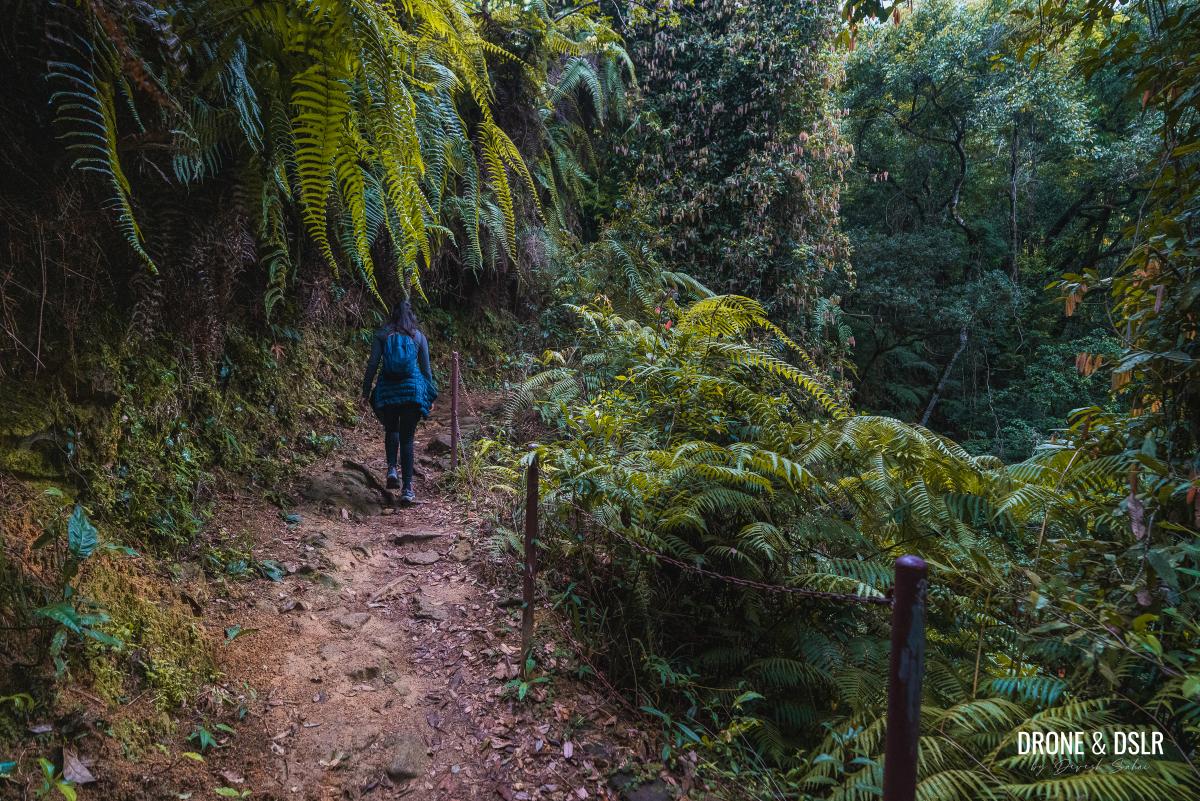
During the initial climb, this may not appear that obvious, but as you make your way uphill, you’ll begin noticing the stream along the trail.
-
- Nothing to strenuous about these Forest Walks
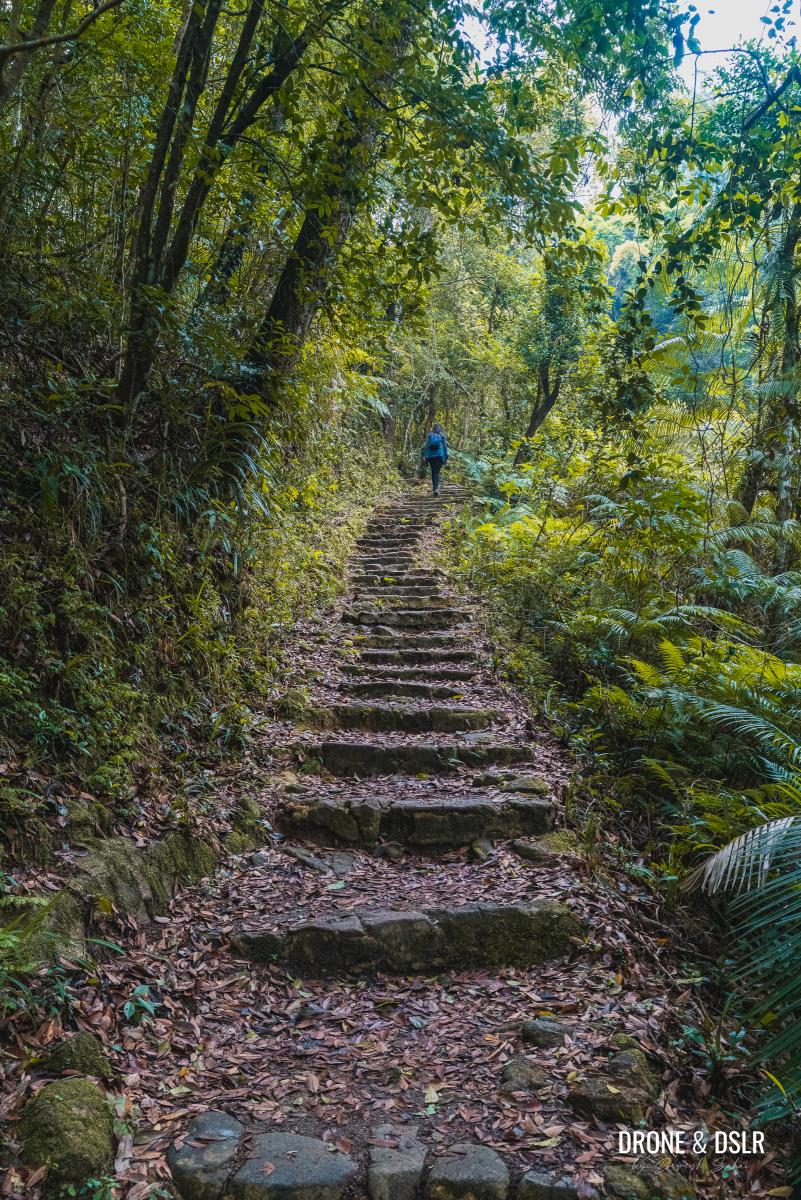
-
- The Tai Po Kau Nature Reserve
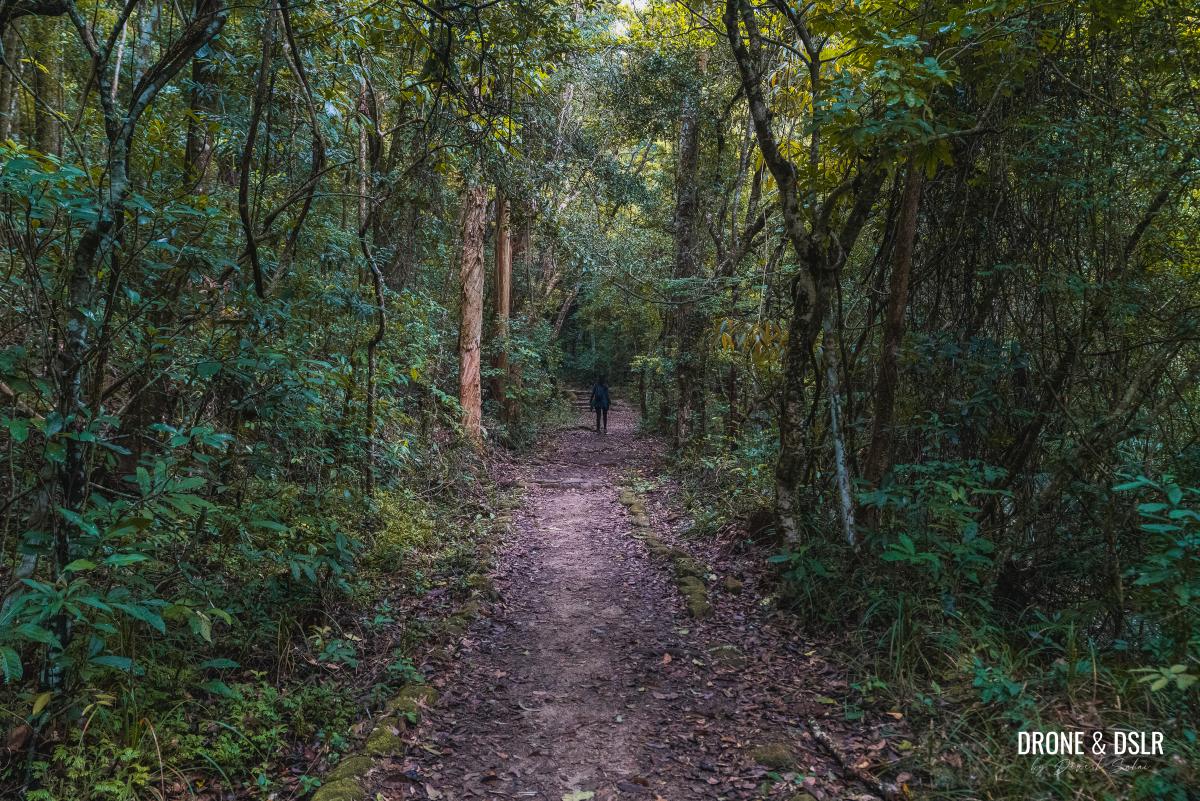
Cascades and Falls
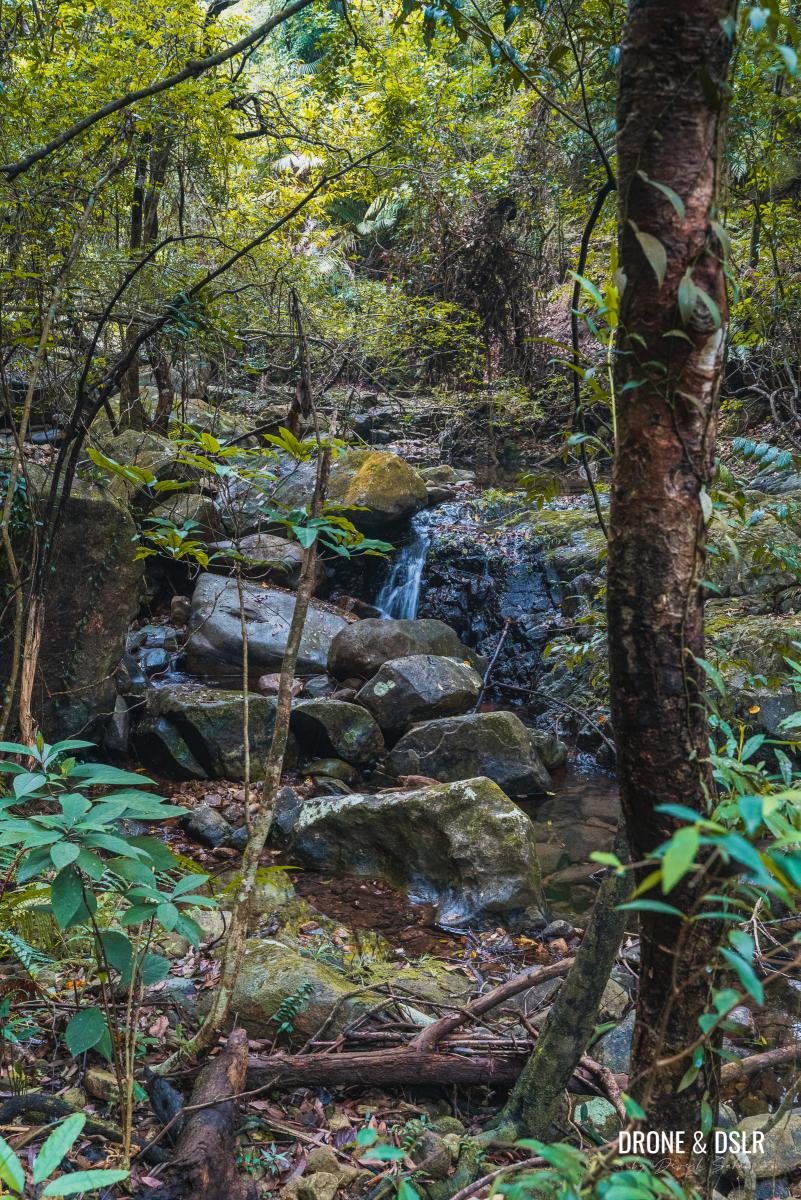
Along the way, there are numerous cascades and falls, as the stream makes its way downhill. Honestly, I felt this was the most tranquil and scenic section of the Blue Walk.
-
- After a long walk, the stream finally returns
-
- The Blue Walk continues alongside the stream – one of the reasons we picked the Blue Walk
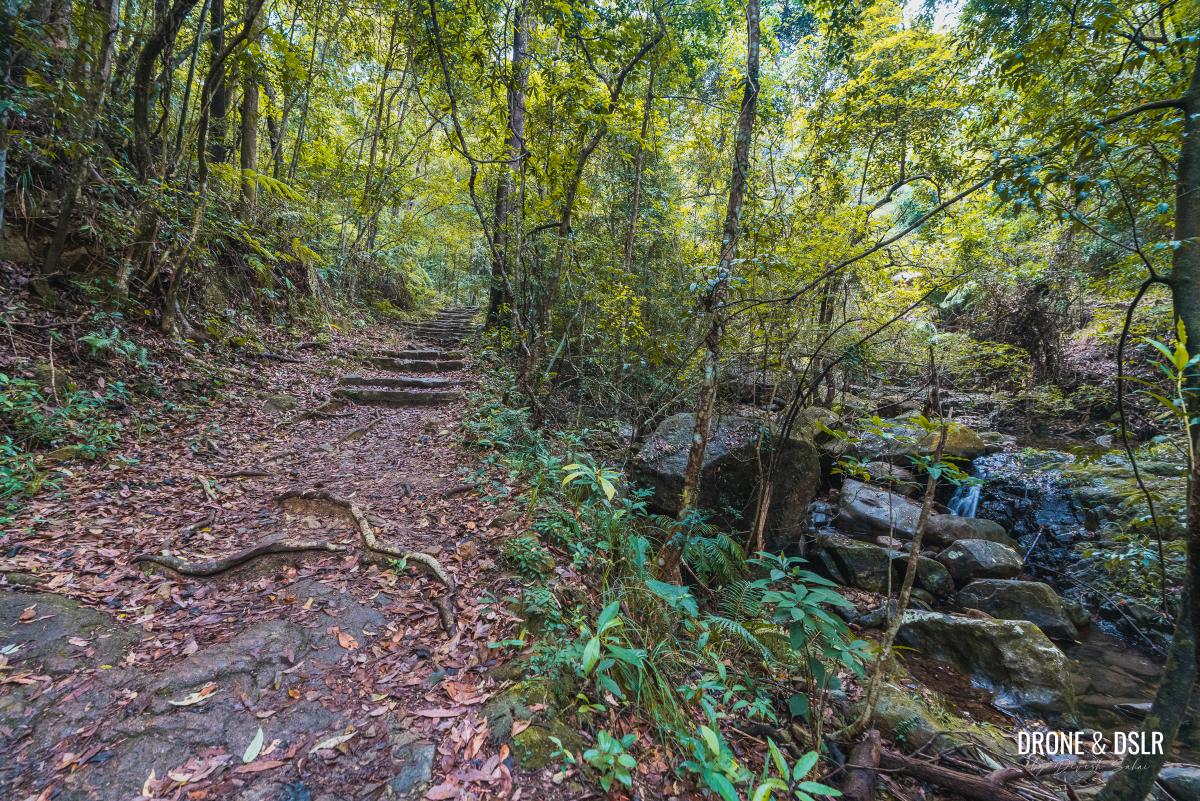
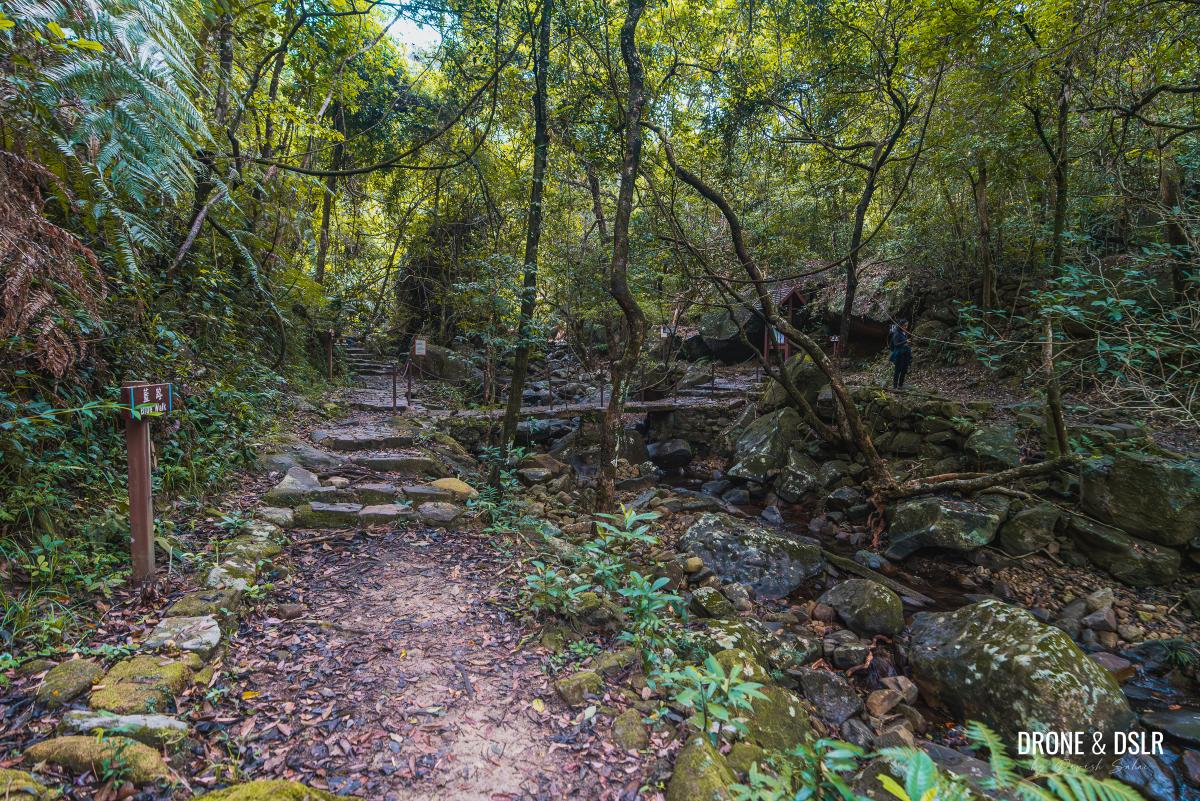
The trail continues till it reaches a bridge, that crosses the stream, and then returns on the other side of the stream. So, now you’re still walking along the stream, but the opposite side.
-
- A short distance to the loop at the end of the stream
-
- And we’ve reached the point where the Blue Walk returns
-
- Cross the stream and follow the signs
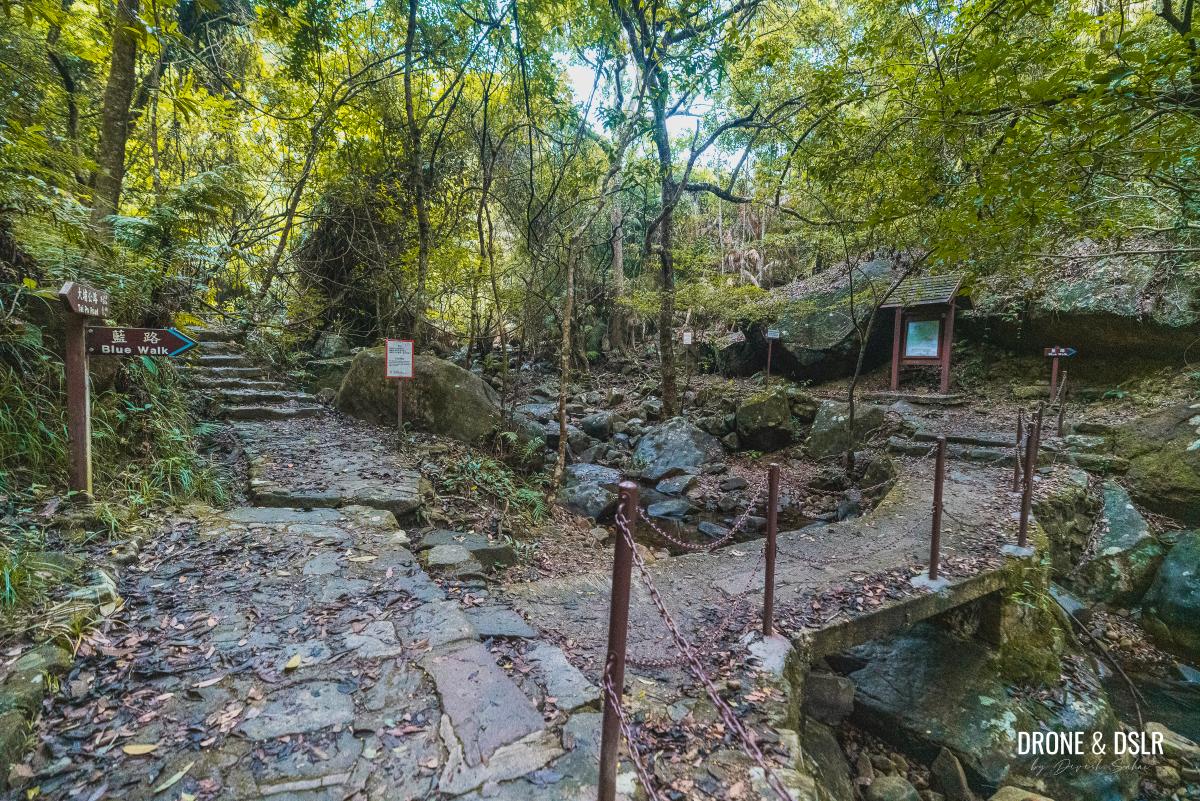
So get to see more the same sights, just from a different side.
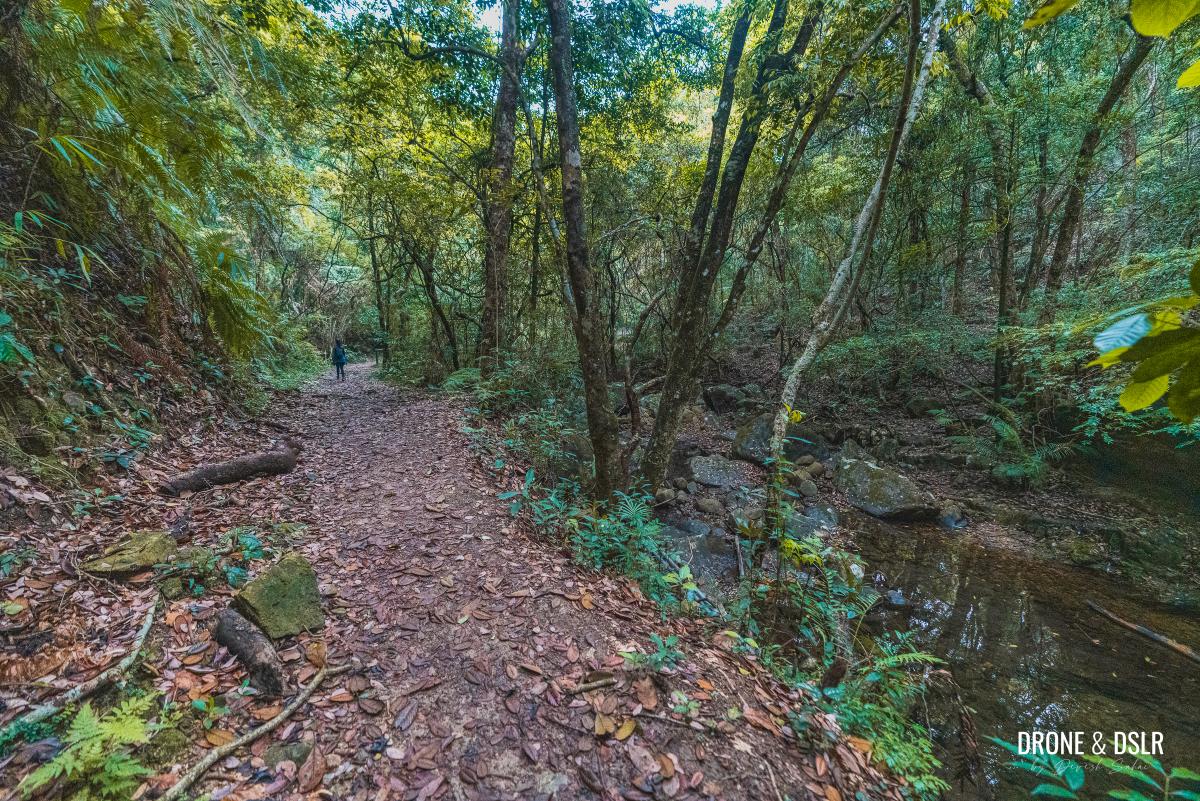
And the Blue Walk continues on the opposite side of the stream now
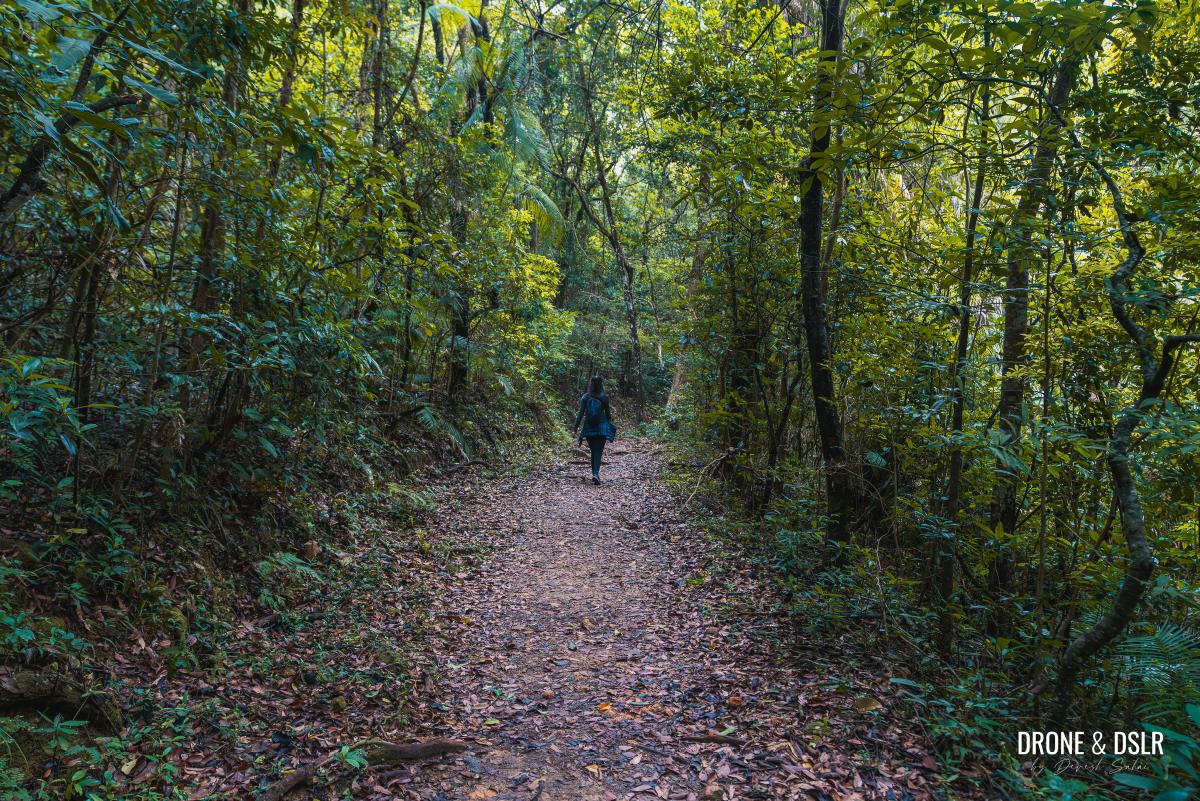
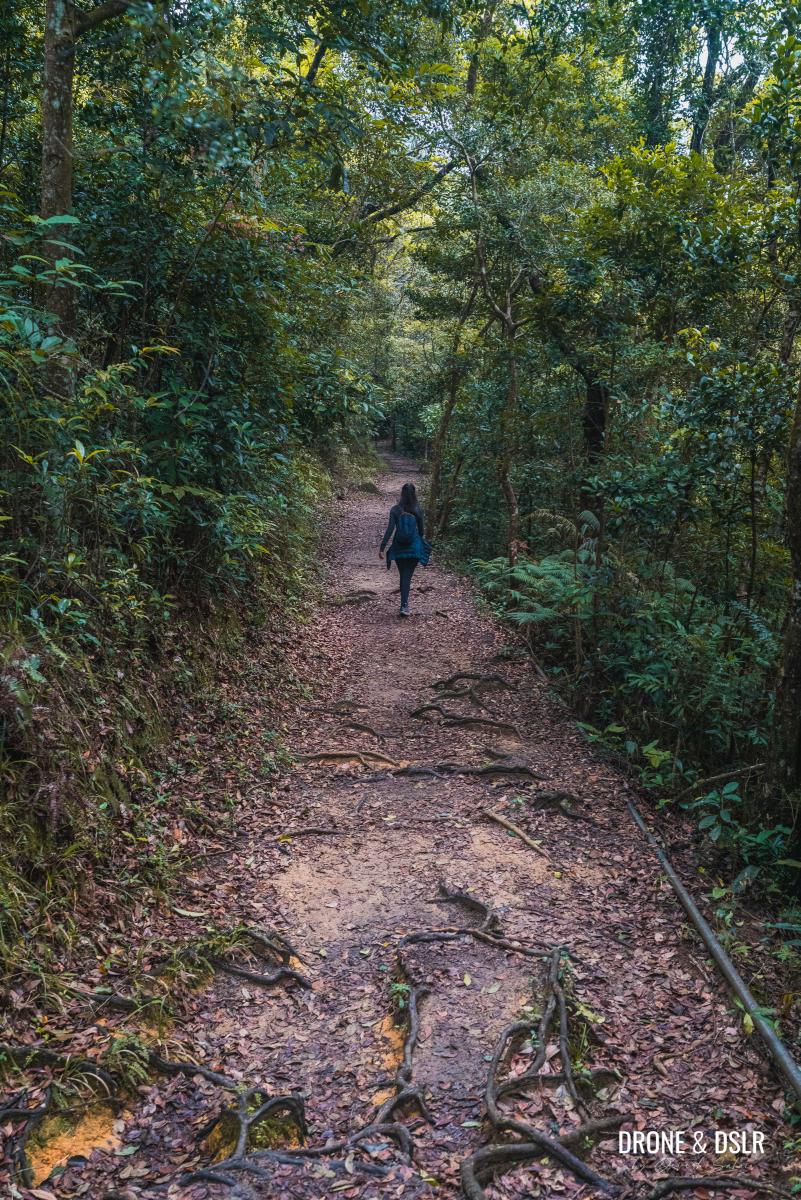
The beautiful Blue Walk continues meandering below a canopy of trees, accompanied by the sounds of nature, till it reaches a shortcut to reconnect it to the Red Walk. Follow the signs for the Blue Walk, as it turns left and climb uphill, unless you want to reconnect with the Red Walk.
-
- Tai Po Kau Nature Reserve – one of the most serene nature walks in Hong Kong
-
- The Blue Walk – Tai Po Kau Nature Reserve
-
- There’s a shortcut to the Red Walk at this point. But we continued on the Blue Walk
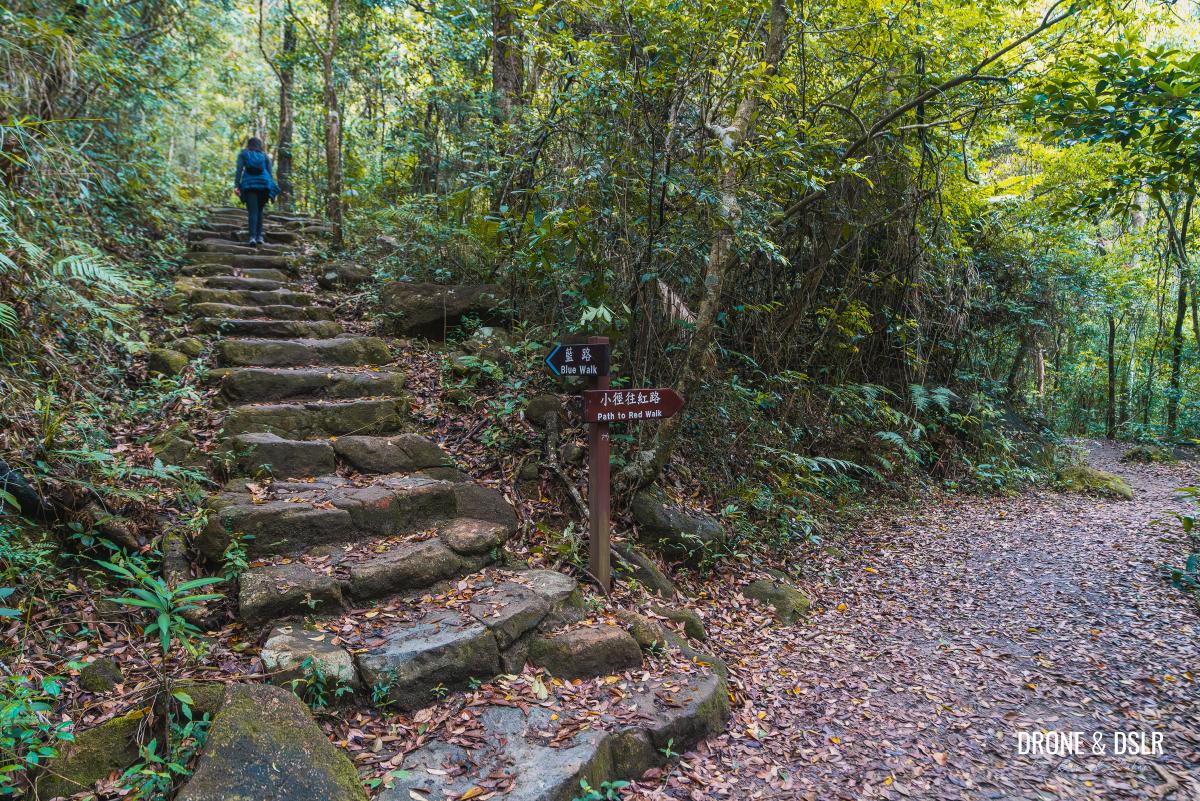
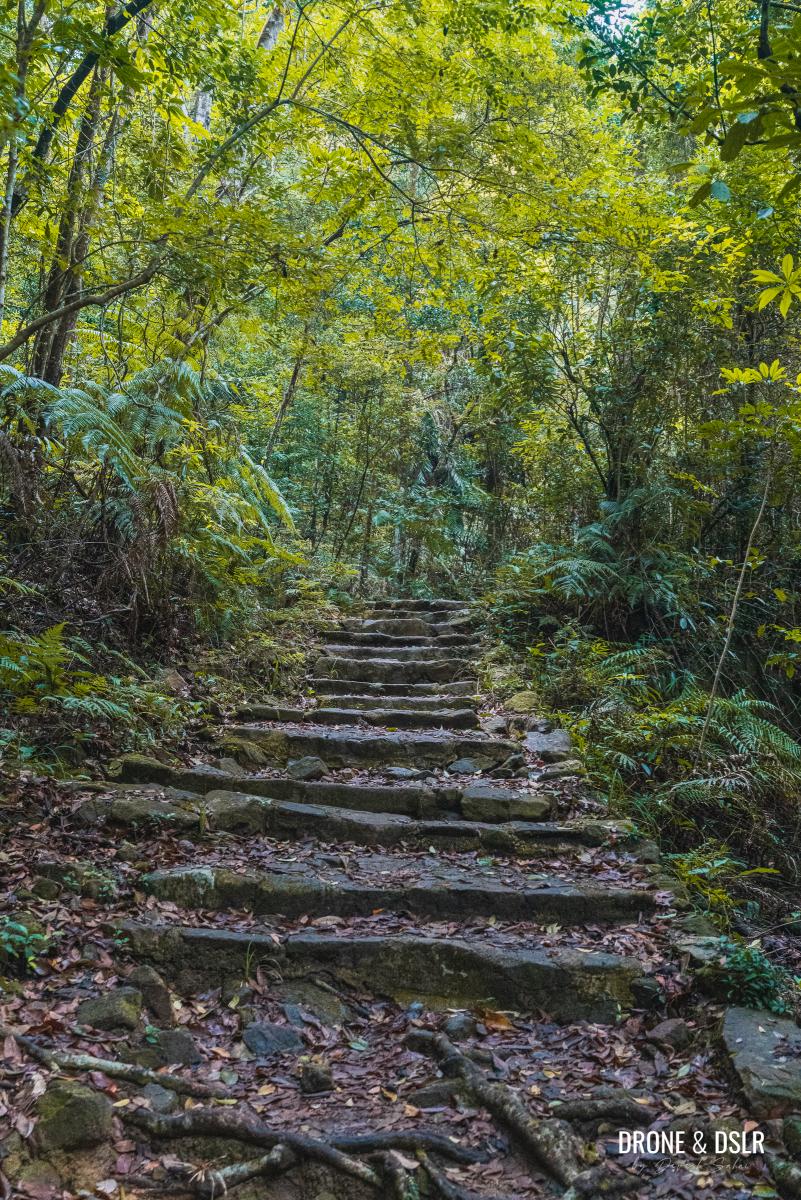
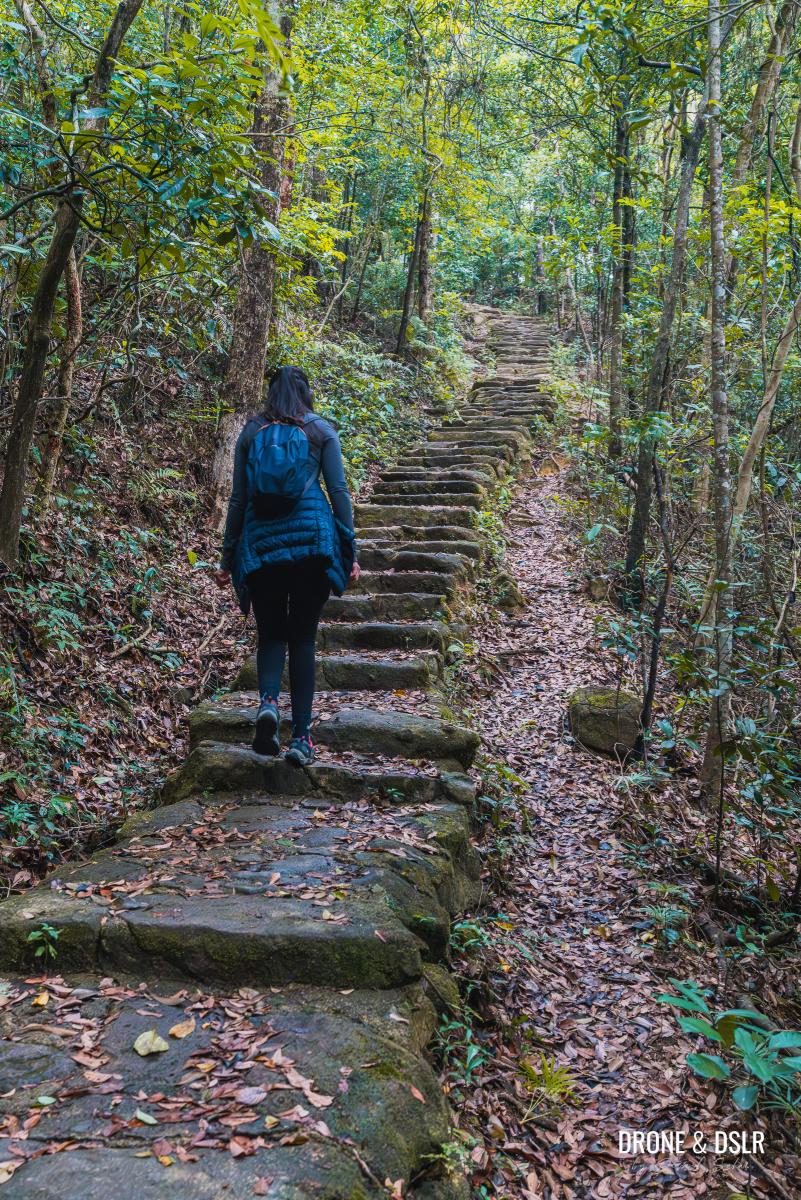
The steps that follow are perhaps the only major climbing you’ll do on this walk. At the top of the steps, the Yellow, and the Brown Walks reunite and begin their overlap with the Blue Walk.
-
- The only section of the Blue Walk that required some climbing
-
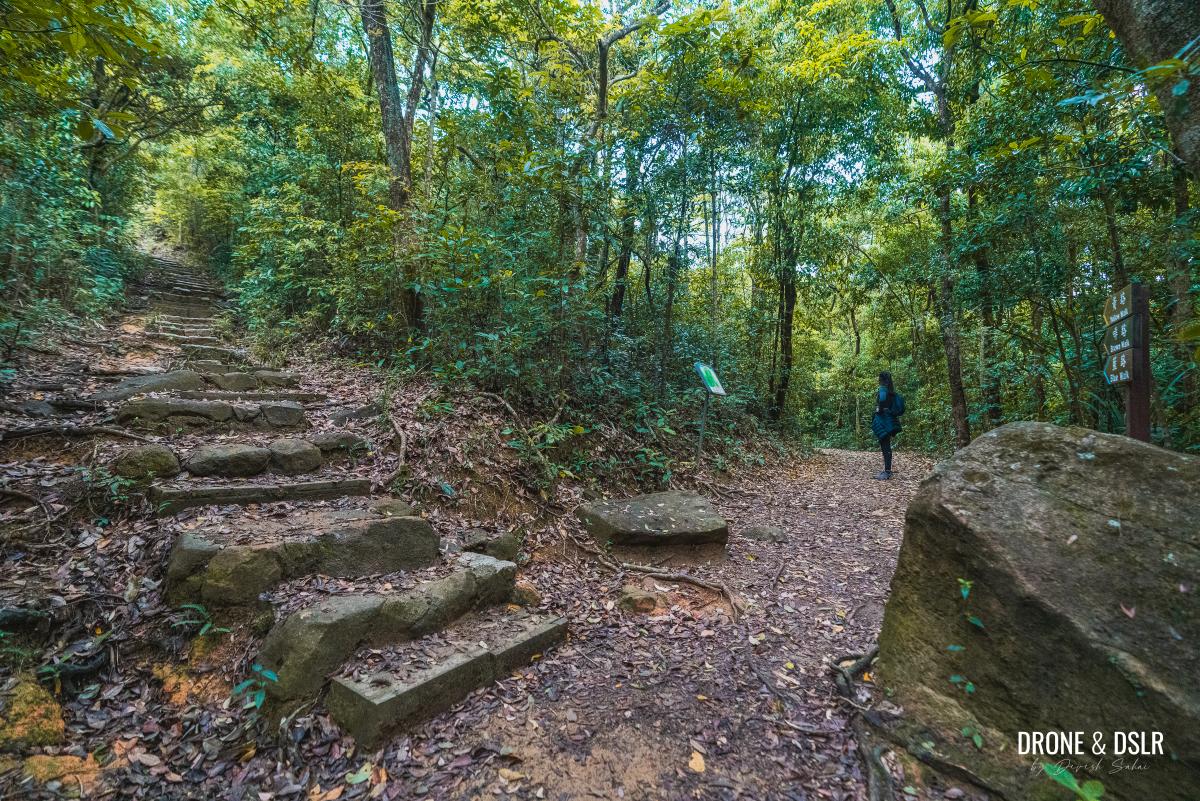
- At the end of the steps, the Blue Walk reunites with the Yellow and Brown Walks
-
- And the three Forest Walks continue
Lot’s More Lushness
The next kilometre of the trail, with the three overlapping walks, continues on a flat terrain, surrounded by a lush canopy of trees.
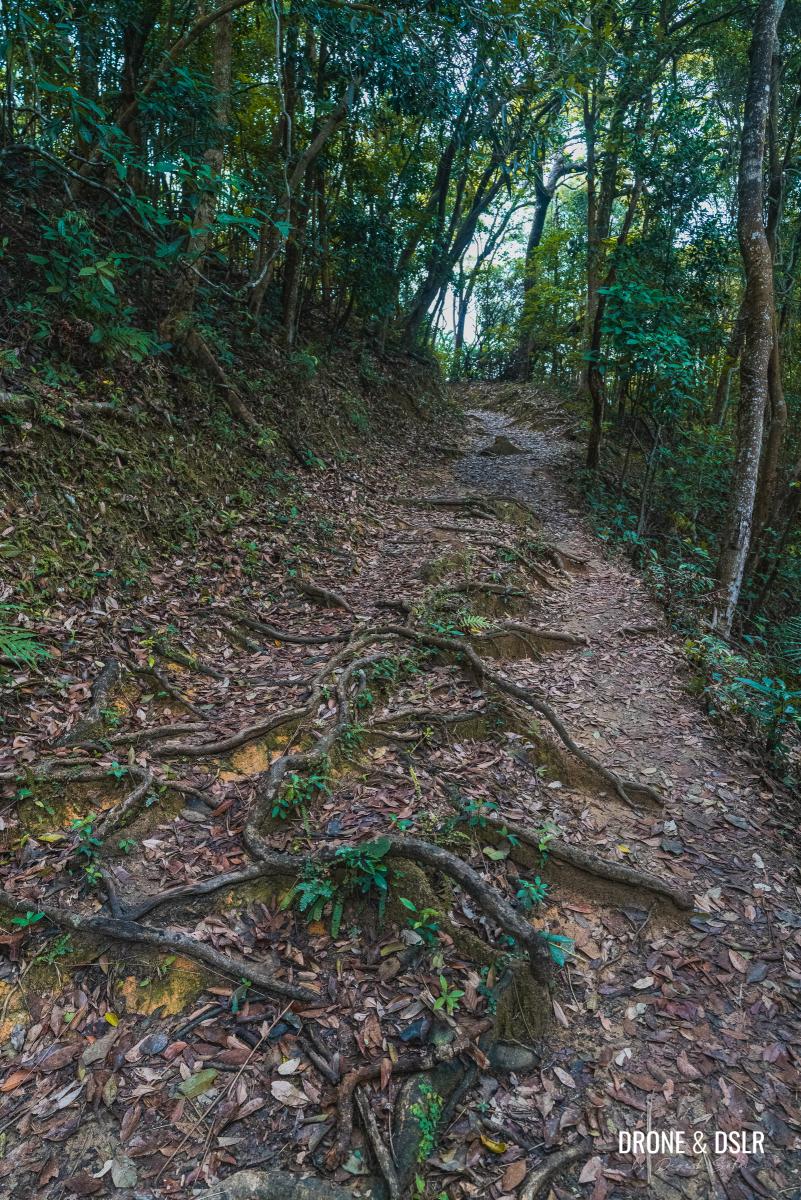
Tripping hazard – Watch out for the roots
Once again, we found ourselves one with nature. The sounds of the birds and the rustling of the leaves were all we could hear. It was honestly, so peaceful.
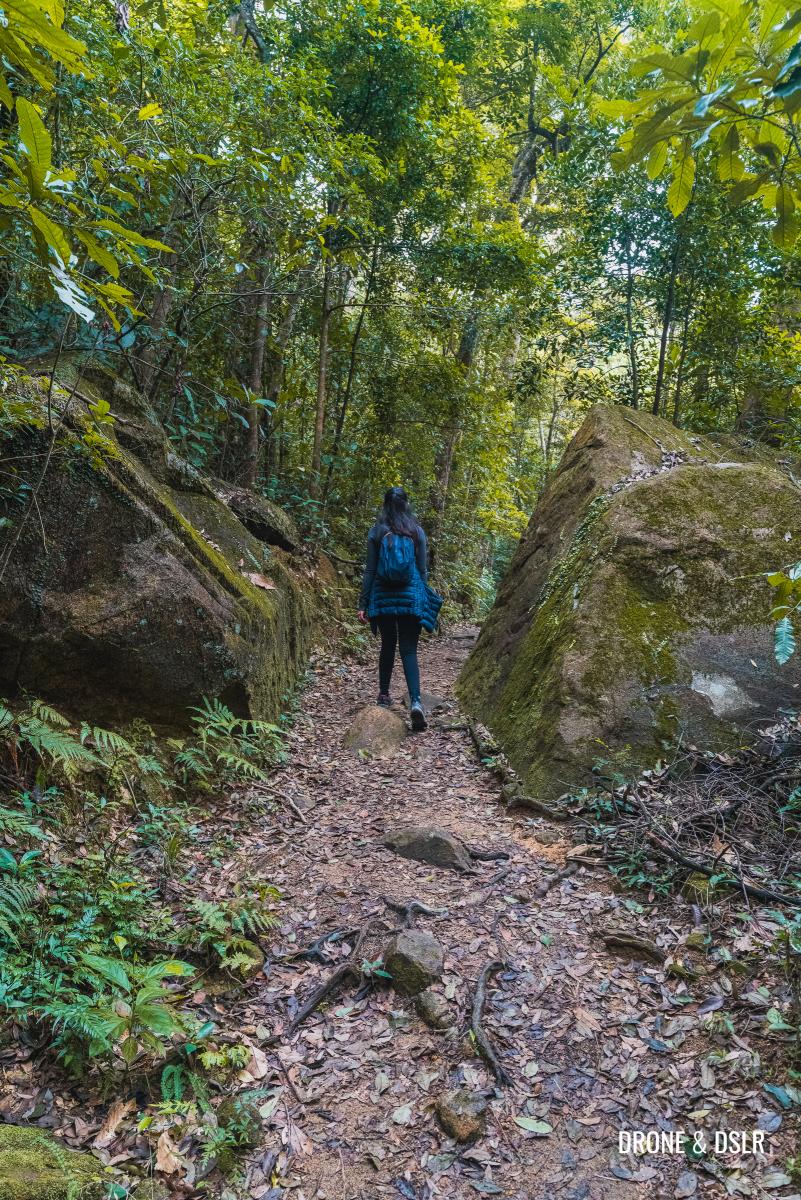
Almost at the end of the forest section of this walk
The trail finally ends, and exits the forest area back onto the Tai Po Kau Forest Track – Kau Lead Section.
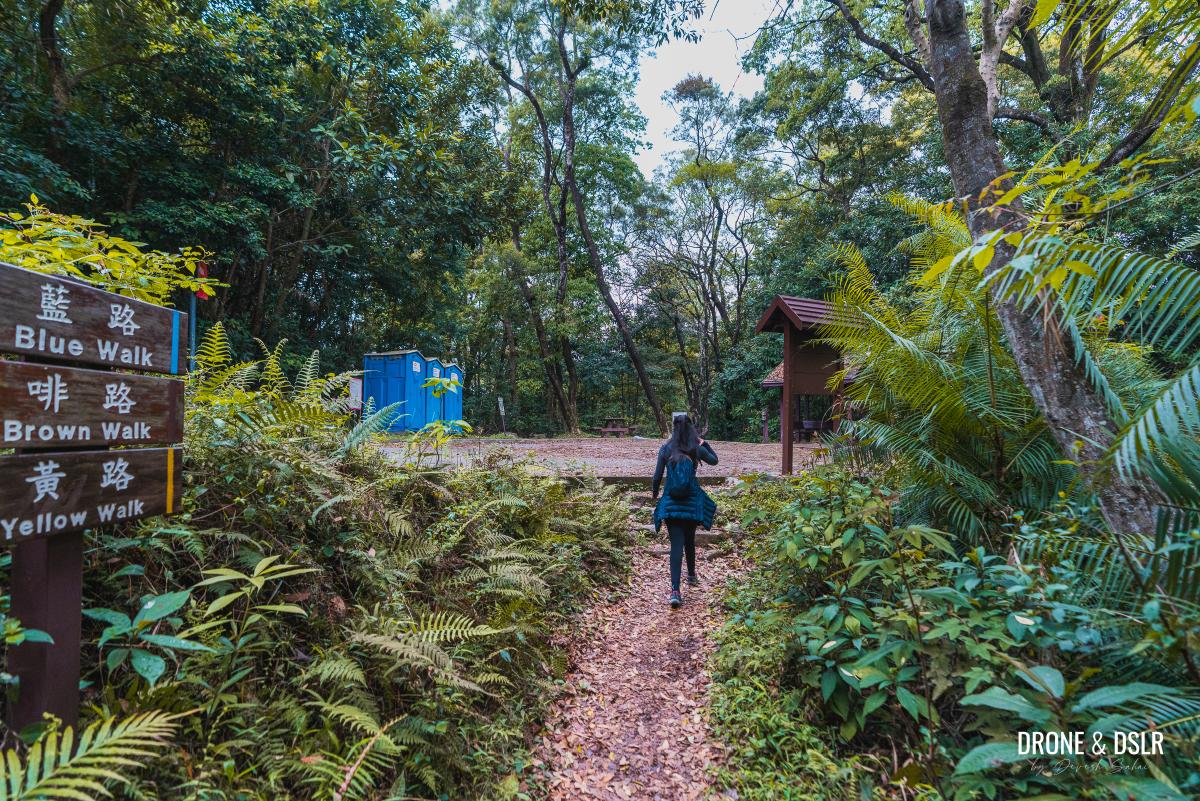
And the Forest Walk emerges onto Tai Po Kau Forest Track – Kau Lead Section
At this point, there are a few portable toilets, in case nature was calling you.
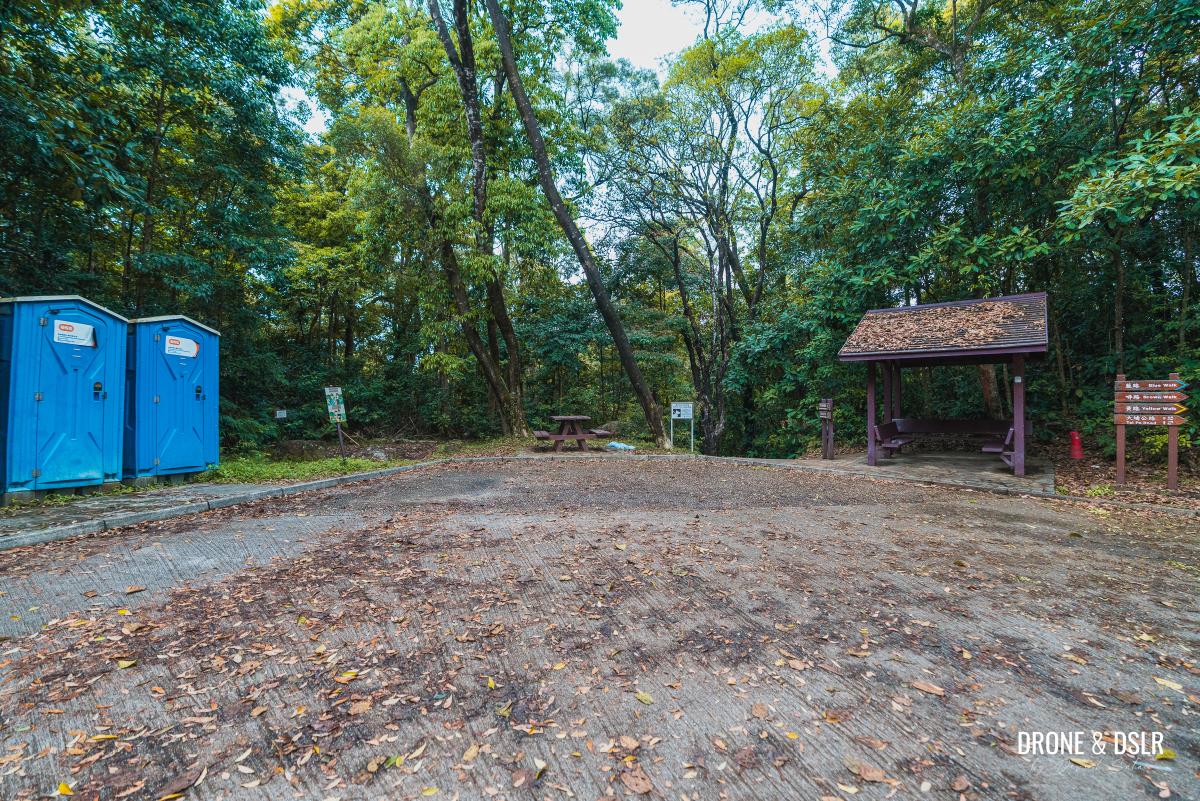
Toilets and seating area, but we spotted a lot of monkeys here
Monkeys and Barking Deer
Just as we were crossing the toilets, we saw a group of monkeys running, and jumping on the trees above us. And just a few hundred metres ahead, we heard the strangest sound coming from the forest. I could only assume it was a barking deer, because I’ve never heard a bark so unique.
-
- The remainder of the journey follows the Tai Po Kau Forest Track – Kau Lead Section downhill
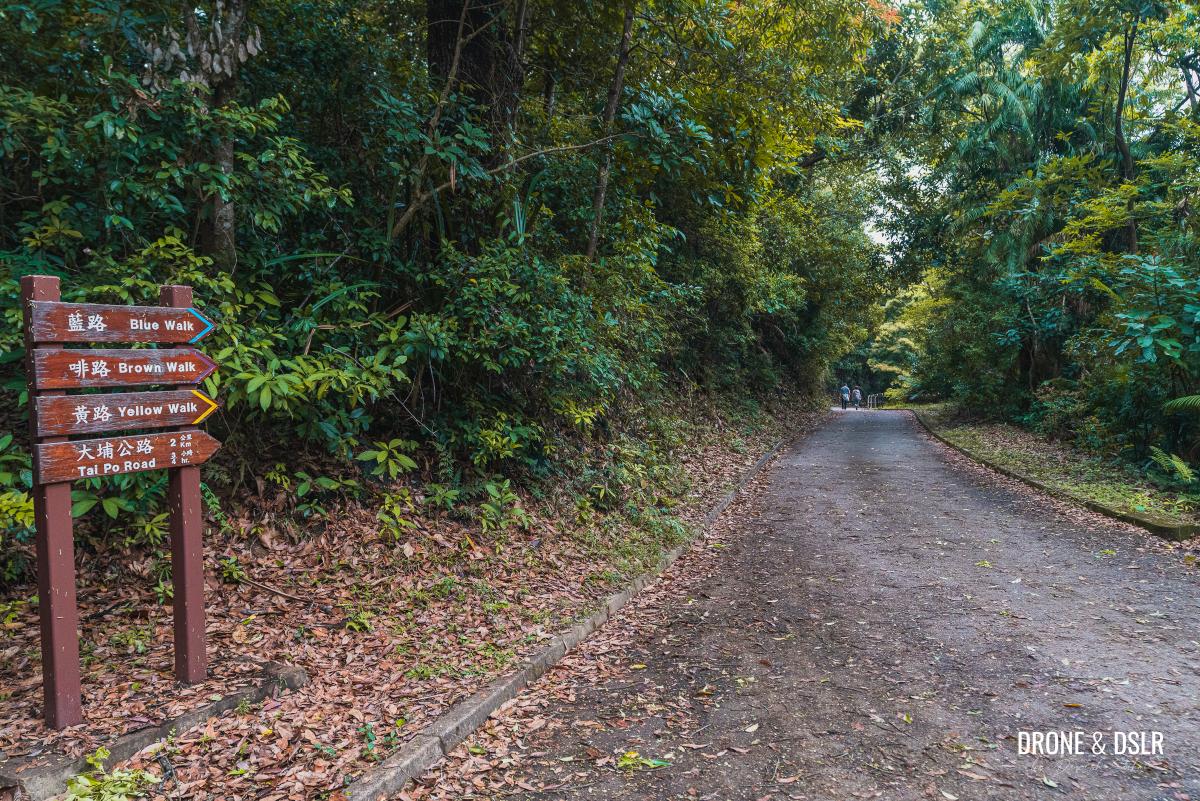
-
- Although this part of the walk was outside the forest, we heard monkeys, birds, and even a barking deer from here
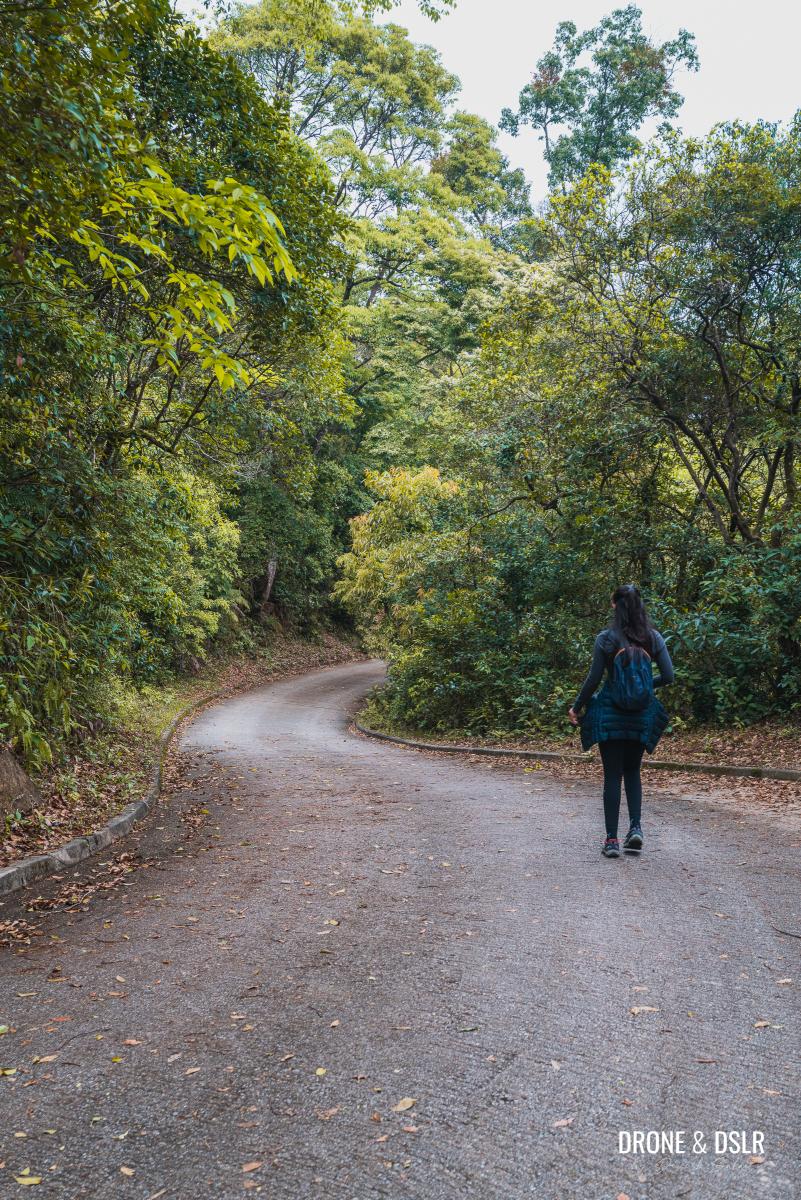
After those encounters, we continued to walk downhill on winding the Tai Po Kau Forest Track – Kau Lead Section, till the Red Walk merged with the other three walks.
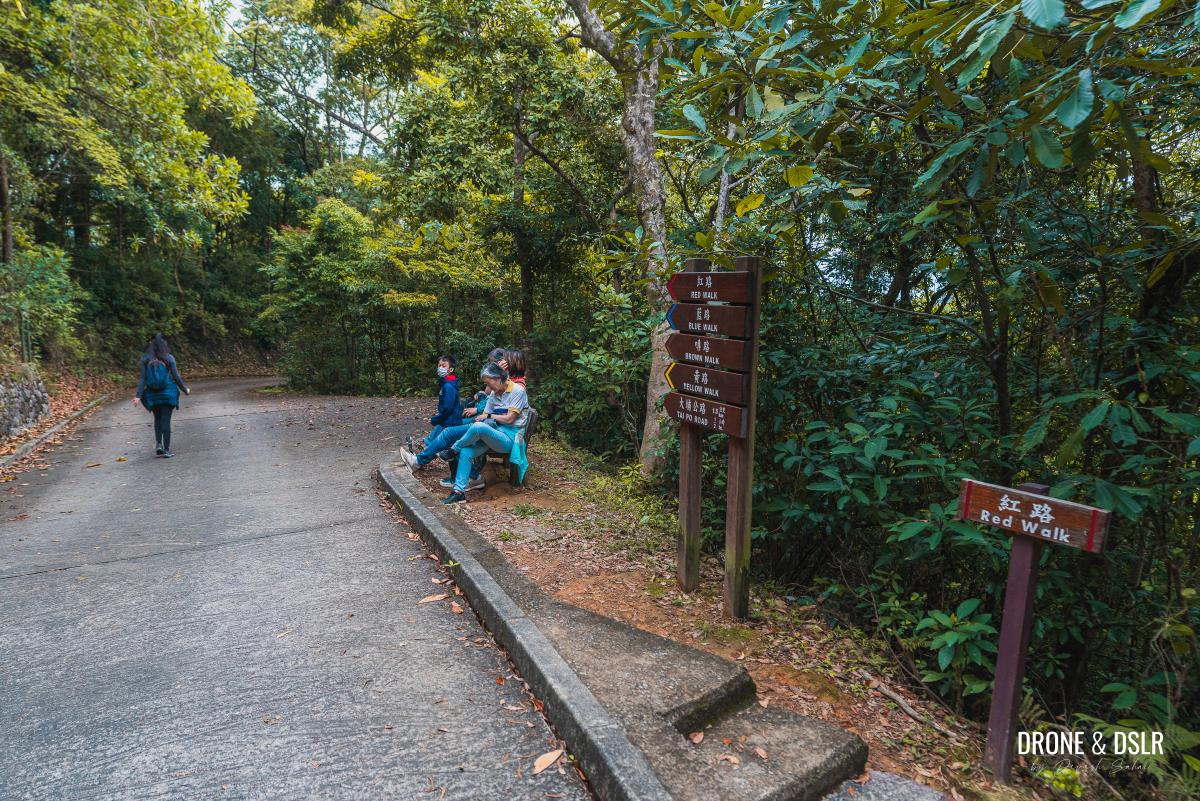
And the Red Walk reunites on the Tai Po Kau Forest Track – Kau Lead Section. Finally all four Forest Walks are together.
After the point where all four walks merge, the trail reaches some sort of residential area. I can only assume it was that with the number of parked cars.
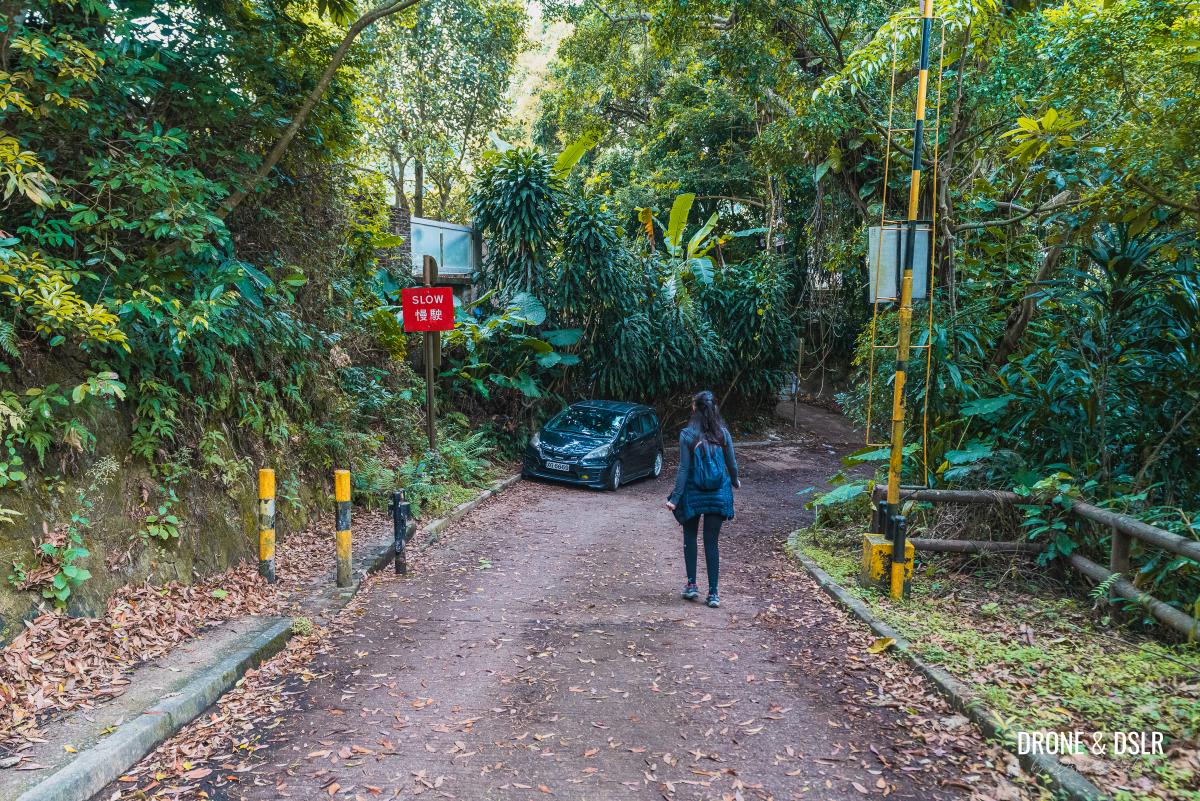
There was a residential area somewhere behind these trees
Tai Po Kau Outdoor Study Centre
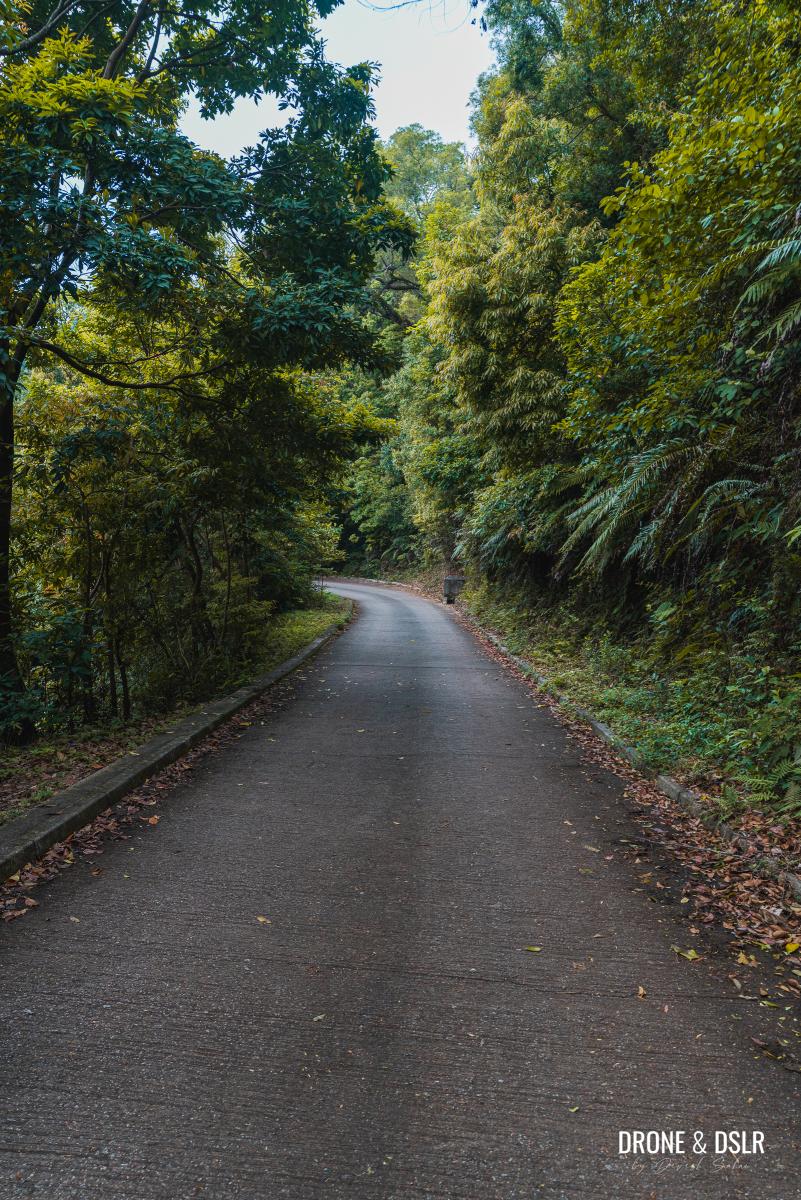
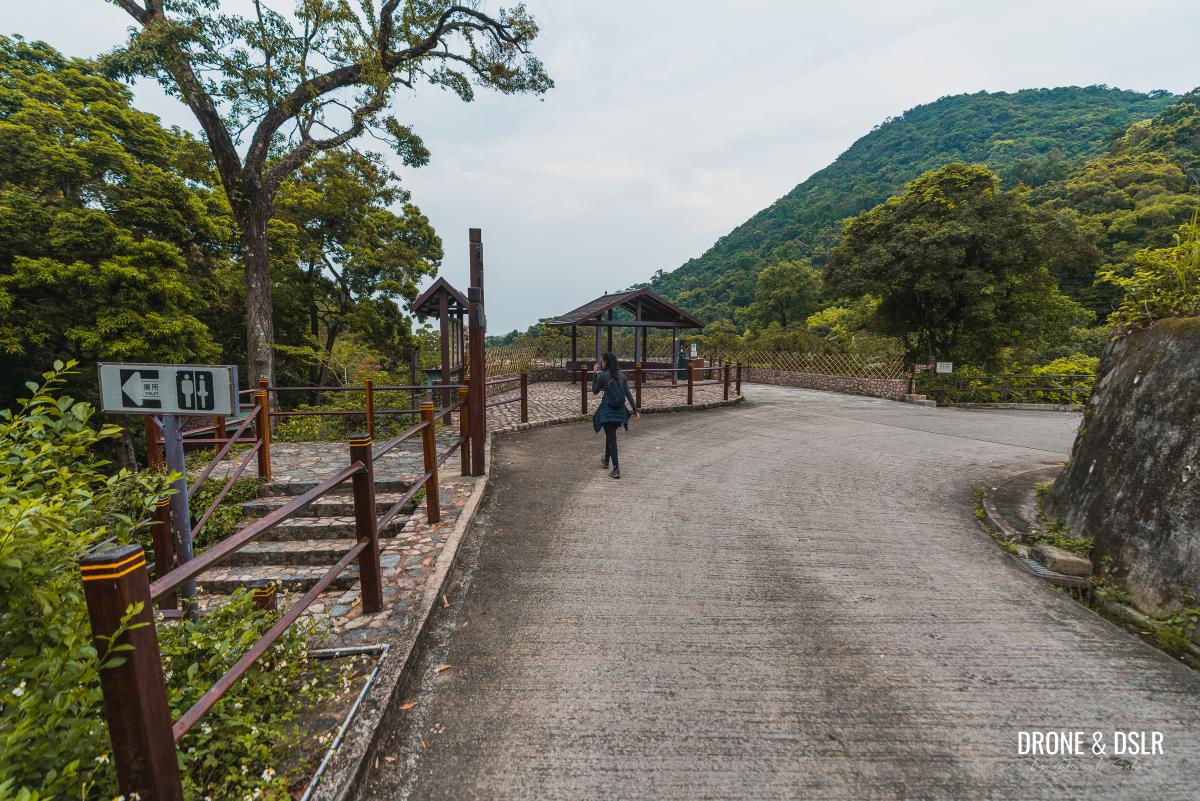
After another 400 metres of downhill walking, we arrived at the Tai Po Kau Outdoor Study Centre.
-
- The Forest Walks are almost coming to an end
-
- But before the end, the walks arrive at the Tai Po Kau Outdoor Study Centre
-
- The Tai Po Kau Outdoor Study Centre
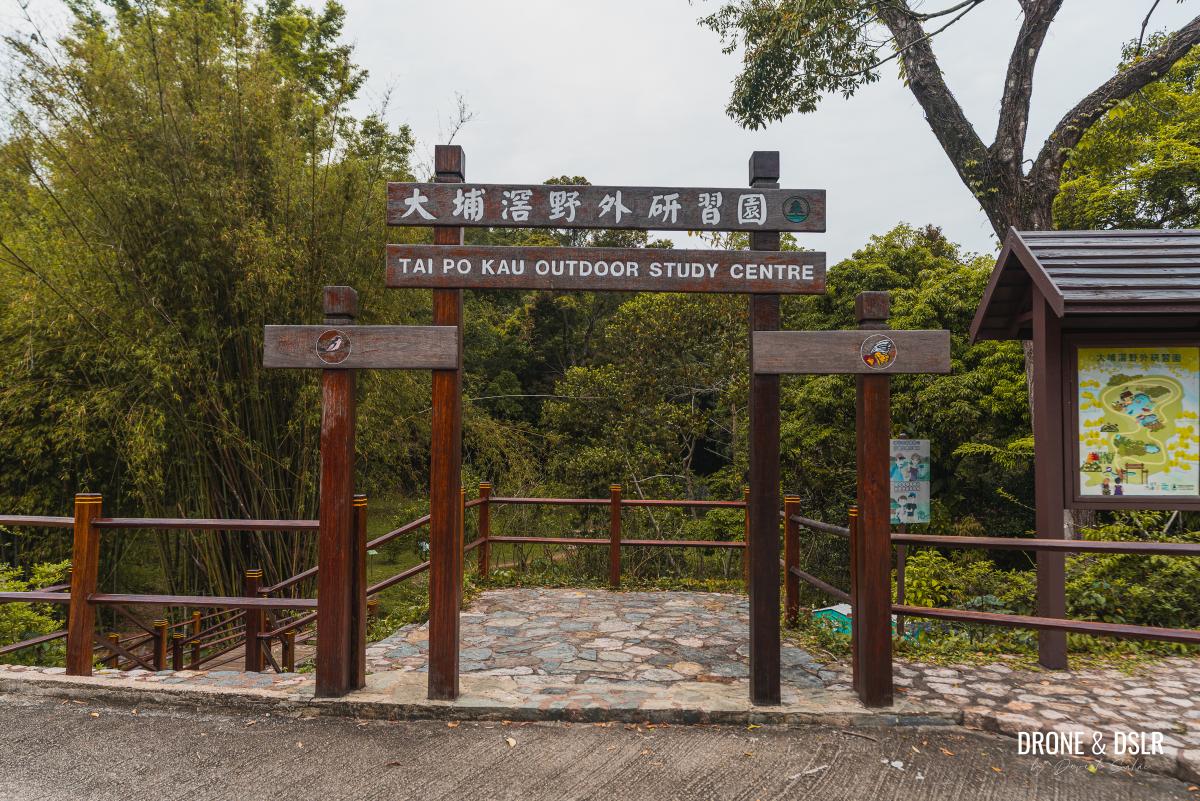
The centre is essentially a mini ecosystem of the nature reserve, where visitors (especially kids) can observe some flora and fauna from a closer proximity.
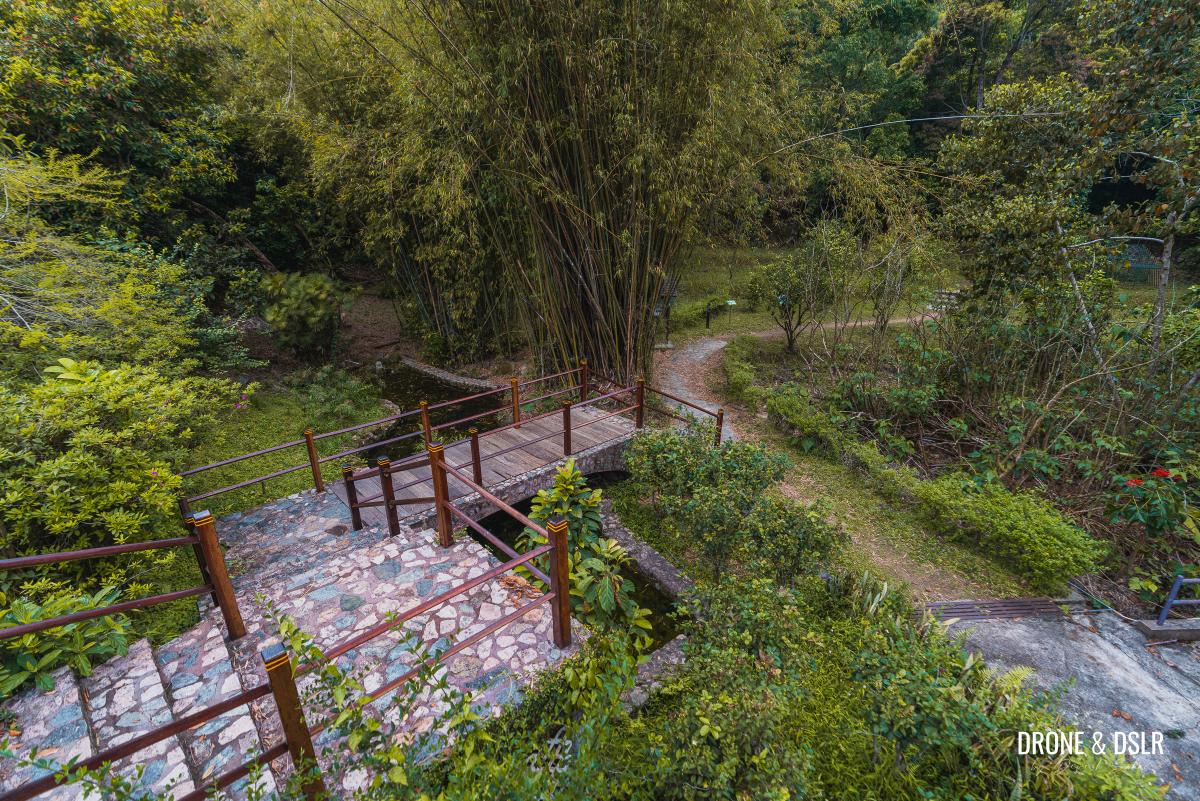
Tai Po Kau Outdoor Study Centre – a mini ecosystem of the forest for display
There is also a toilet and water filling station next to the Tai Po Kau Outdoor Study Centre.
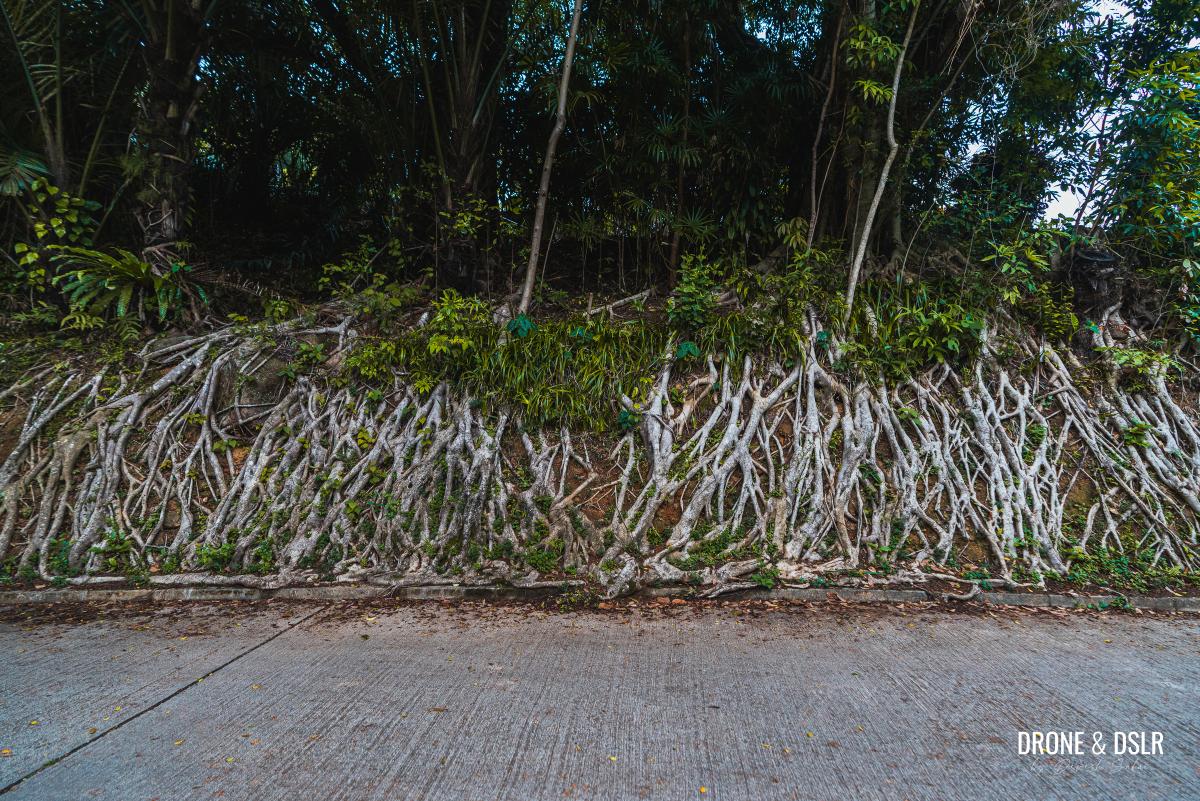
Just beyond the Tai Po Kau Outdoor Study Centre were these magnificent exposed roots along the road
After the study centre, the road reaches a dam that collects the water from the multiple streams coming down this nature reserve. Unfortunately, when we visited, the water levels weren’t high enough to be overflowing.

The dam wasn’t overflowing when we visited
And shortly after the dam, our journey on the Blue Walk (and all other walks too) came to an end.
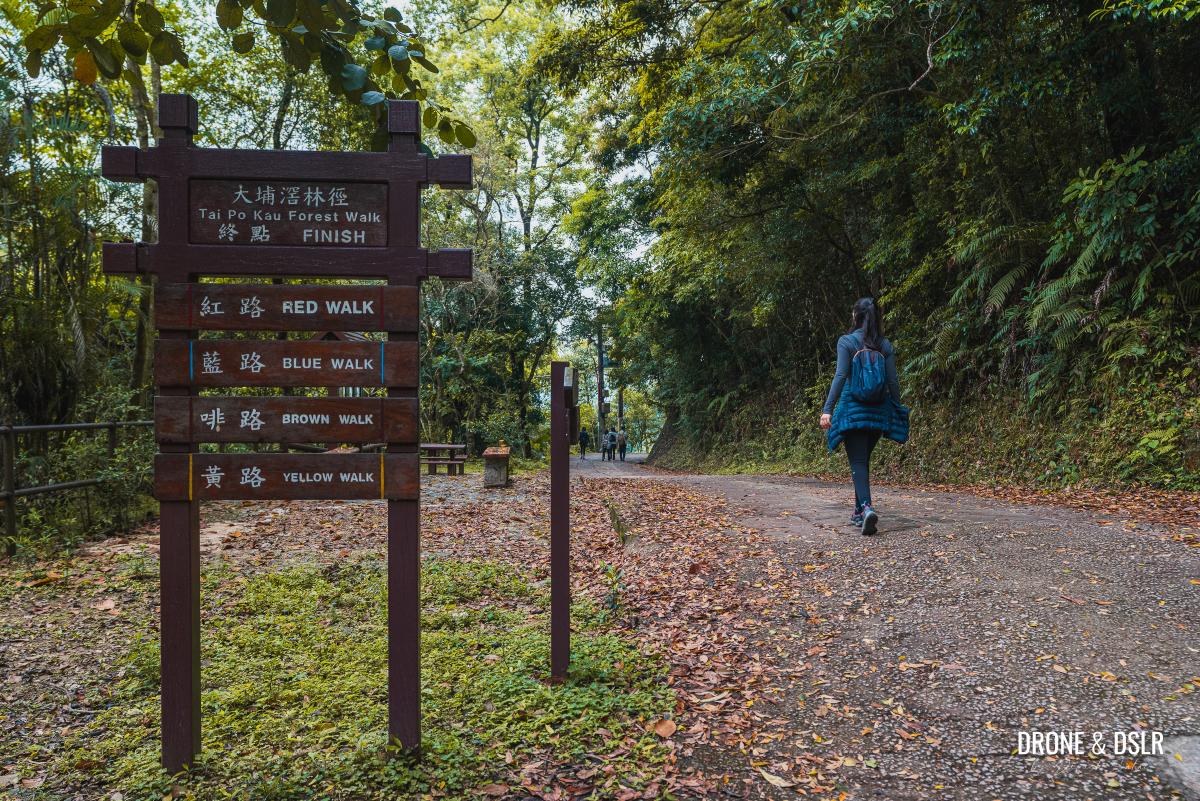
And we’re back where we started, at the end of all the Forest Walks
At this point, simply continue walking on the road till you exit the nature reserve.
Tai Po Kau Nature Reserve — Immerse Yourself In Nature
We’ve been on plenty of nature and tree walks in Hong Kong, but the Tai Po Kau Nature Reserve just felt more secluded. I guess maybe that’s because it is. What I also liked about the nature reserve is that it allows visitors to choose their own adventure.
If you’re looking for an easy, educational, and peaceful outdoor excursion in the summer or rainy months, then the Tai Po Kau Nature Reserve may be right for you. It’s where you can come to be one with nature and its sounds.
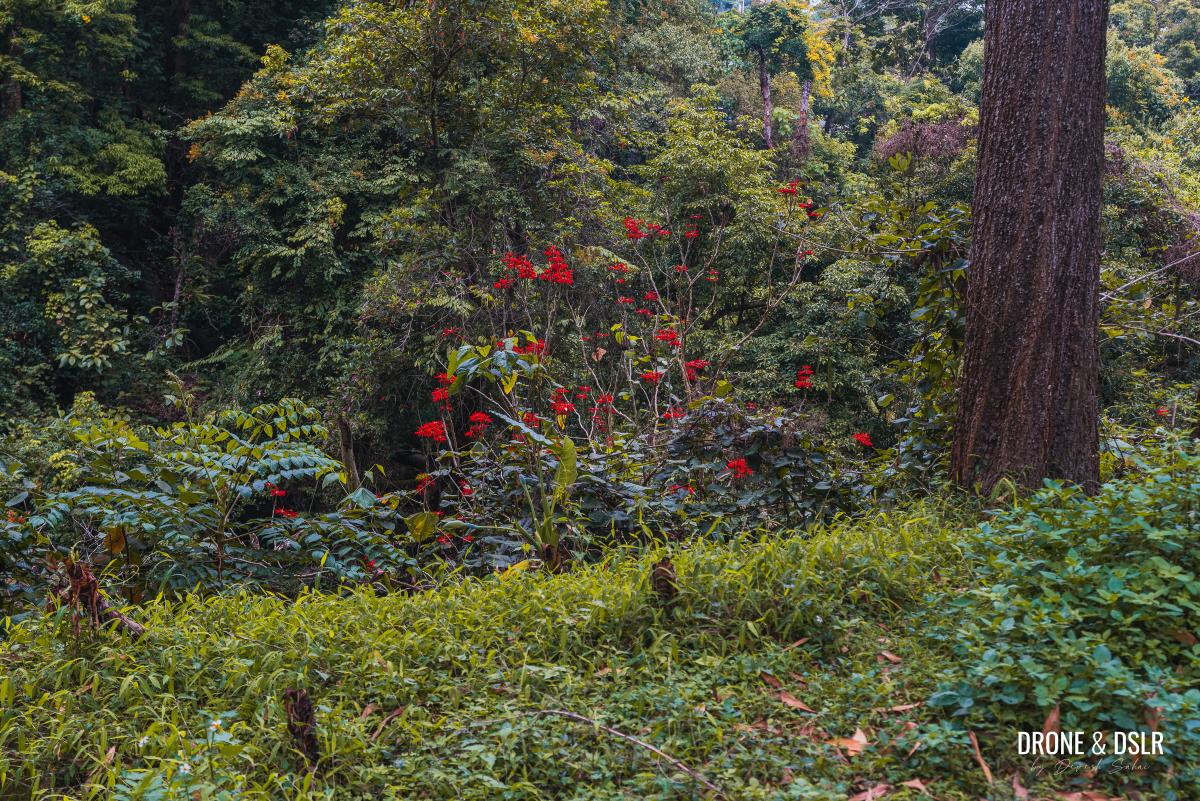
Admiring the colours inside the Tai Po Kau Nature Reserve
If you enjoyed the Tai Po Kau Nature Reserve, you might also like the Quarry Bay Tree Walk or the Eagle’s Nest Nature Trail.
And if you found this guide resourceful, please feel free to share on the social Media channel of your choice and drop us a comment below.
If you enjoy our work, come join us on Instagram and YouTube 🙂



You might also like








Leave a reply