


30 km west of Lisbon lies the fairytale town of Sintra. A UNESCO World Heritage Site, Sintra is perhaps the most popular day-trip from Lisbon, and once you’ve been there, it’s easy to see why.
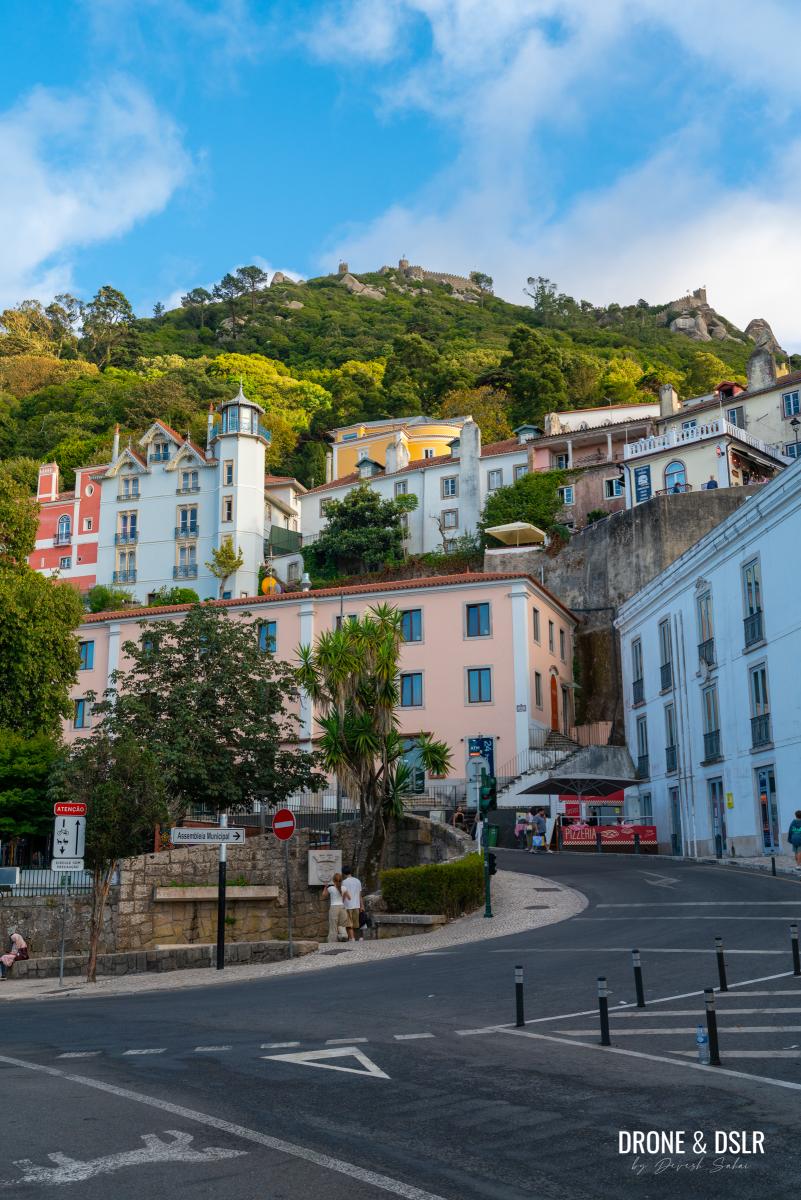
Probably my favourite photo of Sintra – the old town sits below a hill and is guarded by the Moorish Castle on the top
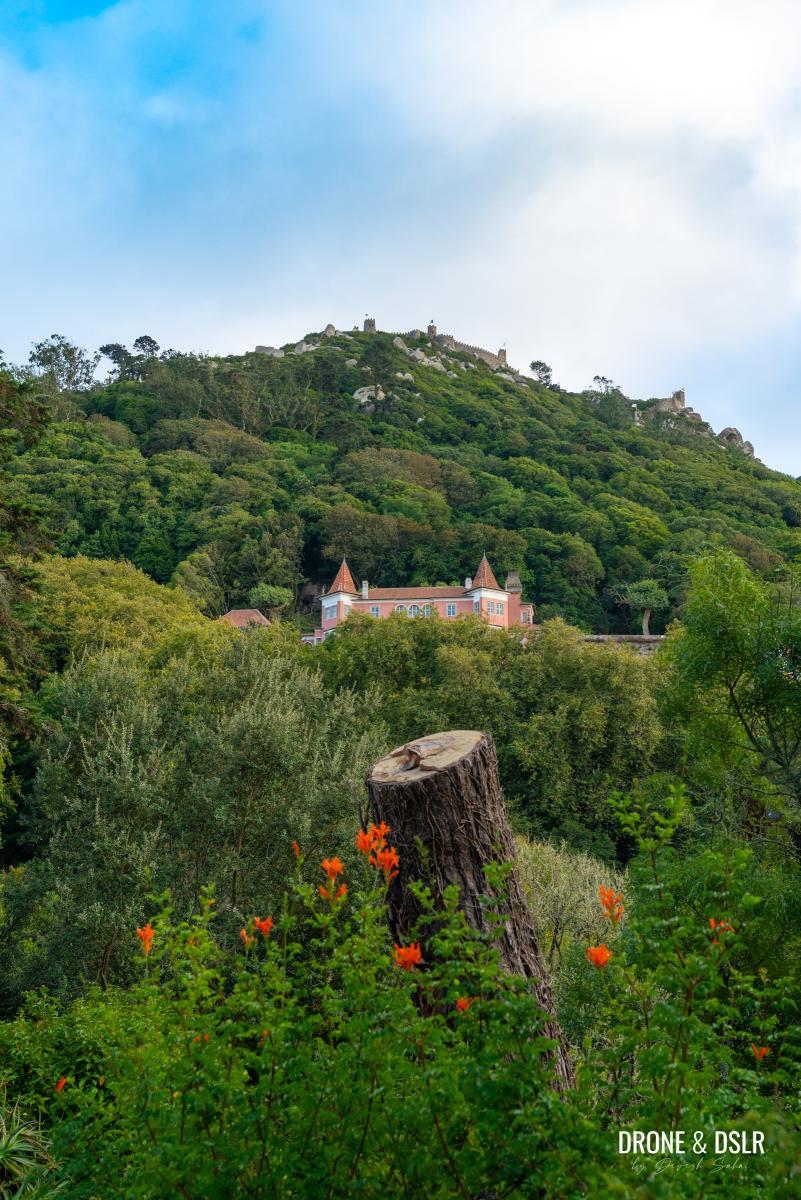
From the moment you enter the foothills of the Serra de Sintra, bright, colourful houses greet you as you step into this charming little historical town. Its hillsides are dotted with forts, palaces, and aristocratic estates. From the colourful National Palace of Pena (Palácio Nacional da Pena), to the medieval walls of The Moorish Castle (Castelo dos Mouros), Sintra is full of things to do and see.
-

- The beauty of Sintra – lush landscapes, colourful houses, and a Moorish fort on top of the hill
-
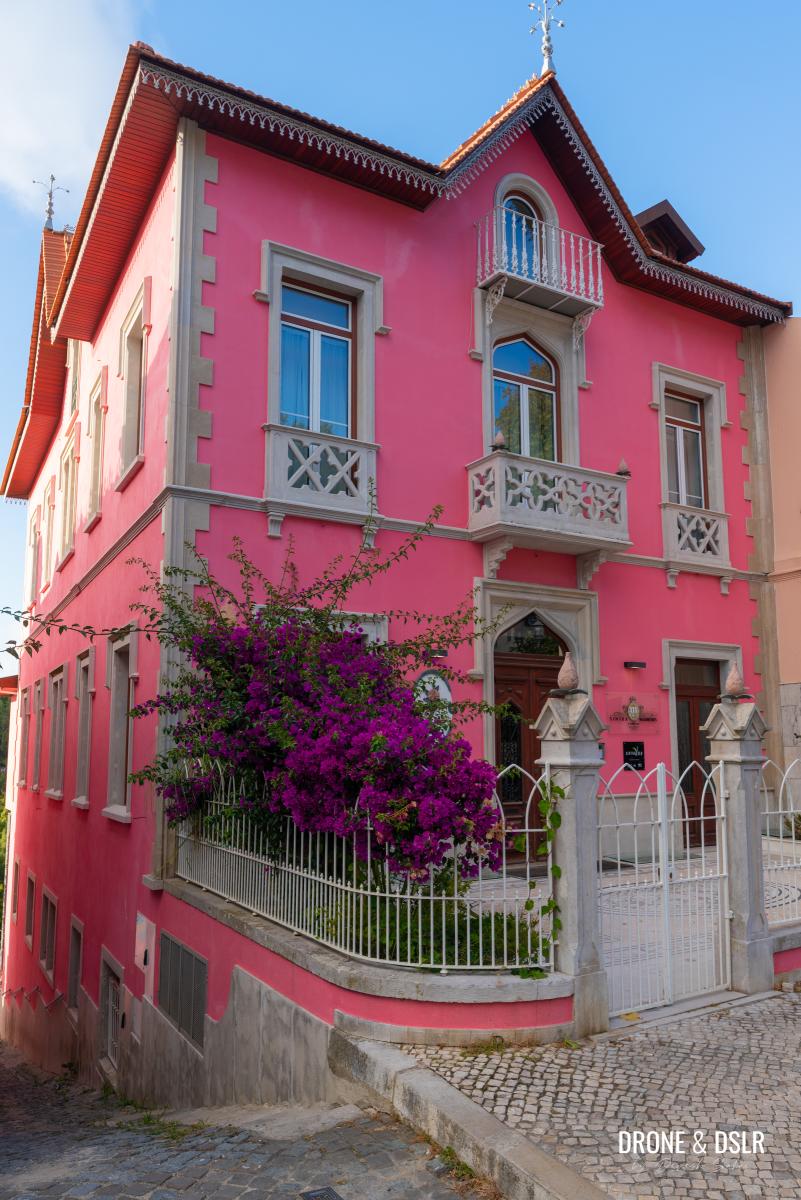
- Walking around Sintra is a treat for the eyes
-
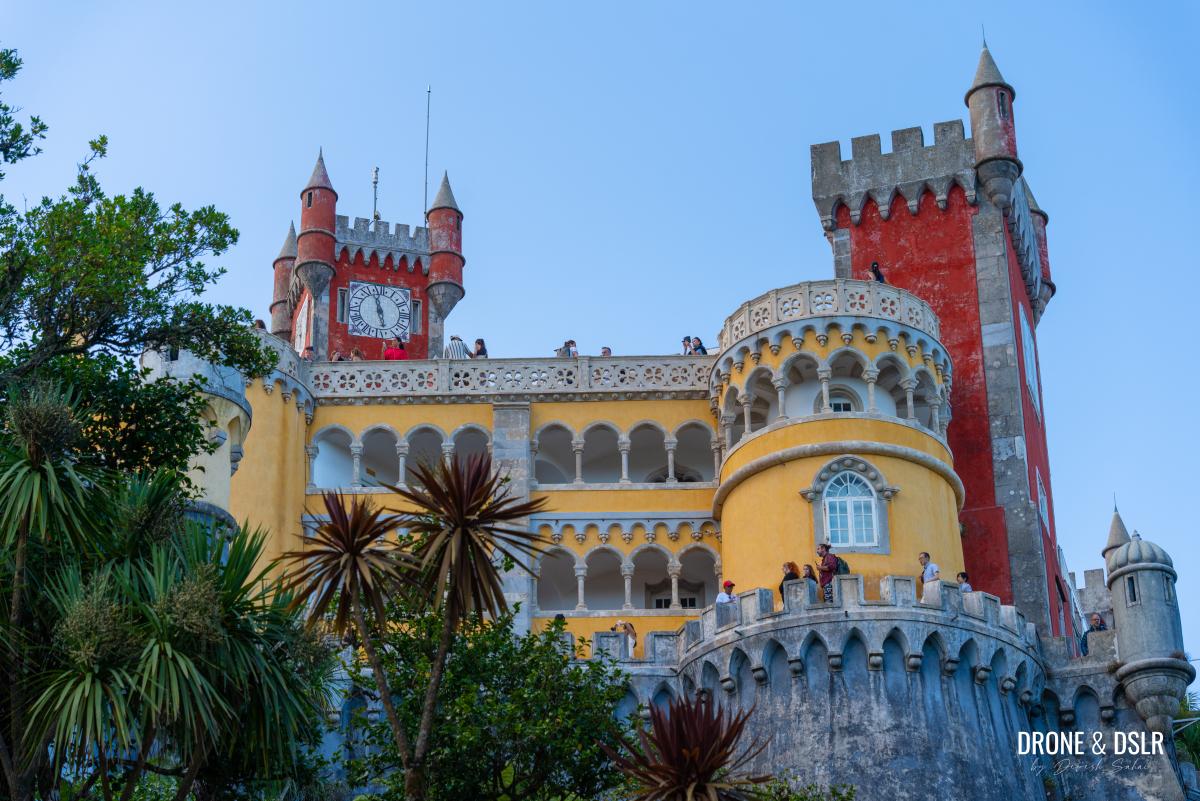
- The National Palace of Pena is perhaps the most popular attraction in all of Portugal
And after having spent a few days in Sintra, I’m here to tell you that if you’re planning on visiting Sintra, stay for more than a day. In fact, a day-trip from Lisbon does more injustice to Sintra!
Sintra – A Must-Do Day Trip From Lisbon
OK look, I get it. Not every visitor has the luxury of spending more than a day in Sintra, and that’s completely fine. In fact, Sintra is remarkably well set up for day-trippers, and you don’t even need a car to make the most of it.
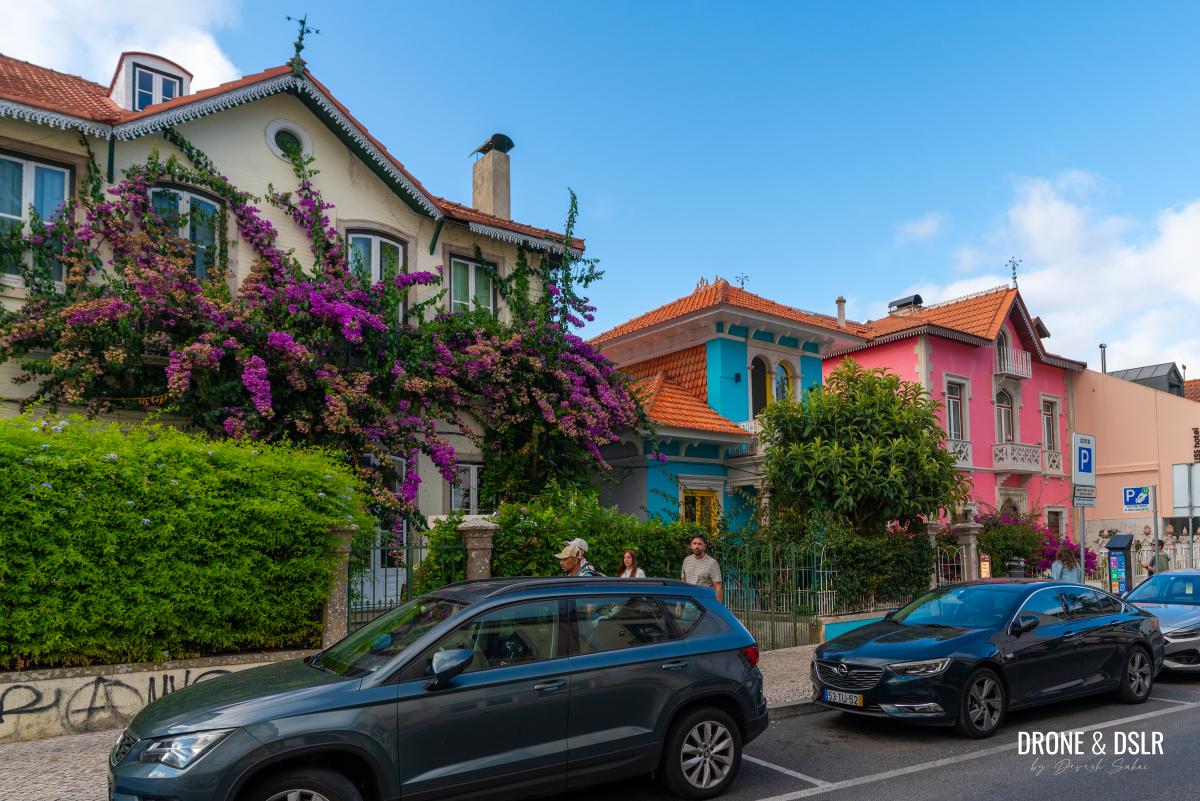
Colourful houses as you enter Sintra
Sintra is about a 40 minutes train ride from the centre of Lisbon. It’s the final stop of two train services, one departing from Rossio Station downtown, and another from Oriente Station, close to the airport.
Once you arrive in Sintra station, bus number 434 meets you right outside the station’s exit gates. The bus follows a circular route – from the old town, to the train station (where you board), to the Moorish Castle, Pena Palace, and back to the old town.
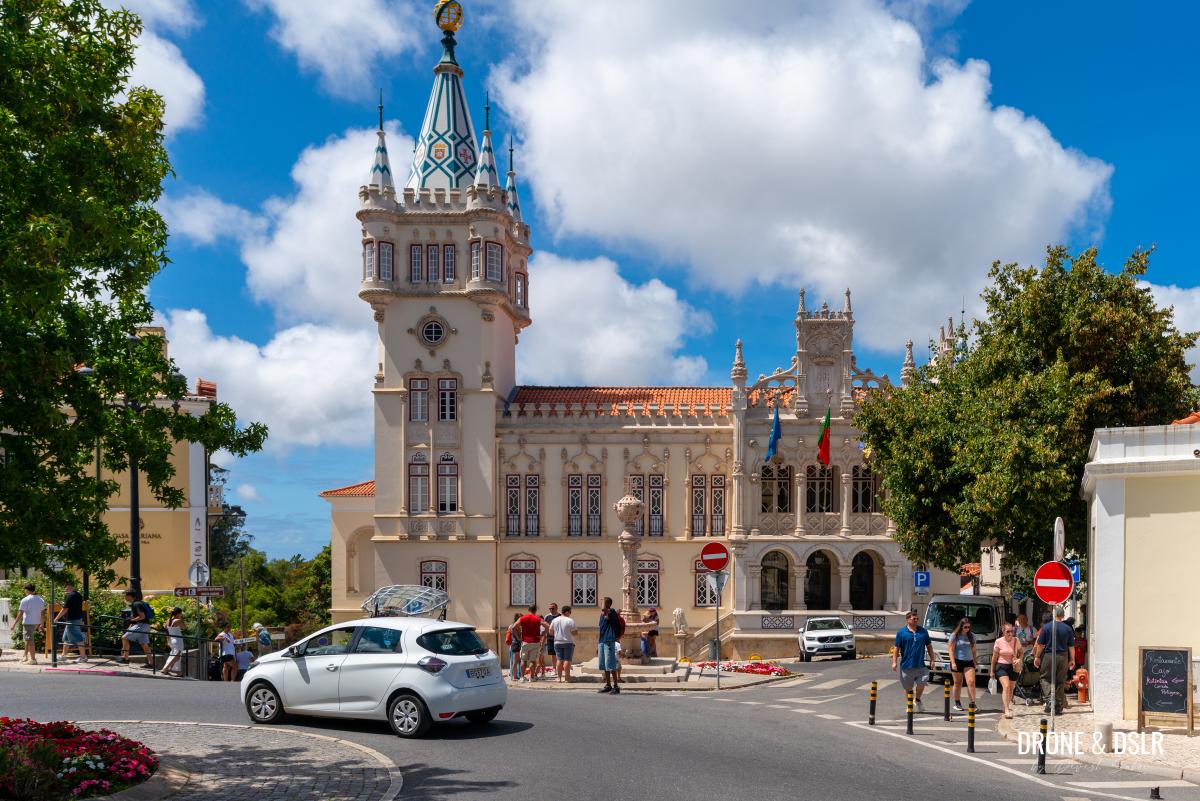
The Sintra Town Hall
In other words, you can tick off three of Sintra’s main attractions without once having to worry about transport. Convenient doesn’t even begin to cover it.
That said, Sintra has far more to offer than just those three attractions. And the best way to explore is via self-driving, and spending at least one night in the town.
Yes, Sintra Is More Than A Day Trip
While it’s entirely possible to tick off Sintra’s main attractions in a single day, you’d be doing the place a disservice by rushing through it. For starters, exploring the Pena National Park alone, where Pena Palace is situated, easily warrants a couple of hours all on its own.
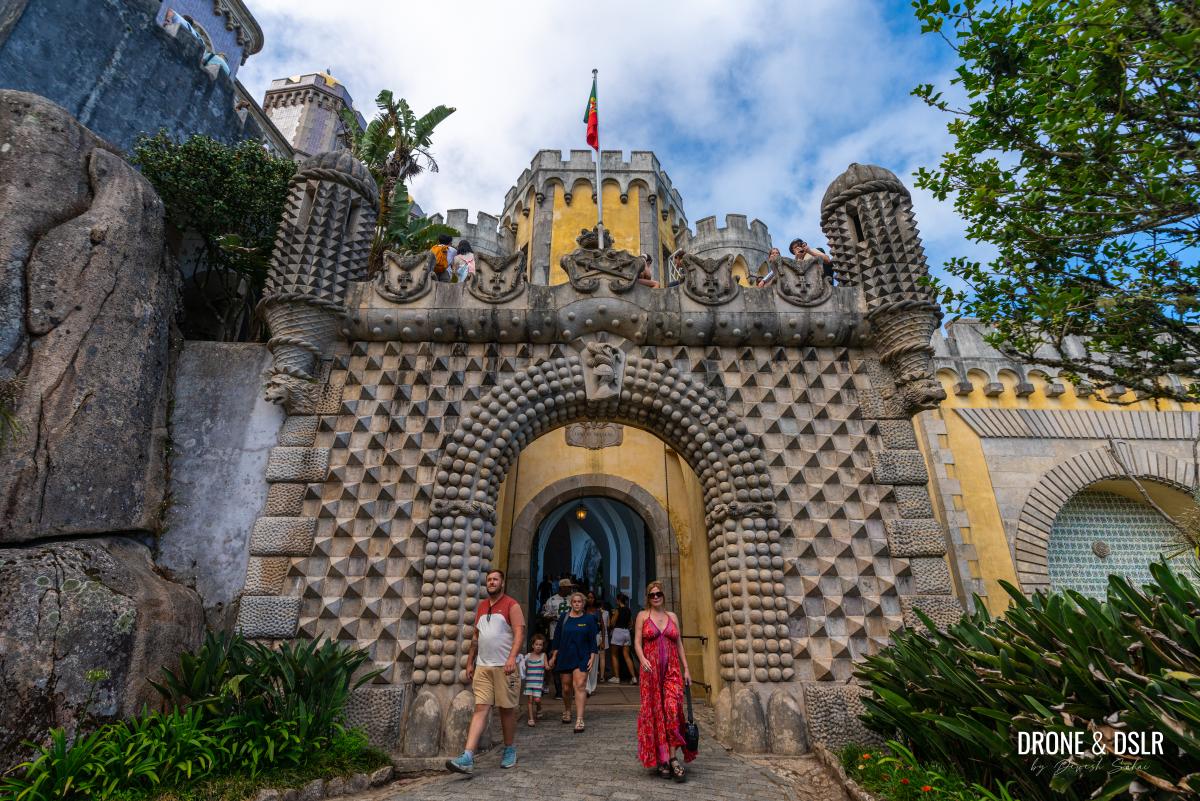
The gates to the National Palace of Pena
A day trip also means missing out on Sintra’s wonderful dining scene. Lisbon has no shortage of incredible restaurants, but our single favourite meal of the entire Portuguese trip was eaten right here in Sintra, narrowly beating out a memorable seafood dinner in Porto.
And then there’s Cabo da Roca, the westernmost point on continental Europe, and one of my most fun memories of the whole visit. Standing at the edge of the continent with the Atlantic stretching endlessly before you is the kind of moment that simply can’t be rushed.
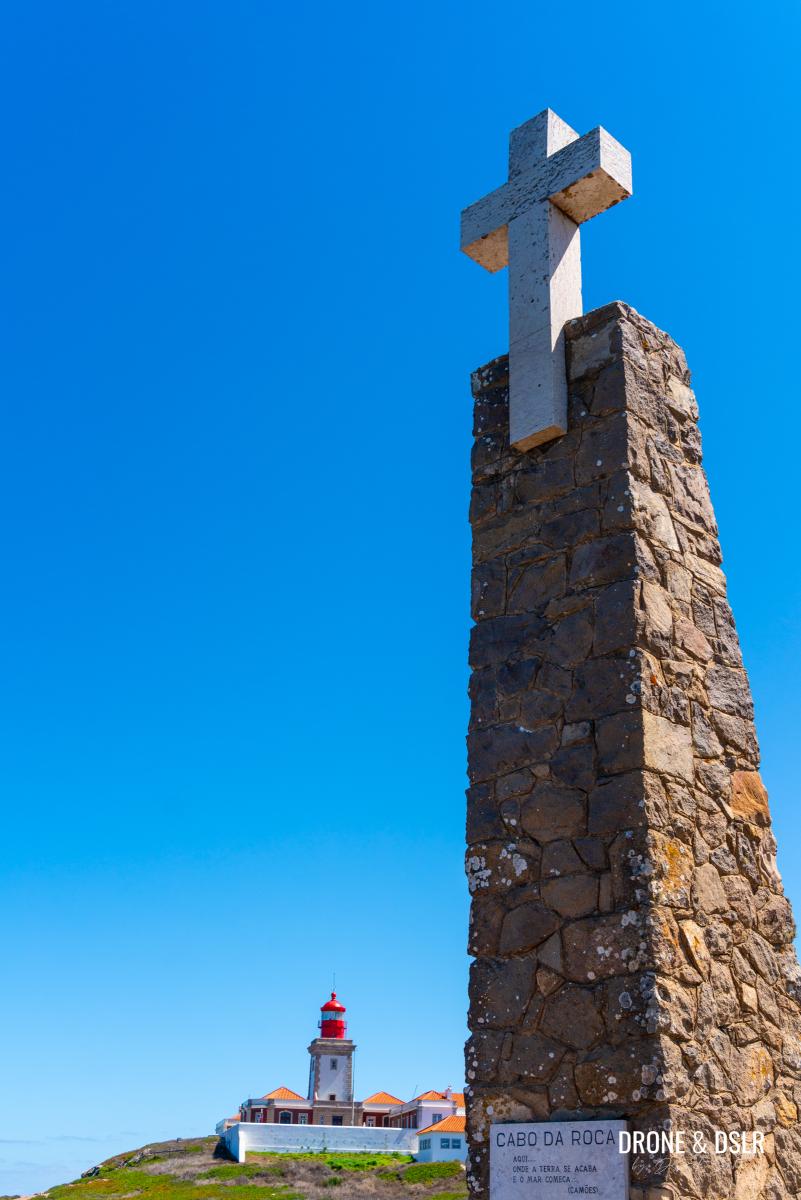
Cabo da Roca and the lighthouse
Could you squeeze more out of Sintra by joining an organised tour? Possibly. But if you’d rather explore at your own pace and truly make the most of everything this town has to offer, we’d strongly recommend spending at least one night and hiring a car.
Things To Do In Sintra
With that said, let’s jump into all the attractions and things to do that make Sintra an incredible destination.
Visit The Park and National Palace of Pena (Palácio Nacional da Pena)
Perched high above the town of Sintra on one of the highest peaks of the Serra de Sintra, is the National Palace of Pena, perhaps the most popular attraction in Portugal.
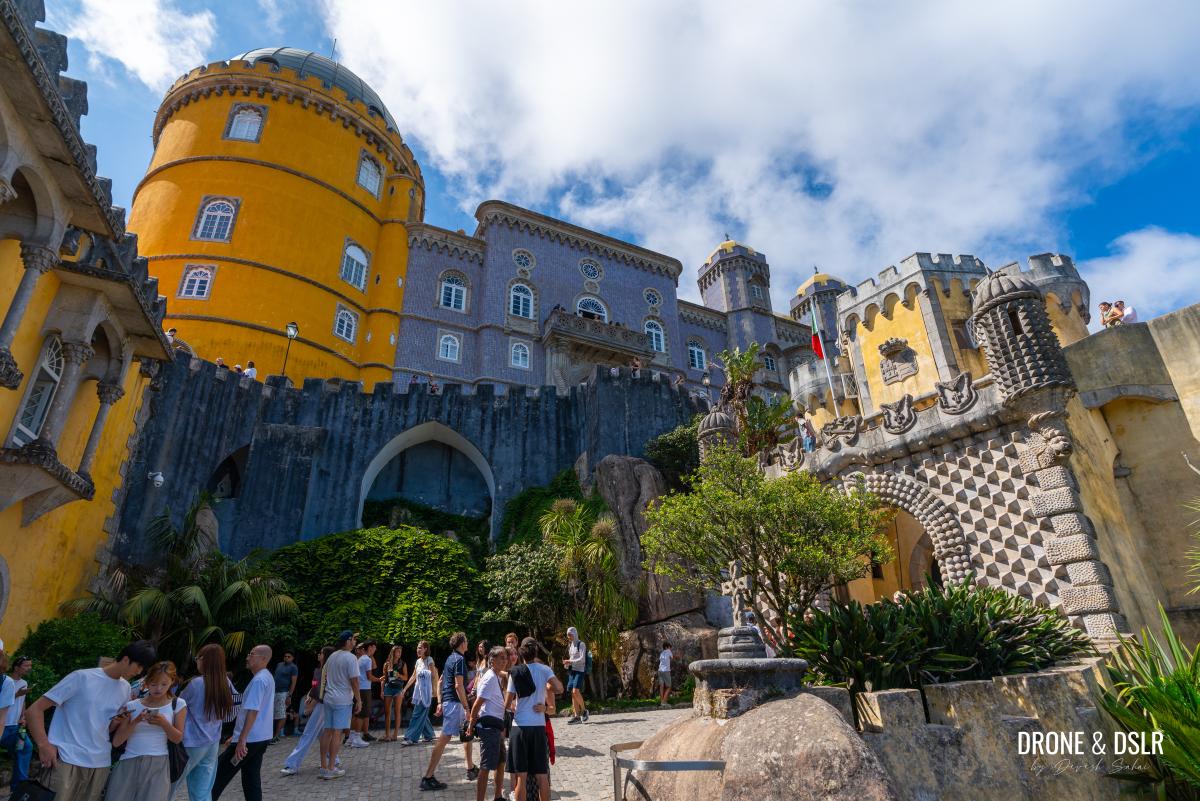
The gorgeous National Palace of Pena
This might be a hot take, but while at the palace, I found myself comparing it to the Neuschwanstein Castle and honestly felt that the Pena Palace is more beautiful and striking!
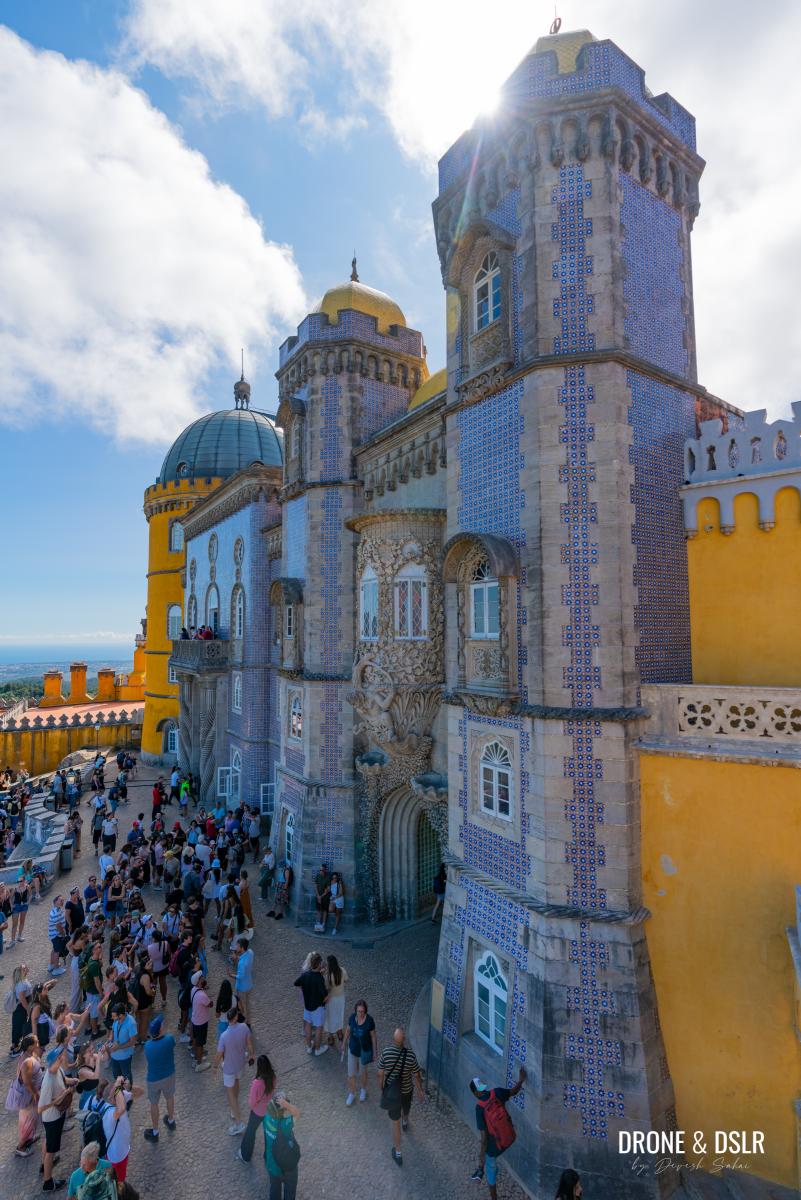
The magnificent National Palace of Pena in Sintra
Sure, Neuschwanstein Castle is iconic in more ways than one, the fact that it’s inducted into popular culture thanks to Disney is one of the reasons for its popularity. And not to mention its location – at the base of the Alps, with a waterfall in the background, and lush plains in the foreground – is too beautiful for words.
-
- Hot take – this palace is prettier than the Neuschwanstein Castle
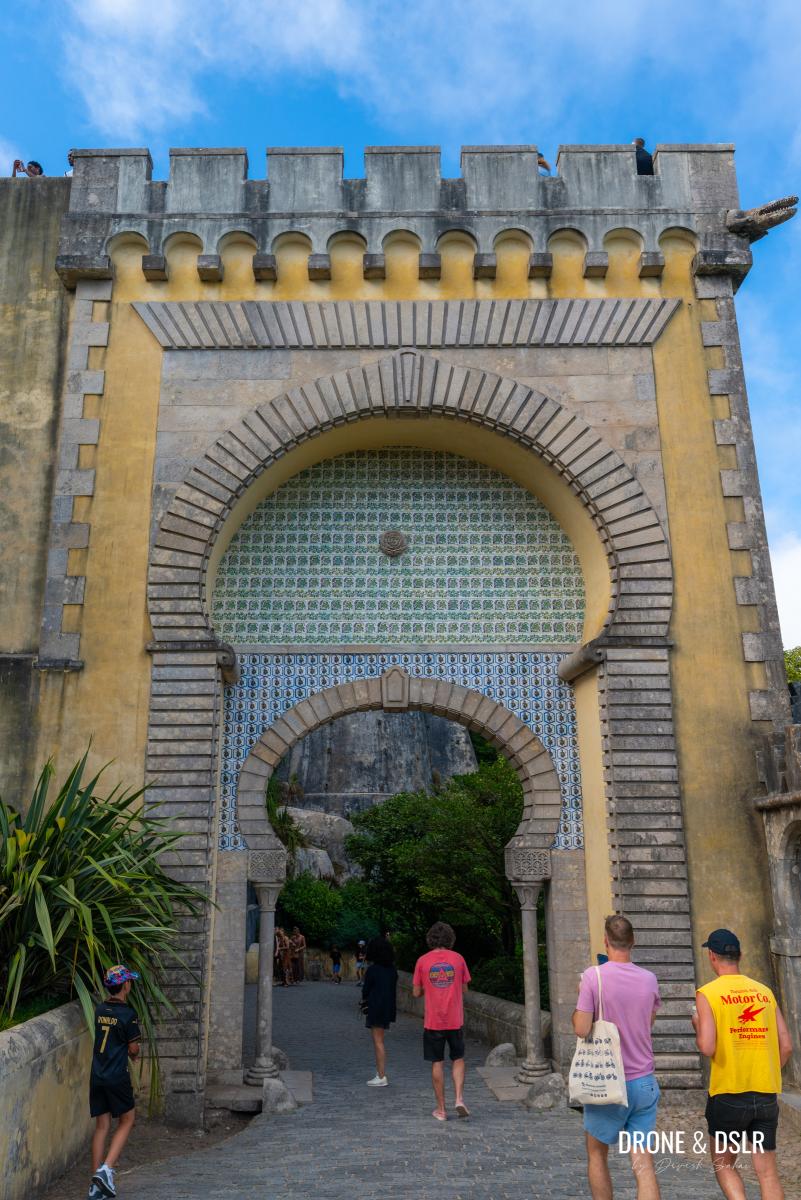
-
- The Arabic gates at the Pena Palace
-
- The Moorish influences aren’t just limited to the arches, but also these minarets at the Pena Palace
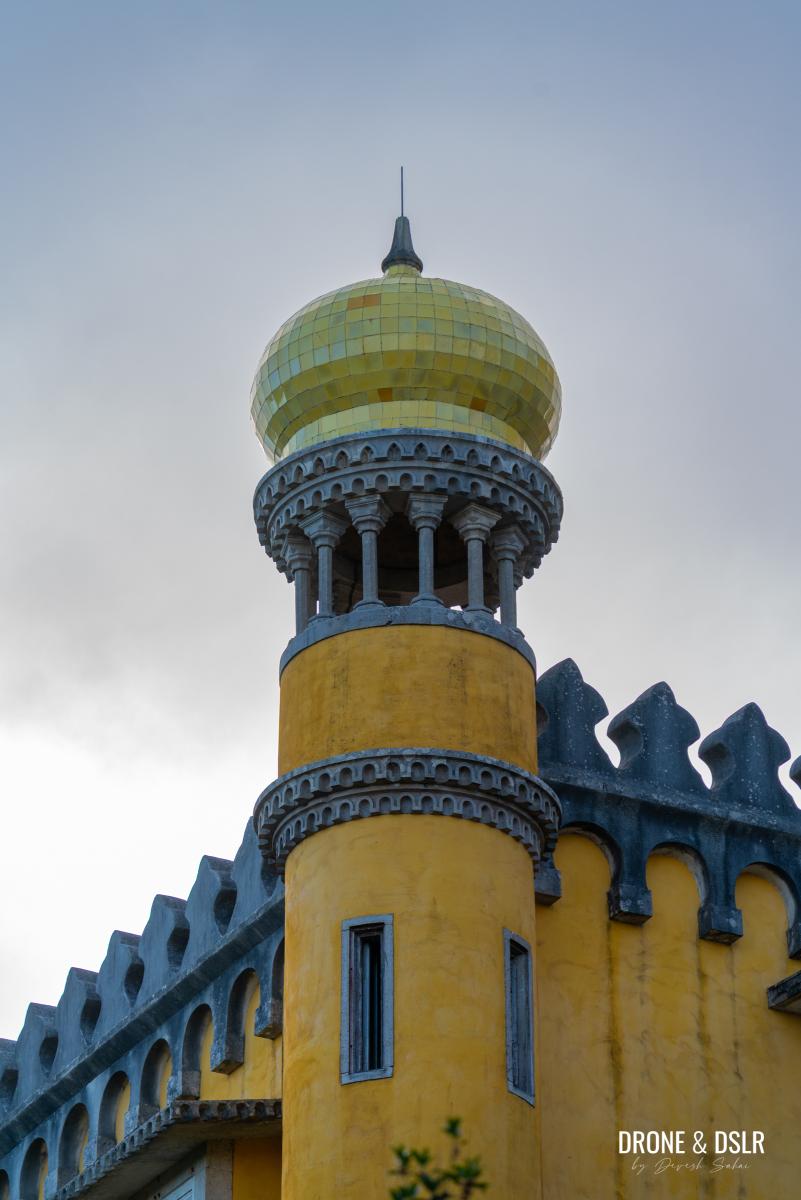
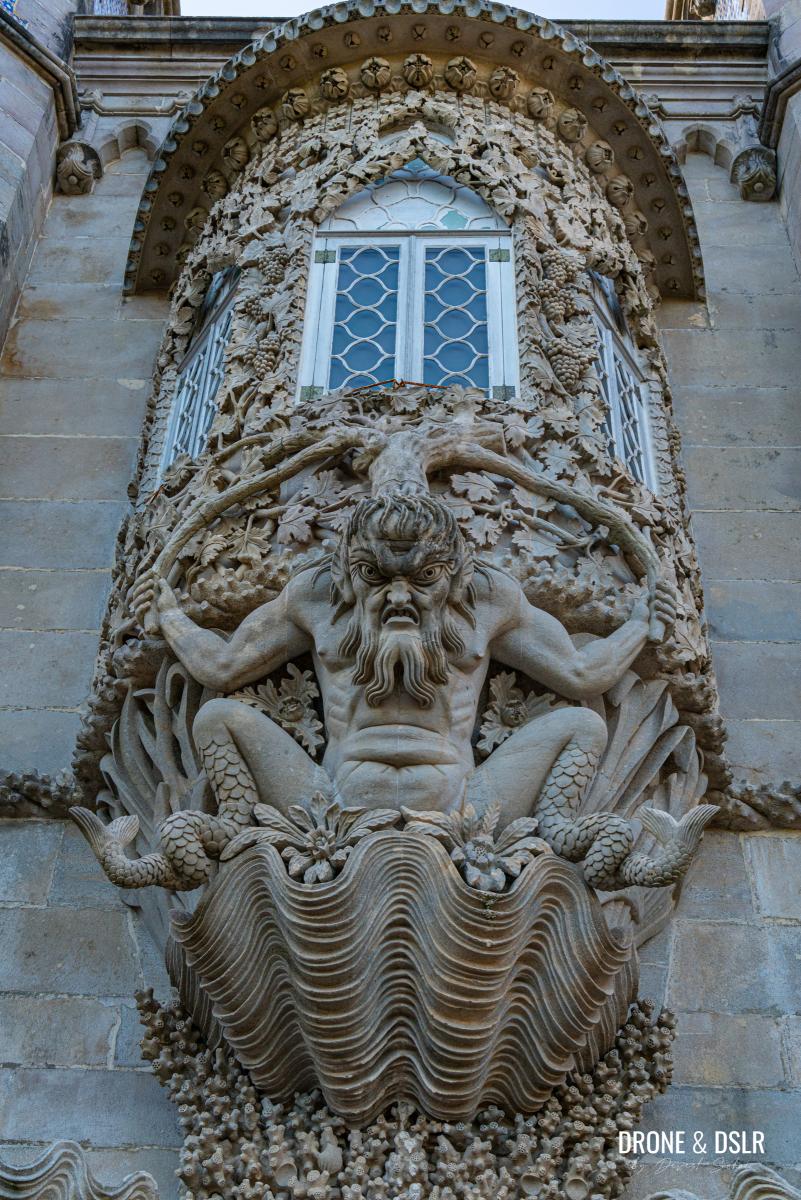
But pound for pound, if you put both castles together, I think the National Palace of Pena is more captivating. For one, the colours and intricate detailing on the walls are gorgeous! In contrast, the Neuschwanstein Castle feels bland up close.
-
- The Triton Sculpture became our favourite work of art at the National Palace of Pena
-
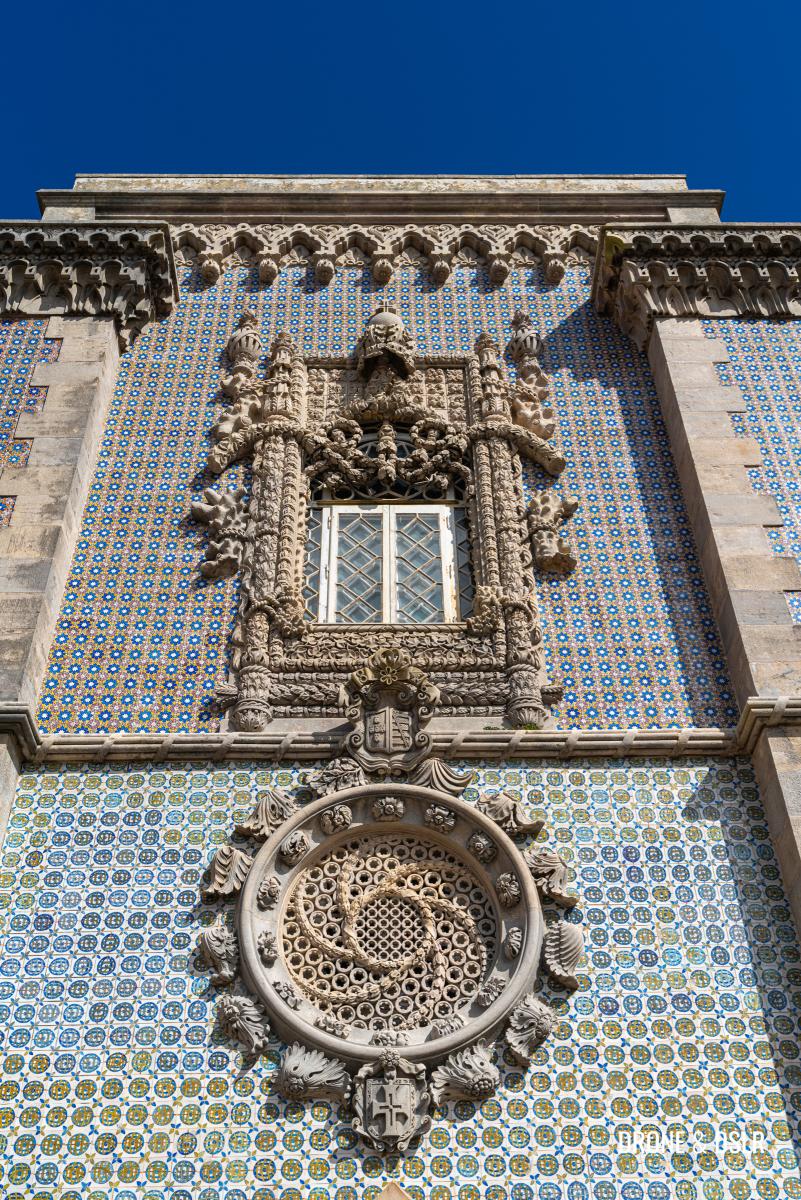
- The closer you look at the National Palace of Pena, the more you admire it
-
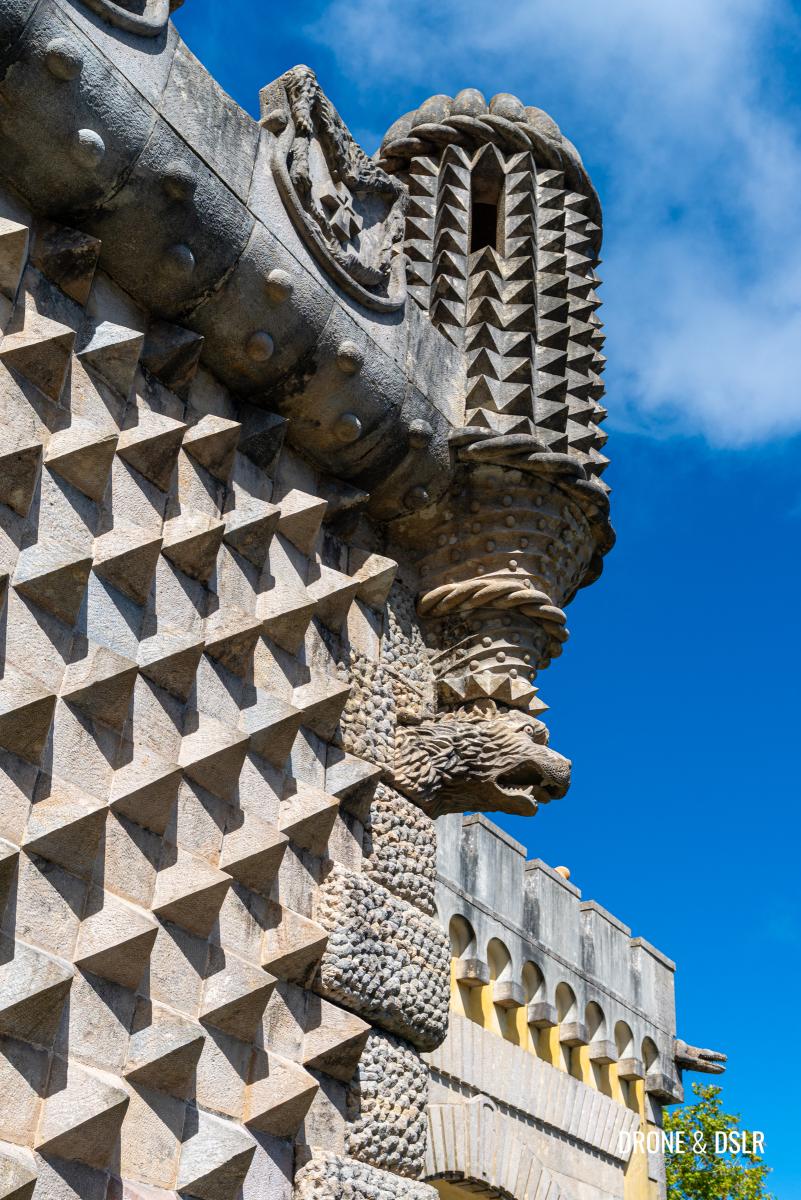
- Look at that intricate work on the National Palace of Pena
-
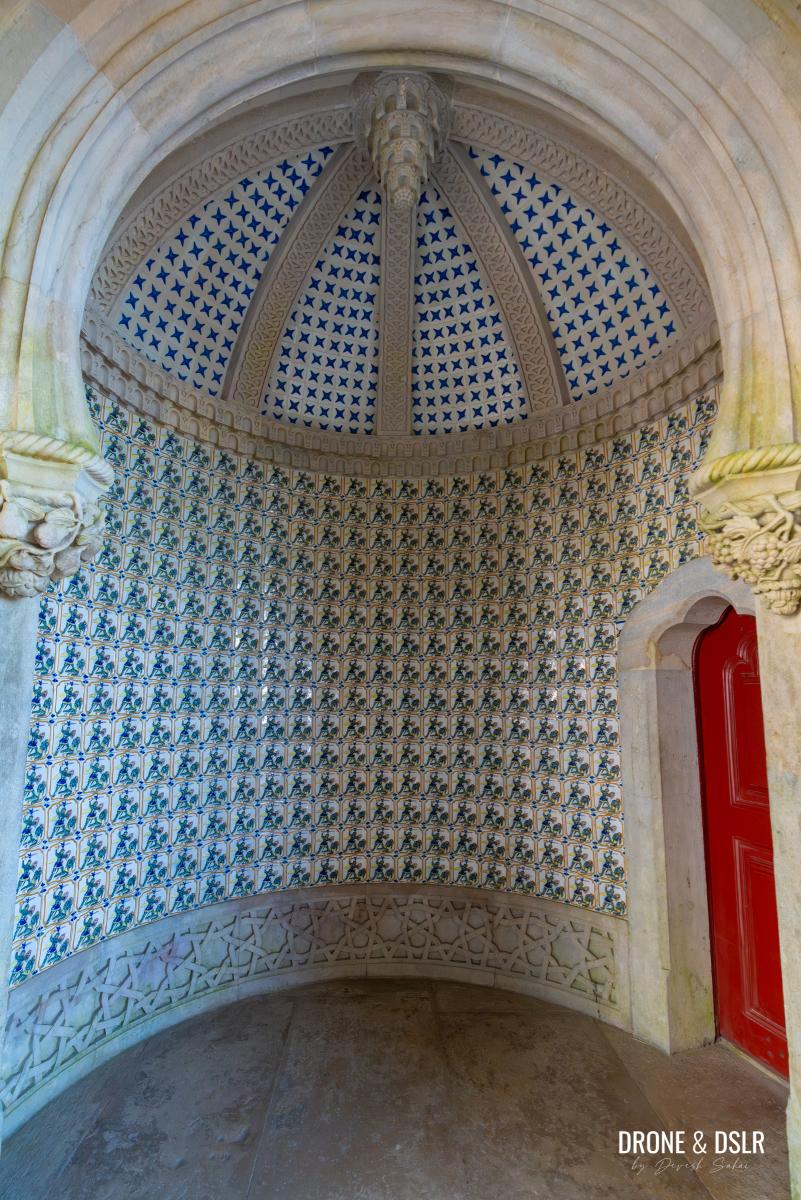
- Intricate tilework inside the National Palace of Pena
-
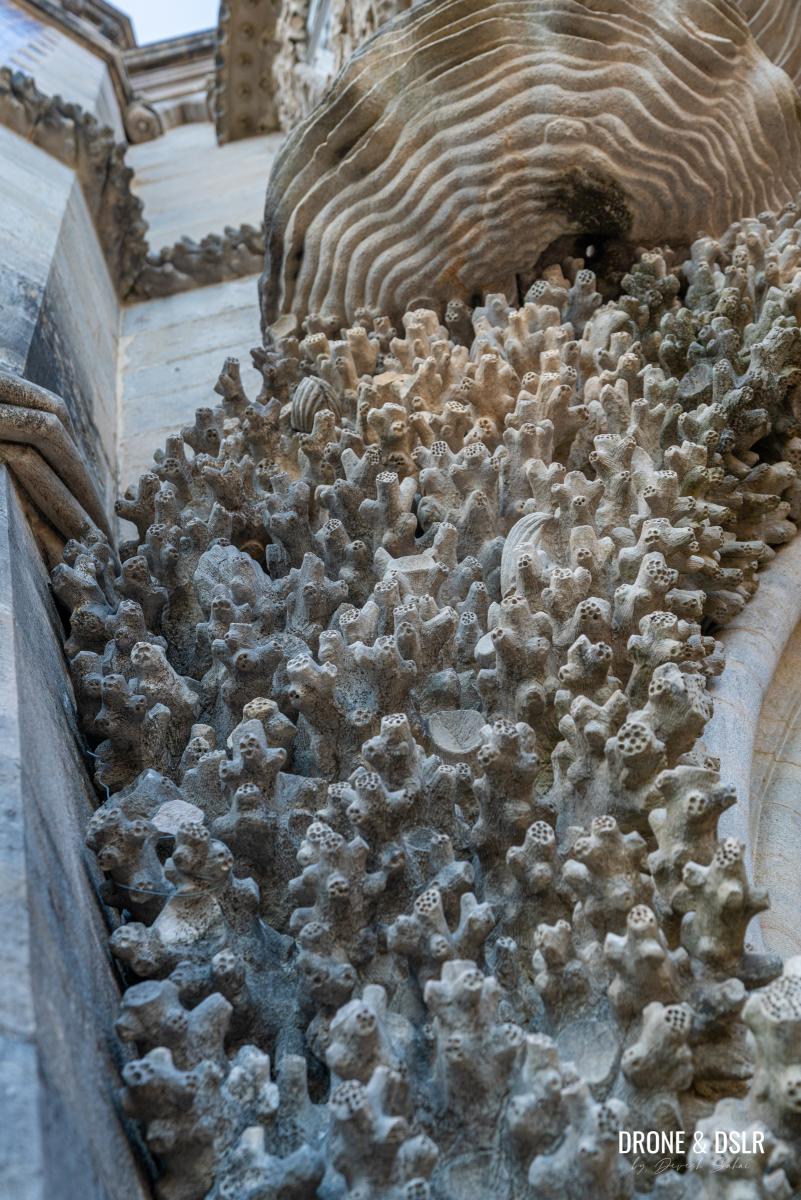
- Look at the corals coming out of the walls at the National Palace of Pena
Also, unlike Neuschwanstein Castle, this is a palace that was once occupied. So, there are plenty of interesting artifacts inside it. And once you enter, you’re left to your own devices, free to roam around and take pictures. Which isn’t the case with the Neuschwanstein Castle.
-
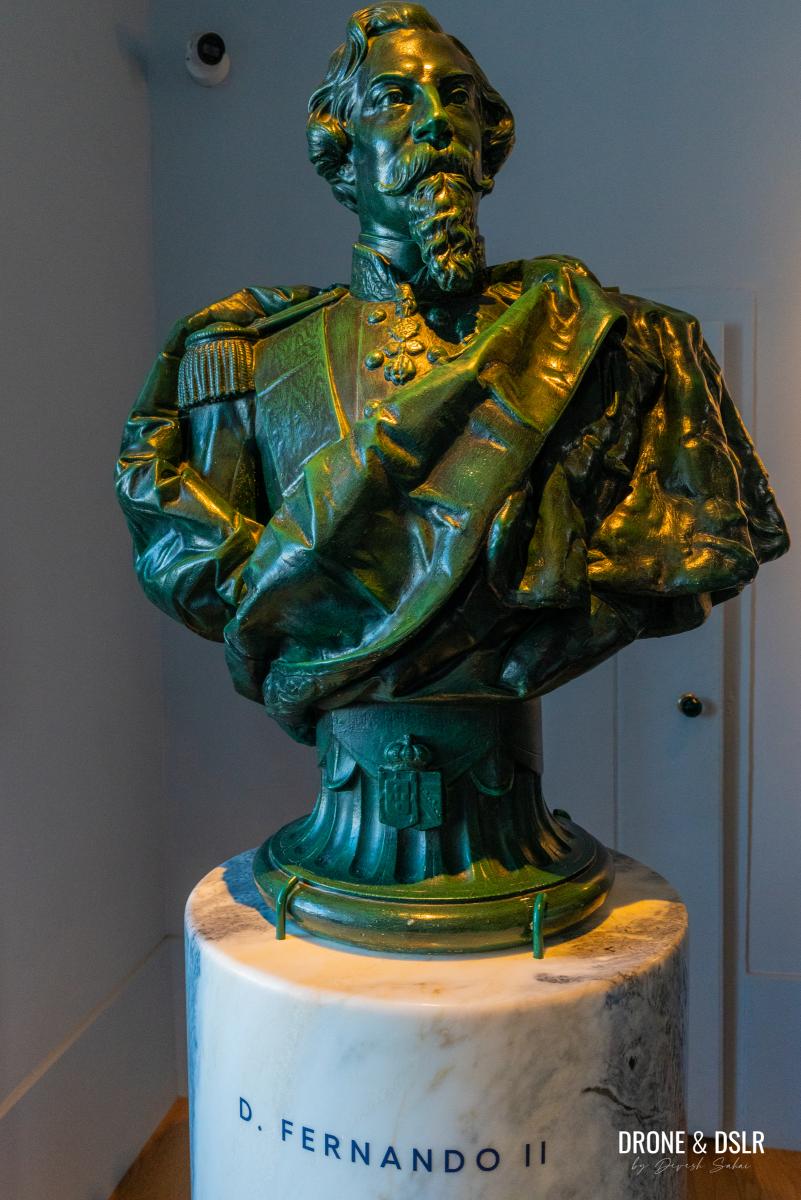
- The man who lived in the Pena Palace – King Ferdinand II
-
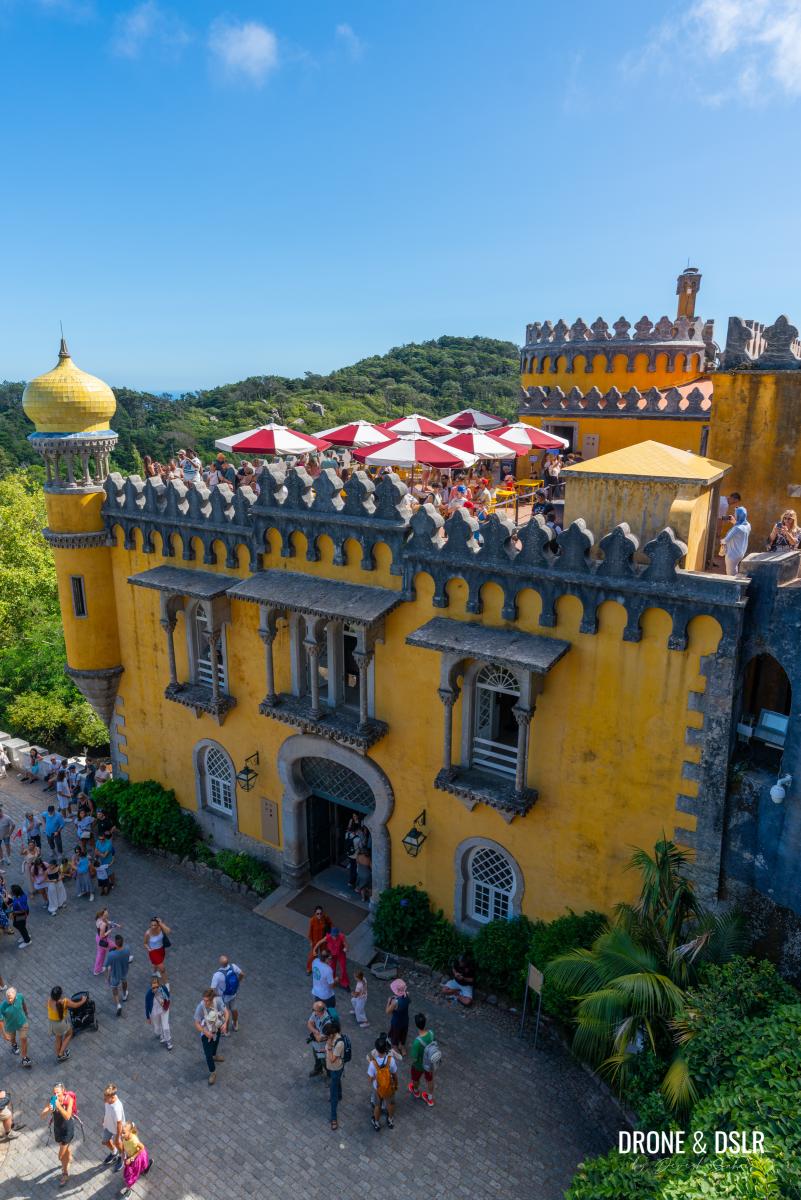
- The café at the National Palace of Pena
-
- Take your time exploring the area inside the Pena Palace
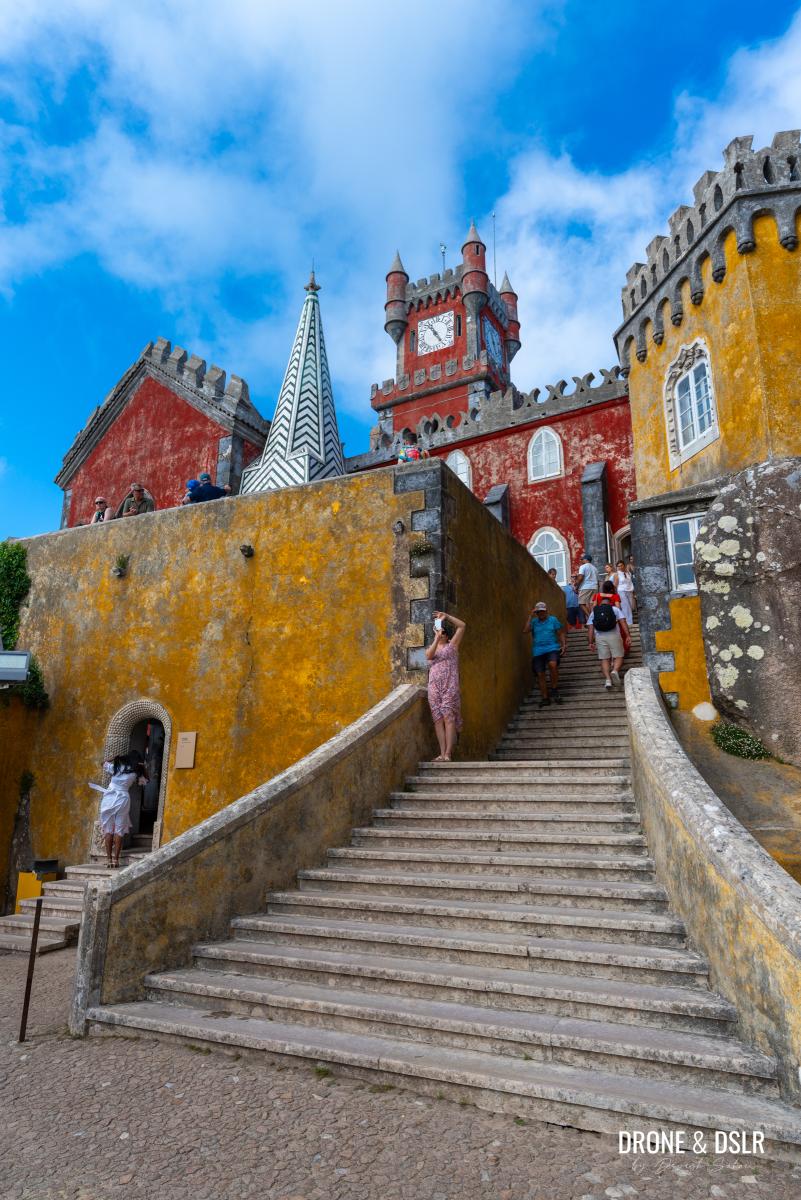
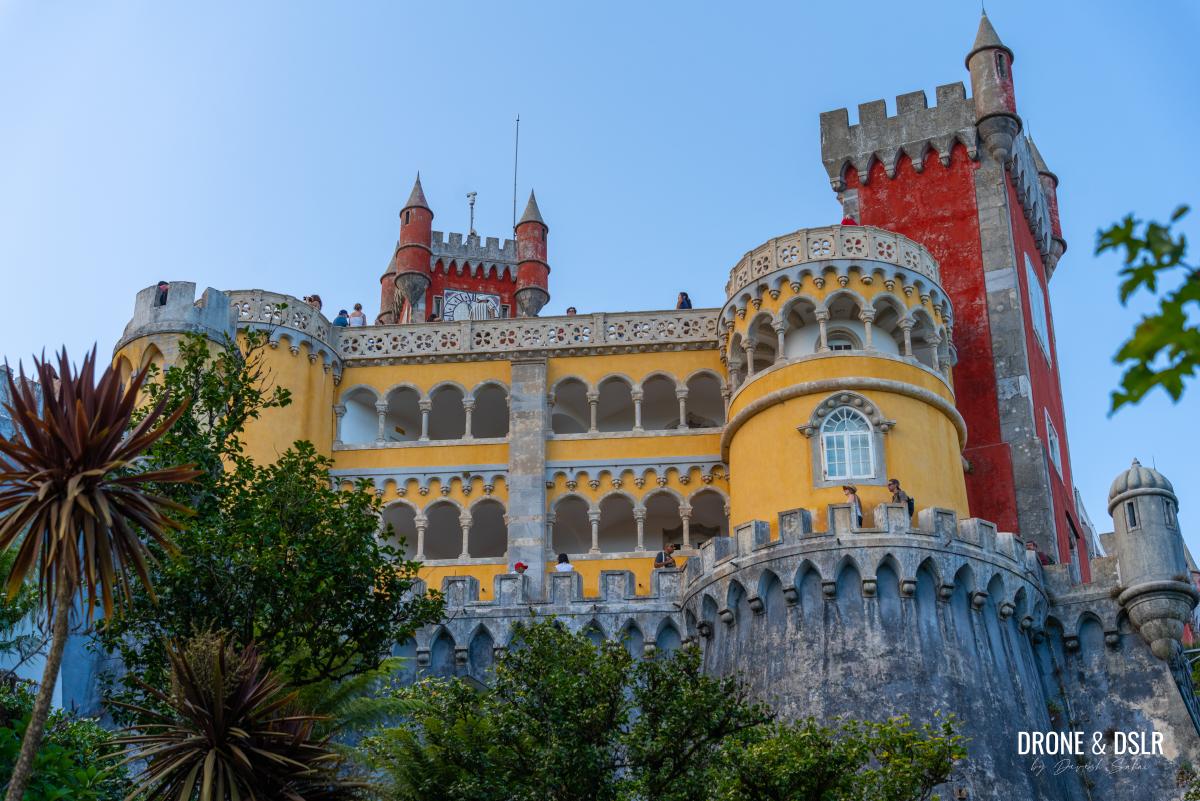
Comparisons aside, the National Palace of Pena is arguably Portugal’s most iconic landmark. The palace is honestly an explosion of colour. Its vivid yellow and red turrets emerge from the surrounding green forest, and is visible for miles.
-
- National Palace of Pena is just exquisite
-
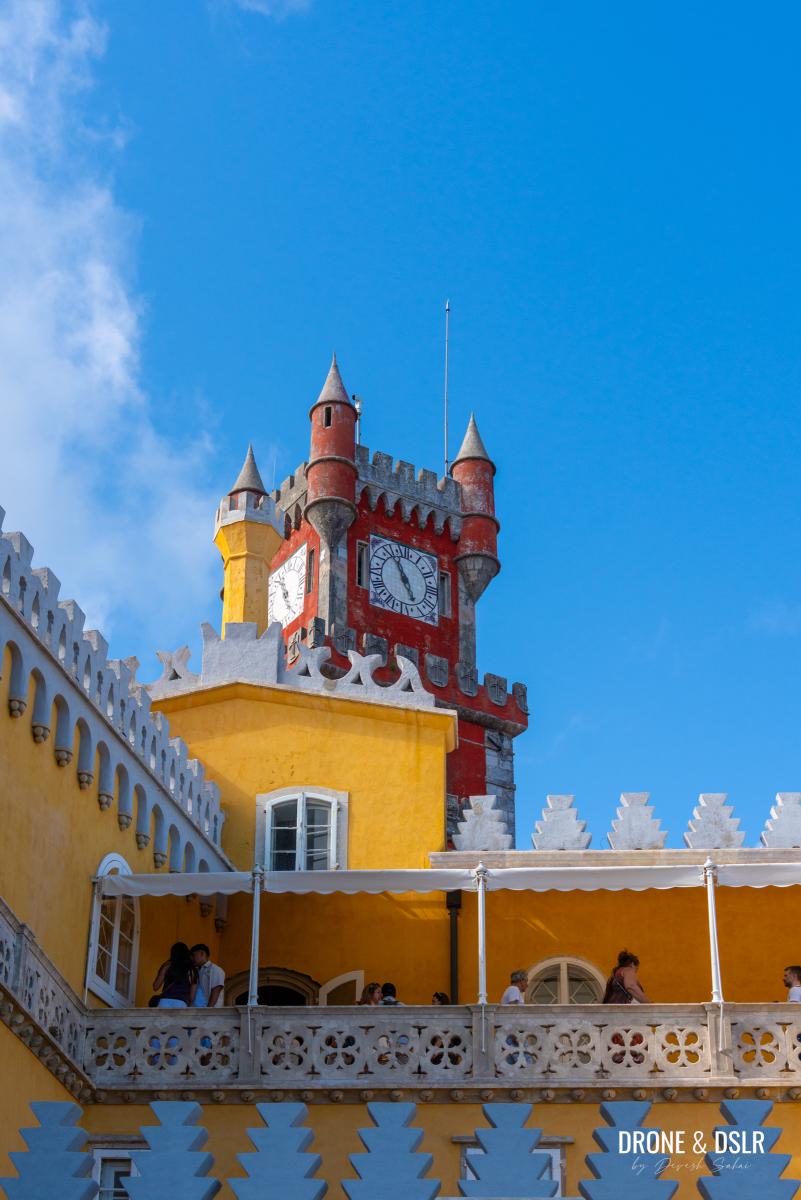
- The red rising clock tower
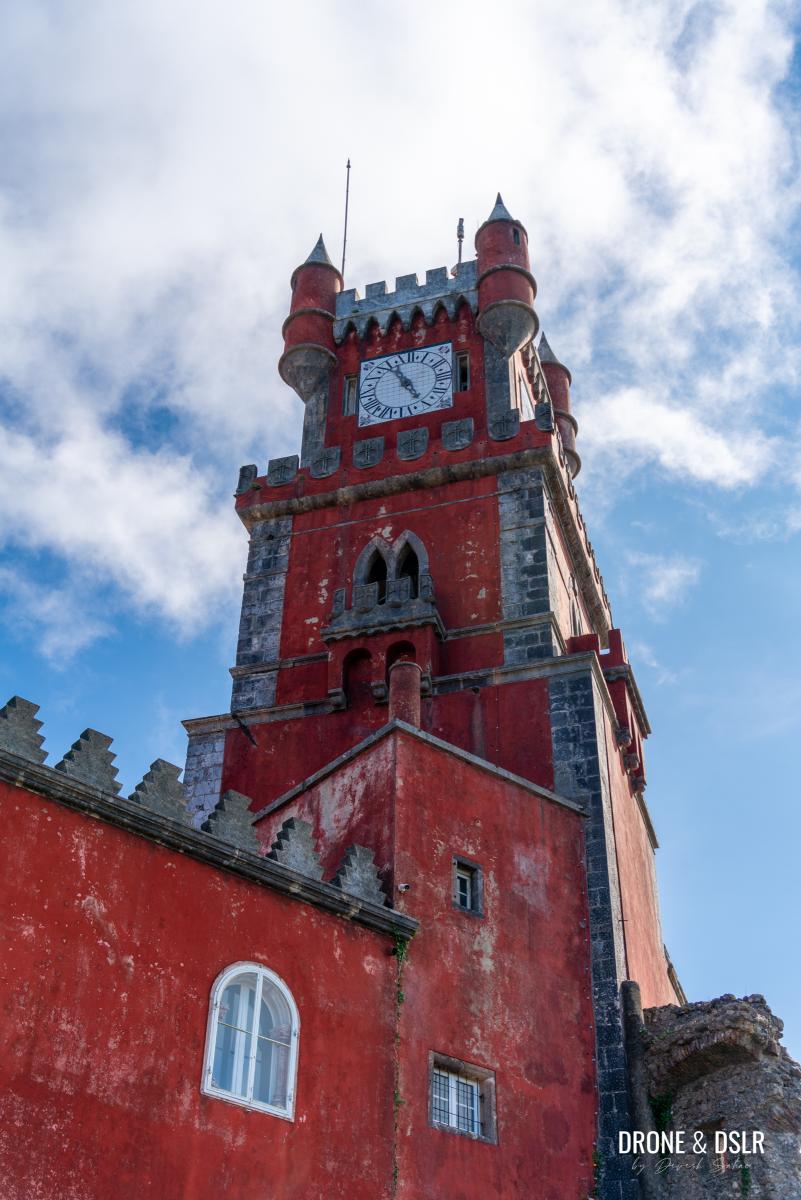
Built in the 19th century under the orders of King Ferdinand II, it’s blend of architectural styles from Romanesque, Gothic, and Moorish. The resulting structure looks as though it was lifted straight from a fairy tale!
-
- The Moorish influences are very apparent at the Pena Palace
-
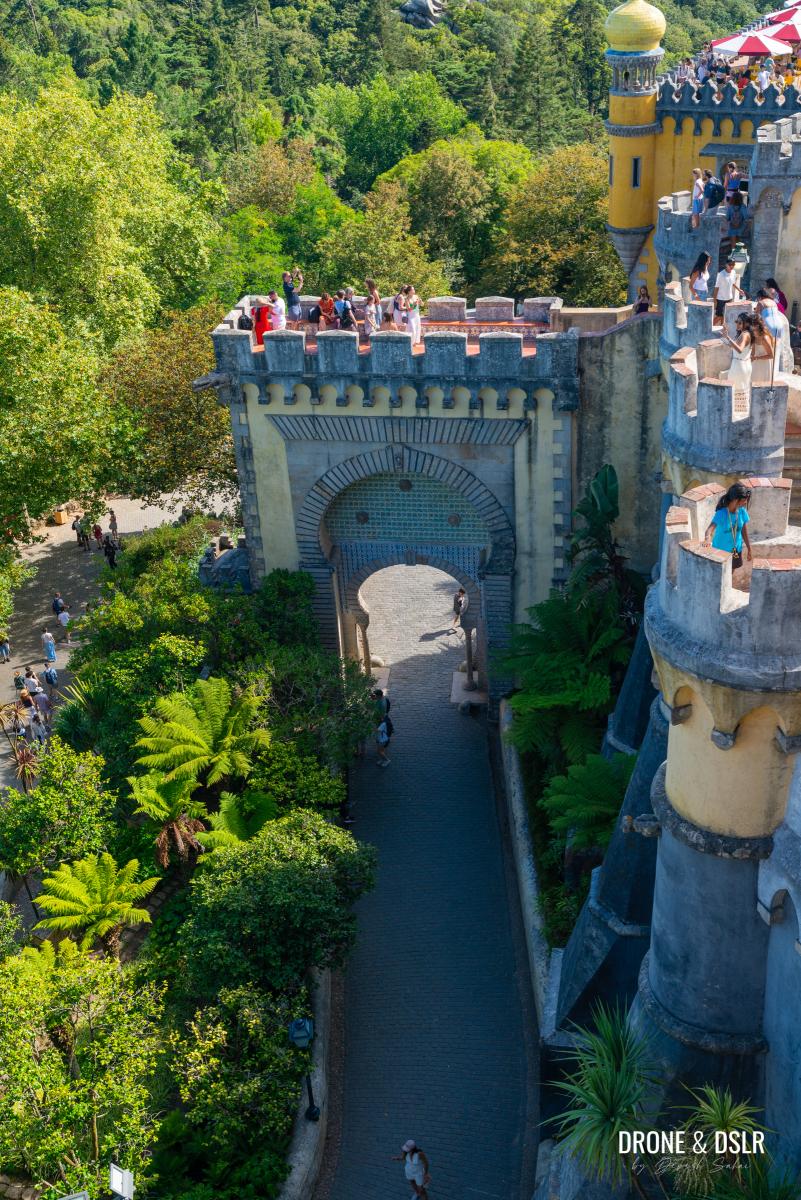
- Pena Palace as you enter
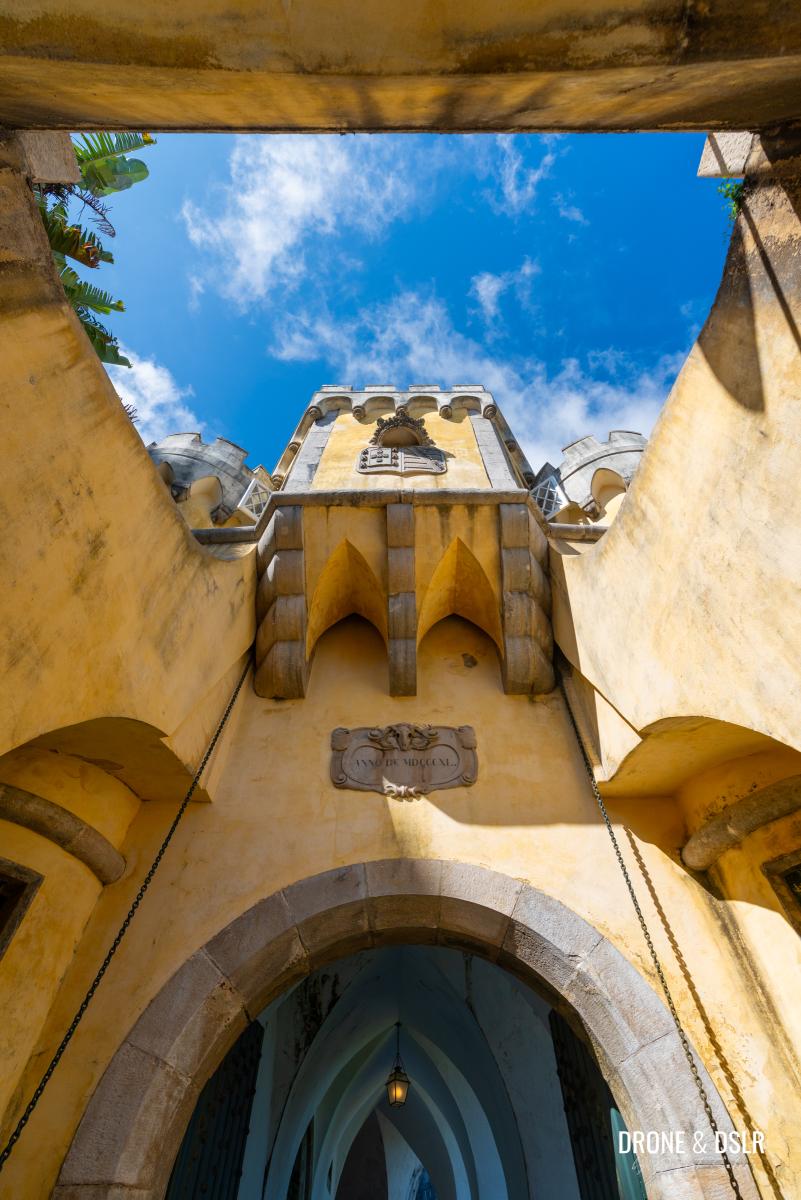
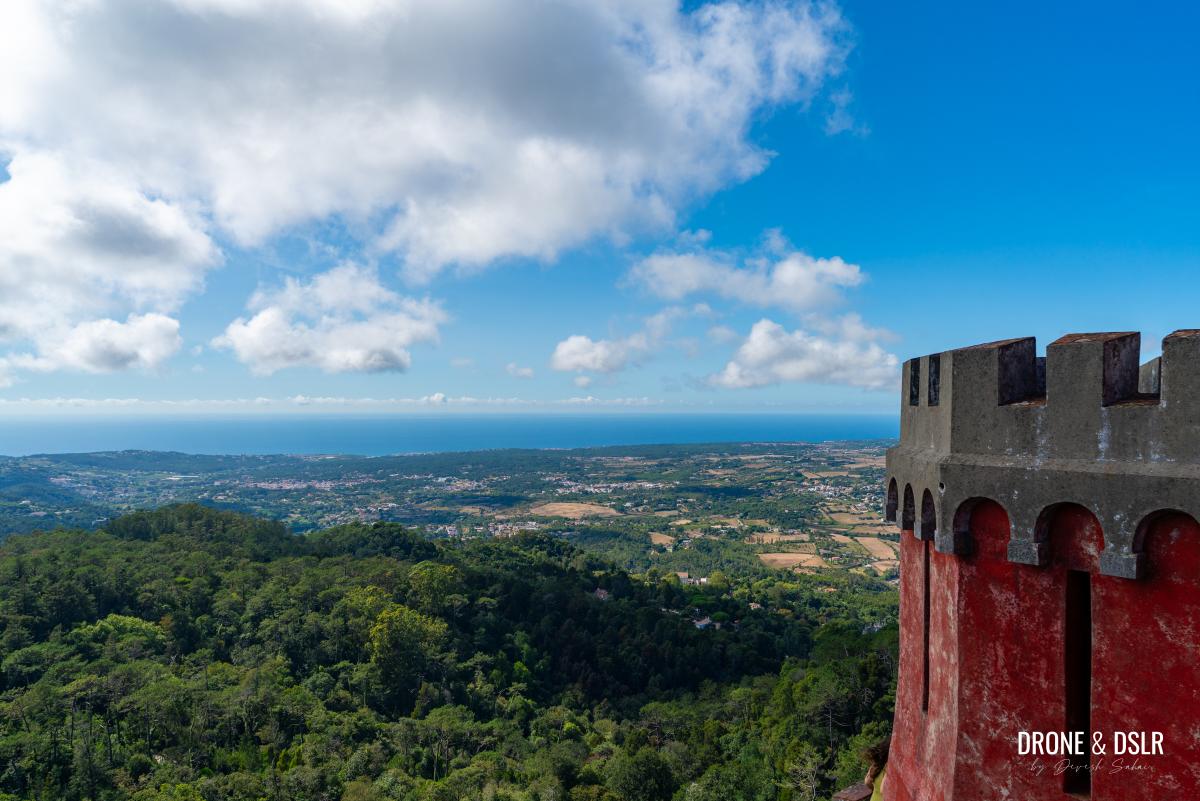
Take your time exploring inside the palace, and walk along its outer walls for stunning panoramic views.
-
- The part of the Pena Palace for those who weren’t invited all the way inside
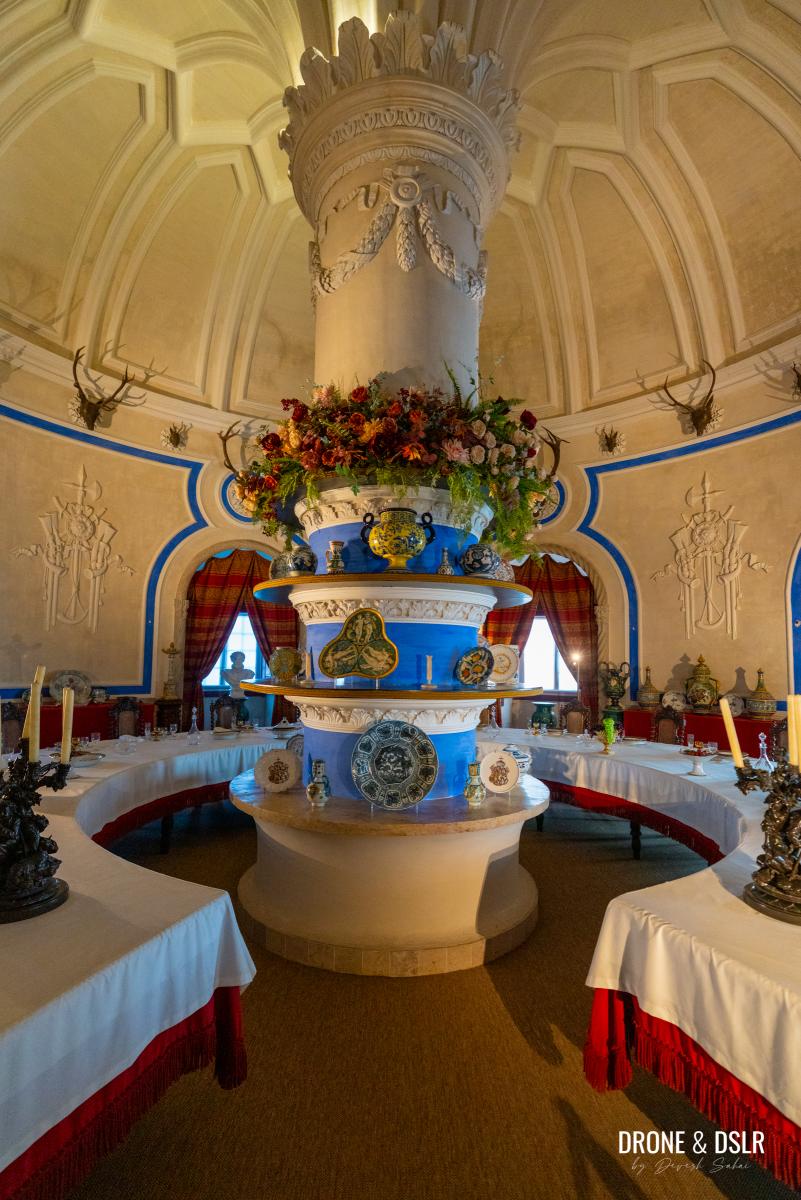
-
- The main living quarters inside the National Palace of Pena
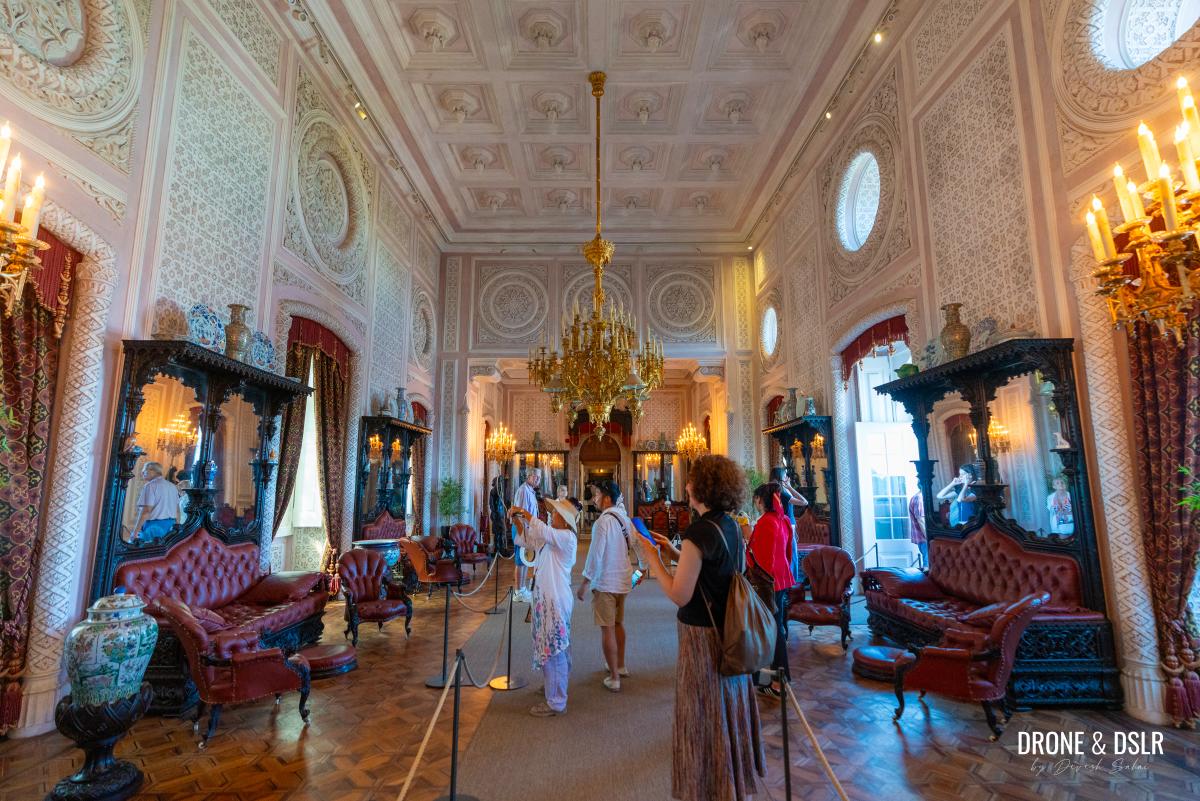
-
- The chapel inside the National Palace of Pena
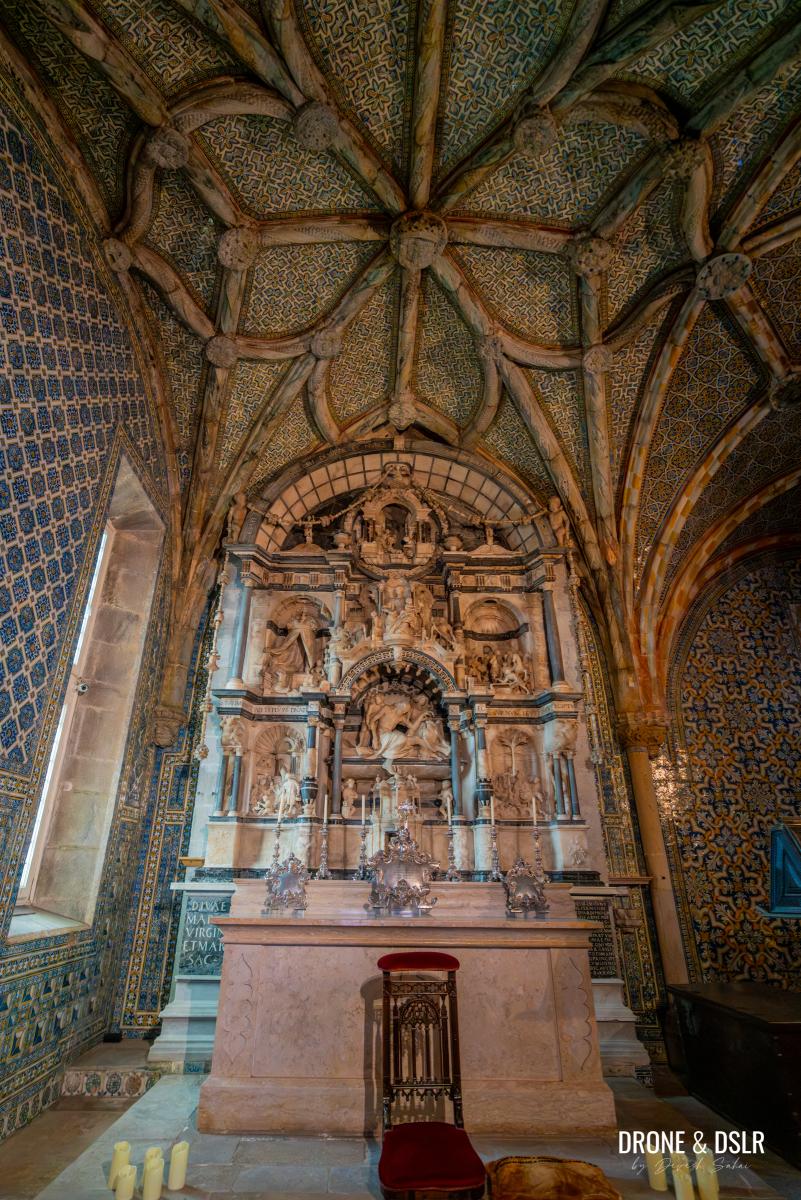
-
- Walk along the outer walls of the National Palace of Pena
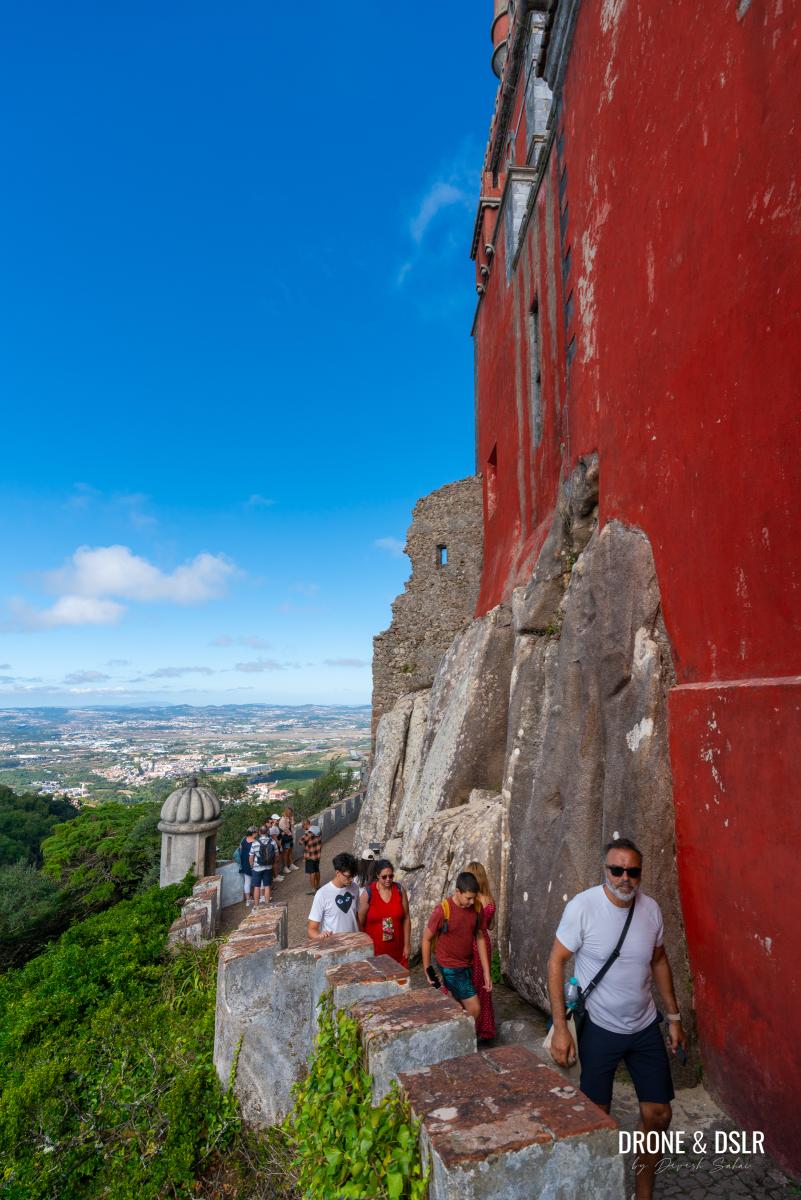
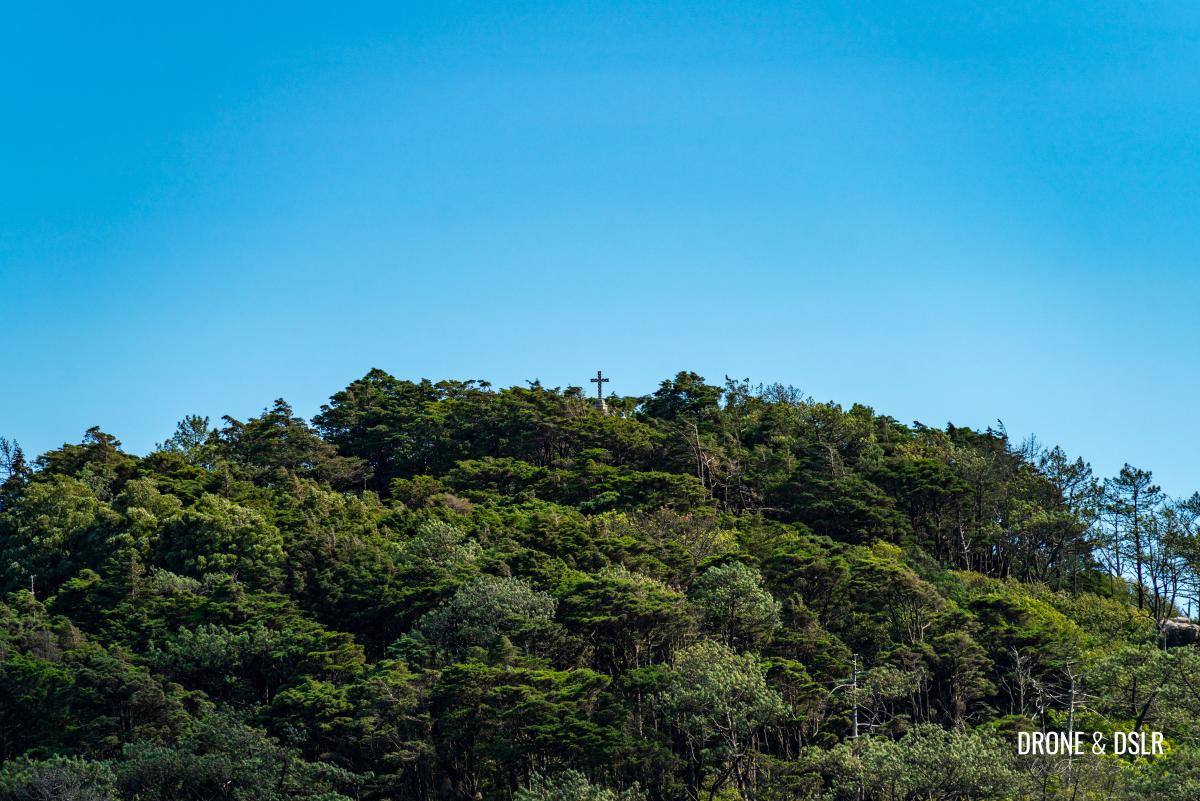
It’s also worth noting that the palace sits within the sprawling Park of Pena, a vast and beautiful landscape that is very much worth exploring beyond the palace walls. The park is home to a number of other fascinating sites, including the High Cross viewpoint, the Countess of Edla Chalet, a romantic retreat built for King Ferdinand II’s second wife, and a network of winding forest trails that lead to hidden statues, ponds, and viewpoints over the Serra de Sintra.
-
- The High Cross viewpoint is one of the more popular spots in Pena Park that visitors hike to
-
- Make sure you walk along the walls of the Pena Palace for these views
It’s a wonderful place to simply wander, but do come prepared – a few hours and a sturdy pair of walking shoes are essential. The terrain is hilly, the paths can be steep, and there is plenty to discover around every corner.
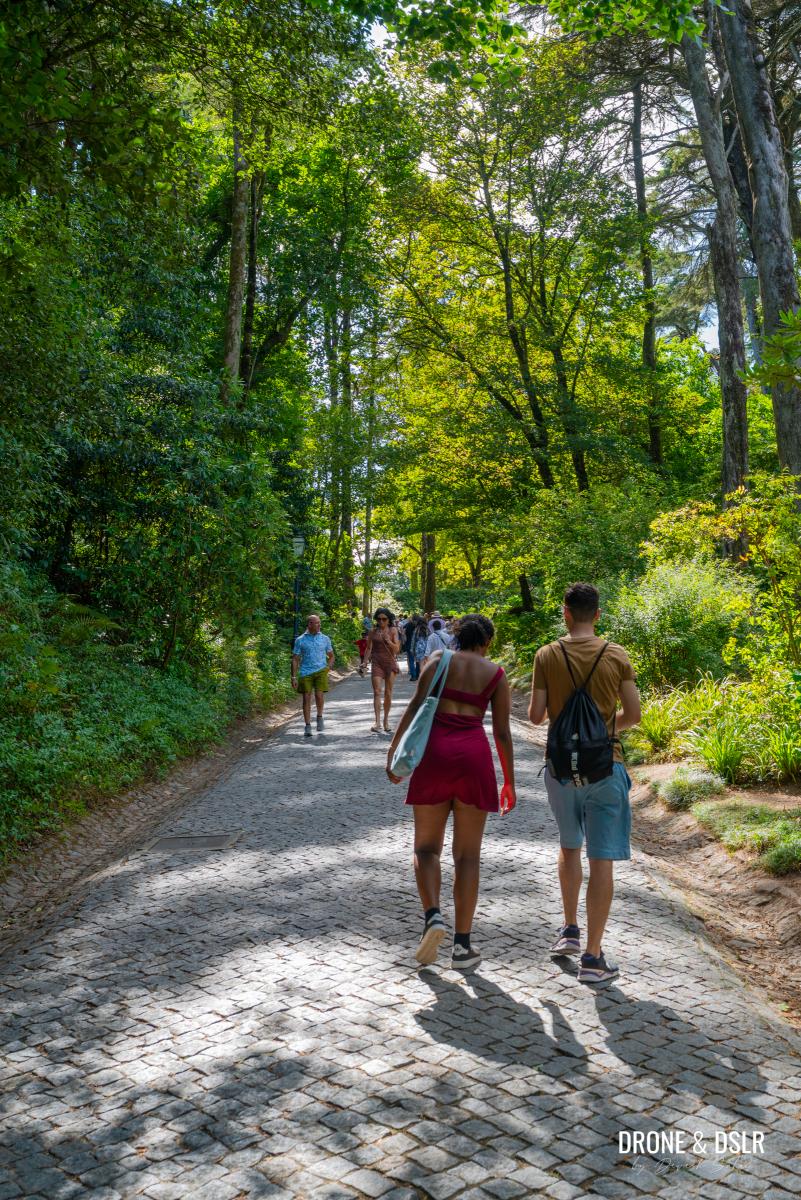
Come wearing comfortable attire if you plan to explore the Park of Pena
The road leading to the National Palace of Pena is long and winding. I do not recommend driving up to the palace, but instead taking a taxi or bus (434). But most importantly, book your ticket and time slot in advance.
Explore The Moorish Castle
Although the National Palace of Pena isn’t visible from Sintra old town, the Moorish Castle is.
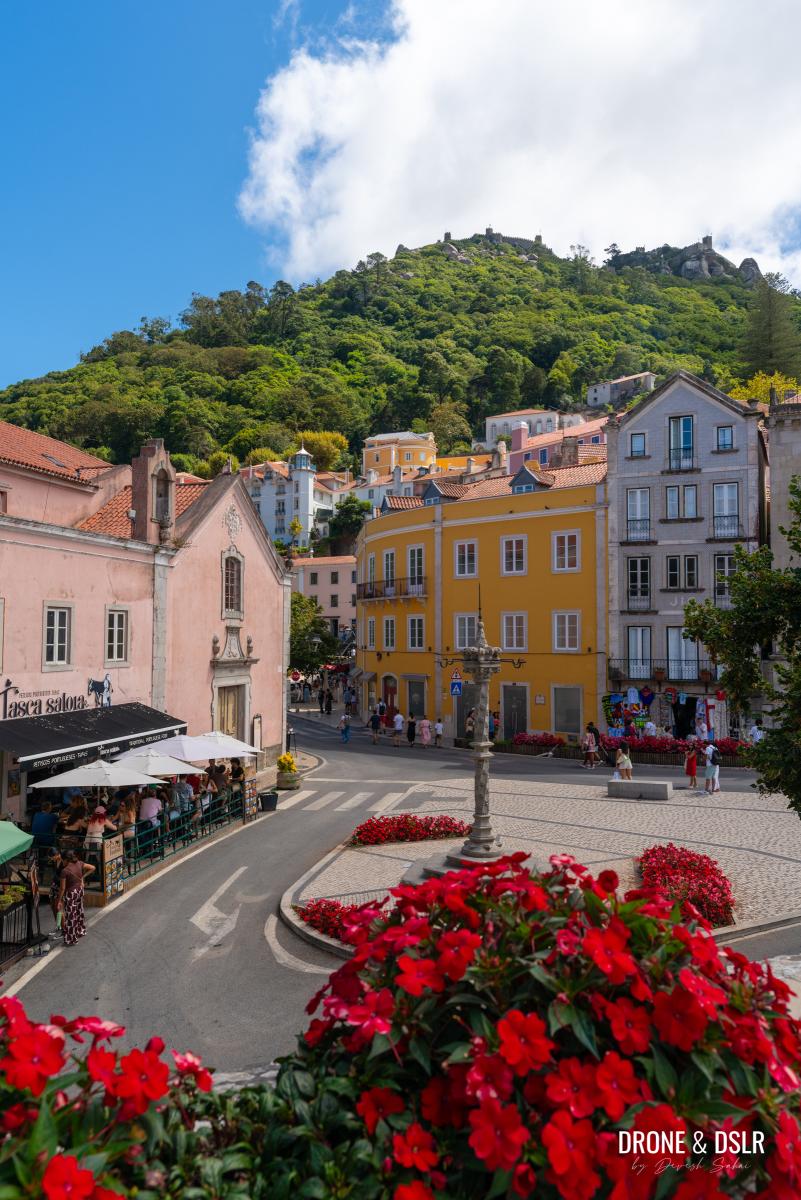
The old town in Sintra is a joy to explore (can you spot the Moorish Castle?)
Situated on the rocky hilltops of the Serra de Sintra, the Castelo dos Mouros is one of those places that is genuinely beautiful. Built by the Moors between the 8th and 9th centuries, this ancient fortification has stood watch over the surrounding landscape for over a thousand years.
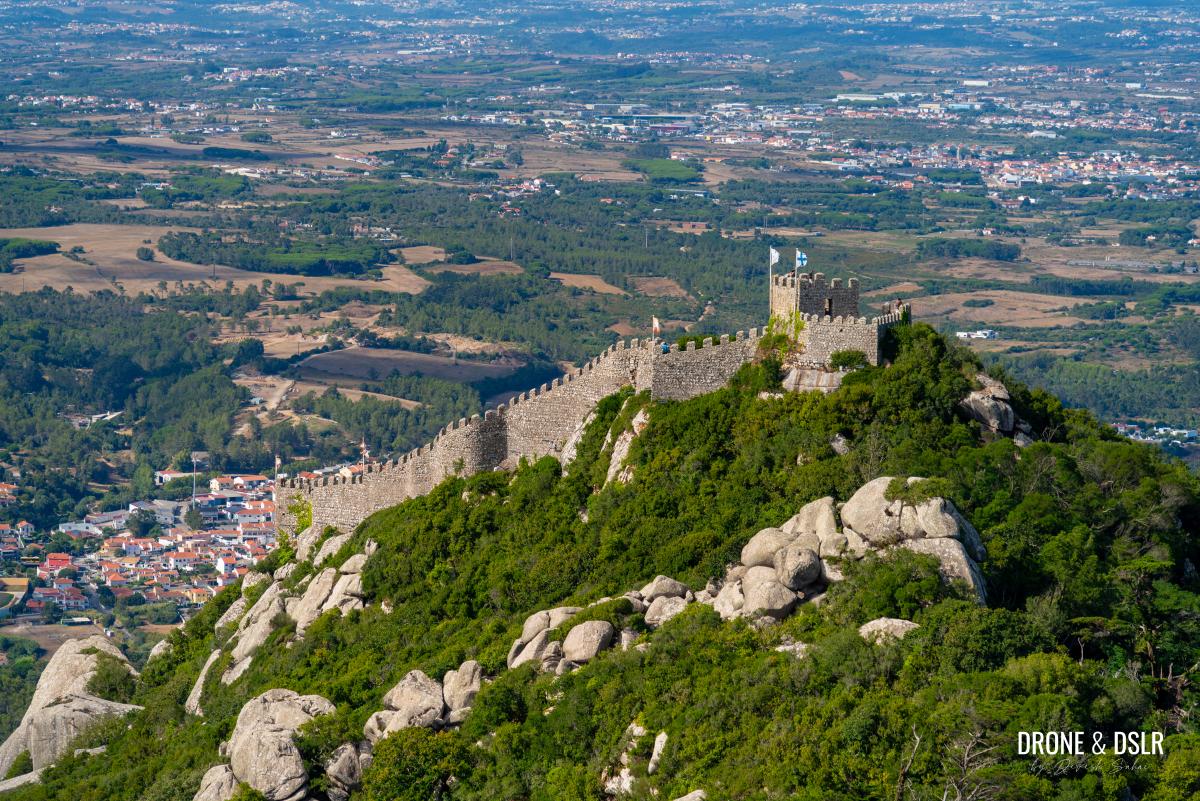
The Moorish Castle (Castelo dos Mouros) in Sintra
The castle walls themselves are the real highlight here. The Moorish Castle is an experience that is very much outdoors and on your feet. You’ll find yourself climbing steep stone steps, walking along narrow battlements, and pausing at watchtowers to take in some spectacular views.
Once again, make sure to book your tickets in advance and take the bus (434) to avoid any issues with parking and traffic.
Walk Around The Old Town
I’ll admit I have a soft spot for mountain towns. I’ve always found them cosy and comforting, especially on a cold winter’s night. Sintra’s old town is all of that, but with an added burst of colour that makes it truly delightful! And with the Moorish Castle perched dramatically on the hilltop in the background, the whole scene takes on an almost fairy-tale quality.
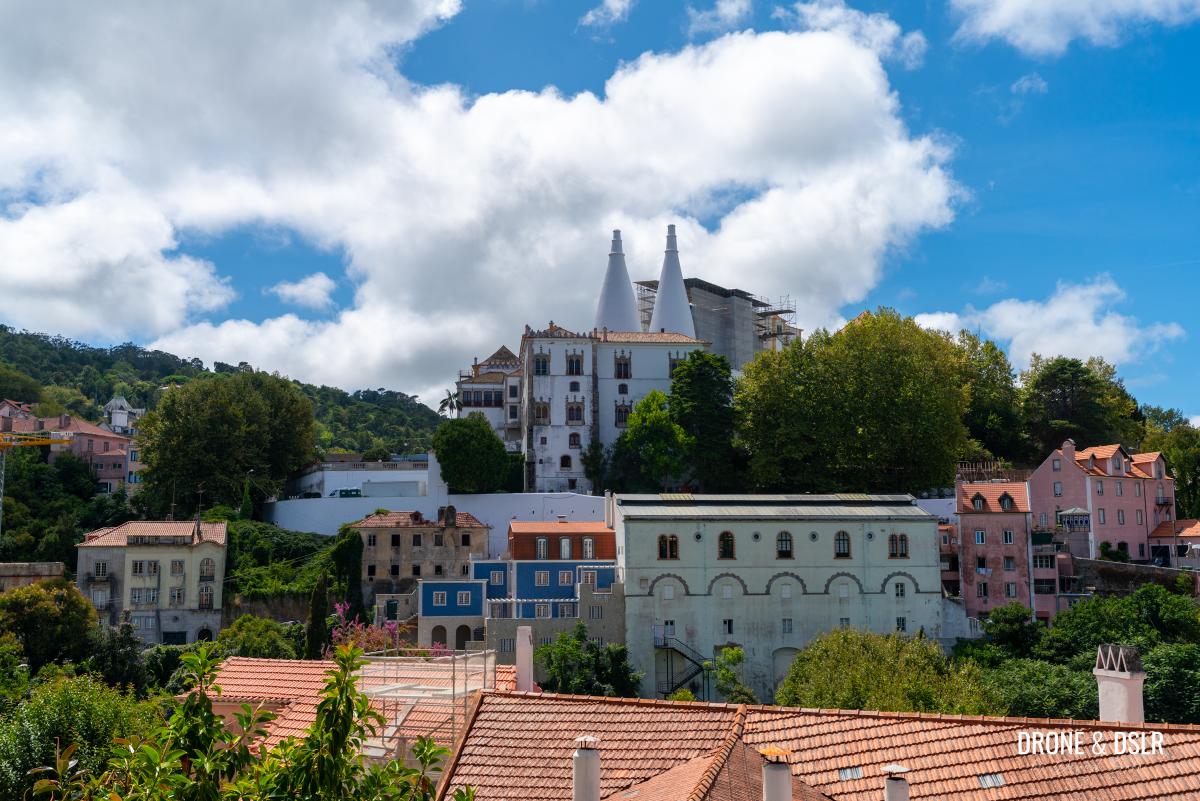
Sintra old town
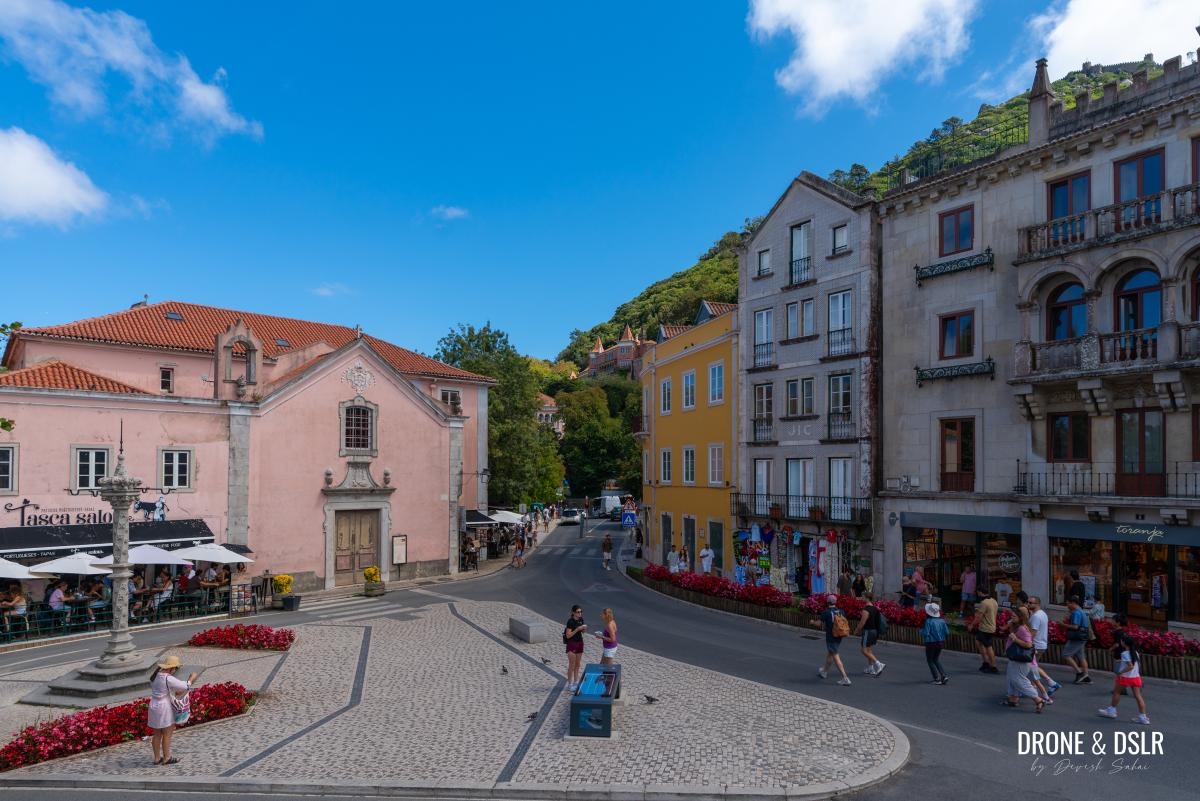
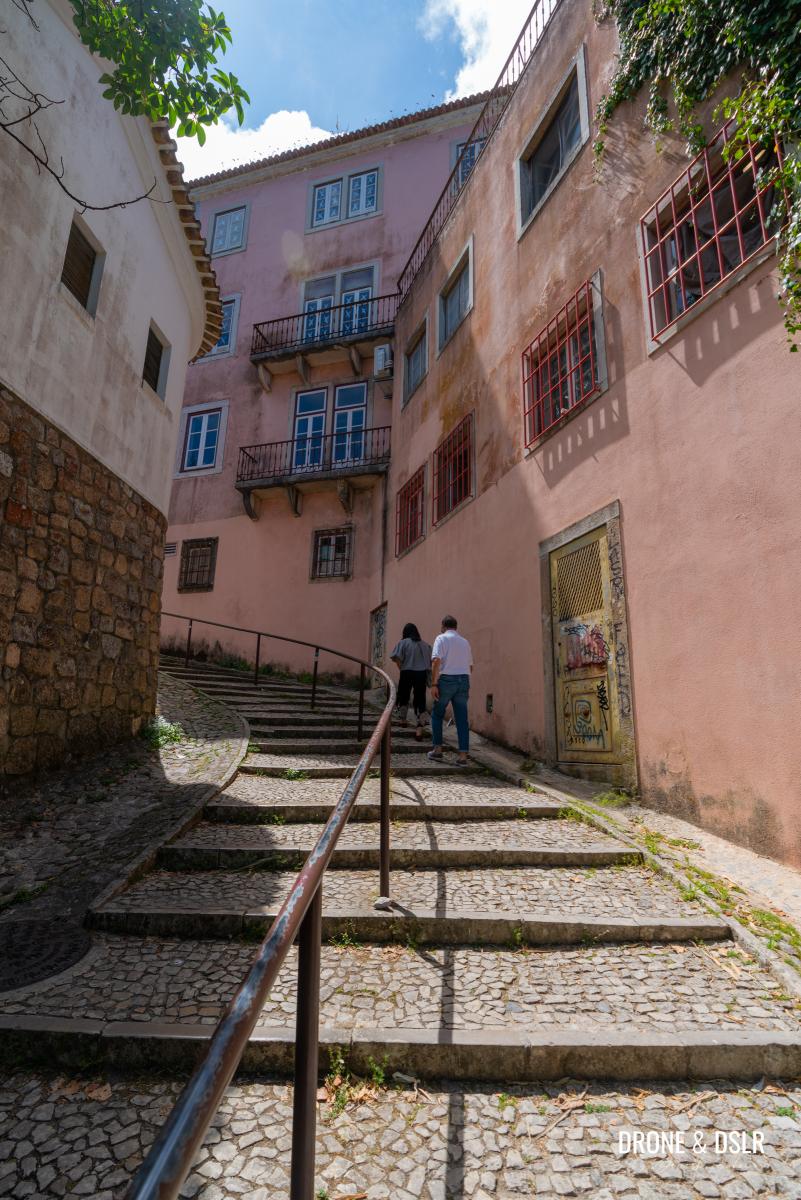
The town itself is home to a lovely mix of shops, restaurants, and the magnificent Sintra National Palace. The best way to experience it? Simply walk up and down the hillside and let yourself get lost in the alleys.
-
- The colours of Sintra old town
-
- Wandering the alleys of Sintra
-
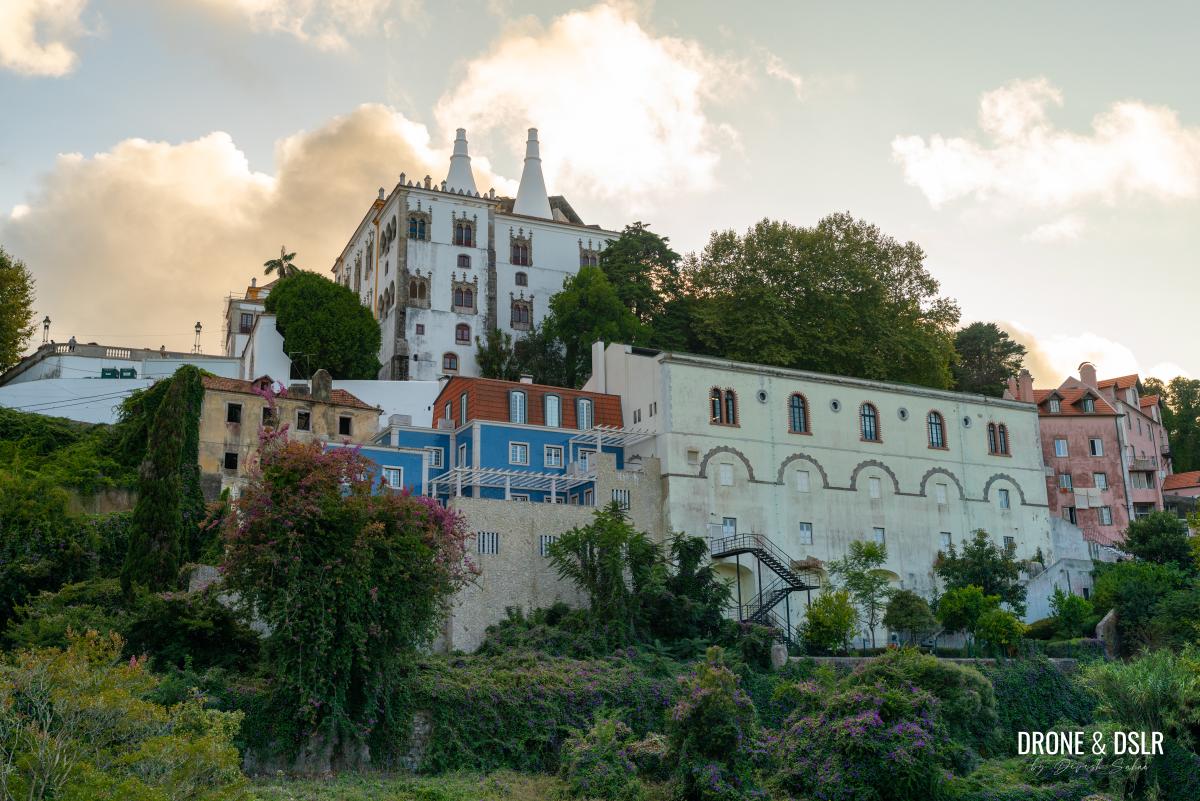
- Walking around Sintra in the evening
Step Into The Sintra National Palace (Palácio de Sintra)
Sintra isn’t home to one, not two, but three remarkable royal sites — the National Palace of Pena, the Moorish Castle, and the Sintra National Palace (also known as the Town Palace).
While Pena Palace steals the show, the Sintra National Palace holds its own as one of the oldest and best-preserved royal palace in all of Portugal. Its two distinctive white conical chimneys make it one of the most recognisable landmarks in the heart of the old town.
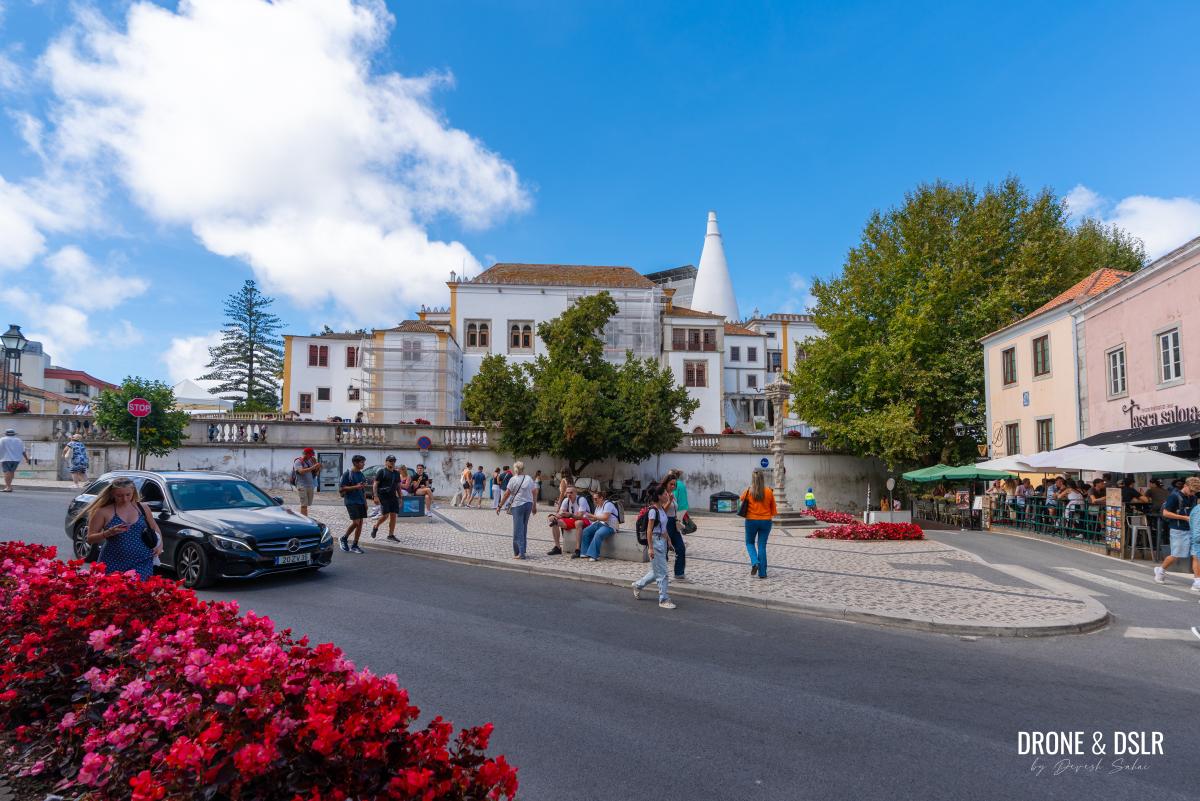
Exploring Sintra old town next to the National Palace of Sintra
Unfortunately, on the day of our visit, the palace was undergoing renovation, which meant we weren’t able to go inside. By all accounts, the interior is stunning, filled with elaborately decorated rooms, magnificent azulejo tile work, and centuries of royal history dating all the way back to the Moorish period. Sadly, we didn’t get a chance to experience it.
Explore The Quinta da Regaleira
If there is one place in Sintra that I keep hearing about and am already quietly kicking myself for missing, it’s Quinta da Regaleira. This extraordinary estate (part palace, part gothic chapel, part mystical garden) is widely considered one of Sintra’s unique sites.
The undisputed highlight is the Initiation Well, an inverted tower that spirals deep into the earth, straight out of a dream. It’s the kind of place that photographers lose hours in without even noticing.
Did we regret skipping it in favour of Cabo da Roca? A little, yes. We had limited time on our last morning, and we prioritized Cabo da Roca (more on that below).
But Quinta da Regaleira is firmly at the top of the list for our next visit to Sintra/Lisbon, and if your itinerary allows for it, I’d wholeheartedly recommend making time for it.
Unwind At The Parque da Liberdade
Not every stop in Sintra needs to be a grand palace or a centuries-old castle. That’s exactly where Parque da Liberdade comes in.
Tucked right alongside the old town, this peaceful public park is the perfect place to slow down, catch your breath, and simply soak in a bit of nature between sights.
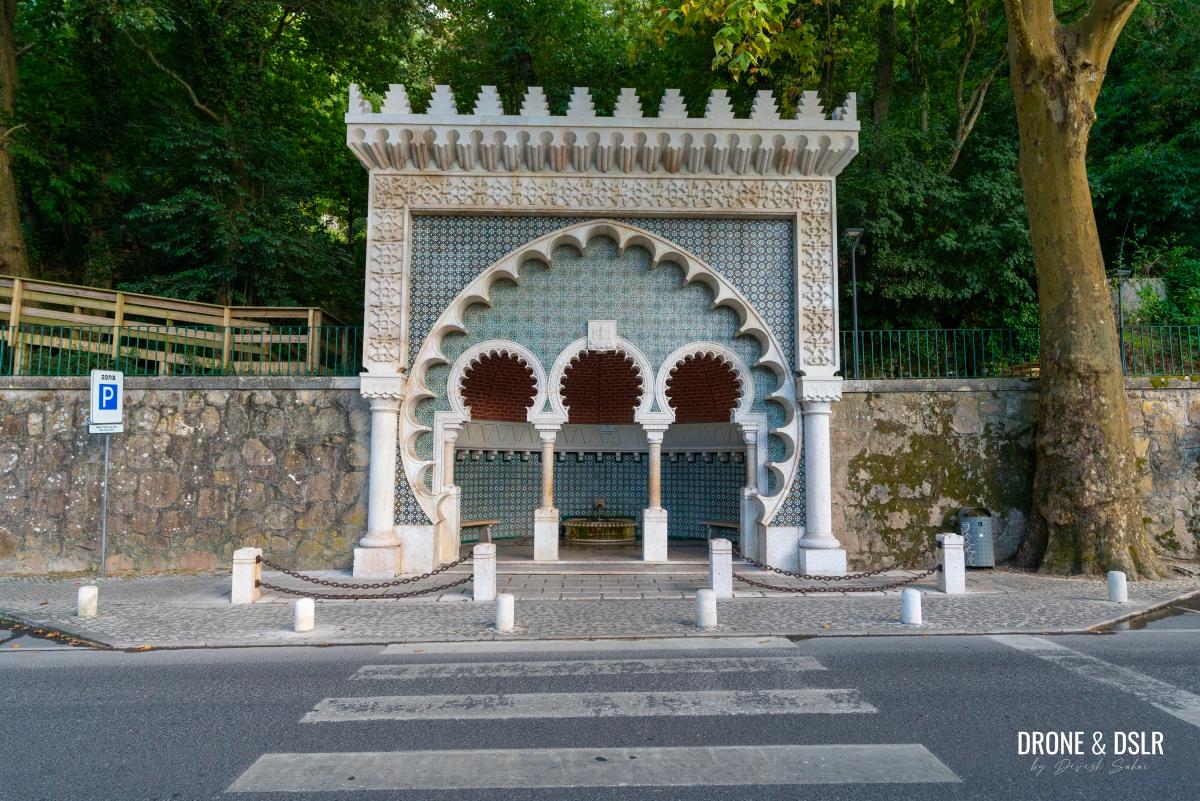
Walk around Sintra you’ll stumble upon such architectural gems – like this rest area outside the Parque da Liberdade
Its shaded pathways are inviting especially on a warm day, and its central location means that ducking in for a short pit stop couldn’t be easier. Even a quick 20-minute wander through the park is enough to leave you feeling refreshed and ready to take on the rest of Sintra.
Visit Cabo da Roca
This might sound ignorant, but I had no idea Cabo da Roca existed before visiting Sintra. For those equally unaware, Cabo da Roca (or Cape Roca) is the westernmost point not only of Portugal, but of continental Europe and the entire Eurasian landmass. Quite the distinction!
Although our plan for the last day involved visiting Quinta da Regaleira, I just had to skip it for an opportunity to stand at the edge of Europe!
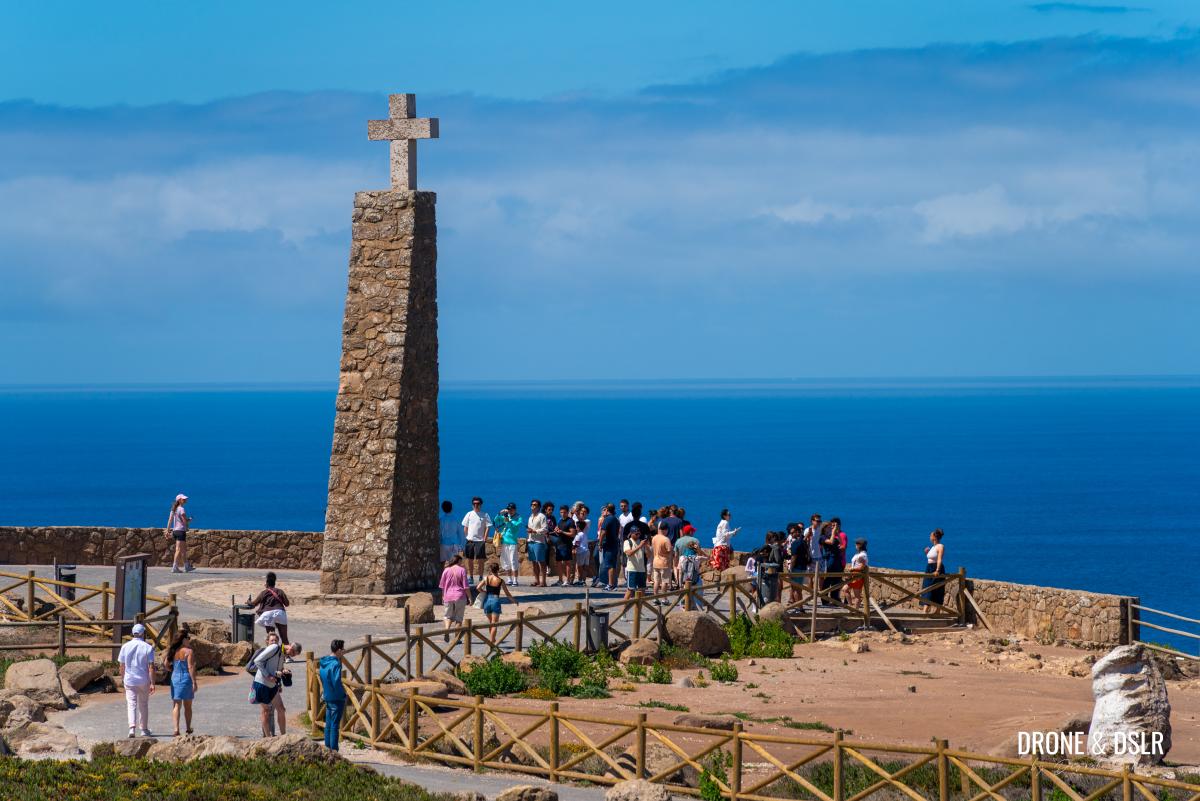
Cabo da Roca, the western edge of Europe
Just a 35-minute drive downhill from Sintra, Cabo da Roca turned out to be one of the highlights of our trip. There’s something truly special about standing at the westernmost edge of a continent! It’s not an experience you come across every day.
-
- Cabo da Roca – the westernmost point not only of Portugal, but of continental Europe!
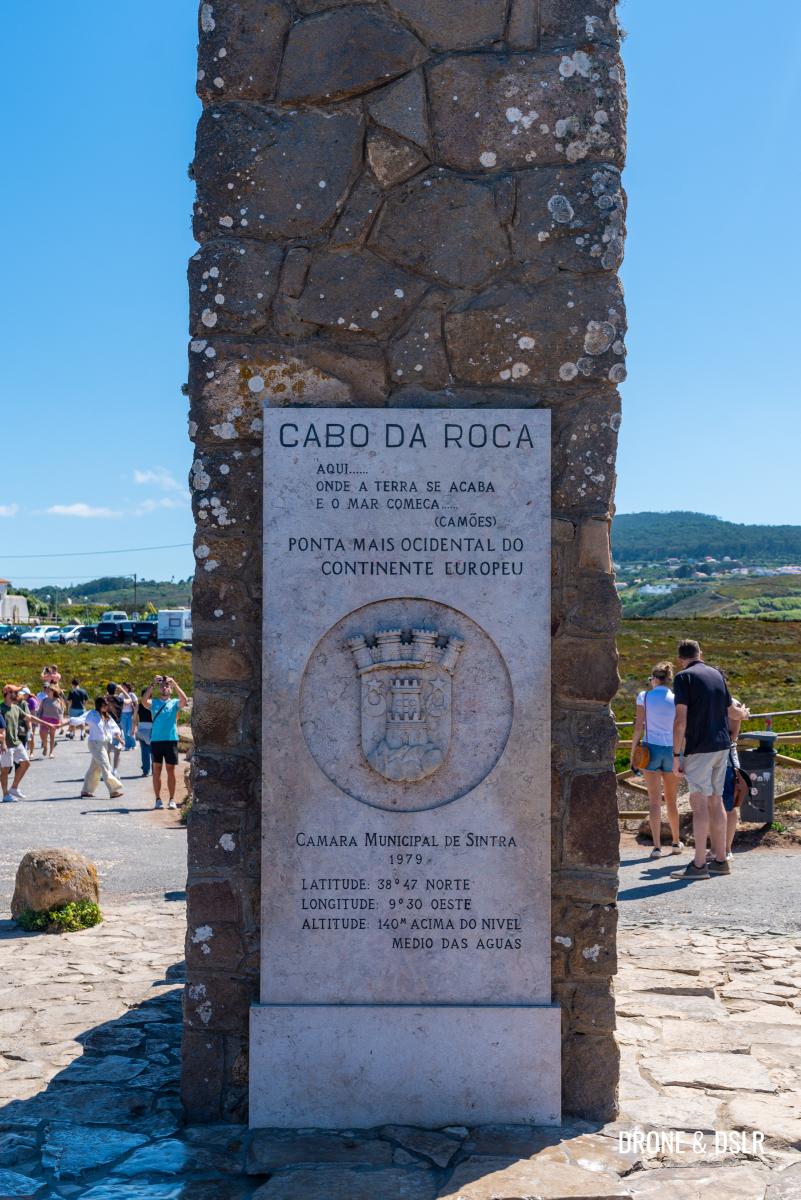
-
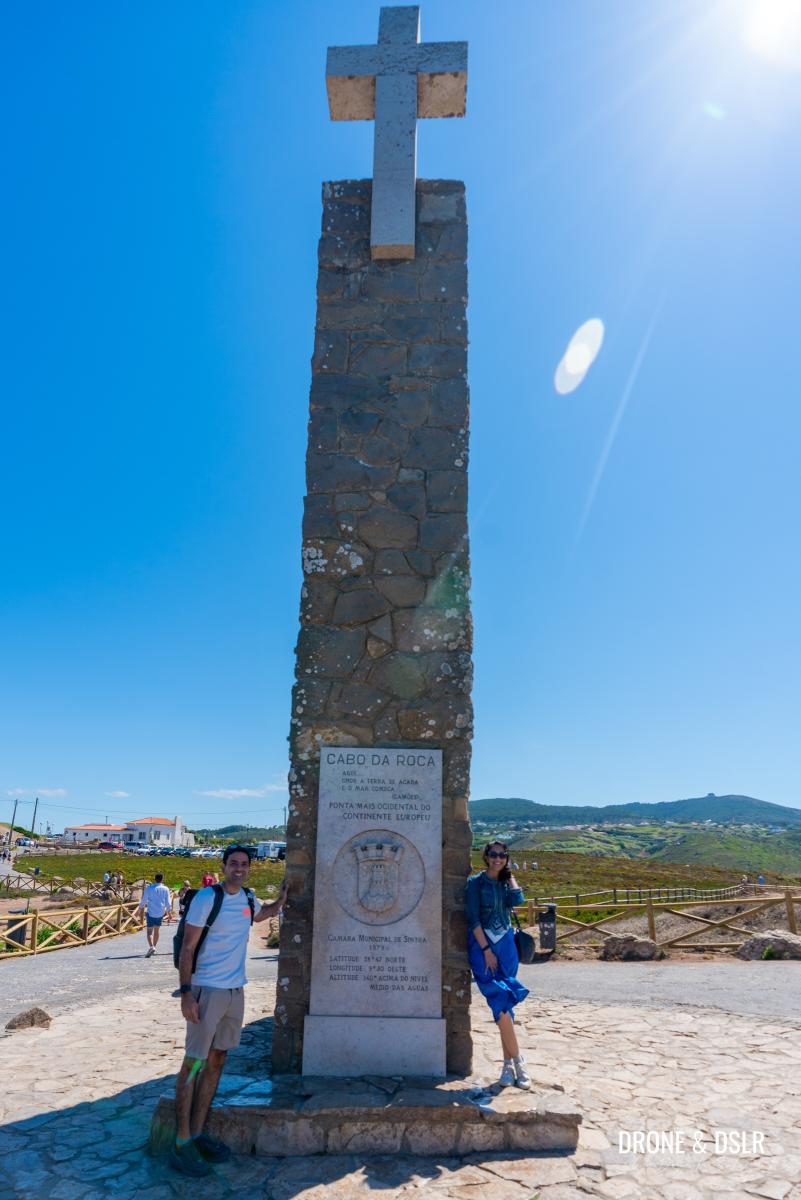
- Us as Cabo da Roca
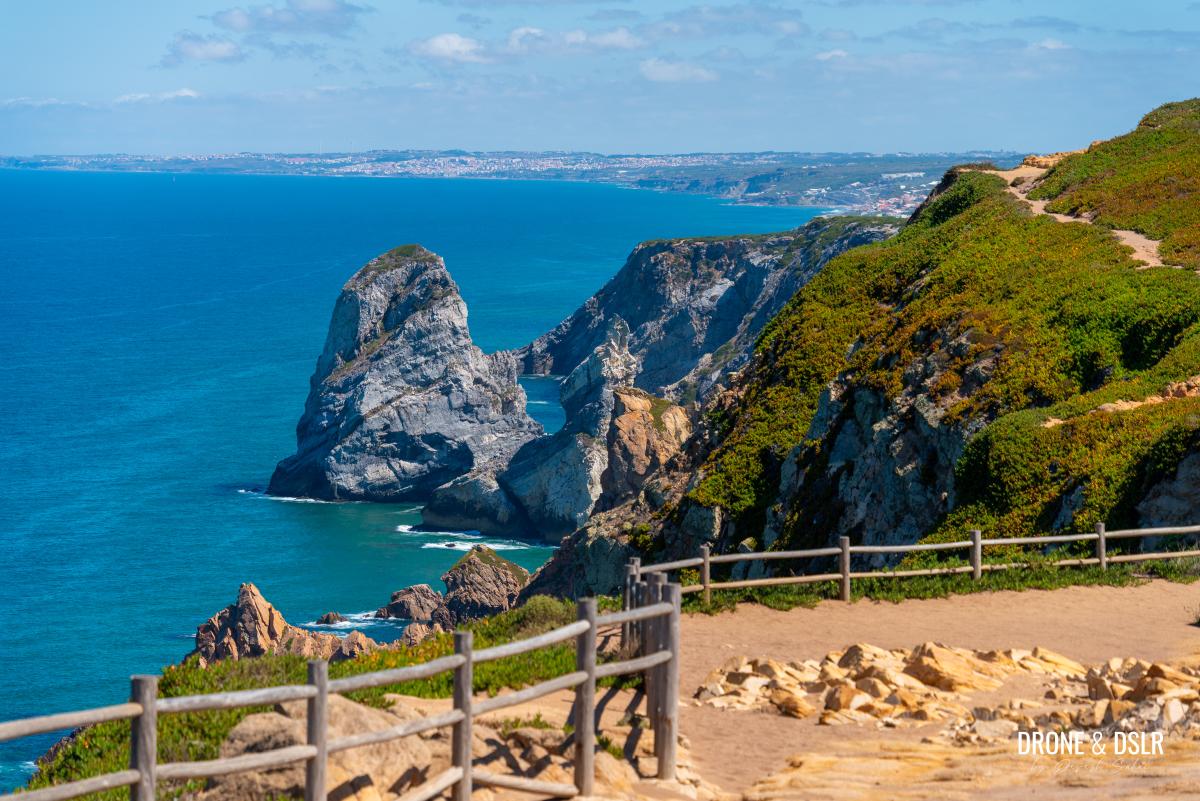
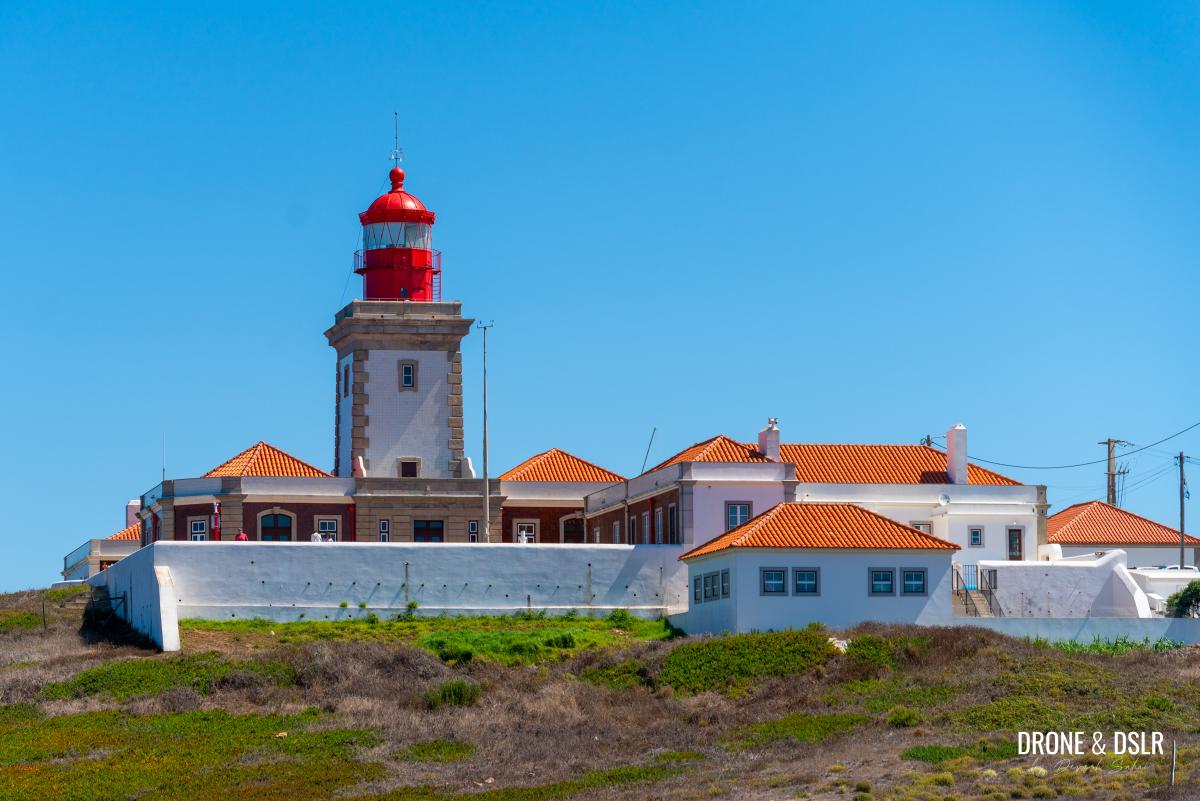
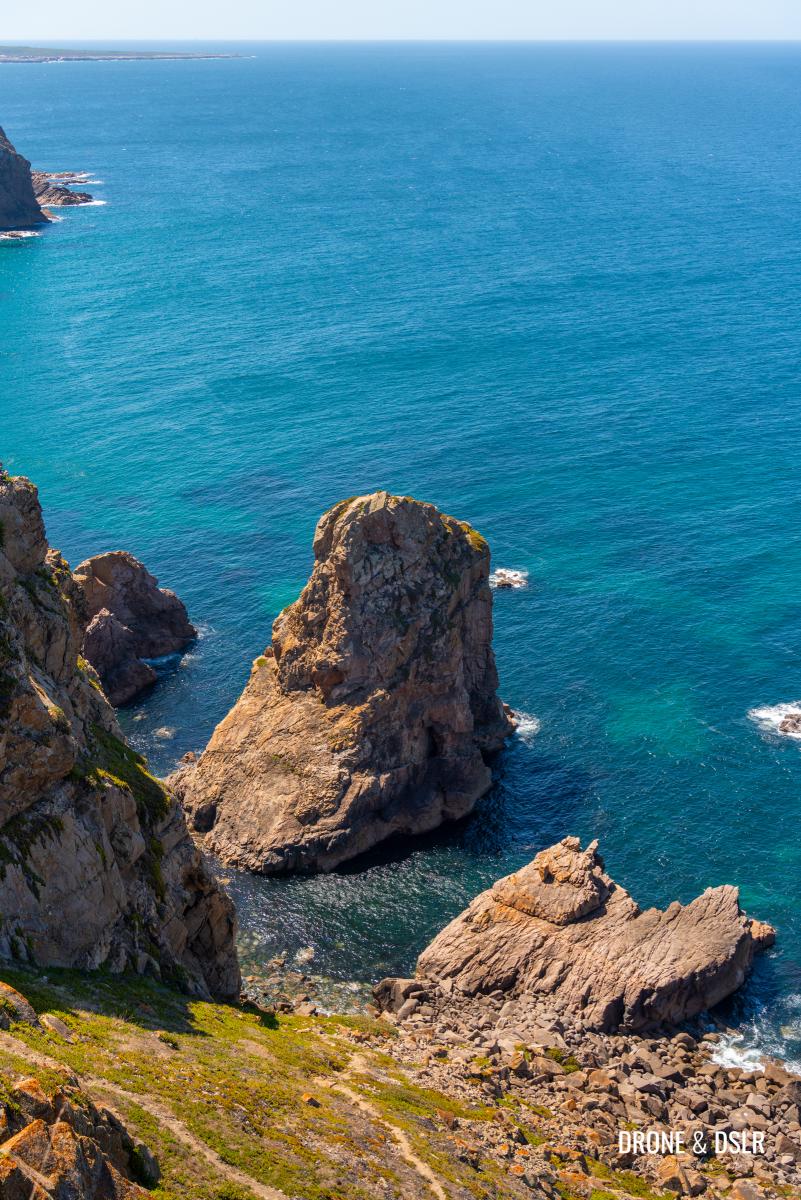
The sheer vastness of the Atlantic Ocean, the dramatic rugged landscape, and the striking Cape Roca Lighthouse (Farol do Cabo da Roca) all contribute to the cape’s breathtaking beauty.
-
- Looking north along the coastline from Cabo da Roca
-
- The beautiful Farol do Cabo da Roca (Cape Roca Lighthouse)
-
- Looking down the cliffs of Cabo da Roca
While the westernmost point itself is marked by a pillar, there are also several trails branching off into the surrounding area, perfect if you feel like exploring a little further.
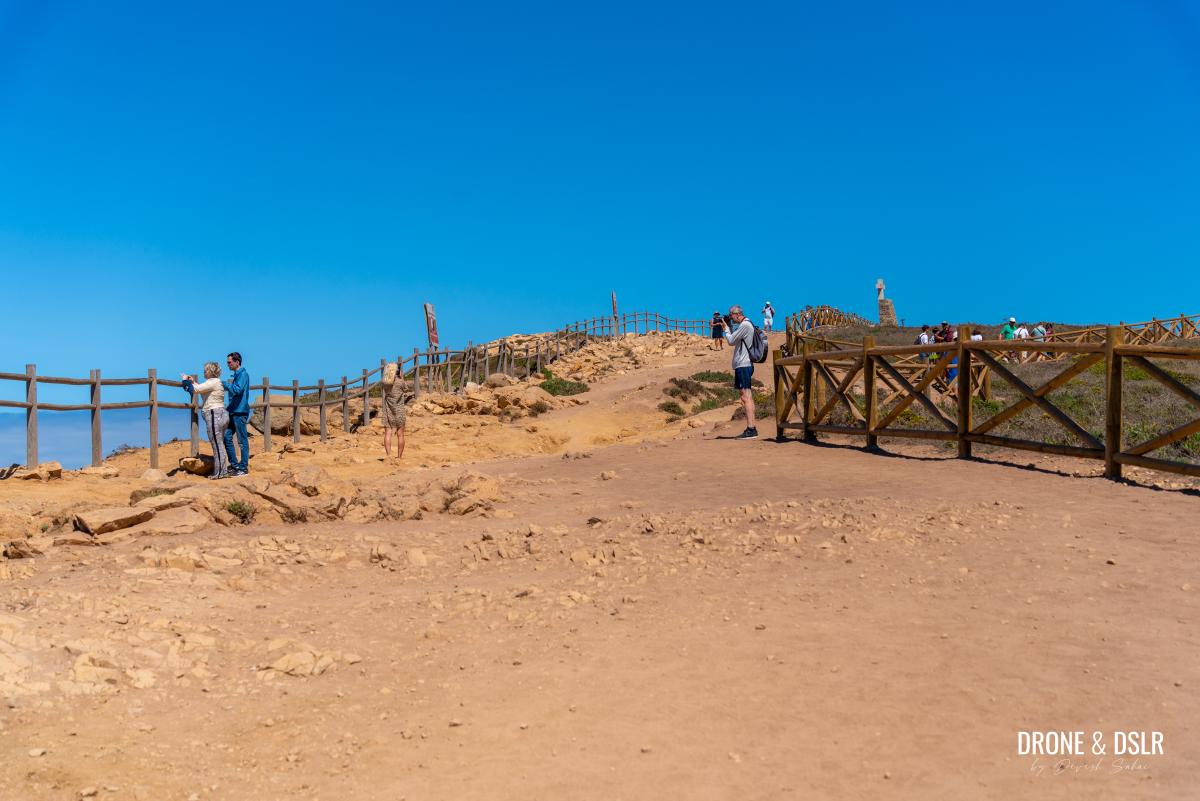
There are plenty of trails along the coastline if you plan on taking a walk at Cabo da Roca
Parking is not an issue either. There are plenty of spaces both next to the lighthouse and along the road leading to the cape.
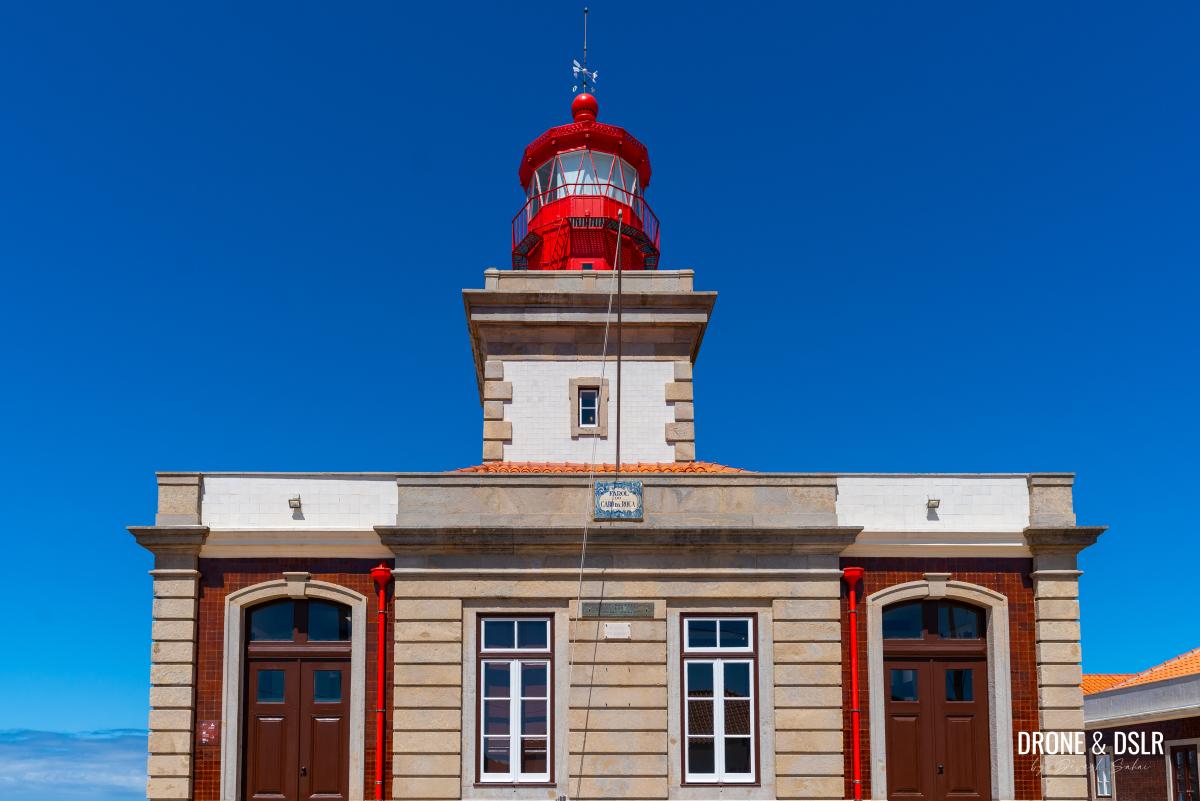
The Cape Roca Lighthouse (Farol do Cabo da Roca)
While there is a souvenir shop on-site, I’d strongly recommend stopping into the official Tourist Office for what is arguably the best souvenir going — a handwritten certificate confirming that you stood at Cabo da Roca, the westernmost point of continental Europe. Absolutely worth it!
Sintra Restaurants
There is no dearth of restaurants in Sintra. Especially in the old town, where you can find one perched on top of the hill, with incredible views.
But funnily enough, most of the restaurant recommendation we go from our B&B hosts weren’t located in the old town.
First and foremost, no visit to Sintra is complete without trying a Travesseiros de Sintra. Made famous by the historic Piriquita bakery, these pillow-shaped delights (the name literally means “pillows” in Portuguese) are iconic to Sintra.
Anyway, without overwhelming you with choices, let me give you the two best restaurants we ate at, while in Sintra.
Apeadeiro Restaurant
If you were left wondering where we ate our favourite meal in Portugal, it was at the Apeadeiro Restaurant in Sintra.
Located right next to the Sintra train station, this restaurant came highly recommended by our B&B staff.
After waiting for 10 minutes, we were whisked away into a restaurant that is probably stuck 30 or 40 years ago in time.

The delicious monkfish rice with ate at the Apeadeiro Restaurant in Sintra
Soaking in the old-school charm, we spoke to the super friendly staff who got us the garlic prawns, and the monkfish rice. Both dishes were outstanding!
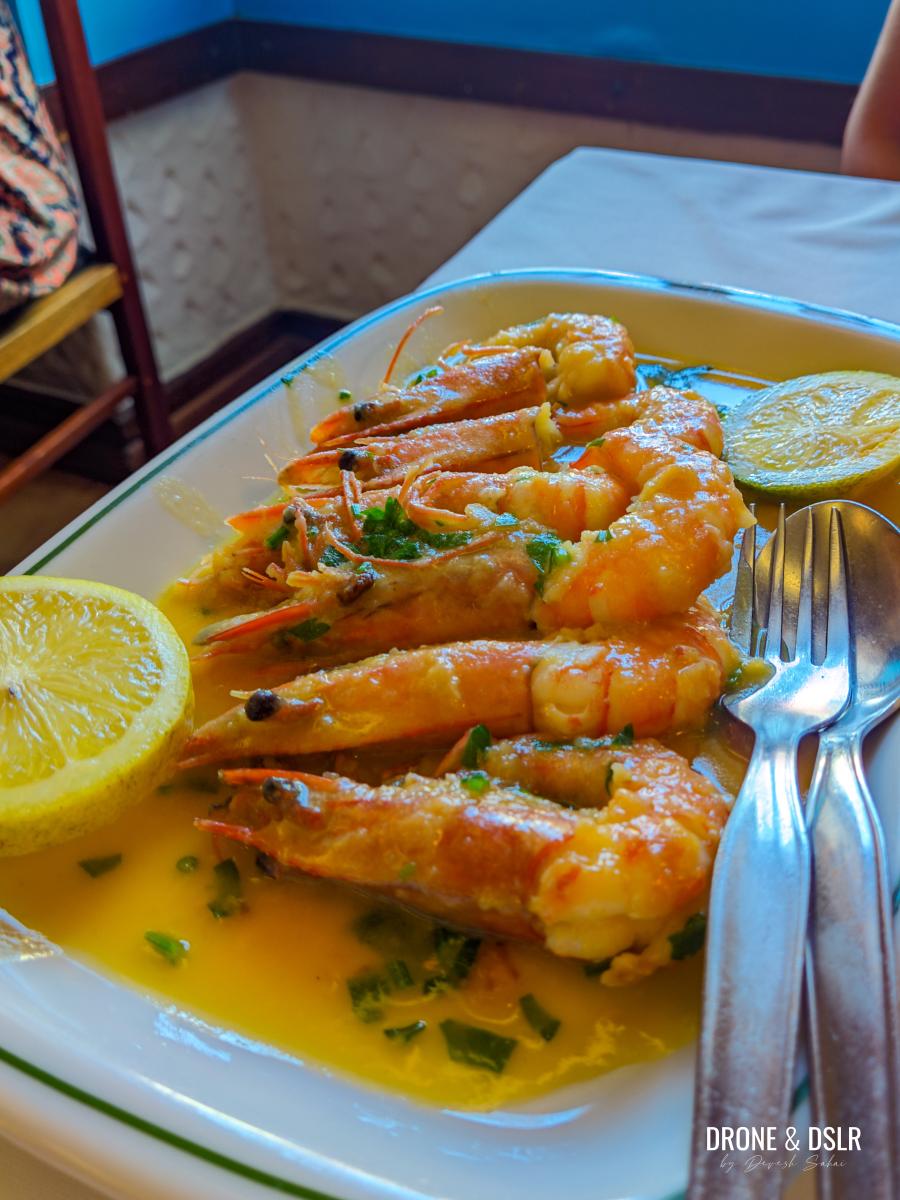
The best garlic prawns we ate in Portugal, was in Sintra
And afterward, we were brought Travesseiros de Sintra, which was a perfect end to a delicious meal.
Cajó
Cajó was another highly recommended restaurant. Once again, we had to arrive early to secure a spot for dinner. But even then, we still had to wait for 5 minutes.
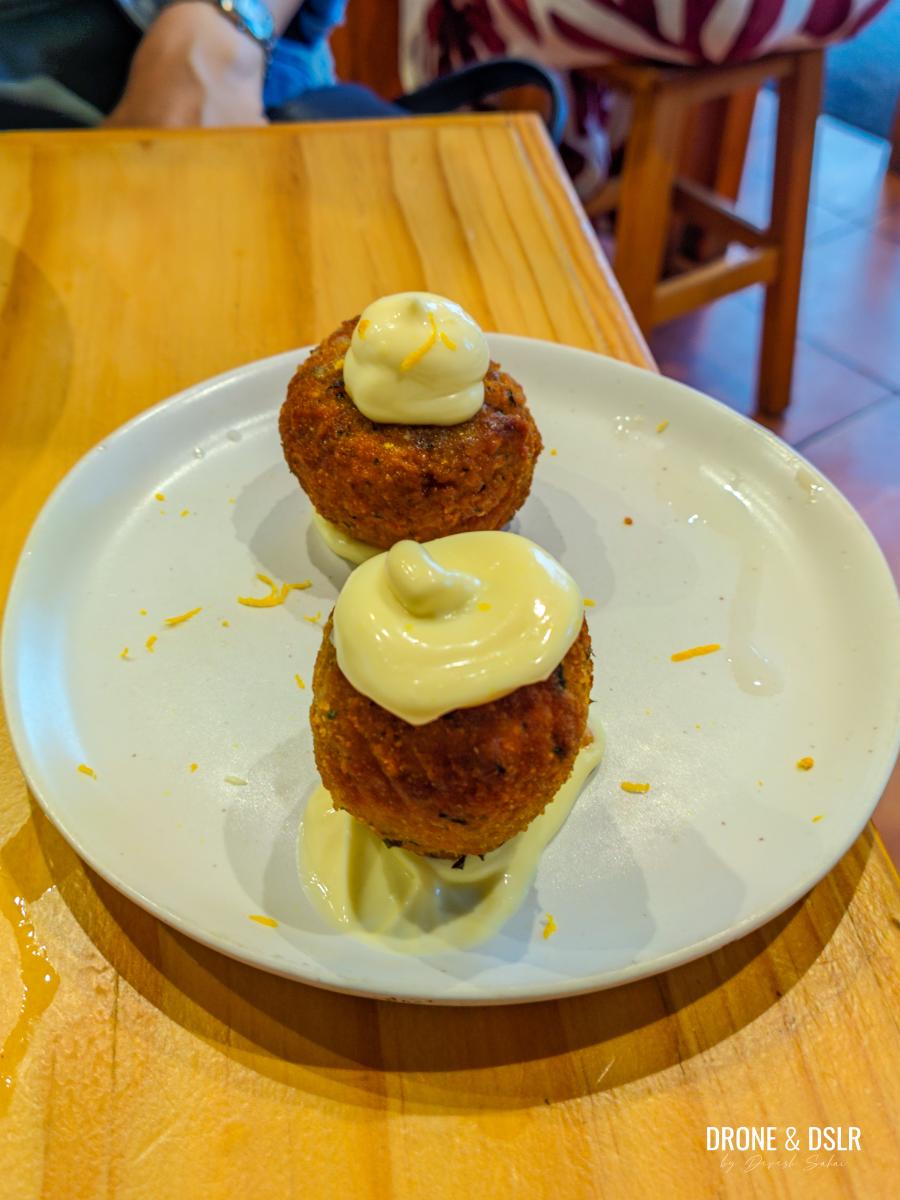
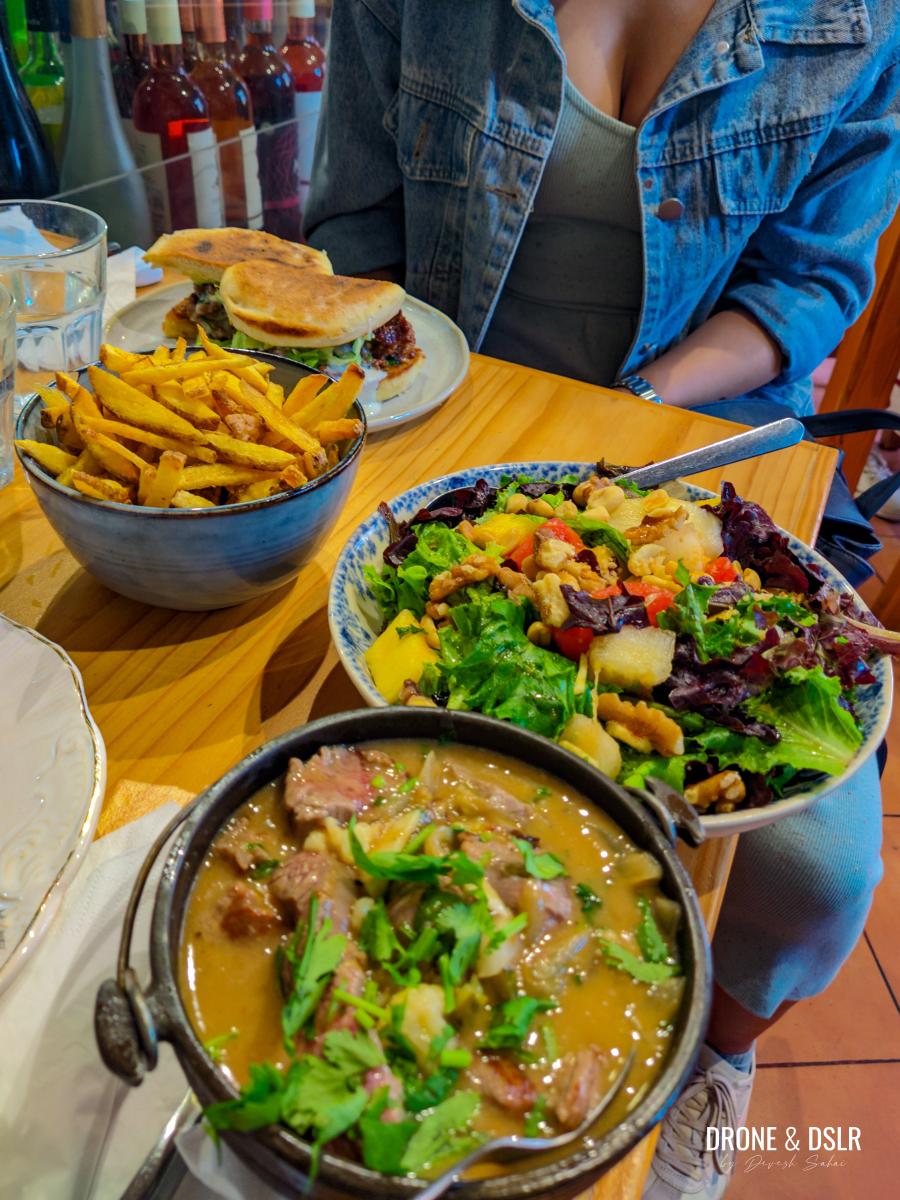
Once inside, we got their special duck croquettes, and the pica pau. I had the pica pau at other restaurants too during our Portugal trip, but none came close to the one at Cajó.
-
- Duck croquettes at Cajó
-
- Our meal at Cajó
Where To Stay In Sintra
There is no dearth of places to stay in Sintra if you plan on spending a night or two. Although many people choose to stay at the old town, during our research, we narrowed it down to two options, Chalet Saudade, and Villa Bela Vista. We eventually ended up staying at the former and couldn’t have been more satisfied with our decision.
Chalet Saudade – Vintage Guest House
If you’re looking for a place to stay in Sintra that feels as special as the town itself, Chalet Saudade is a wonderful option. This beautifully restored 19th-century chalet sits in the heart of Sintra, yet manages to feel like a peaceful retreat away from the bustle of the tourist centre.
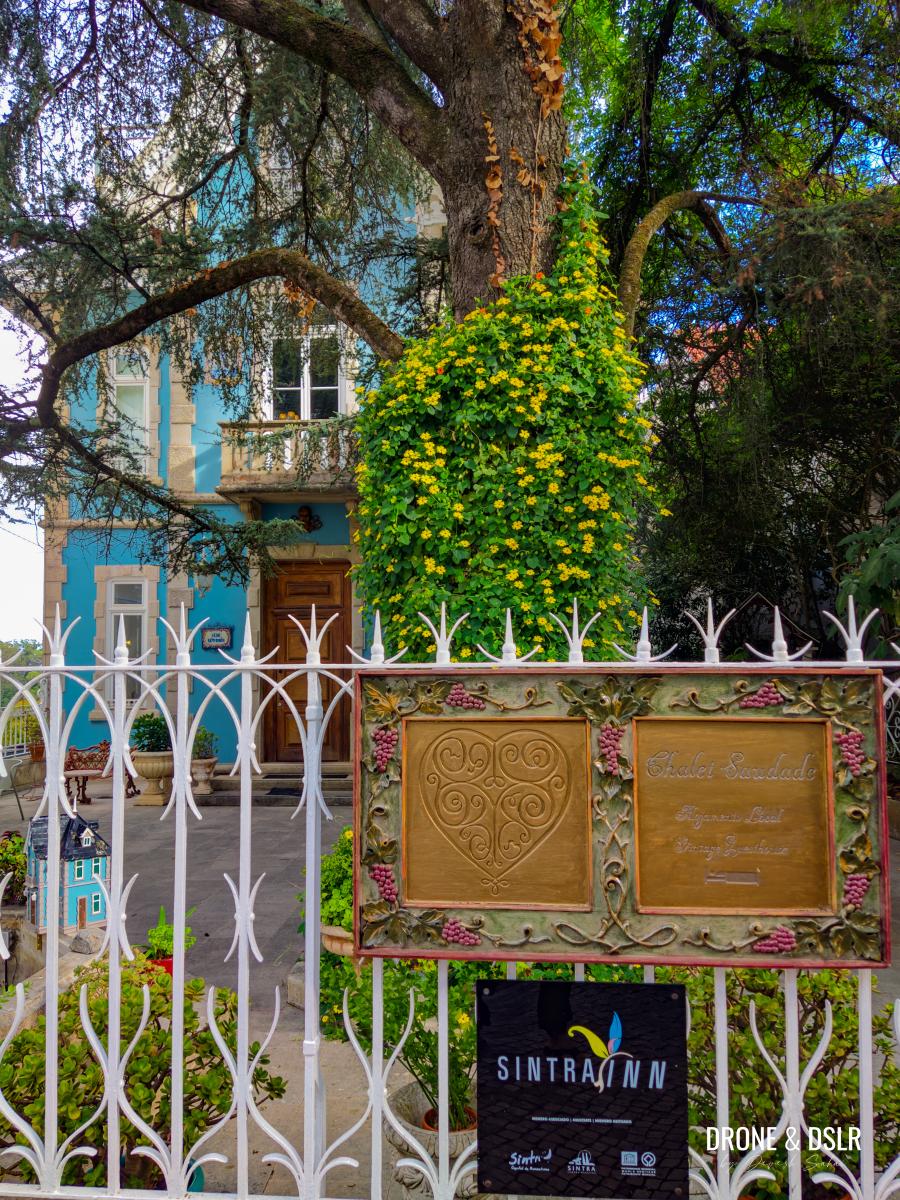
Chalet Saudade – Vintage Guest House
The property comes equipped with (all shared) an elegant living room with board games, peaceful gardens with antique water fountains, and the kind of atmosphere that makes you want to never leave.
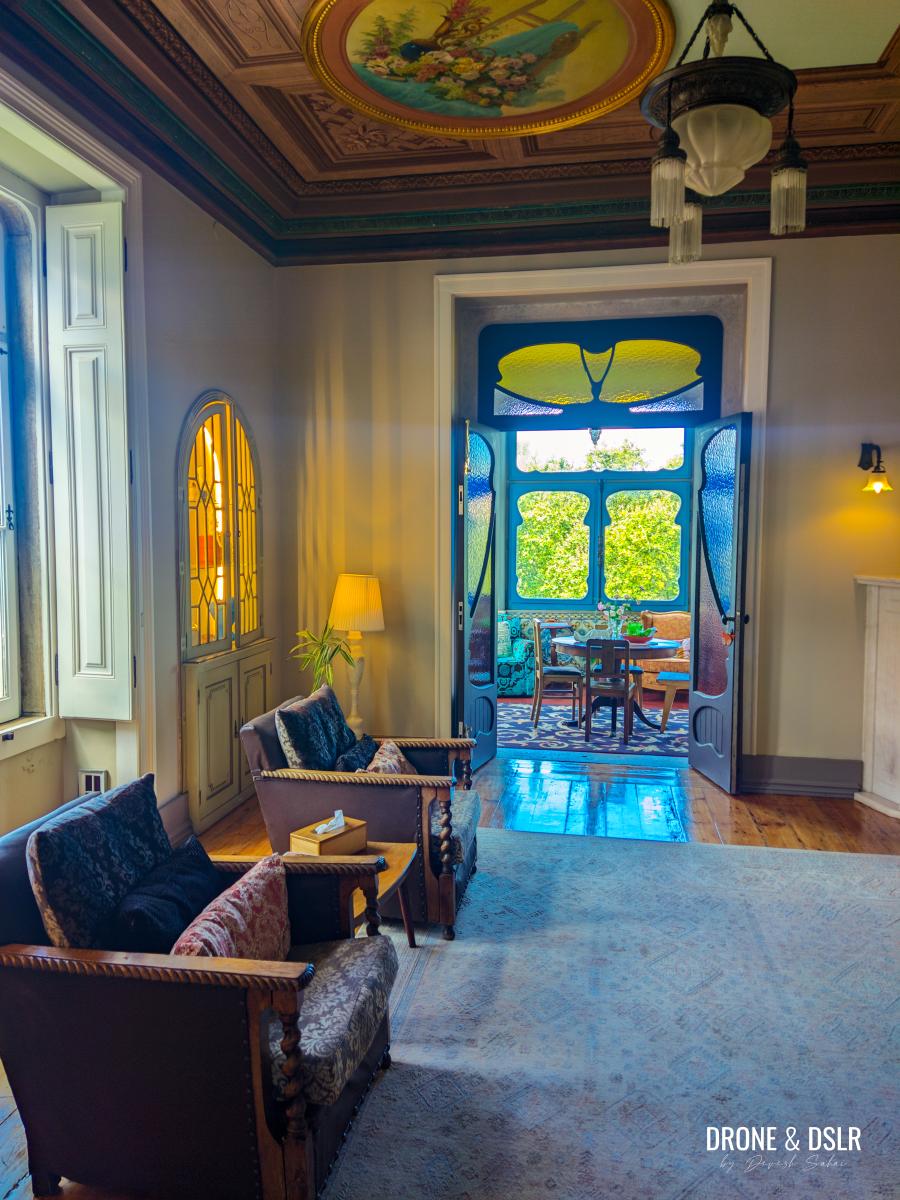
Inside Chalet Saudade – Vintage Guest House, our amazing accommodation at Sintra
The train and bus station is just a short stroll away, and the old town is about a 10-15 minute walk. Rooms are limited, so we recommend booking in advance.
Villa Bela Vista
Another property that caught our eye during the planning stage, and one we’d happily recommend, is Villa Bela Vista. This charming bed and breakfast in the heart of Sintra ticks a lot of boxes.
The location alone is hard to beat, with the Sintra National Palace just a 3-minute walk away and Quinta da Regaleira reachable in under 10 minutes on foot.
Villa Bela Vista is a solid, characterful choice for anyone looking to base themselves in Sintra.
Sintra – Probably The Best Thing To Do in Lisbon
I hope this post has convinced you that Sintra is so much more than just a day trip from Lisbon. It’s a destination where you could easily spend a couple of days and still find yourself wanting more. And as our own experience proves, even two full days wasn’t enough to see everything it has to offer.
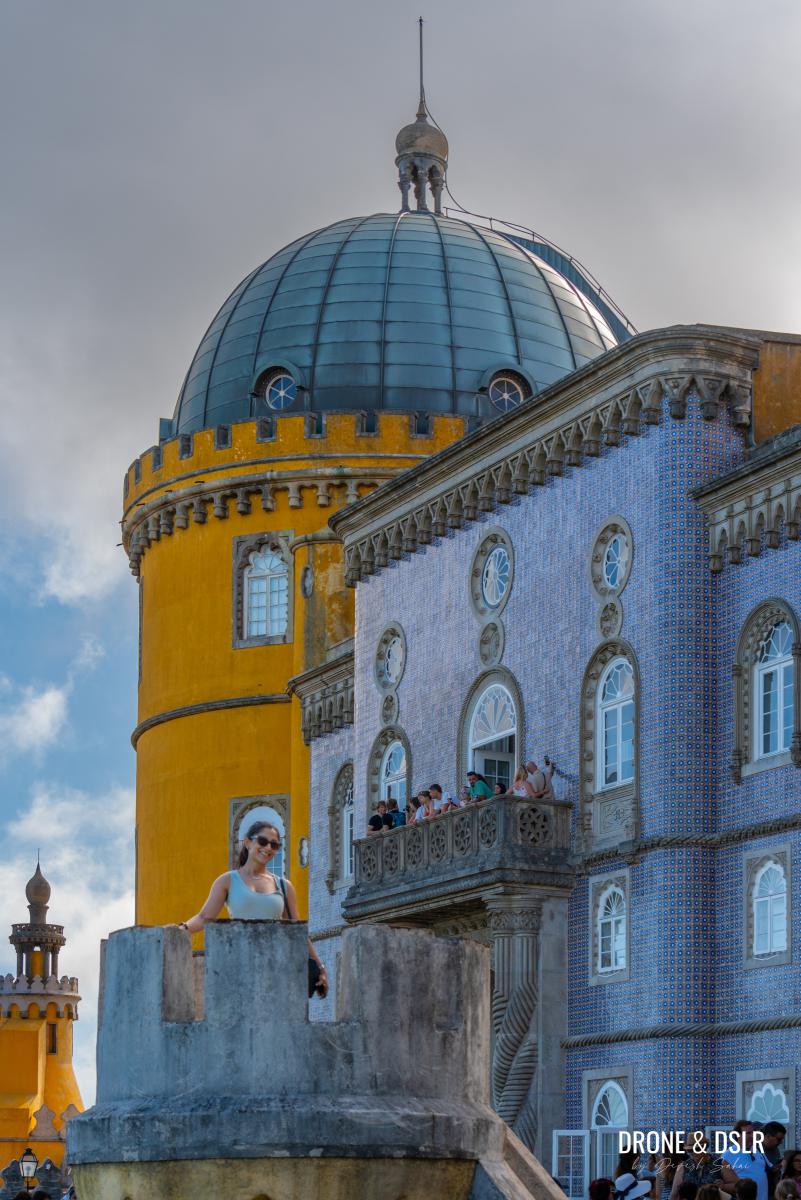
Hello from Sintra!
Anyway, I hope that our experience helps you plan your trip to Sintra a little better. If you’re visiting Lisbon, skipping Sintra simply isn’t an option — it’s too special, too close, and too memorable to pass up. Just do yourself a favour and hire a car, it opens up a world of possibilities and lets you explore Sintra entirely on your own terms.
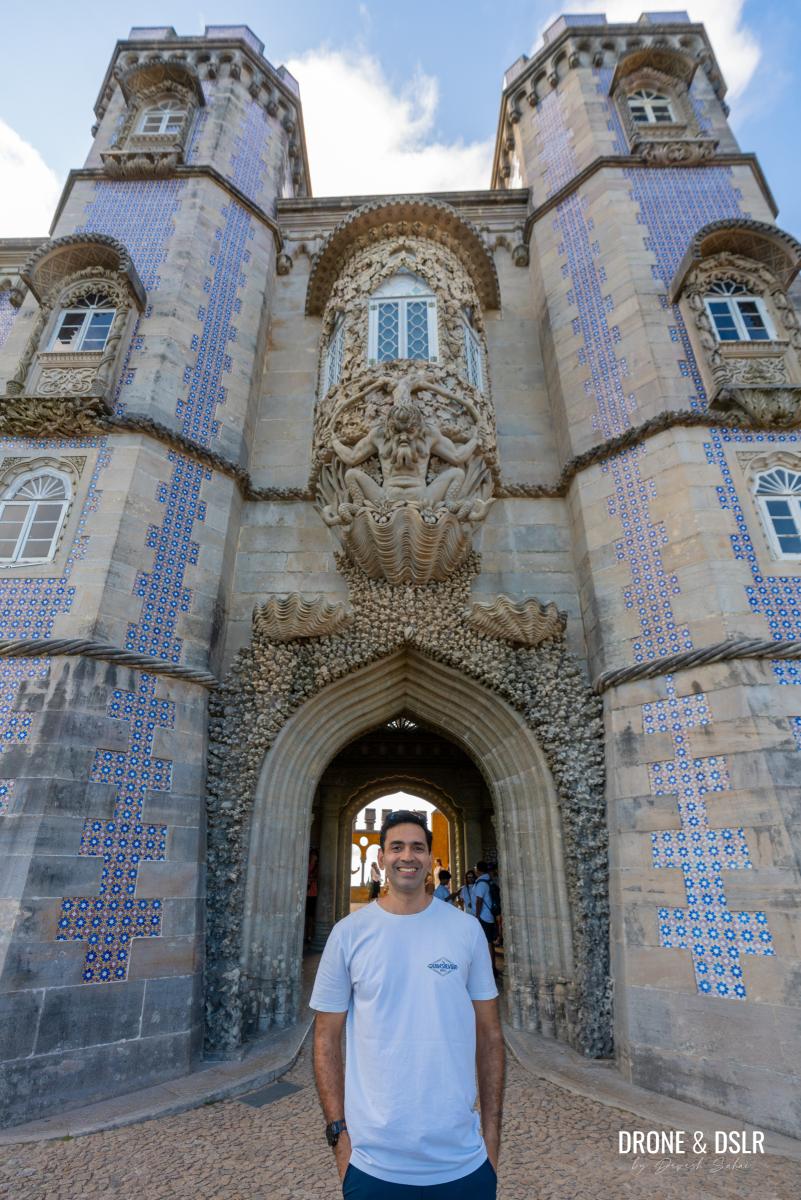
Just me and Triton at the Pena Palace in Sintra





Leave a reply